
Reviewed · THIRD REICH & WWII HISTORY TOURS
Munich under the Third Reich: a historical walking tour (private tour with a guide)
Munich gets darker fast. This private, Spanish-led walk connects the rise of the Nazi movement to real street-level landmarks, including the key site tied to Joseph Goebbels and the lead-up to the Night of Broken Glass. I like that it stays focused in 2.5 hours, with a clear storyline instead of random stops, and I like that you actually visit the former GESTAPO headquarters rather than treating them as vague history notes.
One thing to consider: the subject is heavy. You’ll see memorials for victims and opponents of the regime and hear about propaganda and subjugation, so this is not a light stroll through a pretty city center. Also, it’s Spanish with no mention of other languages—so plan accordingly if you’re not comfortable.
In This Review
- Key things I’d watch for on this tour
- Entering Munich’s Third Reich story at Marienplatz
- Meeting the guide: green umbrella by the Fish Fountain
- Tracing the Nazi rise through key Munich locations
- The Goebbels planning site and the Night of Broken Glass
- Former GESTAPO headquarters: seeing state terror in context
- Memorials for victims and opponents: why remembrance belongs on the route
- Everyday life under Nazism, propaganda, and the road to war
- Price and value: $188 per group up to 10
- Who this tour is best for (and who should skip it)
- Should you book Munich under the Third Reich?
- FAQ
- How long is the walking tour?
- What language is the guide?
- Is this a private tour?
- Where do we meet the guide?
- What does the tour cost?
- What are the main highlights?
- What’s included in the price?
- Is the tour wheelchair accessible?
Key things I’d watch for on this tour
- Private group format (up to 10) keeps the pace manageable and the questions flowing
- Start at Marienplatz right by the Fish Fountain, with your guide holding a green umbrella
- Goebbels and the Night of Broken Glass are handled on-site, not just in passing
- Former GESTAPO headquarters is part of the route, bringing the machinery of fear into view
- Memorials for victims and opponents anchor the visit in remembrance, not just facts
- Everyday life, propaganda, and leaders get folded into the story so you understand how control worked
More walks tracing Munich Third Reich and wartime history
- Munich: Third Reich & WWII Walking Tour★ 4.6 · 6,181 reviews
- Third Reich Walking Tour Munich★ 4.5 · 4,291 reviews
- Munich: Birthplace of the Third Reich Guided Walking Tour★ 4.6 · 771 reviews
- Munich World War II Sites Including Dachau Concentration Camp★ 4.5 · 570 reviews
Entering Munich’s Third Reich story at Marienplatz
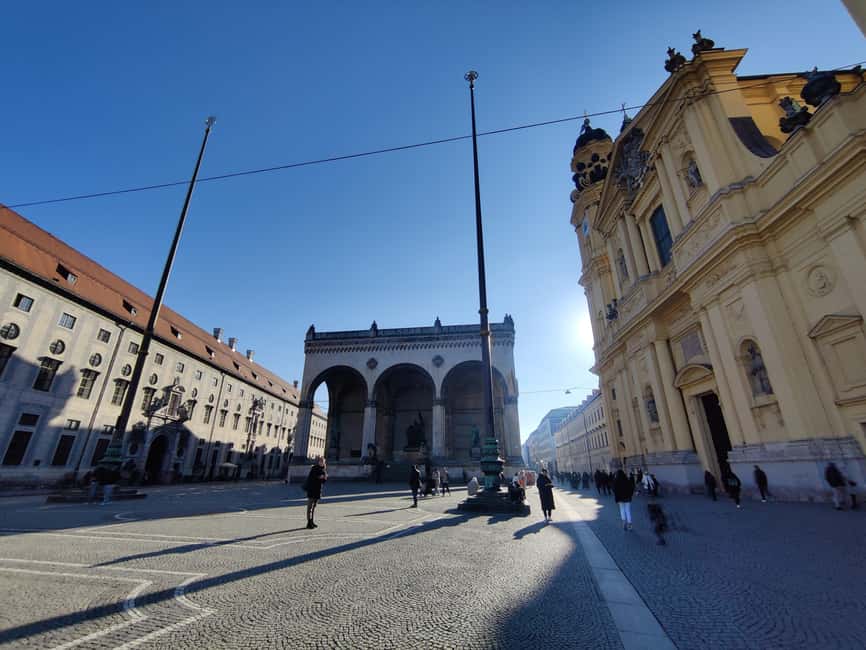
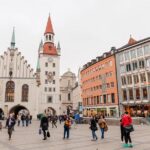
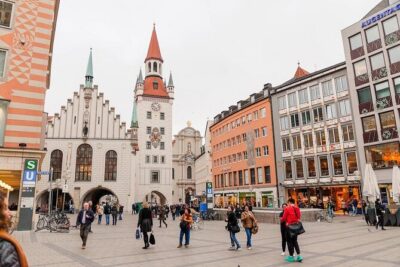
The tour starts where Munich’s center feels instantly recognizable: Marienplatz, by the Fish Fountain (Fischbrunnen). Expect an easy meet-up point—your guide is waiting with a green umbrella—so you won’t waste precious walking time hunting for the group.
What I like about this opening is that it frames the rest of the route. You’re not just walking from one “historic spot” to another. You’re learning how the Nazi party’s rise becomes physical in the city itself—through meeting places, leadership decisions, and the locations where state power showed up in everyday life.
And because the format is a private group, you can set the tone early. If you want more context around the propaganda and the social pressure of the era, this kind of guided route is built for that, rather than leaving you to piece it together on your own.
Meeting the guide: green umbrella by the Fish Fountain
Your guide meets you next to the Fish Fountain on Marienplatz with a green umbrella. That small detail matters more than it sounds, because it reduces stress on the day—especially in a busy square. Arrive a few minutes early, and you’ll get that calm start that makes the rest of a walking tour feel easier.
This is also where you’ll confirm the language experience. The guide is Spanish, and that’s the only language listed. If you’re traveling with someone who needs English (or you don’t read Spanish comfortably), you’ll want to think ahead.
If you’re lucky enough to get Valentina, there’s a clear sign this tour can be well paced. One Spanish-language review praised Valentina for making the excursion very enjoyable and showing strong knowledge of the topic. That combo—clear command plus a pleasant delivery—can make a difficult subject feel less overwhelming.
Tracing the Nazi rise through key Munich locations
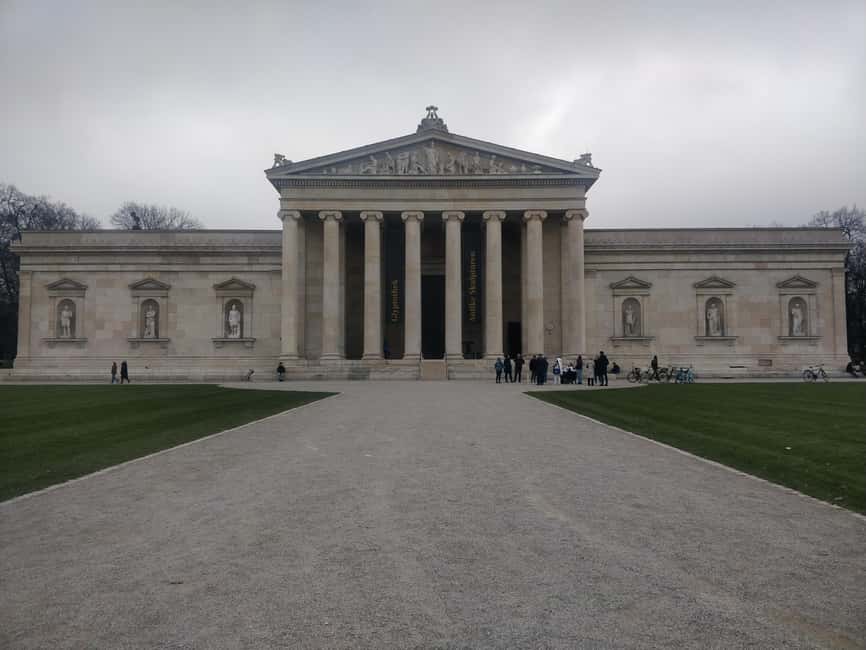
The core of the experience is a walking narrative: how Munich earned the reputation as a central stage for the Nazi movement, and how major figures and meetings helped power grow from ideology into control.
You’ll focus on places where the party’s first meetings took place, plus the former Nazi Party Headquarters. Even without a museum-style wall of exhibits, these locations work. They give the story a sense of scale: decisions were made here, organization happened here, and the consequences played out far beyond Munich.
What makes this route valuable is the way it turns “history facts” into a connected chain. The guide isn’t just naming leaders and events. You’re also learning how the Nazi party subjugated an entire country, and how the regime trained people to accept its worldview through messaging and pressure.
That’s the real payoff for many history-minded travelers: the story doesn’t feel like disconnected chapters. It feels like a system—built step by step.
More laps of the Altstadt and Marienplatz
- Munich: Old Town & Viktualienmarkt City Walk in German
★ 4.7 · 2,304 reviews - Munich: Night Watchman Walking Tour
★ 4.7 · 2,092 reviews - Munich Ghosts and Spirits Evening Walking Tour
★ 5.0 · 1,900 reviews
The Goebbels planning site and the Night of Broken Glass
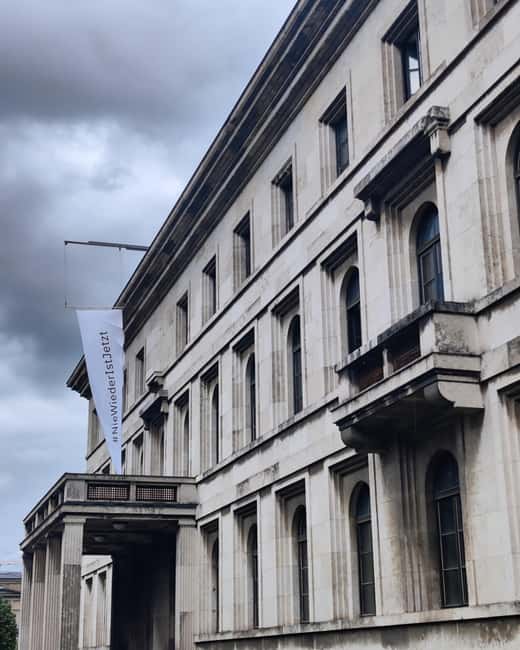
One of the most specific highlights is the key place where Joseph Goebbels plotted the Night of Broken Glass. The tour treats this as more than a dramatic headline. You’ll learn how the event fits into the regime’s broader strategy—how intimidation and propaganda work together to push society toward compliance.
On a walking tour, this stop can hit differently than reading about it. Standing in or near the location tied to a decision like that reminds you this wasn’t abstract evil. It was organized, planned, and carried out by people using public power.
If you’re trying to understand how extremist politics turns violent quickly, this is the kind of moment that helps the lesson stick. You’ll leave with a clearer sense of the cause-and-effect logic that drives regimes like this: propaganda softens resistance, then coercion makes it costly.
Former GESTAPO headquarters: seeing state terror in context
Next comes the former GESTAPO headquarters. This stop matters because it shifts the story from political theater to the actual enforcement side of the regime.
You’ll learn how Nazi leadership used institutions and control mechanisms to dominate daily life. The guide also places the experience in context, which is crucial here. Otherwise, “here is where the Gestapo was” can become a grim sightseeing line. With context, it becomes a study of how fear was administered and why opponents faced real danger.
This is also the point where the memorial elements become especially important. Because after you’ve seen where control lived, the memorial stops honor what that control did to victims—and what it tried to erase from the public story.
If you don’t like heavy topics, you may feel your pace slow here. That’s normal. Wear comfortable shoes, and mentally plan for a more reflective mood in this section of the walk.
Memorials for victims and opponents: why remembrance belongs on the route
The tour doesn’t end with leaders and buildings. You’ll visit memorials honoring the victims and opponents of the regime. That’s not a random add-on; it’s the emotional finish that gives the whole walk its meaning.
In practical terms, this part helps you process what you’ve just learned. The earlier stops can feel like politics and strategy. The memorial sites bring the human cost to the front, and they remind you the story isn’t only about how the regime rose—it’s also about who suffered and who resisted.
I appreciate that the tour explicitly ties historical memory to the visit. You’re encouraged to reflect on the consequences of intolerance and extremism. That reflection isn’t delivered as a lecture; it’s built into where you walk and what you stand in front of.
Everyday life under Nazism, propaganda, and the road to war
A good history tour doesn’t just cover dramatic moments. This one also explains everyday life in Munich during Nazism, including the propaganda used by the regime.
That focus makes the information feel more real. If all you hear is about top leaders and landmark events, it’s easy to treat Nazism like a distant phenomenon. By covering how propaganda and social control shaped routine life, the tour shows how an entire country can be steered—quietly at first, then with increasing force.
You’ll also learn about the leaders who shaped the era, and the events that triggered World War II. The value here is in the connective tissue: how earlier steps link to later catastrophe.
And since the tour is led by an “expert guide” in Spanish, you’re getting narrative context rather than just a list of bullet points. That’s exactly what you want when the subject is complex and morally weighty.
Price and value: $188 per group up to 10
At $188 per group up to 10, this is priced like a private tour, not a mass-market group bus ride. The value depends on how many people are splitting the cost.
- If you book with a full group (10 people), it becomes very reasonable per person.
- If it’s just you and a partner, the same total cost can feel steep—though you still get the benefit of a true private route and a Spanish-speaking guide.
For me, the biggest value driver isn’t the price number. It’s the structure: 2.5 hours, a focused set of sites, and guided interpretation of events and mechanisms (from party organizing to enforcement to remembrance). If you care about learning how control took shape—rather than just collecting “top sights”—the cost tends to make more sense.
You also get a straightforward inclusions package: a guide in Spanish for the full 2.5-hour visit. Hotel pickup and food/drinks aren’t included, so plan to handle those basics yourself.
Who this tour is best for (and who should skip it)
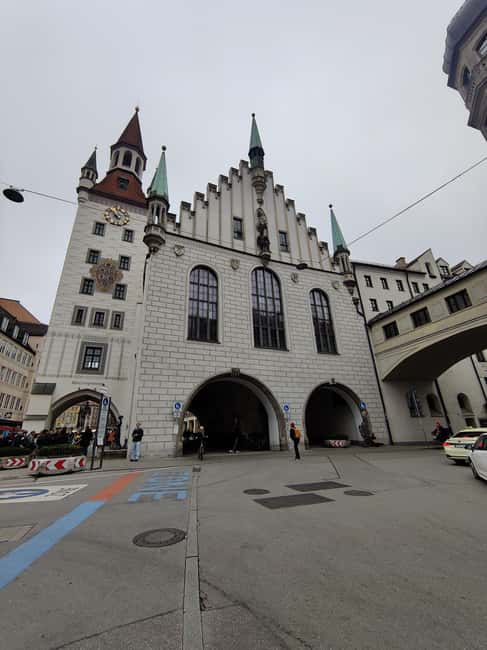
This is a strong fit for:
- history buffs who like narrative, not scattered facts
- students or anyone doing a deeper study of 20th-century Germany
- travelers who want to understand how ideology became enforcement, and how that connects to World War II
It may be a tougher fit if:
- you want a light, carefree walking tour
- you’re not comfortable with emotionally heavy sites and memorial context
- you need a guide who speaks a language other than Spanish (Spanish is the only language listed)
If you’re the kind of traveler who can handle reflection—good shoes, quiet attention, and some uncomfortable truths—this tour will likely feel purposeful instead of merely grim.
Should you book Munich under the Third Reich?
I’d book it if you want your Munich history to have backbone. This isn’t a surface-level “Nazi landmarks” circuit. The route connects specific sites—party meeting places, the former Nazi Party Headquarters, the key Goebbels-related planning location, and the former GESTAPO headquarters—with memorial stops that keep victims and opponents in focus.
You should probably skip it if you’re looking for something relaxed, entertainment-first, or language-flexible. The topic is serious, and the tour is Spanish.
One more practical note: because food and drinks aren’t included, plan for a comfortable pre- or post-walk routine. Bring what you need so the 2.5 hours stays about learning, not logistics.
If you’re ready for a guided, place-based lesson in how intolerance can become power, this is a smart way to experience Munich with clarity.
FAQ
How long is the walking tour?
It lasts 2.5 hours.
What language is the guide?
The guide provides the tour in Spanish.
Is this a private tour?
Yes. It’s a private group experience for up to 10 people.
Where do we meet the guide?
Meet next to the Fish Fountain (Fischbrunnen) on Marienplatz. The guide will be waiting with a green umbrella.
What does the tour cost?
It costs $188 per group, up to 10 people.
What are the main highlights?
You’ll see the key place tied to Joseph Goebbels and the Night of Broken Glass, visit the former GESTAPO headquarters, tour former Nazi Party-related locations, and stop at memorials honoring victims and opponents.
What’s included in the price?
A Spanish guide and the 2.5-hour visit.
Is the tour wheelchair accessible?
Yes, it’s listed as wheelchair accessible.
More History Walks in Munich
More Altstadt and Marienplatz Walks
More Third Reich and WWII History in Munich
Just added to the Munich Explorer notebook
Third Reich & WWII History Tours, compared.
 ★ 4.6Third Reich & WWII Walking TourFrom $316,181 reviews
 ★ 4.5Third Reich Walking Tour MunichFrom $454,291 reviews
 ★ 4.6Birthplace of the Third Reich Guided Walking TourFrom $29771 reviews
 ★ 4.5Munich World War II Sites Including Dachau Concentration CampFrom $105570 reviews
 ★ 5.0Munich City Walking Tour, includes Third Reich & ViktualienmarktFrom $31458 reviews
 ★ 4.5Third Reich & WWII Walking TourFrom $35417 reviews
 ★ 4.9Munich 3-Hour Segway Tour: Nazi Munich & Royal ArchitectureFrom $91194 reviews
 ★ 5.0Dachau Concentration Camp Memorial Site And Third Reich Day Tour From MunichFrom $145185 reviews
Browse the lists this tour appears in