
Reviewed · THIRD REICH & WWII HISTORY TOURS
Third Reich & WWII Walking Tour
Munich has a way of keeping its past close. This Third Reich walking tour takes you past the places where Nazi power started to form, and it connects those landmarks to the city’s mood in the 1930s. I like the small-group feel (often capped around 10) and the way the route hits major sites like Königsplatz and Feldherrnhalle. One consideration: it is heavy material, and you’ll be walking and standing for nearly three hours with limited breaks.
The tour runs about 2 hours 45 minutes, in English, and you get a mobile ticket. It also ends at the area tied to Hitler’s former headquarters, so you finish with a clear sense of how the story moved from propaganda and rallies to political control. For families: it’s not recommended for children under 12.
If you’re coming for WWII context, this is a smart way to do it without getting lost in museum labyrinths. Just plan ahead for comfort, because you may have trouble hearing in cold wind or crowds, and snacks are not part of the package.
In This Review
- Key points to know before you go
- Munich on foot: why this tour lands differently
- Timing, route flow, and how the stops build a story
- Marienplatz start: getting oriented before the heavy stuff
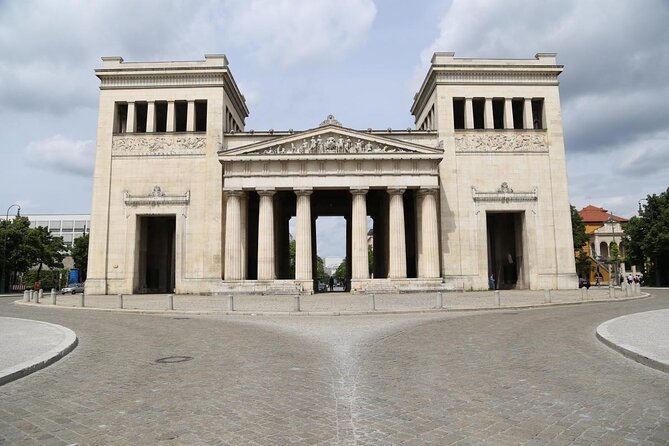
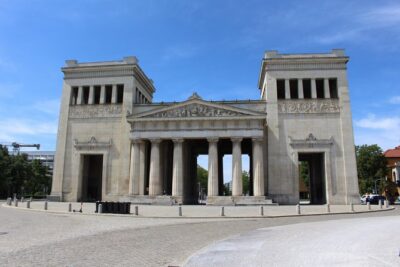
- Königsplatz: where post-WWI chaos meets ideology
- Hofbräuhaus to Feldherrnhalle: mass meetings and a failed power grab
- Hofgarten and the White Rose: showing the other side
- Hitler’s former HQ area: your finish point and what to do with it
- Guides make the difference: what you should look for
- Value and price: is $35.09 worth it?
- What to bring and how to handle a cold, crowded city
- Who this tour suits best (and who might skip it)
- Quick practical FAQ
- FAQ
- How long is the Third Reich & WWII walking tour in Munich?
- Where does the tour start and where does it end?
- Is the tour offered in English?
- How much does it cost?
- Is food or drink included?
- Is hotel pickup included?
- Are admissions included?
- Is the group small?
- Can I cancel and get a refund?
- Should you book this Third Reich walking tour?
Key points to know before you go
- Small group size helps you ask questions and actually hear the guide
- Major Nazi-era Munich landmarks are covered in one efficient route
- White Rose resistance gets attention, not just Nazi pageantry
- Professional guides like Michael, Alex, Josh, Ulrich, Danielle, Joel, and Bridget bring structure and sensitivity
- Bring water and a snack, since there’s little time to pause
- The walk ends at the Hitler former HQ area, giving a strong finishing point
More walks tracing Munich Third Reich and wartime history
- Munich: Third Reich & WWII Walking Tour★ 4.6 · 6,181 reviews
- Third Reich Walking Tour Munich★ 4.5 · 4,291 reviews
- Munich: Birthplace of the Third Reich Guided Walking Tour★ 4.6 · 771 reviews
- Munich World War II Sites Including Dachau Concentration Camp★ 4.5 · 570 reviews
Munich on foot: why this tour lands differently
A walking tour is a strange kind of history lesson. Buildings don’t just sit there; they frame the story. In Munich, that matters because the Nazi movement didn’t only happen in speeches and documents. It happened in public space: squares, grand halls, beer halls, and streets where people gathered, looked on, and decided what they believed.
This tour follows that logic. You move from key political stages to places tied to mass meetings, the Nazi rise, and later moments of resistance. You also get a local lens on how the city functioned during WWII, not just dates and names.
And because it’s a small-group walk with a professional guide, you’re not stuck passively reading plaques. You’re listening, looking, and asking questions as you go—exactly what you want with a topic that can easily turn into a blur of facts.
Timing, route flow, and how the stops build a story
The whole experience is about 2 hours 45 minutes. That duration is long enough to cover the big anchor sites, but short enough that you don’t feel like you’ve spent your whole day on one theme.
The route is designed as a timeline you can physically follow. It starts in the Munich center at Marienplatz (80331) and finishes at Königsplatz 1 (80333), at the area connected to Hitler’s former headquarters. Along the way, you’ll see major locations linked to the early Nazi movement, the push to seize power, and the social reality that surrounded those events.
Two practical things I’d plan for:
- You’ll be walking and standing for most of the tour.
- There may be a short indoor pause mid-route, but don’t assume a long rest break.
If you’re visiting Munich during busy seasonal crowds, this timing still works well. Your guide’s pacing is part of the value: they keep the group moving while still giving you time to stop and process what you’re seeing.
Marienplatz start: getting oriented before the heavy stuff
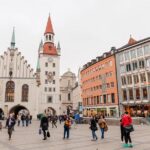
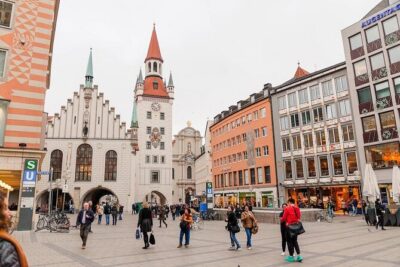
Starting at Marienplatz makes sense. It’s central, easy to find, and it sets you up with a sense of scale. Before you get anywhere “Nazi-history specific,” you begin in the part of Munich that feels like everyday Europe—trams, tourists, shops, people going about their day.
That contrast is useful. It primes you for the next step: realizing that the Nazi story didn’t unfold in a separate world. It unfolded in places the city already used for public life.
You’ll also want to be ready for a quick start. The pace doesn’t treat you like you’re strolling. It’s more like you’re getting guided notes on what to look at, right away.
More laps of the Altstadt and Marienplatz
- Munich: Old Town & Viktualienmarkt City Walk in German
★ 4.7 · 2,304 reviews - Munich: Night Watchman Walking Tour
★ 4.7 · 2,092 reviews - Munich Ghosts and Spirits Evening Walking Tour
★ 5.0 · 1,900 reviews
Königsplatz: where post-WWI chaos meets ideology
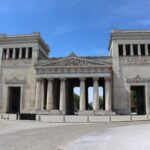
One of the most important stops is Königsplatz. This is where the tour’s framing becomes clear: Germany was coming out of World War I as a defeated and humiliated nation, while Munich faced hyperinflation and political violence. In that environment, the Nazi movement found fertile ground.
Königsplatz also works visually. It’s the kind of open, formal space that suits mass gatherings, uniforms, and the theater of power. Even if you don’t know the exact event names, you can feel why this mattered. The guide turns that feeling into context: how a movement grew, how ideas spread, and how public spectacle became a tool.
This stop is where the tour earns its seriousness. You’re not just learning what happened. You’re learning why people were ready to listen—then how propaganda weaponized that readiness.
Hofbräuhaus to Feldherrnhalle: mass meetings and a failed power grab
From there, the tour connects two very different but linked parts of the story.
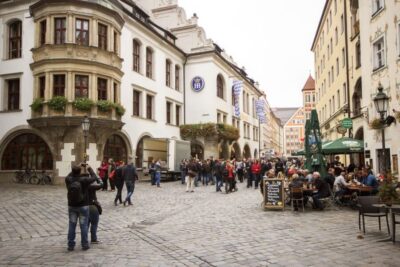
First comes the Hofbräuhaus connection. The tour explains how the Nazi movement moved from early mass attention into something broader and organized. Hofbräuhaus is famous in Munich for beer-hall culture, but in this context it becomes more than an icon. It becomes a stage: a place where large groups could hear messages and feel part of a bigger wave.
Then you head to Feldherrnhalle, where the focus shifts to an attempt to seize power that ultimately failed. This matters because it breaks a common misconception. The Nazi rise wasn’t just inevitable destiny. There were power attempts, setbacks, and tactics that evolved.
In a good guide-led walk, these stops don’t feel like separate postcards. They feel linked. You start to see a pattern: propaganda first, then pressure, then control.
Hofgarten and the White Rose: showing the other side
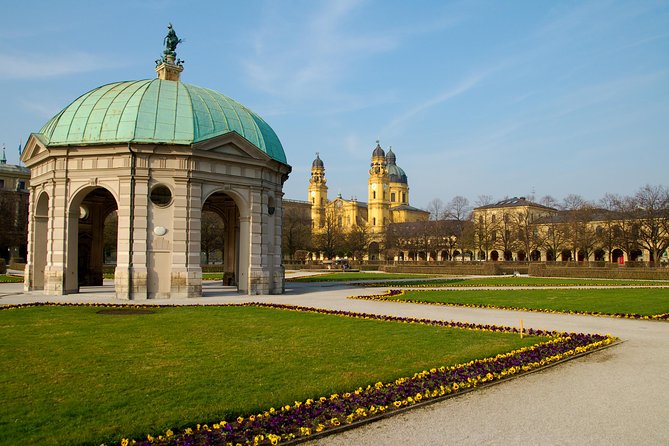
A standout part of this tour is that it doesn’t stop at Nazi symbols. You also spend time around the Hofgarten area where the tour talks about the White Rose resistance movement.
That choice changes the emotional shape of the walk. It’s not denial or balancing for the sake of balance. It’s a necessary reminder: even within a system built to demand obedience, there were people who refused to go along.
So when the guide discusses the White Rose, it lands differently than the rally sites. The message isn’t about crowds and spectacle. It’s about conscience, risk, and the cost of opposing the regime.
Guides also tend to handle this section with care. One group leader reportedly paused to let people absorb what they heard, then invited reflection and discussion. That’s exactly the right approach for this topic.
Hitler’s former HQ area: your finish point and what to do with it
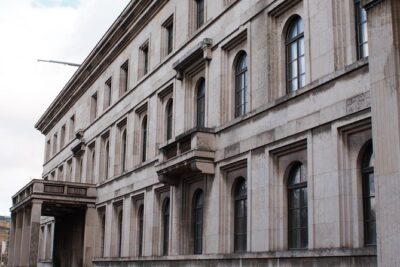
The tour ends at Königsplatz 1, at the area tied to Hitler’s former headquarters. Ending here gives you a kind of mental full stop: you’ve traced the rise, and now you reach the seat of power.
If you want to keep the momentum after the walk, plan to spend a little time in the museum or documentation space at/near the finish area. One guide suggested going inside for stronger exhibits, including films, photographs, and art from the time. That’s worth your time if you learn better with visual material after walking the outdoor route.
Tip: if you’re cold or your feet are done, you can still get value here. This is not a place you need to rush through.
Guides make the difference: what you should look for
The guides listed for this tour include Michael, Alex, Josh, Ulrich, Danielle, Joel, and Bridget. Across them, the pattern from the way the tour is delivered is clear: the best moments are when the guide connects building to event and event to human behavior.
You’ll also notice that different guides handle the emotional load in different ways, but they all seem to aim for:
- Honest, factual context
- Sensitivity around tragic events
- A willingness to welcome questions and discussion
One detail I’d take seriously: some people noted the guide can be hard to hear, especially in cold weather or noisy streets. If that happens to your group, don’t panic. Stand closer to the guide, avoid drifting, and ask your question right away rather than waiting for later.
Value and price: is $35.09 worth it?
At $35.09 per person for about 2 hours 45 minutes, you’re paying for three things:
1) access to a structured route through important sites
2) a guide to connect those sites into a coherent story
3) a small-group format that makes questions possible
If you tried to do this alone, you could cobble together stops using maps and a few guidebook pages. But you’d lose the real advantage: the guide’s ability to explain why these places mattered at each step, and what to notice while you’re standing right there.
There’s also a hidden value factor: you don’t waste time guessing. You get a planned route that fits together, from mass meetings to attempted coups to resistance context, finishing near the center of Nazi power.
One item to note: admission ticket is not included (so if the walk ends by a museum/documentation space that requires entry, budget for that separately).
What to bring and how to handle a cold, crowded city
This walk is outdoors for a long stretch, and Munich weather can be stubborn. Even in decent conditions, you’ll stand still long enough for your body to complain.
Bring:
- A snack and water. There’s little time to rest, and you’ll enjoy the tour more if you’re not running on empty.
- Warm layers, especially gloves if you’re walking in colder months.
- Comfortable shoes with grip. You’re stopping and starting on uneven surfaces and near busy areas.
Also, mentally prepare yourself for the tone. This isn’t light sightseeing. It’s respectful, but it’s not shy about the Nazi story and WWII-era realities. That’s the point.
Who this tour suits best (and who might skip it)
This is a strong fit if:
- You want a focused Munich Third Reich orientation without spending an entire day hopping between separate sites.
- You like factual context that explains how people and politics moved from one step to the next.
- You’re interested in both Nazi power and the White Rose resistance counterpoint.
You might hesitate if:
- You’re looking for a relaxed, casual stroll. This walk is packed and serious.
- You’re traveling with kids under 12, since the tour specifically is not recommended for that age group.
- You hate standing and walking for nearly three hours.
If you’re a WWII beginner, you can still enjoy it—just know the guide will cover a lot. Good pacing and question time can make it manageable, but you should expect density.
Quick practical FAQ
FAQ
How long is the Third Reich & WWII walking tour in Munich?
It runs about 2 hours 45 minutes.
Where does the tour start and where does it end?
It starts at Marienplatz, 80331 München, Germany, and ends at Königsplatz 1, 80333 München, Germany, in the area tied to Hitler’s former headquarters.
Is the tour offered in English?
Yes, it’s offered in English.
How much does it cost?
The price is $35.09 per person.
Is food or drink included?
No. Food and drinks are not included.
Is hotel pickup included?
No. Hotel pickup and drop-off are not included.
Are admissions included?
An admission ticket is not included.
Is the group small?
Yes. It’s limited to a small group (with 10 people mentioned) and has a maximum of 30 travelers.
Can I cancel and get a refund?
Yes, free cancellation is offered. You can cancel up to 24 hours in advance for a full refund.
Should you book this Third Reich walking tour?
Yes, if you want an organized, respectful way to understand Munich’s role in the Nazi rise and WWII-era life. The value is in the route logic—major sites connected into one story—and in the small-group guide-led format that helps you ask questions instead of just reading plaques.
Book it especially if you’re short on time and want to see Königsplatz, Feldherrnhalle, and Hofbräuhaus in one morning. Just go prepared: bring a snack, dress warm, and give yourself a moment to absorb what you’re learning when the tour turns to resistance and the human cost of the era.
More Altstadt and Marienplatz Walks
More Third Reich and WWII History in Munich
Just added to the Munich Explorer notebook
Third Reich & WWII History Tours, compared.
 ★ 4.6Third Reich & WWII Walking TourFrom $316,181 reviews
 ★ 4.5Third Reich Walking Tour MunichFrom $454,291 reviews
 ★ 4.6Birthplace of the Third Reich Guided Walking TourFrom $29771 reviews
 ★ 4.5Munich World War II Sites Including Dachau Concentration CampFrom $105570 reviews
 ★ 5.0Munich City Walking Tour, includes Third Reich & ViktualienmarktFrom $31458 reviews
 ★ 4.9Munich 3-Hour Segway Tour: Nazi Munich & Royal ArchitectureFrom $91194 reviews
 ★ 5.0Dachau Concentration Camp Memorial Site And Third Reich Day Tour From MunichFrom $145185 reviews
 ★ 5.0Munich in the 3rd Reich and WW2 private walking tourFrom $423148 reviews
Browse the lists this tour appears in