
Reviewed · THIRD REICH & WWII HISTORY TOURS
Munich City Walking Tour, includes Third Reich & Viktualienmarkt
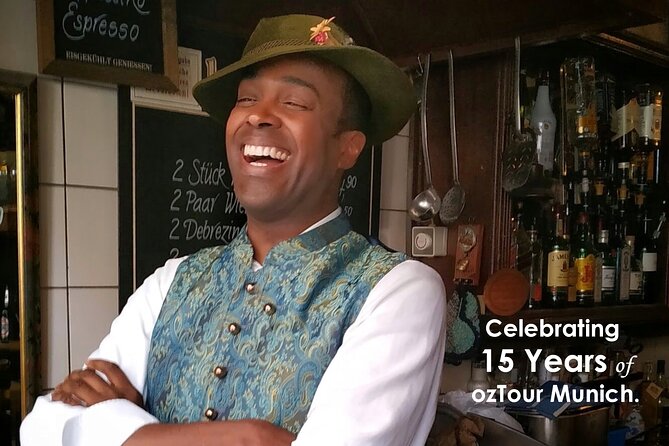
Munich clicks into place fast on foot. I love how the guide, especially Ozzie, connects big sights to everyday life and even Germany’s present-day mood, and you’ll also get a real food break at Viktualienmarkt instead of just rushing past shops. One watch-out: this tour is outdoors a lot, so in cold weather you’ll want to dress warm and accept some standing time.
This is a small-group walk (max 20), built for first-time visitors who want practical city tips while seeing iconic places. You’ll pass by Munich’s twin-towered skyline icons, medieval gates, major squares, and several churches, with a mid-tour pause that feels more like eating with locals than touring a landmark.
In This Review
- Key highlights to look for on this Munich walk
- A 3.25-hour Munich intro that helps you move like a local
- Price and what $31.78 gets you (and what you’ll still pay for)
- Starting at Schützenstraße: how the route sets your bearings
- Frauenkirche: Munich’s twin-tower icon and the Devil’s Footstep
- German Hunting and Fishing Museum: stuffed animals, real artifacts, and a Bavarian twist
- Hofbräuhaus: beer hall history without turning it into a party trap
- Isartor and Karl Valentin: a medieval gate with comedy DNA
- Marienplatz and New Town Hall: the square you’ll keep returning to
- Max-Joseph-Platz: theater and power nearby, but still walkable
- Odeonsplatz and Feldherrnhalle: how Munich remembers the darkest chapter
- Churches and views: St. Michael, St. Peter, and the city from above
- Platzl, Karlsplatz, and Wolfsbrunnen: small details that make the day feel real
- Maximilianeum: education to government, above the Isar
- Viktualienmarkt lunch break: how to eat like you actually live here
- Who this tour suits best (and who might want a different plan)
- Practical ways to get more from the walk
- Should you book this Munich walking tour?
- FAQ
- How long is the Munich City Walking Tour with Third Reich & Viktualienmarkt?
- What is the price per person?
- Is the tour offered in English?
- How large is the group?
- Where does the tour start and end?
- What is included in the ticket price?
- Are snacks included during the lunch break?
- Do you need to buy admission tickets at the stops?
- Are service animals allowed?
- What is the cancellation policy?
- Is the tour near public transportation?
Key highlights to look for on this Munich walk
- Ozzie-led storytelling that ties monuments to modern context, not just dates
- A Viktualienmarkt lunch break with Bavarian choices you can actually order and enjoy
- Third Reich context around Odeonsplatz/Feldherrnhalle, handled in a careful, educational way
- Church stops with payoff: legendary details like the Devil’s Footstep and big-city views
- Route that teaches navigation, including shortcuts and how to move between central sights
- Small group size so you can ask questions and regroup easily
More walks tracing Munich Third Reich and wartime history
- Munich: Third Reich & WWII Walking Tour★ 4.6 · 6,181 reviews
- Third Reich Walking Tour Munich★ 4.5 · 4,291 reviews
- Munich: Birthplace of the Third Reich Guided Walking Tour★ 4.6 · 771 reviews
- Munich World War II Sites Including Dachau Concentration Camp★ 4.5 · 570 reviews
A 3.25-hour Munich intro that helps you move like a local
If you want Munich to stop feeling like a list of photos, this walk is a strong start. The rhythm is simple: you get to see headline sights, then the guide adds what they mean and how to handle them as you explore later on your own. You’re not just learning what’s where; you’re learning how to use the city.
I like that the guide focuses on practical decisions too. You get tips on where to spend time, how to pace yourself, and how to plan around Munich’s layout so you don’t zigzag in the wrong direction.
The guide also brings the story forward. One of the most praised strengths from the people who do this tour is that they don’t treat the past like a museum piece only. The Third Reich material is presented with context, and the talk extends into present-day Germany so the monuments feel less random and more human.
Price and what $31.78 gets you (and what you’ll still pay for)
At $31.78 per person, this tour is priced like a value play: you’re paying for a guided walk, not for admission tickets to a private museum experience. Most of the stops you’ll be standing at are marked as free to enter, so the main cost driver is the guide plus the time together.
One extra item to budget for: the tour includes a mid-tour lunch stop at Viktualienmarkt, but snacks or food you buy there are not included in the tour price. The menu examples point toward classic options like a Bavarian bratwurst or Bavarian potato salad with pretzel, plus a beer.
If you’re the type who hates adding surprise costs later, this is still manageable. You’re choosing your own lunch-and-beer moment in one convenient place rather than hunting around hungry.
Starting at Schützenstraße: how the route sets your bearings
The walk starts at Schützenstr 11 and ends at Odeonsplatz (Odeonspl. 3). That matters more than you’d think, because it shapes where you end the day: Odeonsplatz is a natural hub for getting around afterward.
Expect a steady flow of sights with short time at each stop. This tour works best when you treat it like a guided city orientation, not like a slow museum day. You’re there to learn what’s important and why, then use that knowledge to decide what’s worth revisiting.
With a max group size of 20, it’s also easier to track where you’re going. You can keep up, and you’re not constantly stuck behind a crowd.
More grazing through the Viktualienmarkt stalls
- Munich: Old Town & Viktualienmarkt City Walk in German
★ 4.7 · 2,304 reviews - Munich: Viktualienmarkt Food Tour
★ 4.5 · 1,127 reviews - Munich: Walking Tour Old Town and Viktualienmarkt
★ 4.7 · 839 reviews
Frauenkirche: Munich’s twin-tower icon and the Devil’s Footstep
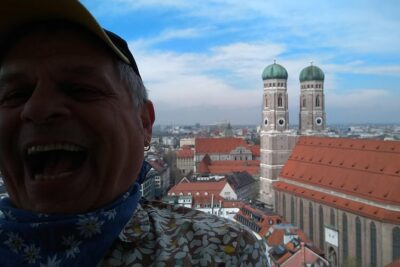
Your first big landmark is the Frauenkirche, Munich’s legendary twin-towered cathedral. It’s a late Gothic icon from the 15th century and it’s still tied to the Catholic hierarchy in the city as the seat of the Archbishop of Munich and Freising.
What you’ll get from this stop is less about “walk in and look up” and more about learning what to notice. The guide typically points out the cathedral’s scale and interior highlights, including the historic crypt and the story of the Devil’s Footstep.
A practical tip: even if you’re not going deep into architecture, this is the kind of place where context changes everything. After a few minutes of explanation, you start to see the building as a symbol with meaning in Munich’s identity.
German Hunting and Fishing Museum: stuffed animals, real artifacts, and a Bavarian twist
Next comes a surprising pivot: the German Hunting and Fishing Museum in a former Augustinian church. You’ll see a huge exhibit area (3,000 square meters) that covers hunting and fishing through time with items like stuffed wildlife, antique weapons, and a focus on regional legends.
The feature people love here is the Wolpertinger—those legendary creatures tied to Bavarian imagination. It’s the kind of detail that makes the stop memorable even if hunting-and-fishing museums aren’t your usual plan.
If you prefer hands-on experiences over reading, this stop may feel more exhibit-based than theatrical. Still, it’s a great contrast to the cathedral-and-square route and it adds a distinctly Bavarian flavor to the day.
Hofbräuhaus: beer hall history without turning it into a party trap
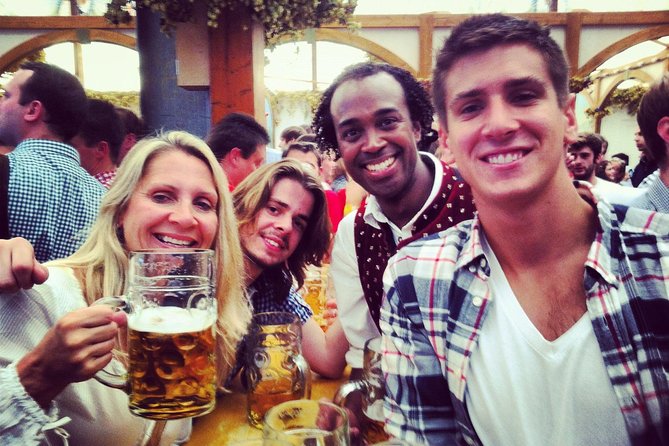
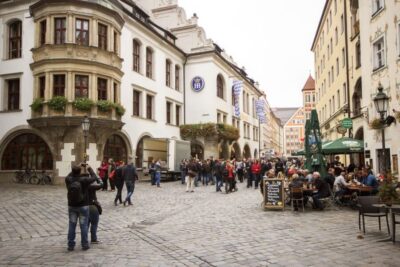
At Staatliches Hofbräuhaus, you’re stepping into a place that dates back to 1589 and still functions as a beer hall anchored by tradition. The hall is famous for its home-brewed Bavarian beer, hearty food, and live traditional music—so even a short stop can feel like you entered a living Munich ritual.
What I like about including Hofbräuhaus early is that it helps you understand the social role of beer halls here. Munich doesn’t treat beer as a random drink; it treats it like part of the city’s rhythm and community storytelling.
One consideration: during peak times, Hofbräuhaus can feel crowded and loud. Since the tour stop here is brief, don’t expect a leisurely sit-down. Use it as a landmark moment and a chance to learn how to return on your own schedule if you want.
Isartor and Karl Valentin: a medieval gate with comedy DNA

Then you shift from beer hall legend to medieval city structure at Isartor. This gate dates to 1337 as part of Munich’s fortifications and includes a central tower and historic frescoes.
The clever part is that the Isartor stop isn’t just about stone. It also connects to the Valentin-Karlstadt Museum, dedicated to Bavarian comedian Karl Valentin. You come away seeing how Munich preserves culture in unexpected places, not only in palaces or big churches.
If you’re short on time and want to taste Munich’s personality beyond tourist landmarks, this is a good stop. Comedy is a cultural mirror, and here it’s literally built into the route.
Marienplatz and New Town Hall: the square you’ll keep returning to
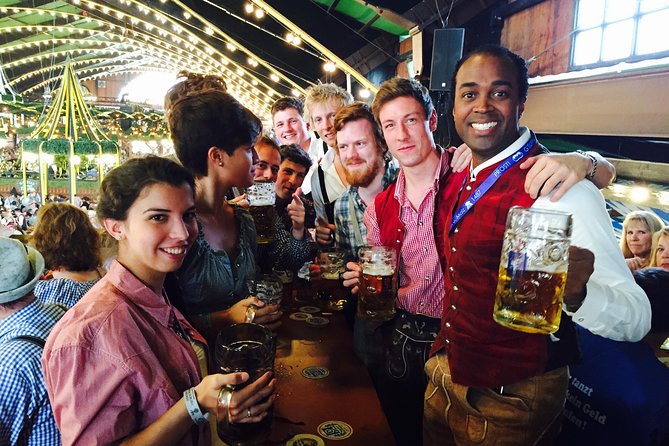
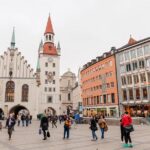
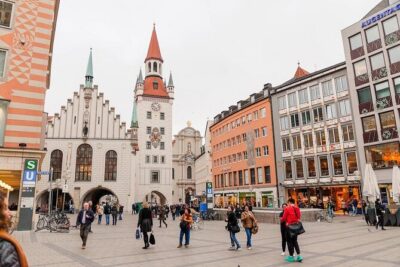
Marienplatz is the center of Munich, rooted in the city since 1158. This is where you’ll see the New Town Hall and the famous Glockenspiel, plus nearby landmarks like the Mariensäule.
The tour doesn’t try to turn this into a lecture marathon. Instead, it orients you to the layout: which streets pull you toward shopping, how the square connects to other districts, and what’s worth revisiting later.
A small practical note: Marienplatz is busy. If you want photos, keep your expectations realistic. You may get a good view while moving, but you’ll likely need a return trip if you want a perfectly timed shot of the Glockenspiel.
Max-Joseph-Platz: theater and power nearby, but still walkable
At Max-Joseph-Platz, you’re in a grand square tied to major institutions. The area connects to the National Theatre and the Munich Residenz, which gives you a sense of how Munich places culture next to political and historical weight.
Even in a short stop, it’s worth listening for what the guide points out about the architecture and the meaning behind the street power. Munich often feels “orderly” in layout, but the order tells you how the city values institutions.
This section is also useful for planning. Once you understand where Max-Joseph-Platz sits, you can better link your next walks toward the Residenz area without getting lost.
Odeonsplatz and Feldherrnhalle: how Munich remembers the darkest chapter
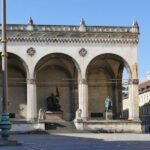
This is one of the key reasons to choose this specific tour. At Odeonsplatz, the guide takes you through the Theatine Church, the Feldherrnhalle, and the Residenz area—plus how this part of town ties into Germany’s heavy political story.
The Feldherrnhalle is tied to the Nazi era, and the tour’s topic name reflects that. Expect careful, educational framing rather than shock-value storytelling. The goal is to help you read the space—why certain buildings were positioned the way they were and how Munich has had to live with that legacy.
One of the strongest praised aspects is that the guide connects historical events to present-day thinking, including how people discuss politics now. That makes the stop feel less like a “don’t look at it” moment and more like a “learn how to interpret it” moment.
Churches and views: St. Michael, St. Peter, and the city from above
Next you’ll hit two very different church experiences.
St. Michael München is Munich’s largest Renaissance church and a center connected to the Jesuits. It has a striking facade and a barrel-vaulted interior, and you can learn about its royal crypt, where Bavarian rulers are laid to rest. This is a stop where the guide helps you see church design as power, not only worship.
Then you move to St. Peter’s Church, known as Alter Peter, Munich’s oldest parish church dating back to the 12th century. The big payoff here is the 91-meter tower for views, plus the mix of Gothic, Baroque, and Rococo elements inside.
If you’re choosing between climbing a tower and taking more photos, this is where your priorities should guide you. Even if you skip the climb, the guide’s explanations help you appreciate the layered design choices.
Platzl, Karlsplatz, and Wolfsbrunnen: small details that make the day feel real
Along the way, you’ll see a cluster of “in-between” Munich spots that many people skip.
Platzl is a charming historic square in the old center area, associated with traditional Bavarian atmosphere and classic Munich architecture. It’s also close to the Hofbräuhaus zone, which helps you understand how these landmarks connect as one walkable world.
Then there’s Karlsplatz, locally known as Stachus. It features the Karlstor gate and changes character by season, including an ice rink in winter. This stop is a reminder that Munich keeps using its historic bones while changing the public vibe around them.
Finally, Wolfsbrunnen brings in Art Nouveau with an entertaining story: built in 1904, it features a bronze depiction of Little Red Riding Hood and a wolf, commissioned by the Wolf family. Even if you only get a quick look, you’ll remember the image afterward, which is more than you can say for most fountains.
Maximilianeum: education to government, above the Isar
At the Maximilianeum, you’re looking at a building tied to the education of gifted students and later connected to government. It was founded by King Maximilian II in 1852, and since 1949 it has housed the Bavarian State Parliament.
The guide also frames it in terms of location: it sits perched above the Isar River, so you feel how Munich uses elevation and river geography to shape landmarks. This is one of those stops that helps you “read” the city spatially.
If you like architecture with a story, this is a satisfying addition. It’s not just pretty; it’s a timeline in stone and institutional purpose.
Viktualienmarkt lunch break: how to eat like you actually live here
The most practical moment of the tour is the mid-tour break at Viktualienmarkt. This open-air market has been a vibrant food hub since the early 19th century, and it’s the kind of place where you can grab a Bavarian snack without turning it into a planned sit-down meal.
I like that the lunch stop isn’t vague. You’re pointed toward classic choices such as Bavarian bratwurst, Bavarian potato salad with pretzel, and a beer. The market setting also makes it easy to decide fast, especially if you’re cold and want something warm soon.
One extra detail that stands out from the provided menu description: the selections are described as having no artificial flavors, colors, preservatives, additives, fillers, or GMOs. I can’t tell you how every stall operates, but it’s a clear signal that the tour’s lunch moment aims at straightforward, ingredient-conscious food.
Timing tip: arrive hungry but don’t rush. Use the stop to reset, then come back to the walk with energy. If you’re traveling with kids or anyone who needs breaks, this is the natural pause point.
Who this tour suits best (and who might want a different plan)
This walking tour is perfect if you’re visiting Munich for the first time and you want a guided start that helps you plan the rest of your trip. It’s especially good for people who want a guide who can answer how-to questions—where to go next, how to approach the city, and what to prioritize.
It also fits well with solo travelers and couples because the group is small. You’ll meet like-minded people without feeling swallowed by mass tourism.
If you hate standing around while someone talks for extended periods, you might find the outdoor pace challenging in bad weather. Some people also wished for more time focused on certain topics, so if you’re mainly here for the Third Reich material only, you might want a separate, dedicated deep-focused experience too. This one is more of a balanced overview built for navigation and context.
Practical ways to get more from the walk
This is a 3+ hour walk, and a lot of it is outdoors. Wear layers, bring gloves if it’s chilly, and keep a steady pace rather than stopping to read every plaque.
When the guide gives directions on how to move between sights, take it seriously. Those little navigation tips often save you from backtracking later, especially around central squares.
Also, pay attention to regroup points. Since the tour ends at Odeonsplatz, it’s worth staying aware of where the group will finish and how you’ll rejoin at the end of the walk. If you plan to grab something extra near a stop, make sure you know where everyone is meeting next.
Should you book this Munich walking tour?
Book it if you want a strong first-day framework: major landmarks, street-level guidance, and a lunch stop that keeps food in the story. The standout value is the guide approach, especially with Ozzie, who brings context, practical navigation tips, and thoughtful framing for the Nazi-era material near Odeonsplatz/Feldherrnhalle.
Skip it or pair it with something else if you’re expecting a slow-paced, linger-at-each-site tour or if you want a heavy emphasis on one single theme. This is a well-rounded orientation walk where you’ll learn enough to make smart choices for what to do next.
If you’re planning Munich on a first visit and want to feel oriented fast, this one is an easy “yes.”
FAQ
How long is the Munich City Walking Tour with Third Reich & Viktualienmarkt?
It lasts about 3 hours and 15 minutes.
What is the price per person?
The price is $31.78 per person.
Is the tour offered in English?
Yes, it is offered in English.
How large is the group?
The tour has a maximum of 20 travelers.
Where does the tour start and end?
It starts at Schützenstr 11, 80335 München, Germany and ends at Odeonsplatz (Odeonspl. 3, 80539 München, Germany).
What is included in the ticket price?
The guided tour is included.
Are snacks included during the lunch break?
No. The tour includes a pause mid-tour for freshly made Bavarian lunch in Viktualienmarkt, but snacks/food are not included.
Do you need to buy admission tickets at the stops?
Many stops are listed with free admission ticket information, based on the tour details provided.
Are service animals allowed?
Yes, service animals are allowed.
What is the cancellation policy?
Free cancellation is available up to 24 hours in advance for a full refund. Canceling less than 24 hours before start time is not refundable.
Is the tour near public transportation?
Yes, it is near public transportation.
More Altstadt and Marienplatz Walks
More of the Viktualienmarkt



More Third Reich and WWII History in Munich

Just added to the Munich Explorer notebook
Third Reich & WWII History Tours, compared.
 ★ 4.6Third Reich & WWII Walking TourFrom $316,181 reviews
 ★ 4.5Third Reich Walking Tour MunichFrom $454,291 reviews
 ★ 4.6Birthplace of the Third Reich Guided Walking TourFrom $29771 reviews
 ★ 4.5Munich World War II Sites Including Dachau Concentration CampFrom $105570 reviews
 ★ 4.5Third Reich & WWII Walking TourFrom $35417 reviews
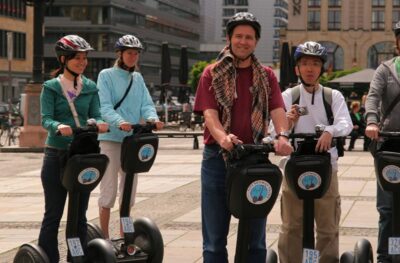 ★ 4.9Munich 3-Hour Segway Tour: Nazi Munich & Royal ArchitectureFrom $91194 reviews
 ★ 5.0Dachau Concentration Camp Memorial Site And Third Reich Day Tour From MunichFrom $145185 reviews
 ★ 5.0Munich in the 3rd Reich and WW2 private walking tourFrom $423148 reviews
Browse the lists this tour appears in