
Reviewed · THIRD REICH & WWII HISTORY TOURS
Munich: Third Reich & WWII Walking Tour
A dark lesson, told street by street. This Munich walking tour traces Hitler’s rise from early rallies in a city trying to recover after World War I, to the public spaces where the Nazi movement staged its power. You’ll walk where history was argued, cheered, and weaponized.
I like the way the tour ties the big timeline to specific places, especially the shift from post–World War I chaos into organized Nazi momentum. I also love that the White Rose Resistance Movement gets real space in the story, not treated as a footnote.
One thing to consider: this is a heavy subject. If you’re looking for a light, feel-good stroll, you might find the tone and topics mentally taxing, especially in cold weather on a 2.5-hour walk.
In This Review
- Key highlights worth your attention
- A street-level story of how Nazism gained traction in Munich
- The 165 minutes that keep moving (and why pace matters)
- Hofbräuhaus: where the early mass meeting helped the movement grow
- Feldherrnhalle: propaganda and the attempt to seize power
- Königsplatz and the Nazi rallies: why these spaces still matter
- Hofgarten and the White Rose Resistance Movement: a needed counterpoint
- Guides, voice, and the cold reality of an outdoor walk
- Price and value: $31 for a 165-minute guided, site-based history
- Who should book this tour, and who might want another fit
- Should you book the Munich Third Reich & WWII walking tour?
- FAQ
- How long is the Munich Third Reich & WWII walking tour?
- How much does the tour cost?
- What languages are available for the guided tour?
- Where is the meeting point?
- Is the tour guided or self-guided?
- Which key sites will we visit?
- Does the tour cover the White Rose Resistance Movement?
- What should I bring?
- Is free cancellation available?
- Can I pay later, and is the tour accessible?
Key highlights worth your attention
- Hofbräuhaus to Hitler’s first big mass meeting and how public gatherings helped build momentum
- Feldherrnhalle and the failed power grab, explained with the political temperature of the moment
- Königsplatz as a stage for Nazi rallies, showing how public space can be used for propaganda
- A stop in the Hofgarten for the White Rose Resistance Movement, adding moral contrast to the march of events
- Guides who keep the group moving and their voice carrying, even when it’s cold and windy
More walks tracing Munich Third Reich and wartime history
- Munich: Third Reich & WWII Walking Tour★ 4.6 · 6,181 reviews
- Third Reich Walking Tour Munich★ 4.5 · 4,291 reviews
- Munich: Birthplace of the Third Reich Guided Walking Tour★ 4.6 · 771 reviews
- Munich World War II Sites Including Dachau Concentration Camp★ 4.5 · 570 reviews
A street-level story of how Nazism gained traction in Munich
This tour works because it doesn’t treat Nazism like a distant idea. It shows how it grew in a real place—Munich—during a time when Germany was bruised and unstable. After World War I, Germany was a defeated nation, and Munich was dealing with hyperinflation and a climate of revolution and violence. That mix mattered. It helped people feel like rules had broken, and new movements could promise order, belonging, and revenge.
What you’ll get is a guided walk through turning points. You start with the earliest public organizing that helped Adolf Hitler’s movement take shape. Then you track how the movement’s footprint expanded across the city, using visible locations to project strength. By the time the walk reaches the larger rally grounds, you understand why these sites are still emotionally charged today.
Most people come for the famous names on the signs and buildings. I’d say you stay for the cause-and-effect thread: how desperation, street politics, and propaganda messages can combine into something terrifying.
The 165 minutes that keep moving (and why pace matters)
The tour runs about 2.5 hours (165 minutes), which is a solid length for a walking history lesson without turning into a long grind. You’ll make stops frequently enough to break up the walk, so you’re not just trudging between points while trying to hear your guide over city noise.
Also, the guides get repeatedly praised for two practical things: clarity of delivery and keeping the group engaged. You’ll hear the story in English or German depending on your booking. Many reviews call out guides by name—Michael, Steve, Josh, Alex, Danielle, Florian, Ulrich, and Brigit Muller—and the consistent theme is that the talk stays respectful while still feeling lively. When it’s cold, some guides even look after comfort; for example, reviews mention hot tea and seating pads or mats when people have to pause outdoors.
Plan to come with comfortable shoes and the mindset of a walking seminar. You won’t just skim the surface. You’ll connect political events to places you can point at on a map when you’re done.
Hofbräuhaus: where the early mass meeting helped the movement grow
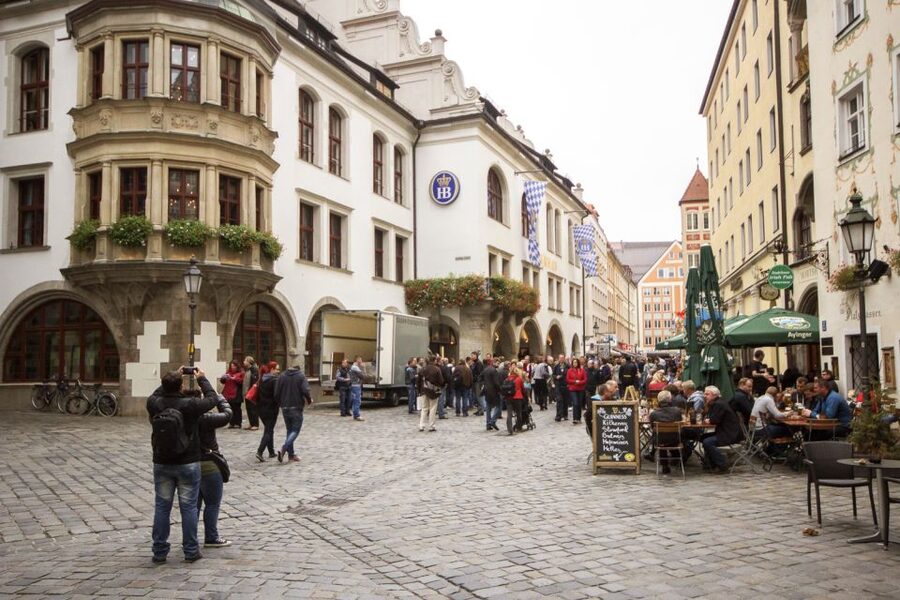
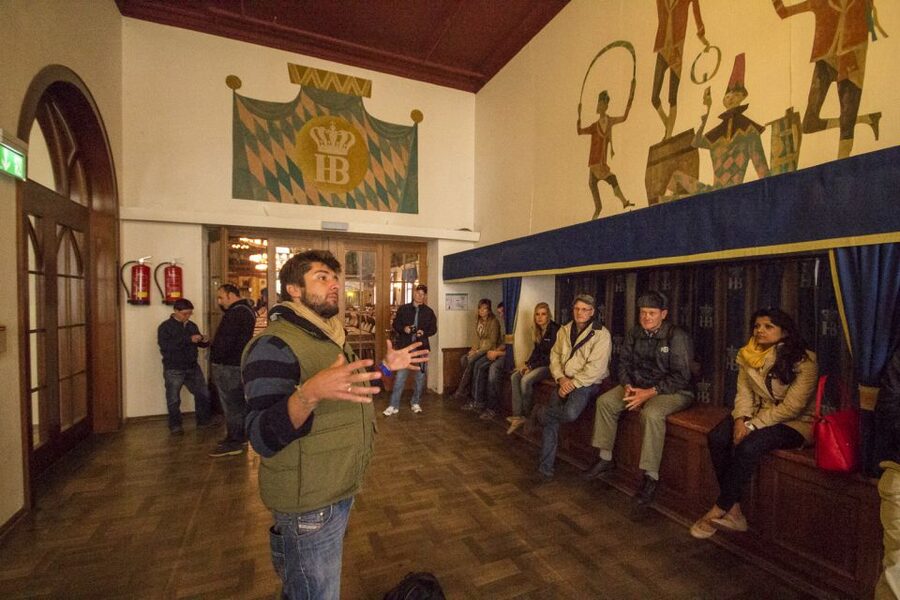
One of the first stops is the Hofbräuhaus, a classic Munich beer hall that also played a role in the early rise of Hitler’s movement. This is where the tour starts to explain how public gatherings can become recruitment machines. When the city is politically volatile and the public is hungry for meaning, a crowded meeting can feel like a solution.
What makes this stop valuable is the contrast. You’re in a famous, social landmark—then your guide reframes it as a political stage. The guide walks you through the first mass meeting and connects it to the bigger story: post–World War I humiliation, political instability, and how Nazism used mass events to build momentum.
Even if you already know basic German history, this approach helps you see the mechanism. It’s not magic. It’s organizing. It’s timing. It’s turning a room full of people into a movement that spreads.
More laps of the Altstadt and Marienplatz
- Munich: Old Town & Viktualienmarkt City Walk in German
★ 4.7 · 2,304 reviews - Munich: Night Watchman Walking Tour
★ 4.7 · 2,092 reviews - Munich Ghosts and Spirits Evening Walking Tour
★ 5.0 · 1,900 reviews
Feldherrnhalle: propaganda and the attempt to seize power
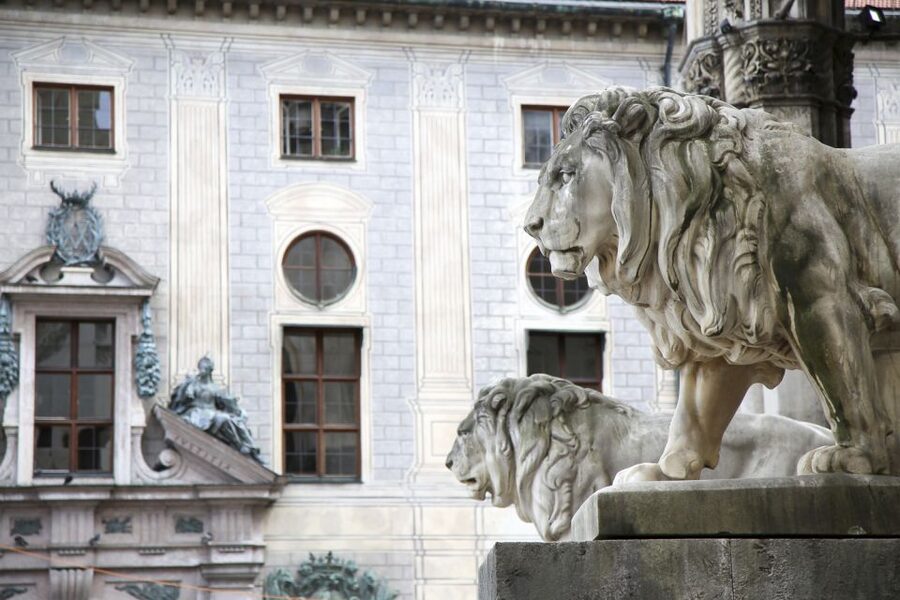
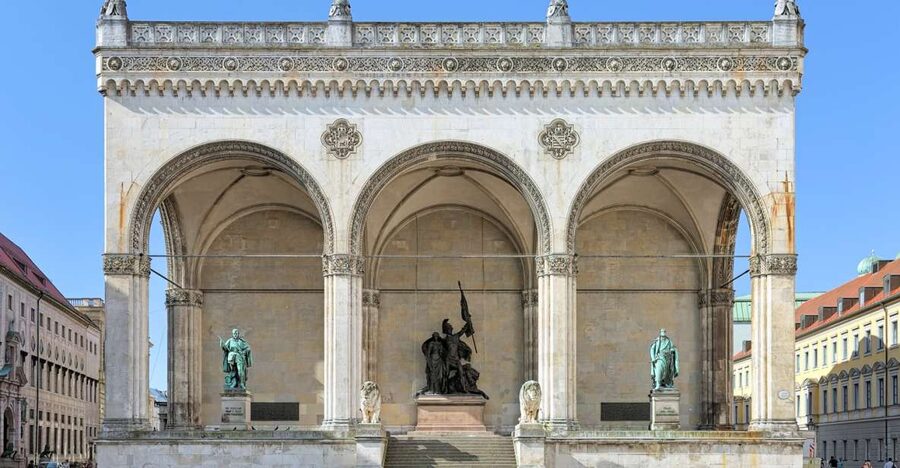
Next you’ll visit Feldherrnhalle, another site tied to the movement’s dramatic public ambitions. This stop focuses on the failed attempt to seize power and how that moment fit into the broader struggle for authority in Bavaria’s political climate.
This is where the tour gives you a sense of stakes. The story isn’t only about who won later; it’s about who tried, how they tried, and what those attempts signaled to supporters and opponents. Your guide helps you understand why public political theater mattered so much—and why the Nazis would later double down on controlled spectacle.
Drawback here: the topic can feel relentless. You’re learning about power plays and attempts to grab control, and the emotional tone is understandably heavy. If you’re sensitive to difficult history, mentally pace yourself and take a breath between points.
Königsplatz and the Nazi rallies: why these spaces still matter
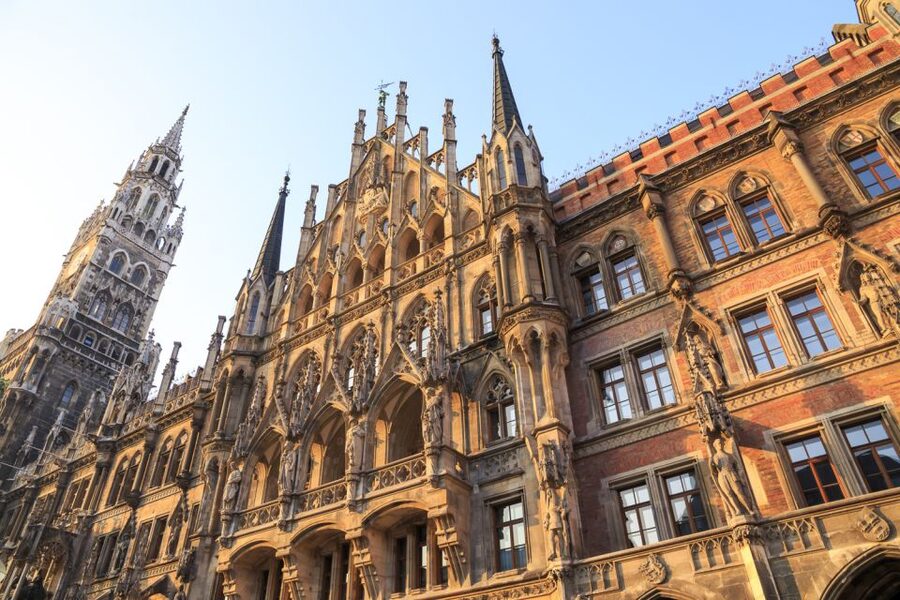
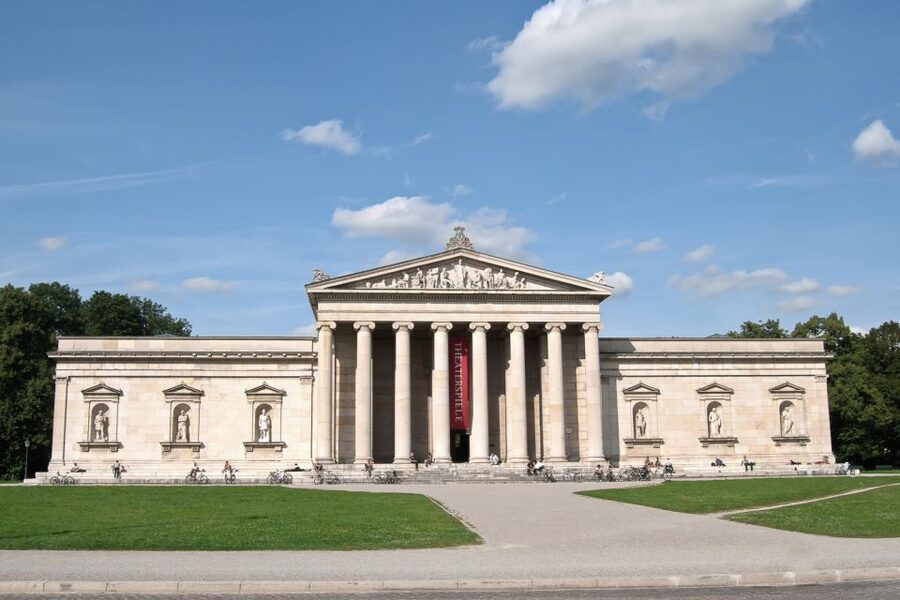
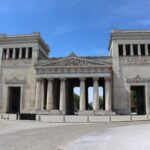
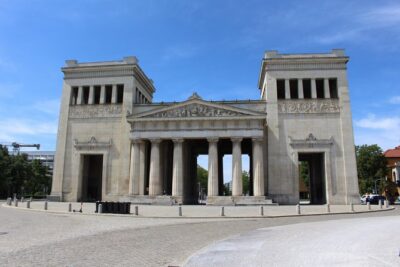
Then comes Königsplatz, which the tour presents as a key location for Nazi party rallies. This stop is more than sightseeing. It’s about learning how public architecture can amplify political messages.
From a practical visitor standpoint, Königsplatz helps you visualize scale: where crowds could assemble, where slogans and uniforms could dominate attention, and where the movement could project legitimacy. From a human standpoint, it’s unsettling—because the same open space that invites gatherings also became a tool for intimidation and propaganda.
What I like about this part of the tour is the way it connects earlier street-level recruitment to later mass messaging. You start with small-to-growing momentum at places like the Hofbräuhaus. Then the story widens to rally grounds where the movement could look bigger, more coordinated, and more inevitable.
Hofgarten and the White Rose Resistance Movement: a needed counterpoint
A key strength of this tour is that it doesn’t end at the rise. You also stop in the Hofgarten to talk about the White Rose Resistance Movement.
That matters because it changes your takeaway. Instead of only learning how Nazism gained traction, you also learn how some people pushed back when the danger was real. The White Rose part adds moral contrast and reminds you that resistance existed, not just in theory but in people’s choices under dictatorship.
If you’re doing this tour near other WWII sites later, this segment gives you a more complete mental picture. It helps you balance the mechanics of propaganda with the reality that not everyone accepted the script.
Guides, voice, and the cold reality of an outdoor walk
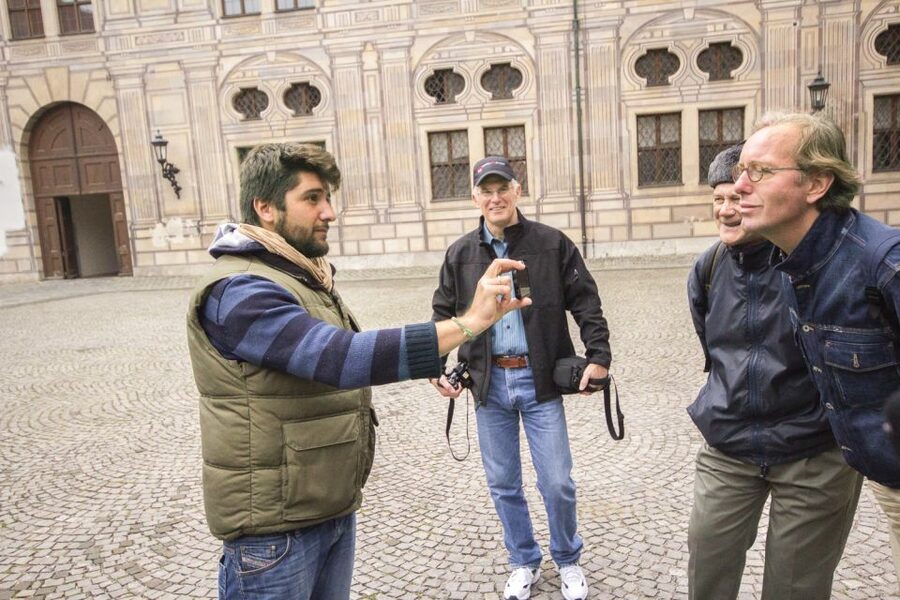
Based on the guide feedback, one of the biggest strengths here is delivery. Multiple reviews highlight guides like Michael and Steve for being clear and engaging, with voices loud enough to hear even in noisy outdoor spots. Others—Josh, Danielle, Alex, Florian, Ulrich, and Brigit Muller—get mentioned for blending facts with humor or a tone that stays respectful while still keeping attention.
Two practical tips I’d borrow from those experiences:
- Bring layers. Reviews repeatedly mention cold weather and recommend warm clothing.
- Wear shoes that handle slick pavement. This is still a walking tour, and you’ll be outside longer than you expect if the group stops often for explanation.
If you’re traveling with a history-loving friend group, this tour is the kind where you’ll have real conversations afterward—because it gives you points you can revisit with questions.
Price and value: $31 for a 165-minute guided, site-based history
At $31 per person for roughly 2.5 hours, this is priced like a budget-friendly walking tour, not a museum-only day. And that’s the point: you get a guided story tied to multiple meaningful locations in central Munich.
Where the value shows up is in the format:
- You’re not just reading plaques. You’re hearing how each location fits into the rise of Nazism and the broader WWII impact.
- The tour also includes a resistance story (White Rose), so the experience isn’t only about the perpetrators’ ascent.
- You get live interpretation in English or German, with the option for a private group.
If you’re comparing it to paying for a couple of individual museum entries plus a guide, this can feel like a smart “starter” that adds context quickly. It’s also a good use of half a day when you want something substantive without committing to a full museum schedule.
Who should book this tour, and who might want another fit
Book it if you:
- Want site-based context for Hitler’s rise and the Nazi movement in Munich
- Like guided narratives that connect politics to real street locations
- Want the White Rose Resistance Movement included in the story
- Appreciate guides who manage a group well and keep the pace steady
You might think twice if:
- You’re looking for a relaxed, casual walk. This one is emotionally serious.
- You’re uncomfortable with outdoor winter walking and long periods without indoor warmth.
- You prefer history delivered with lots of visuals rather than a guided street narrative (the format is walking and explanation, not a video experience).
The tour is wheelchair accessible, and private groups are available, so it can work for more travelers than a purely rugged sightseeing route.
Should you book the Munich Third Reich & WWII walking tour?
I think it’s a strong booking if you’re open to learning hard history in the place where it happened. The best reason to go is the structure: you start with early public organizing, move through key power-linked sites, and end with a resistance-focused counterweight.
If you’re the type who learns more when you can stand in front of the location and hear the story, this tour fits you. If you want a city tour that’s only about pretty streets and light culture, skip it and choose a different walk.
My practical call: if you can handle a dark topic and you’ll come prepared for cold outdoor walking, this $31 guided walk is a good value way to understand Munich’s role in the origins of the Third Reich—without losing the human thread of resistance.
FAQ
How long is the Munich Third Reich & WWII walking tour?
The tour lasts about 2.5 hours, or 165 minutes.
How much does the tour cost?
The price listed is $31 per person.
What languages are available for the guided tour?
The live tour guide is available in English and German.
Where is the meeting point?
The meeting point may vary depending on the option booked, so you’ll want to confirm it for your specific reservation.
Is the tour guided or self-guided?
It’s a guided tour with a live tour guide.
Which key sites will we visit?
You’ll visit the Hofbräuhaus, Feldherrnhalle, and Königsplatz, with a stop in the Hofgarten.
Does the tour cover the White Rose Resistance Movement?
Yes. The tour includes a stop in the Hofgarten to talk about the White Rose Resistance Movement.
What should I bring?
Wear comfortable shoes. If you’re visiting in cold weather, plan for outdoor walking.
Is free cancellation available?
Yes. You can cancel up to 24 hours in advance for a full refund.
Can I pay later, and is the tour accessible?
You can reserve now and pay later. The tour is wheelchair accessible, and private group options are available.
More Altstadt and Marienplatz Walks
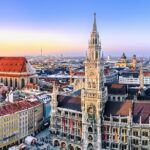
More Third Reich and WWII History in Munich


Just added to the Munich Explorer notebook
Third Reich & WWII History Tours, compared.
 ★ 4.5Third Reich Walking Tour MunichFrom $454,291 reviews
 ★ 4.6Birthplace of the Third Reich Guided Walking TourFrom $29771 reviews
 ★ 4.5Munich World War II Sites Including Dachau Concentration CampFrom $105570 reviews
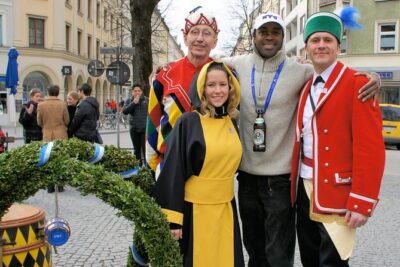 ★ 5.0Munich City Walking Tour, includes Third Reich & ViktualienmarktFrom $31458 reviews
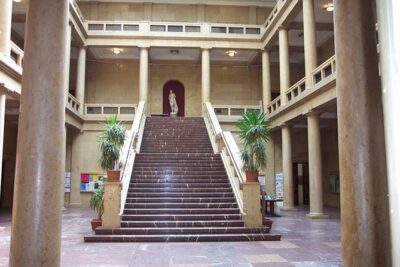 ★ 4.5Third Reich & WWII Walking TourFrom $35417 reviews
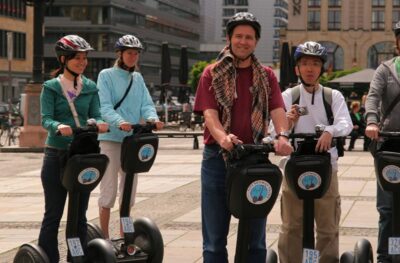 ★ 4.9Munich 3-Hour Segway Tour: Nazi Munich & Royal ArchitectureFrom $91194 reviews
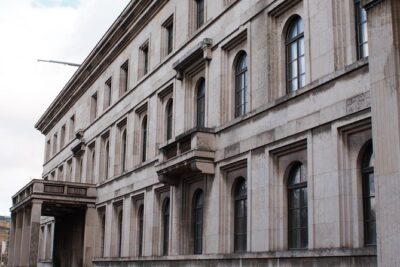 ★ 5.0Dachau Concentration Camp Memorial Site And Third Reich Day Tour From MunichFrom $145185 reviews
 ★ 5.0Munich in the 3rd Reich and WW2 private walking tourFrom $423148 reviews
Browse the lists this tour appears in