
Reviewed · THIRD REICH & WWII HISTORY TOURS
Munich in the 3rd Reich and WW2 private walking tour
Munich’s WWII story starts in plain sight. This private walk traces how the city became the spiritual home of the Nazi movement, with undivided guide time and photos, memorabilia, and props that turn headlines into a clear timeline (guides like Taff, Kevin, and Joanne are known for this style). You’ll like the way the tour focuses on the key turning points—Versailles to the Beer Hall Putsch, Crystal Night to the Holocaust’s origins, and on to bombing and 1945—without rushing past the hard parts.
One possible drawback: it’s heavy history and it involves a moderate amount of walking in all weather, so dress for cold or rain and be ready for the emotional weight of the topic.
In This Review
- Key Points You’ll Care About
- Walking Through Munich’s 3rd Reich Era, From Isar Gate to Odeonsplatz
- What Makes the Tour Worth the Price (Even at $423.44 per Group)
- How the Timeline Fits Together (Versailles to 1945)
- The trauma after World War I and the Treaty of Versailles
- The origins of the Nazi Party in Munich
- The birthplace of the SS and the path to terror
- The Beer Hall Putsch: from street power to propaganda
- Crystal Night and the road toward the Holocaust
- Nazi Party Headquarters and the Munich Pact moment
- Allied bombing and the city’s turning point
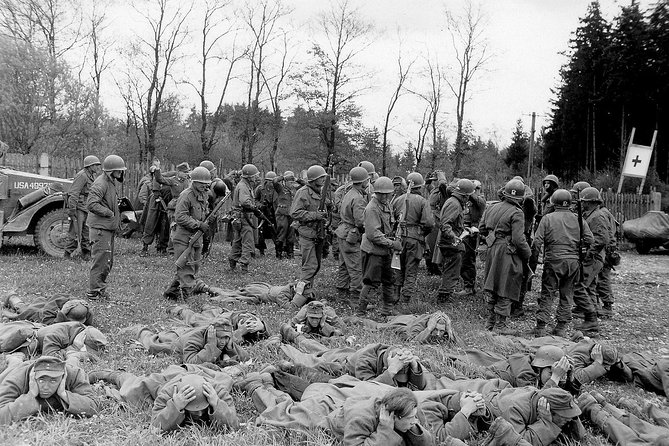
- How Munich fell to US forces in 1945
- Stop-by-Stop: What You’ll See Along the Way
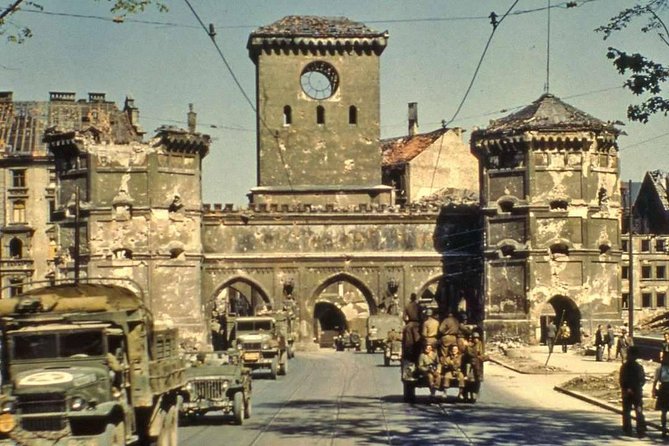
- Starting near Isar Gate (Tal 50) and getting your bearings fast
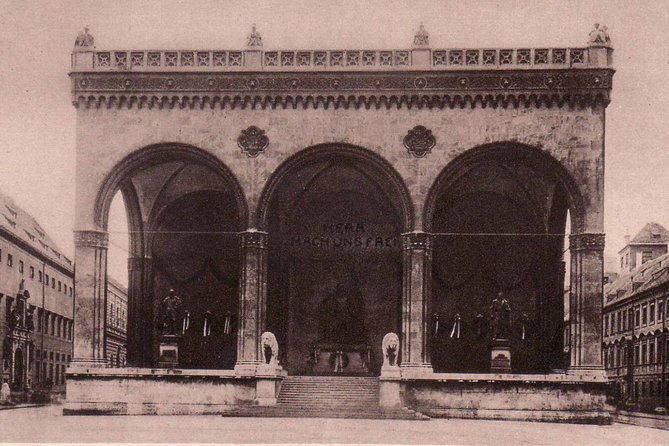
- Moving toward the power center around Odeonsplatz
- The beerhall break linked to the era
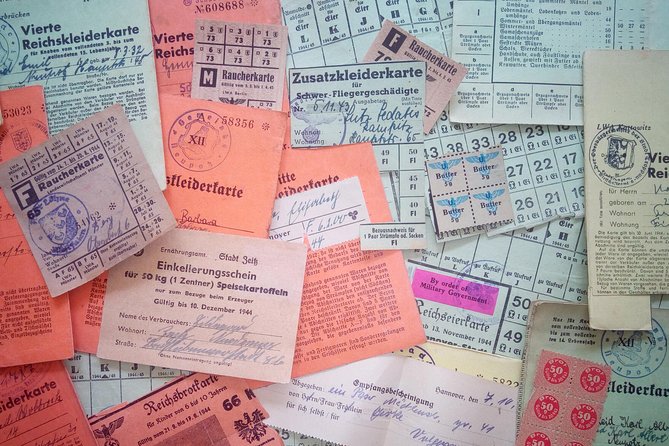
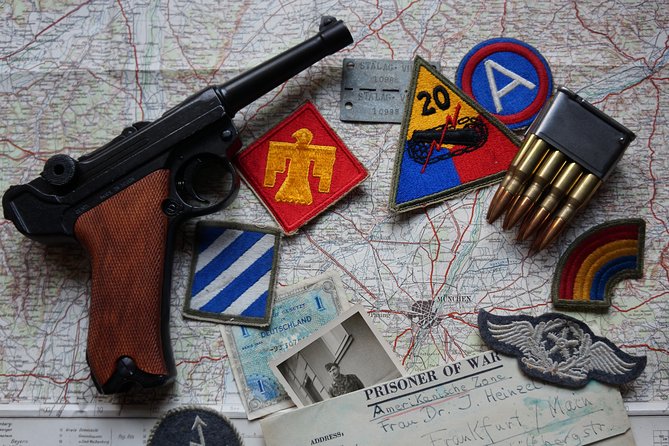
- Visual aids: photos, memorabilia, and occasional dramatization
- Private Guide Perks: Ask More, Go Deeper, Move at Your Pace
- Practical Stuff That Makes or Breaks the Day
- Wear shoes you trust
- Weather is part of the plan
- Use public transit nearby
- Mobile ticket and English
- Who This Tour Is Best For (and Who Should Skip It)
- You might think twice if…
- Should You Book This Munich WWII Private Walking Tour?
- FAQ
- How long is the Munich 3rd Reich and WWII private walking tour?
- Is this a private tour, and how many people can be in a group?
- Is the tour offered in English?
- Where do we meet and where does the tour end?
- Do we stop for a break during the tour?
- What’s the walking like?
- Is free cancellation available?
Key Points You’ll Care About
- Private guide, no group shuffle so you can ask questions and steer the pace.
- History you can picture through guide visuals like photos and historical items.
- A tight Munich route that runs from near the Isar Gate area to Odeonsplatz.
- Stops built around context, including time for a beerhall break linked to the era.
- Built for serious history fans, especially if you want how events connect, not just names and dates.
- Flexible delivery in tough weather, with guides adjusting length or focus while keeping the core story.
More walks tracing Munich Third Reich and wartime history
- Munich: Third Reich & WWII Walking Tour★ 4.6 · 6,181 reviews
- Third Reich Walking Tour Munich★ 4.5 · 4,291 reviews
- Munich: Birthplace of the Third Reich Guided Walking Tour★ 4.6 · 771 reviews
- Munich World War II Sites Including Dachau Concentration Camp★ 4.5 · 570 reviews
Walking Through Munich’s 3rd Reich Era, From Isar Gate to Odeonsplatz
This tour works because it treats Munich like a living classroom. You’re not looking at history from behind glass. You’re walking through the same central areas where ideas spread, power consolidated, and later, the city paid the price.
I like that it’s built as a private experience. With up to 6 people per group, you’re not waiting for the stragglers while your guide moves on to the next checkpoint. If something catches your attention—say the origin story of the Nazi Party or why Versailles mattered—your guide can slow down and explain it in full sentences, not rushed sound bites.
And the guide style matters here. Several guides associated with this tour are known for bringing the era to life with visuals—photos and memorabilia—and in some cases, small dramatizations. That kind of “show and tell” is especially helpful with events like the Beer Hall Putsch, Crystal Night, and the early path from Nazi rhetoric to state-sponsored terror. You get a story you can follow, not just a list of stops.
Still, go in with eyes open. This is WWII-era Germany. It deals with persecution and mass murder. Even when the facts are presented carefully, it’s the kind of history that sticks in your mind after the tour ends.
What Makes the Tour Worth the Price (Even at $423.44 per Group)
The price is listed as $423.44 per group (up to 6). That’s not cheap on paper—especially if you’re booking for just two people. But for a private walking tour, it’s easier to see the value when you do the math.
If your group fills up to 6 people, you’re looking at about $71 per person for a 3.5 to 4.5 hour private guide. If it’s just you and a partner, it’s closer to $212 per person. So the real question is: do you want a private guide enough to pay for it, and do you have others who would share the cost?
For history lovers, the private format is a big part of the value. You’re paying for attention—time to ask, time to stop, and time to understand why these events unfolded in Munich specifically, not only what happened.
How the Timeline Fits Together (Versailles to 1945)
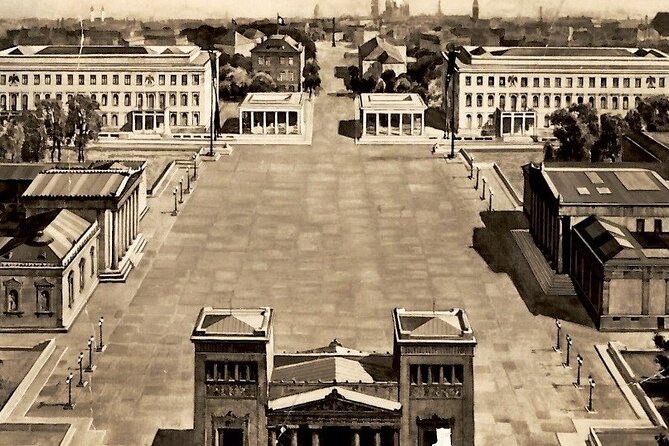
This tour is structured around the story arc that turned political turmoil into dictatorship and then into war. The stops and explanations follow a logic that makes Munich’s role clearer.
More laps of the Altstadt and Marienplatz
- Munich: Old Town & Viktualienmarkt City Walk in German
★ 4.7 · 2,304 reviews - Munich: Night Watchman Walking Tour
★ 4.7 · 2,092 reviews - Munich Ghosts and Spirits Evening Walking Tour
★ 5.0 · 1,900 reviews
The trauma after World War I and the Treaty of Versailles
You start with the post–World War I shock. The Treaty of Versailles didn’t just redraw borders. It fed anger, humiliation, and economic strain—conditions that extremist movements exploited. When you understand that emotional backdrop, the later Nazi rise reads less like a mystery and more like a grim pattern.
The origins of the Nazi Party in Munich
From there, the tour moves into how the Nazi Party grew its support and built a local base. This is where your guide’s visuals can really help. Photos and historical artifacts make it easier to connect speeches, organizations, and street-level activity to the bigger political shift.
If you’re the kind of traveler who wants context, you’ll appreciate that the tour doesn’t jump straight to Hitler’s power. It sets up how Munich became a hub where the movement could brand itself, recruit, and spread influence.
The birthplace of the SS and the path to terror
One of the standout themes is the birthplace of the SS. That part matters because it links the Nazi movement’s ideology to the machinery that carried out violence and control. Even if you know the basic outcome of WWII, this portion helps explain how the structure formed.
The Beer Hall Putsch: from street power to propaganda
Then you reach the infamous Beer Hall Putsch. This is one of those events that’s often summarized in a few lines. Here, you get more sense of why it became a turning point—and how failure didn’t stop the Nazi message from spreading. The tour’s built-in beerhall break usually ties into the atmosphere of that era, so you get both the facts and the place-based context.
Crystal Night and the road toward the Holocaust
The tour covers Crystal Night and the origins of the Holocaust. This is heavy material, and it’s handled as history, not shock value. What you’ll take away is the progression: state policies moving from intimidation into organized terror, and then toward systematic mass murder.
For travelers who want the “how did it get this bad” explanation, this portion is one of the reasons to book.
Nazi Party Headquarters and the Munich Pact moment
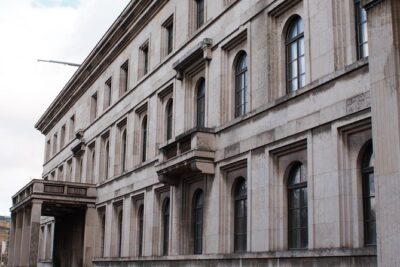
Next comes the Nazi Party Headquarters and the signing of the Munich Pact. This section is useful because it connects local events in Munich to a Europe-wide political failure. It’s one thing to hear about appeasement. It’s another to stand in the kind of setting where major decisions were presented as workable solutions.
Allied bombing and the city’s turning point
The tour also includes the Allied bombing campaign. You’ll see how the war’s pressure changed Munich and how that shift set the stage for the final collapse.
How Munich fell to US forces in 1945
Finally, you reach the end of the arc: how the city fell to US forces in 1945. Ending around Odeonsplatz works well because it’s a central, symbolic place—one that pairs the story of political pageantry with the reality that war brought destruction and defeat.
Stop-by-Stop: What You’ll See Along the Way
You won’t ride in a bus for this one. You’re walking a central route and your guide is constantly tying street-level reality to historical events.
Starting near Isar Gate (Tal 50) and getting your bearings fast
The tour starts at Isar Gate, Tal 50, 80331 München. If you’re meeting at a different point, pick up can be near Hauptbahnhof or Marienplatz, but the walking route begins at Isar Gate for this experience.
This opening matters. It helps you quickly understand the geography—where movement took place, where speeches and gatherings likely happened, and why the city became so strategically and symbolically important.
Moving toward the power center around Odeonsplatz
You’ll finish at Odeonsplatz, Odeonspl. 3, 80539 München, near the Residenz palace and not far from Marienplatz. Ending here keeps the story anchored in the kind of central Munich spaces where public life and political theater intersected.
The beerhall break linked to the era
Expect a break at a beerhall associated with this history. If you’d rather take your break in a cafe instead, tell your guide—this tour allows adjustments. Refreshments aren’t included, so plan to pay for your own drink/food.
For me, what makes the break useful is not the beerhall itself. It’s that the guide can pause the timeline with a place-based moment, then pick up again with the next phase of events.
Visual aids: photos, memorabilia, and occasional dramatization
This tour’s strongest repeat praise is the guide’s use of visuals. You’ll see photos supporting the sites you walk past, and you may see memorabilia or props. Some guides even act out parts, which can make grim events easier to understand without turning them into entertainment.
Private Guide Perks: Ask More, Go Deeper, Move at Your Pace
Because it’s private, the guide can tailor the tour to your group. One of the best parts is that you’re not stuck with a fixed pace. If your group has questions—about how Versailles shaped politics, how the SS formed, or what Munich Pact decisions meant—you can slow down.
This is also where family groups often benefit. Guides connected to this tour are described as friendly and engaging with kids and teens, including families with 11- and 13-year-olds. If you’re traveling with younger history fans, it helps that the guide often turns dense material into something you can follow step by step.
One more practical plus: some guides are clearly comfortable handling weather. On icy or snowy days, it’s not just about staying on schedule; it’s about keeping the tour understandable and not cutting essential parts.
Practical Stuff That Makes or Breaks the Day
Here’s what you should plan for so the tour goes smoothly.
Wear shoes you trust
It’s a walking tour with moderate walking. You’ll want footwear that grips well, especially if you’re going in colder months. If you’re prone to slipping on ice, take extra care around crossings and shaded streets.
Weather is part of the plan
The tour operates in all weather conditions. Dress for it—warm layers, gloves if you get cold easily, and a coat you can move in. Your guide may adjust timing a bit if conditions are extreme, but the tour is designed to keep going.
Use public transit nearby
The start and finish points are near public transportation. If you’re pairing this with other Munich sightseeing, you’ll find it easier to get there than tours that lock you into a far-away pickup zone.
Mobile ticket and English
You’ll get a mobile ticket. The tour is offered in English, which is ideal if you want the story told clearly without relying on translations.
Who This Tour Is Best For (and Who Should Skip It)
This is a great fit if you’re the type of traveler who cares about causes, not just outcomes. You’ll likely enjoy it if you want to understand how Munich went from post–World War I instability into the machinery of Nazi power, and then into wartime collapse.
It’s also a strong match if you value a guide who brings supporting images and real context. The tour works better when you’re allowed to ask follow-up questions and get direct answers.
You might think twice if…
If you want a light, casual sightseeing day, this probably isn’t your top pick. The topic is brutal, and the walking pace plus weather means you’ll be outside for real.
Also, if you’re booking solo and you’re on a tight budget, the private pricing may feel steep. In that case, you might consider whether you want private attention badly enough to pay for it.
Should You Book This Munich WWII Private Walking Tour?
I’d book it if you want a focused, private, English-speaking guide to explain Munich’s role in the rise of the Nazi Party and the events that followed—through to bombing and 1945. The best version of this tour is when you like asking questions and want visuals to tie the story to real places.
If you’re sensitive to heavy subject matter, plan your mental bandwidth. And if you’re traveling in winter, treat footwear and layers as non-negotiable.
Bottom line: for history fans who want clarity and personal guidance, this one is a strong choice.
FAQ
How long is the Munich 3rd Reich and WWII private walking tour?
It runs about 3 hours 30 minutes to 4 hours 30 minutes.
Is this a private tour, and how many people can be in a group?
Yes, it’s private. The price is for a group of up to 6.
Is the tour offered in English?
Yes. It’s offered in English.
Where do we meet and where does the tour end?
The start point is Isar Gate, Tal 50, 80331 München. The tour ends at Odeonsplatz, Odeonspl. 3, 80539 München.
Do we stop for a break during the tour?
Yes. The tour generally stops for a break in a beerhall associated with this history. If you prefer a cafe break, tell your guide. Refreshments are not included.
What’s the walking like?
You’ll do a moderate amount of walking, and the tour does not use a car or bus.
Is free cancellation available?
Yes. You can cancel for a full refund up to 24 hours in advance of the experience start time.
More Altstadt and Marienplatz Walks

More Third Reich and WWII History in Munich

Just added to the Munich Explorer notebook

Third Reich & WWII History Tours, compared.
 ★ 4.6Third Reich & WWII Walking TourFrom $316,181 reviews
 ★ 4.5Third Reich Walking Tour MunichFrom $454,291 reviews
 ★ 4.6Birthplace of the Third Reich Guided Walking TourFrom $29771 reviews
 ★ 4.5Munich World War II Sites Including Dachau Concentration CampFrom $105570 reviews
 ★ 5.0Munich City Walking Tour, includes Third Reich & ViktualienmarktFrom $31458 reviews
 ★ 4.5Third Reich & WWII Walking TourFrom $35417 reviews
 ★ 4.9Munich 3-Hour Segway Tour: Nazi Munich & Royal ArchitectureFrom $91194 reviews
 ★ 5.0Dachau Concentration Camp Memorial Site And Third Reich Day Tour From MunichFrom $145185 reviews
Browse the lists this tour appears in