
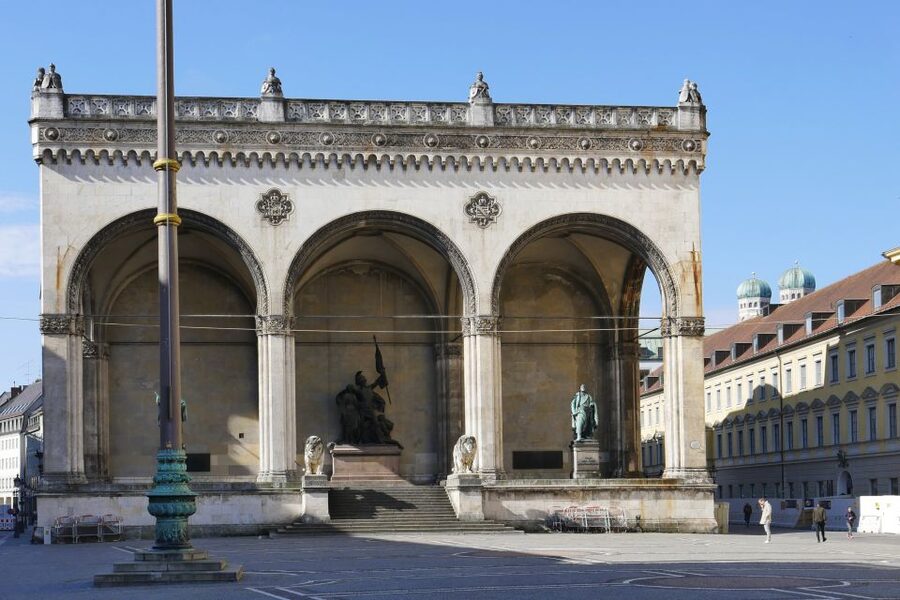
Reviewed · OLD TOWN & MARIENPLATZ WALKS
Munich: Walking Tour Old Town and Viktualienmarkt
Munich’s center is a story on foot. This guided walk strings together the big-picture sights and the everyday rhythms, from Marienplatz and St. Peter’s Church to the Viktualienmarkt food market and the luxury stretch of Maximilianstraße. It’s a tight 1.5 hours, built for seeing a lot without feeling rushed.
I really like how the route balances classic landmarks with places you can smell and see. The market stop at Viktualienmarkt is the kind of pause that helps you understand Munich as a lived-in city, not just postcard views. I also like the way guides bring the streets to life, with real names of buildings, quick historical context, and even extra pictures to help things click.
One drawback to plan for: the meeting point can vary (for example, Mariensäule by Marienplatz or Neues Rathaus), so you’ll want to check your exact pickup spot before you arrive. Also, the tour is marked wheelchair accessible, but it is also labeled not suitable for people with mobility impairments, so double-check what that means for your situation.
In This Review
- Quick highlights to know before you go
- Marienplatz to St. Peter’s: start where Munich feels most “Munich”
- Viktualienmarkt: Munich’s food market stop that actually teaches the city
- Alter Hof, Burgstraße, and the old lanes: the medieval layer beneath the city
- Hofbräuhaus to Maximilianstraße: beer-hall fame and luxury shopping, side by side
- Odeonsplatz and Theatinerkirche: Italian Baroque vibes with a Munich twist
- Pacing, group size, and what 1.5 hours really means
- Price and value: $282 per group, and when to go private
- Guides make the difference: what I learned from named guide experiences
- Should you book this Munich Old Town and Viktualienmarkt walk?
- FAQ
- Where does the tour start?
- How long is the walking tour?
- Is the tour offered in English and German?
- Is transportation included?
- Are entrance fees or museum tickets included?
- Will the tour run in bad weather?
- What should I bring?
- Is the tour wheelchair accessible?
Quick highlights to know before you go
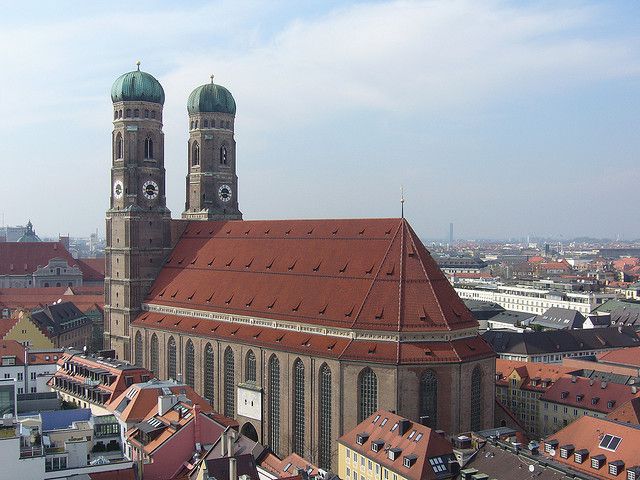
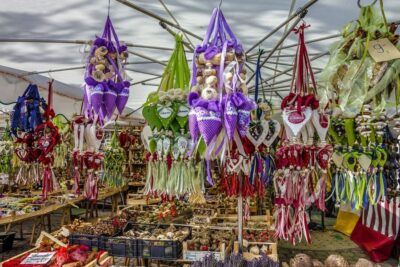
- Viktualienmarkt’s food stalls: You’ll walk through Munich’s most traditional market with that fresh-bread, cheese, and sausage atmosphere.
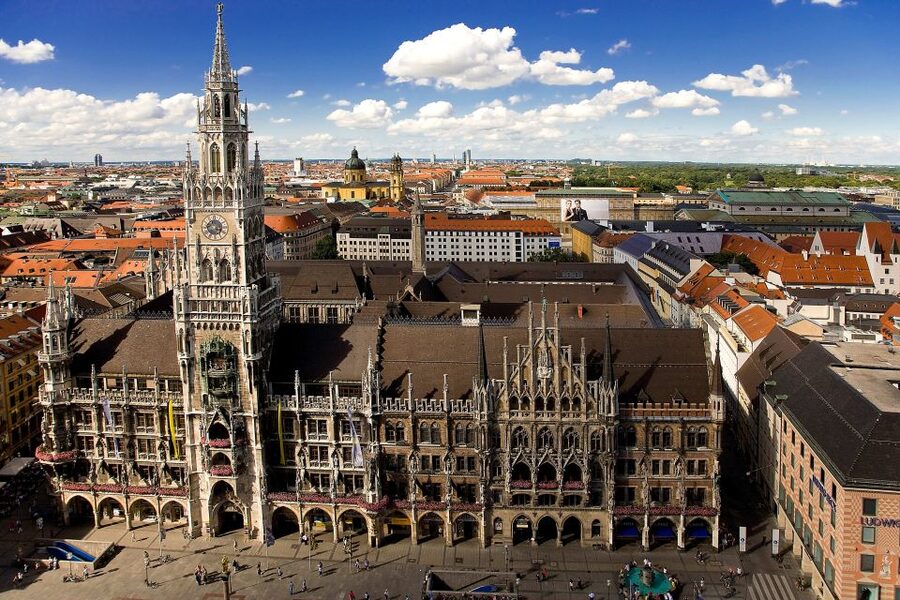
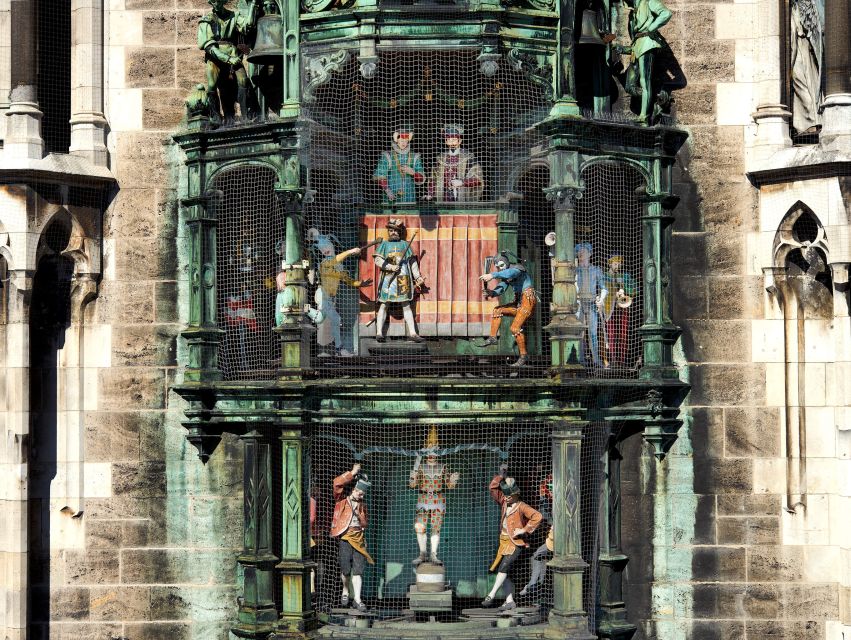
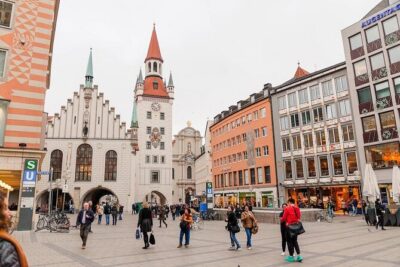
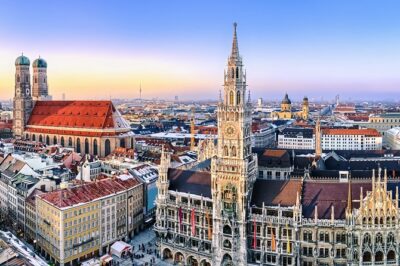
- Marienplatz in full view: Neo-Gothic New Town Hall and the Glockenspiel area set the tone right away.
- Old Munich through key stops: St. Peter’s Church, Alter Hof, and medieval lanes keep the story moving.
- Hofbräuhaus as a cultural landmark: You’ll pass the world-famous beer hall that pulls locals and visitors alike.
- Maximilianstraße and Munich’s shopping edge: One moment you’re in old streets, the next you’re staring at high-end boutiques.
- Odeonsplatz and Theatinerkirche: Italian Baroque styling shows up here, and it’s an easy moment to just pause.
More grazing through the Viktualienmarkt stalls
- Munich: Old Town & Viktualienmarkt City Walk in German★ 4.7 · 2,304 reviews
- Munich: Walking Tour Old Town and Viktualienmarkt★ 4.7 · 839 reviews
- Munich: Viktualienmarkt & Altstadt Food Tour★ 4.7 · 481 reviews
- Munich City Walking Tour, includes Third Reich & Viktualienmarkt★ 5.0 · 458 reviews
Marienplatz to St. Peter’s: start where Munich feels most “Munich”
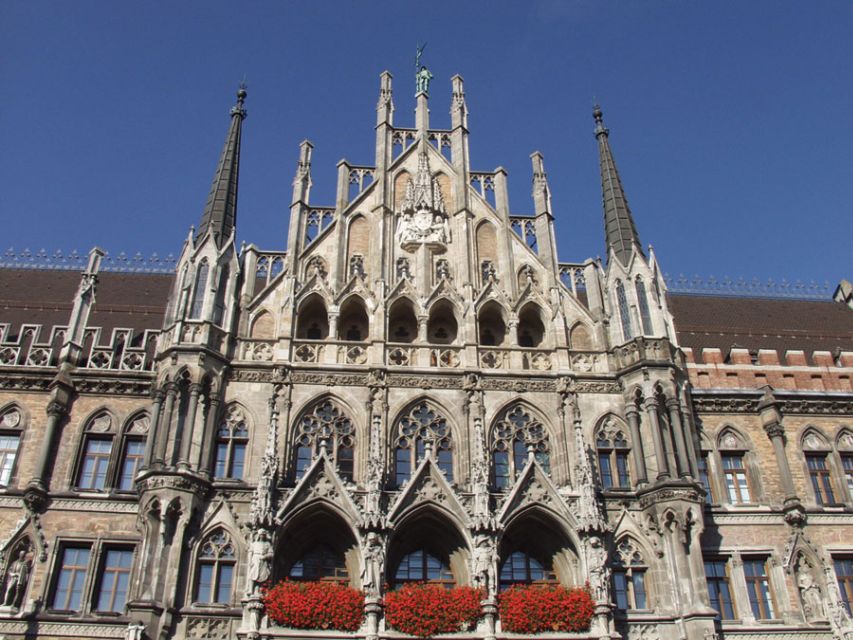
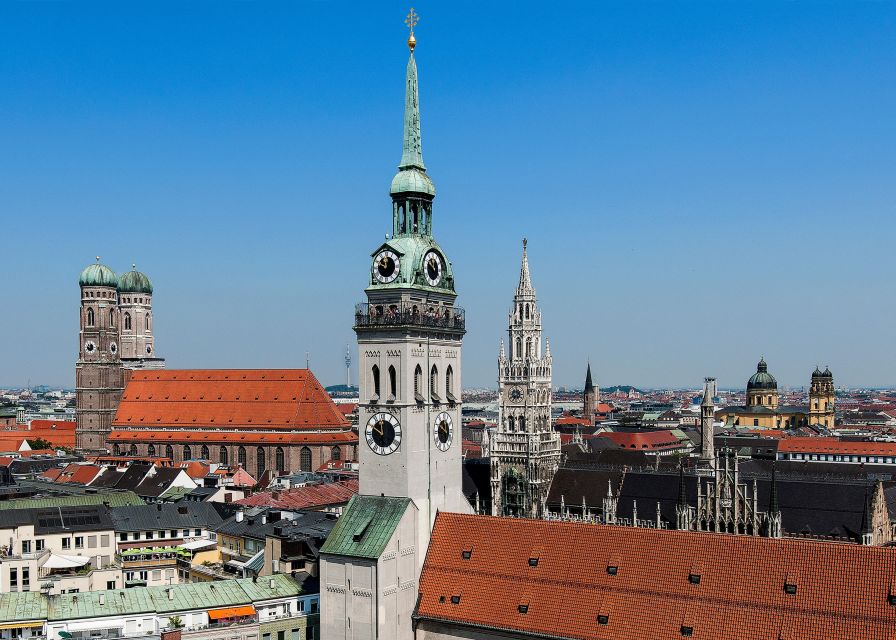
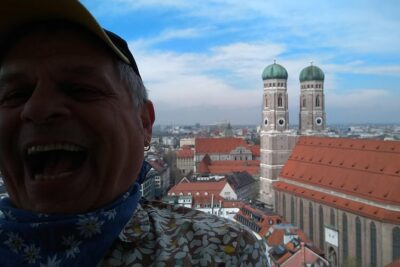
You begin at the heart of the city, typically around Marienplatz. From there you’re oriented fast: you’ll see the Neo-Gothic New Town Hall and the Glockenspiel area as the visual anchor for the whole walk. Even if you’ve only got a short stay in town, this start helps you understand how the city organizes itself around its central square.
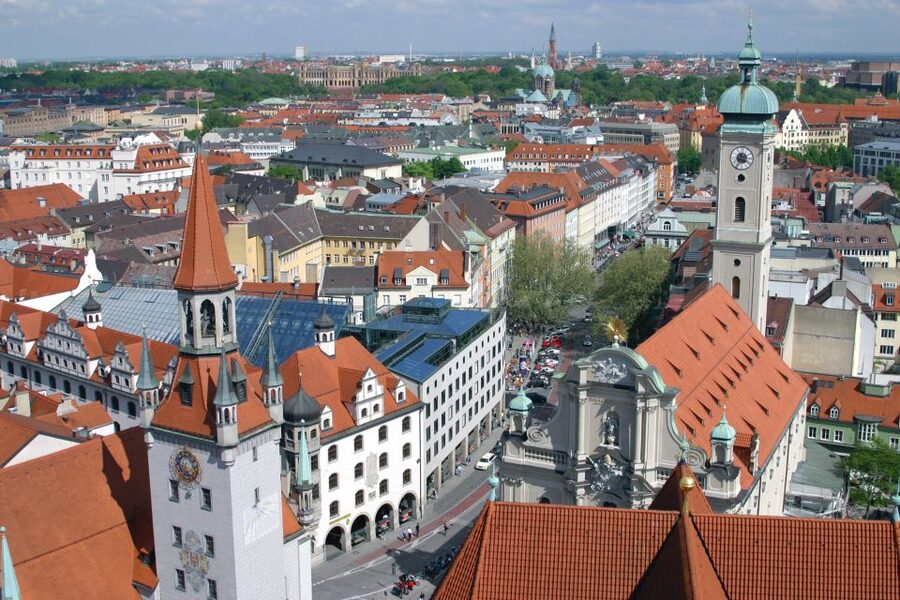
Then the tour moves to St. Peter’s Church. This stop matters because it shifts you from the modern-day “look at that” moment into the older spiritual core of Munich. St. Peter’s is described as the oldest parish church in Munich, and that detail gives you a clearer sense of why certain neighborhoods and institutions grew where they did.
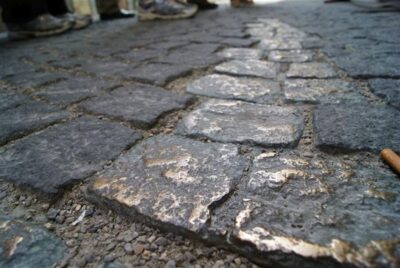
If you’re sensitive to lots of standing around, this early phase is mostly short viewing stops with guidance. Comfortable shoes are key here. You’re doing a lot of city-center walking on uneven old-stone surfaces, and Munich weather can add friction if it’s wet.
Viktualienmarkt: Munich’s food market stop that actually teaches the city
The highlight for many people is the visit to Viktualienmarkt, Munich’s largest and most traditional food market. This is the part of the tour where you stop being a passive spectator. You get pulled in by the sights and smells of fresh bread, cheeses, and sizzling sausages, and you’ll see the colorful stalls that make this market feel like a daily habit, not a tourist trap.
What I like about this market as a tour stop is how it grounds everything else. After you’ve taken in the big monuments, Viktualienmarkt makes the story human: Munich is a food city as much as it is a history city. You’ll leave with better instincts for where to wander next, like where to grab a snack or how to read the market layout when you come back on your own.
A practical note: meals and drinks aren’t included. So think of the market as a great “see and smell” stop where you can choose what to buy based on your own tastes and hunger level.
Alter Hof, Burgstraße, and the old lanes: the medieval layer beneath the city
After the market, you head toward some of the oldest street textures in Munich. You’ll follow Burgstraße, one of the city’s oldest streets, and that’s a simple but effective move. Street names don’t sound exciting until you realize they often point to trade routes, centers of power, or older city boundaries.
Next comes the Old Court (Alter Hof), tied to the Wittelsbach dukes. This is where the tour earns its “history” badge without turning into a textbook. You get specific place names and roles, and you start to see why certain buildings and squares hold influence long after the original political power faded.
Then you’ll walk through Platzlgassen alleys, small winding lanes where medieval charm meets everyday modern life. These lanes are ideal for a guided walk because the city scale stays readable. You can look at the facades, listen to the story, and still move at a pace that doesn’t feel like you’re sprinting between stops.
More laps of the Altstadt and Marienplatz
- Munich: Old Town & Viktualienmarkt City Walk in German
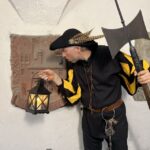
★ 4.7 · 2,304 reviews - Munich: Night Watchman Walking Tour
★ 4.7 · 2,092 reviews - Munich Ghosts and Spirits Evening Walking Tour
★ 5.0 · 1,900 reviews
Hofbräuhaus to Maximilianstraße: beer-hall fame and luxury shopping, side by side
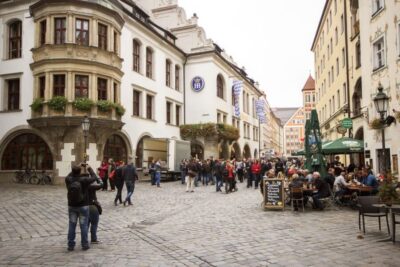
One of the most recognizable moments on the route is when you pass the Hofbräuhaus München. It’s world-famous for a reason, and even from the sidewalk you can feel the pull of a place that has hosted everyone from locals to royalty. It’s not just about beer, either. For many visitors, Hofbräuhaus is where Munich’s social life becomes visible in one location.
After that, the walk shifts sharply to Maximilianstraße, described as Germany’s most exclusive shopping street. This contrast is actually useful. You can see how Munich can feel both traditional and polished, sometimes within a few blocks. If you’re the type who likes to compare neighborhoods on the ground, this part delivers.
You’ll also pass the Bavarian State Opera and the Residenz area. The Opera is described as a neoclassical masterpiece next to the former seat of Bavarian royalty. That proximity makes the viewing stops click: art and power weren’t separate ideas here. You’re seeing how cultural institutions grew right next to the royal center.
Odeonsplatz and Theatinerkirche: Italian Baroque vibes with a Munich twist
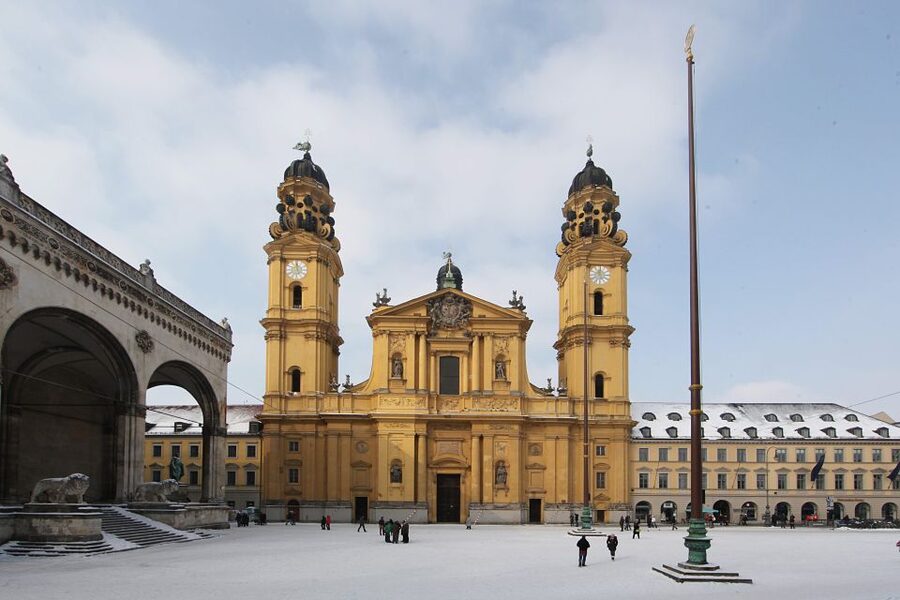
The route continues to Odeonsplatz, a grand square where the architecture does the talking. It’s the kind of open space that’s perfect for slowing down for a moment, especially if you’ve been walking steadily since the market.
You’ll also pass the Feldherrnhalle, and across the way you’ll see Theatinerkirche, built in striking Italian Baroque style. This detail is a fun takeaway because Munich gets nicknamed the northernmost city of Italy, and the church is one of the clearest places on this walk to understand why. You don’t need a lecture to get it. Just look at the style and let the contrast register.
If you’re planning photos, this is a good area to take a few without rushing. The square gives you space to frame buildings, and it’s easier to step aside from foot traffic than in narrower alley sections.
Pacing, group size, and what 1.5 hours really means
The tour lasts about 1.5 hours, and that time is tight enough that pacing matters. You’re not doing long museum-style stops. Instead, you’re getting a sequence of short viewing moments, each with context, then moving on before the walking fatigue builds.
Group size can be up to 30. That’s large enough that you might need to pay attention to where you stand, but it’s still manageable for a walking tour. The best guide setups keep things clear for everyone, and I’ve seen guides handle larger groups with quick, efficient explanations.
For your comfort:
- Bring comfortable shoes. The route is centered on old streets and uneven surfaces.
- Expect rain or shine. Munich can be stubborn, so plan for wet sidewalks.
- Keep an eye on the meeting point details. Because it can vary, arriving late can turn a smooth start into a scavenger hunt.
One small but real advantage: some guides use extra pictures to help you understand what you’re seeing. It’s especially helpful around places like the New Town Hall or when architectural details are easy to miss from street level.
Price and value: $282 per group, and when to go private
The price is listed as $282 per group up to 30, with a live guide included. In value terms, you’re paying for more than sightseeing. You’re buying orientation, context, and a route that strings together the major “I can’t miss this” landmarks without you having to plan every connection.
When this feels like a good deal:
- You want a guided pass through central Munich, especially if it’s your first time.
- You like history, but you don’t want a long, slow pace.
- You’re traveling with a group, since the per-group pricing can spread out.
If you care about flexibility or smaller-group attention, there is private group availability. The data doesn’t state a separate private price here, but the option is there if you’d rather move with less crowd noise and have more space to ask questions.
Guides make the difference: what I learned from named guide experiences
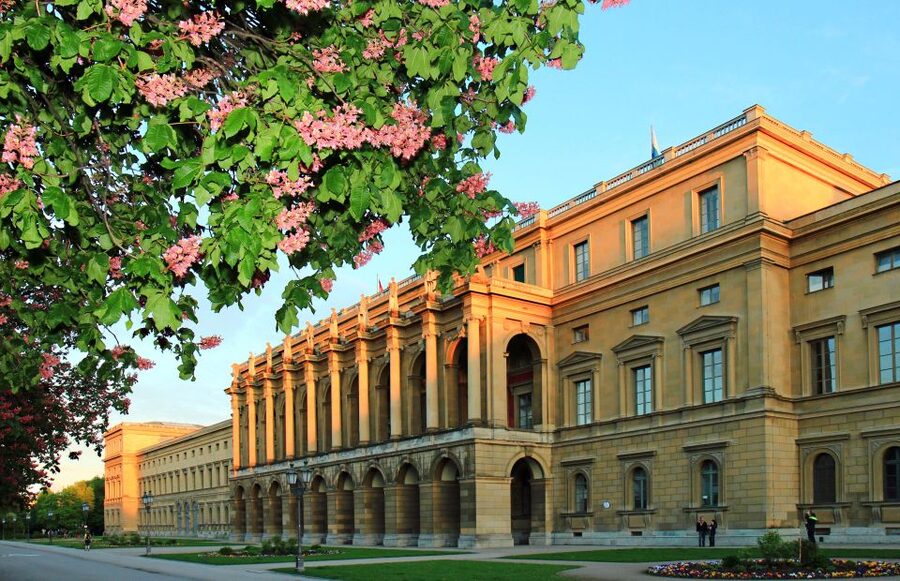
This tour stands or falls on the guide’s delivery, and the pattern in the provided experiences is consistent: guides who can tell stories clearly, answer questions, and adapt to what the group wants.
For example:
- Gitti and Gerhard are mentioned as giving strong explanations and tailoring the walk to interests. Gerhard in particular is described as adapting to what people want to focus on.
- Claudia is praised for storytelling and vivid descriptions, which is exactly what you need on a short walking route.
- Karen earns standout notes for engaging everyone, including a child learning German. If you’re traveling with kids, that matters because it can keep the tour from turning into a long lecture.
- Christina is highlighted for mixing historic facts with fun details.
- Tanja is noted for adjusting start timing when travel conditions changed, and Sabine is praised for keeping the experience enjoyable even during steady rain.
- Michael and Joe show up as story-driven guides with a focus on how to explore Munich like a local.
You won’t know your guide in advance, but you can choose confidence in a structure that supports interaction: short stops, frequent orientation cues, and lots of room to ask questions on the move.
Should you book this Munich Old Town and Viktualienmarkt walk?
Book it if you want a fast, guided way to get your bearings in Munich’s core. This is a smart option for first-timers, short-stay schedules, and anyone who likes architecture plus street-level context, not just checkboxes.
Skip or consider something else if:
- You need a tour that accommodates mobility limitations beyond what you can manage on a steady street walk.
- You’re expecting a lot of sit-down time or long interior visits. This walk is built for outdoor landmarks and market viewing.
My bottom line: for a 1.5-hour window, you get a solid mix of Marienplatz landmarks, a meaningful food-market stop at Viktualienmarkt, and a route that contrasts medieval lanes with royal-era buildings and high-end shopping. It’s the kind of overview that makes the rest of your Munich days easier, because you’ll know where you are and why the city looks the way it does.
FAQ
Where does the tour start?
The meeting point may vary depending on the option booked, with listed possibilities including München 1, Mariensäule and Neues Rathaus.
How long is the walking tour?
The duration is listed as 1.5 hours.
Is the tour offered in English and German?
Yes. The live guide operates in German and English.
Is transportation included?
No. Transportation to the starting location is not included.
Are entrance fees or museum tickets included?
No. Entrance fees are not included.
Will the tour run in bad weather?
Yes. The tour takes place rain or shine.
What should I bring?
Bring comfortable shoes, since you’ll be walking through the city center.
Is the tour wheelchair accessible?
It is marked wheelchair accessible, but it also notes that it is not suitable for people with mobility impairments—so it’s worth confirming whether the route works for your specific needs.
More Altstadt and Marienplatz Walks
More of the Viktualienmarkt




Just added to the Munich Explorer notebook

Old Town & Marienplatz Walks, compared.
 ★ 4.6Third Reich & WWII Walking TourFrom $316,181 reviews
 ★ 4.5Third Reich Walking Tour MunichFrom $454,291 reviews
 ★ 4.7Old Town & Viktualienmarkt City Walk in GermanFrom $232,304 reviews
 ★ 4.7Night Watchman Walking TourFrom $5302,092 reviews
 ★ 5.0Munich Ghosts and Spirits Evening Walking TourFrom $601,900 reviews
 ★ 4.5Munich Old Town Walking TourFrom $271,287 reviews
 ★ 4.6Spooky Tour of Old Town in GermanFrom $261,112 reviews
 ★ 4.6Birthplace of the Third Reich Guided Walking TourFrom $29771 reviews
Browse the lists this tour appears in