
Reviewed · OLD TOWN & MARIENPLATZ WALKS
Munich: Viktualienmarkt & Altstadt Food Tour
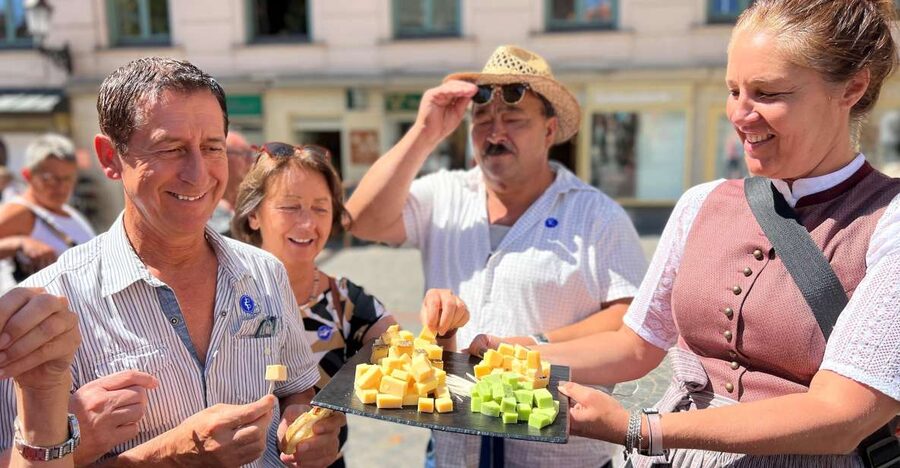
Munich tastes better with a plan. This Viktualienmarkt & Altstadt food tour mixes classic sights with real local bites, and I especially like the Sauren Ecke gherkin stop and the fresh-made Schmalznudel at Café Frischhut. The only thing to think about is price: it’s $671 per group up to 5, so it feels most worth it when you split the cost.
I also love the pacing. You get a guided walk through central Munich, plus tastings at multiple market stalls, without turning it into a lecture. One more plus: the guide approach tends to keep things lively, with explanations that don’t feel dry.
You’ll meet in the Old Town area for a welcome drink at the Isartor, then head toward the market while passing major landmarks like Marienplatz and Jakobsplatz. In just two hours, you’ll walk away with both flavor memories and a clearer sense of how Munich’s food scene fits into everyday life.
In This Review
- Key things to notice before you go
- Entering Munich by foot, starting at Isartor
- Walking past the landmarks that shape the food scene
- Viktualienmarkt: where the tastings actually happen
- The eight stalls: what you’ll taste (and what it adds up to)
- A hearty butchers specialty (the market’s savory anchor)
- A freshly baked pretzel
- Leberkässemmel from the butchers
- The sour gherkin classic from Sauren Ecke
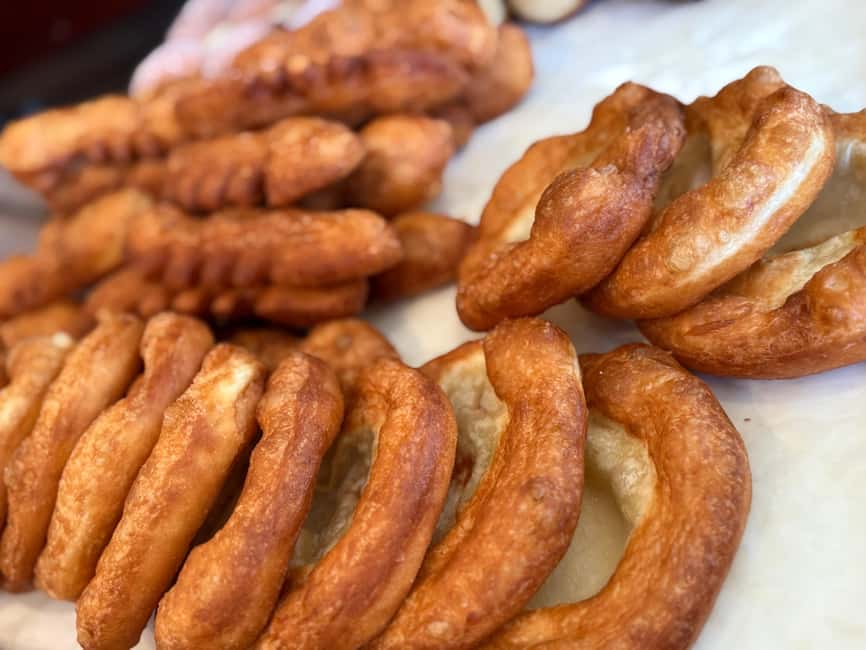
- Schmalznudel: the fried dough finale
- The Sauren Ecke gherkin stop: why this tiny bite matters
- Café Frischhut and Schmalznudel: fried dough with names you’ll remember
- How long is 2 hours, really, for food?
- Price and value: $671 per group up to 5
- Who this tour suits best
- Practical tips for getting the most from the tour
- Should you book this Munich Viktualienmarkt & Altstadt food tour?
- FAQ
- How long is the Munich Viktualienmarkt & Altstadt Food Tour?
- What does the tour cost?
- Is this a private group tour?
- What food and drinks are included?
- What languages is the live guide available in?
- Is the tour wheelchair accessible?
- Is additional food and drink included?
Key things to notice before you go
- Isartor welcome drink to start you off right
- Old-town route through Marienplatz, Hofbräuhaus area, and Jakobsplatz
- Eight market-stall tastings, not just one or two “samples”
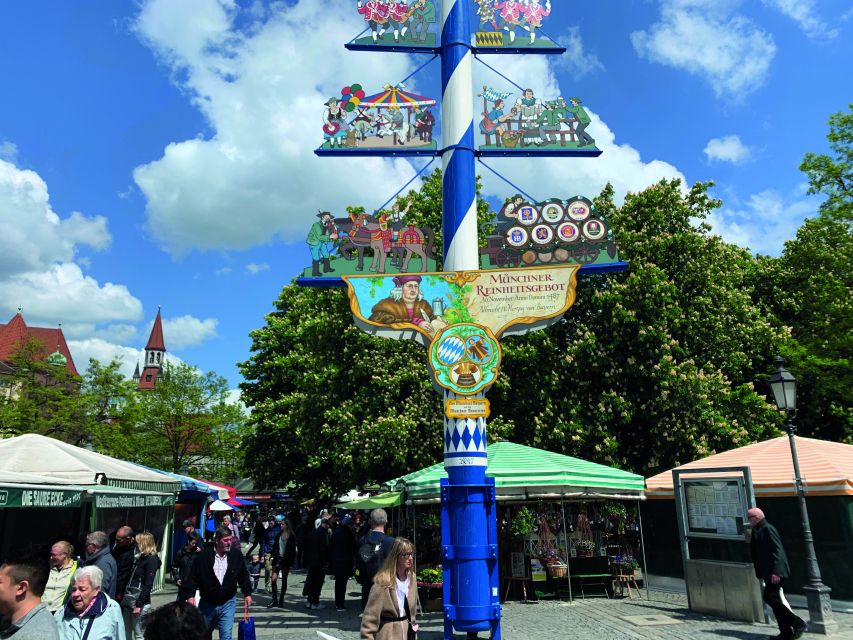
- Sauren Ecke pickled gherkin at the Maibaum
- Fresh Schmalznudel prep at Café Frischhut, including Auszog’ne and Strizerl
- Water from the Viktualienmarkt drinking fountains included
More grazing through the Viktualienmarkt stalls
- Munich: Old Town & Viktualienmarkt City Walk in German★ 4.7 · 2,304 reviews
- Munich: Walking Tour Old Town and Viktualienmarkt★ 4.7 · 839 reviews
- Munich: Viktualienmarkt & Altstadt Food Tour★ 4.7 · 481 reviews
- Munich City Walking Tour, includes Third Reich & Viktualienmarkt★ 5.0 · 458 reviews
Entering Munich by foot, starting at Isartor
This tour is built like a short story with good timing. You begin at the Isartor, where you get a welcome drink before you start walking. That small start matters because it puts you in the right headspace: you’re not rushing from snack to snack, you’re settling into the day.
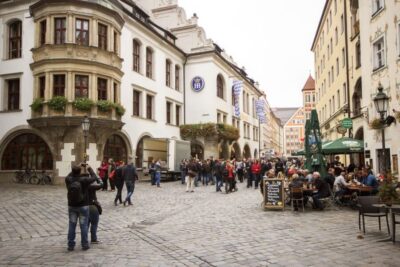
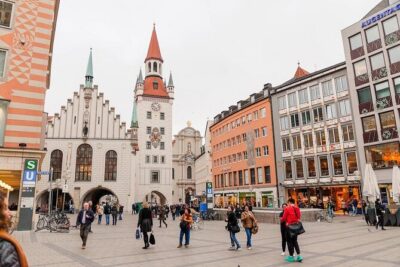
From there, you move through Munich’s core on foot, passing major Old Town landmarks along the way. You’ll go by spots including the Platzl area with Hofbräuhaus, the Alte Münze, the Alte Hof, Marienplatz, the Rindermarkt, and the synagogue on Jakobsplatz. Even if you’ve visited Munich before, this kind of route helps you see how the food district connects to the city’s public squares and historic corners.
The practical value here is pace. In two hours, you don’t just eat—you also get your bearings fast. And because you’re accompanied by a live guide in German and English, you’re not stuck guessing what you’re looking at while you walk.
Walking past the landmarks that shape the food scene
A lot of “food tours” treat sightseeing like wallpaper. This one treats it like context. As you pass places such as Marienplatz and the Rindermarkt, you get the sense of how Munich’s market culture sits inside the rhythms of central city life.
You also learn about the history of the Viktualienmarkt and how it functions today. That combination is useful. You’re not only told what to eat—you’re told why the market still matters, and why certain food habits have kept going.
One small but smart detail: you’ll be walking to and from the market while seeing famous places. That means you can keep your eyes up, not just down at your plate. If you like combining landmarks with tastings, this is a format that works well.
Viktualienmarkt: where the tastings actually happen
When you reach the Viktualienmarkt, the tour shifts gears. This is the heart of the experience: you’ll admire the stalls and then start sampling.
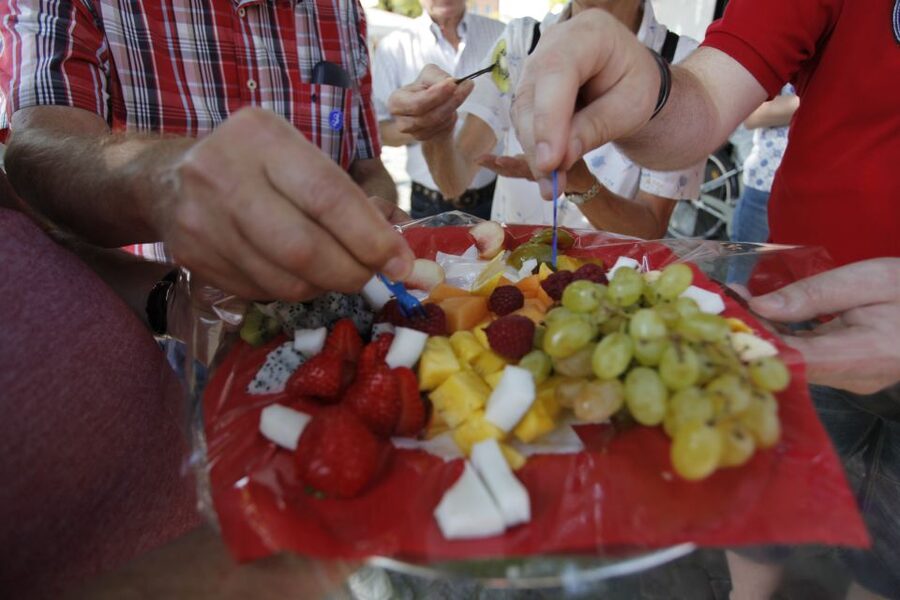
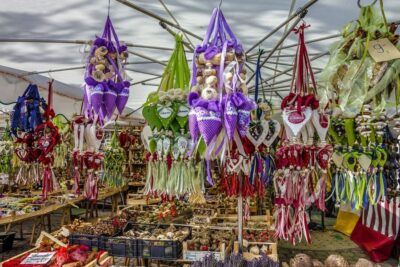
The market stop isn’t presented as one big buffet line. Instead, you’ll taste your way across eight market stalls, which makes the whole thing feel varied. You’re likely to notice different stall styles and different specialties as you go—some places focus on savory meat counters, others on bakery goods, and others on pickles and classic bar snacks.
It also helps that the tour includes water from the drinking fountains at the Viktualienmarkt. That sounds like a small inclusion, but it makes the tour smoother. You can pace yourself without feeling like you need to buy a drink just to stay comfortable.
More Bavarian plates, pretzels and Brotzeit boards
- Munich: Viktualienmarkt Food Tour
★ 4.5 · 1,127 reviews - Munich: Guided City Tour by Bike with Beer Garden Stop
★ 4.7 · 604 reviews - Munich: Viktualienmarkt & Altstadt Food Tour
★ 4.7 · 481 reviews
The eight stalls: what you’ll taste (and what it adds up to)
Here’s what’s actually included as part of the tastings, plus what each one does for the overall flavor story.
A hearty butchers specialty (the market’s savory anchor)
You’ll start with a hearty specialty from the market butchers. Along with the specific included item list, this gives you the first real “Munich savory” moment. If you’re the kind of person who thinks food tours should include proper local comfort food—not only sweets—this is a big win.
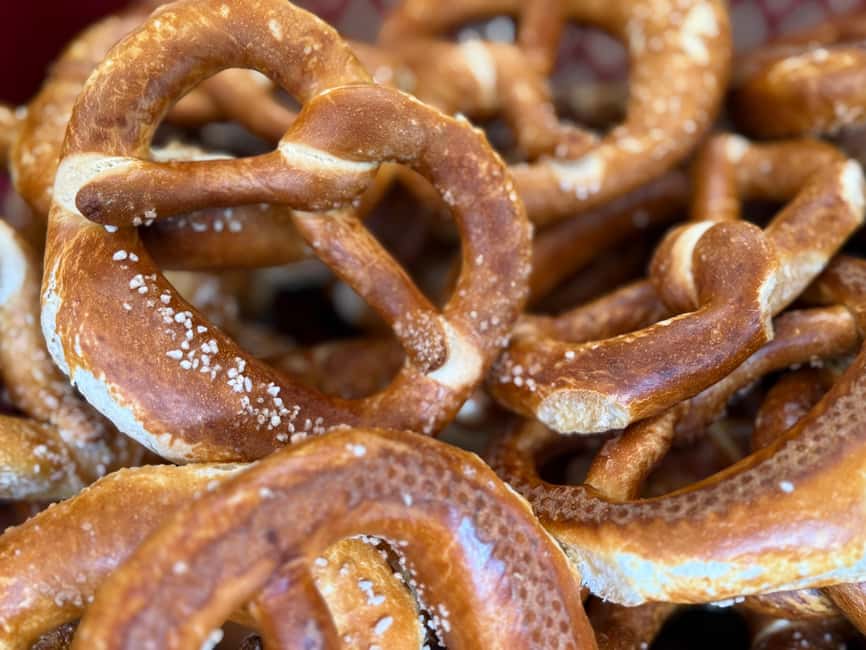
A freshly baked pretzel
Next comes a freshly baked pretzel. This is classic Munich fuel, and it’s also practical for tasting. Bread goods make it easier to sample stronger flavors without your palate getting overwhelmed right away.
Leberkässemmel from the butchers
You also get Leberkässemmel (a meatloaf sandwich) from the butchers at the market. This one is especially satisfying because it’s not just a bite—it’s a real dish form. It gives you that thick, filling “I ate something” feeling that lighter tastings sometimes miss.
The sour gherkin classic from Sauren Ecke
One of the most memorable items is the famous sour gherkin from the Sauren Ecke, picked up at the Maibaum. This is the kind of taste that instantly tells you Munich has its own pantry identity. It’s tangy, punchy, and very specific to the local pickling tradition you’ll keep noticing in markets and meals around town.
Schmalznudel: the fried dough finale
To finish, you visit a Bavarian baking institution: Café Frischhut. Here you taste Schmalznudel, a fried dough specialty. But the tour doesn’t stop at eating it; you’ll also see how the dough types are freshly prepared, including Auszog’ne, Strizerl, and Schmalznudeln.
That last part is worth paying attention to. Watching the preparation makes the tasting feel like part of a process, not just a plate delivered to you. And because you’re seeing the differences in preparation, you’re more likely to remember what you tasted—and why.
The Sauren Ecke gherkin stop: why this tiny bite matters
The Sauren Ecke sour gherkin is easy to overlook if you think you know Munich food already. But it’s one of those “small but iconic” choices that gives you a taste of local daily life.
Gherkins are snack food, but this one is also a ritual. The included stop at the Maibaum ties it to a landmark moment, so you’re not just eating something sour—you’re connecting it to a known place in the market area.
For your palate, it works like a reset. If you’ve had savory meat and bread, the gherkin’s tang helps clear the way for whatever you taste next, especially as the tour heads toward the baking finish.
Café Frischhut and Schmalznudel: fried dough with names you’ll remember
This is the finale you’ll likely talk about later. Schmalznudel is a Bavarian comfort food: fried dough, warm, and very satisfying. What makes this stop more than a simple dessert bite is the preparation piece.
At Café Frischhut, you’ll see Auszog’ne, Strizerl, and Schmalznudeln freshly prepared, then taste them on the spot. Even if you’ve never heard these names before, the tour gives you a reason to care: the names aren’t random; they represent specific shapes or styles within the fried dough family.
For many people, this is where a food tour becomes real. You go from eating samples to experiencing craft. If you like seeing how food is made in the exact place you’re eating it, this stop earns its time.
How long is 2 hours, really, for food?
Two hours sounds short. That’s true on paper. In practice, it’s a smart length for a market tour because you’re balancing walking with tastings.
You’re not asked to spend the whole day in line. You’re guided through an Old Town route to the Viktualienmarkt, then you get multiple bites across different stalls, plus the bakery stop. If you keep your energy up and pace your drinks, 2 hours fits neatly into a Munich schedule that also includes sightseeing.
If you’re very hungry, consider this: it’s additional food and drink that is not included, so you’ll probably still want dinner (or at least a second snack) later. The tour is designed as tastings that give you an overview, not a full meal replacement.
Price and value: $671 per group up to 5
Let’s talk money like adults. The tour costs $671 per group up to 5 for a 2-hour private group experience.
Here’s how I think about value:
- If you book as a full group of 5, your cost per person drops a lot compared to solo pricing.
- You’re paying for a professional guided walk, welcome drink, multiple tastings, and the bakery stop where you see fresh preparation.
- Since you don’t have to buy extra food during the tour (tastings are included), you avoid the “surprise spending” that can happen on self-guided market days.
If you’re coming as a couple or solo, it can feel like a premium spend. Still, it can be worth it if you value a guided route, a private group pace, and getting the key Munich flavors without guessing.
My practical tip: if you’re traveling with friends or family, this is a strong candidate for splitting the cost. If you’re traveling alone and price sensitivity is high, you might prefer something less group-priced.
Who this tour suits best
This tour is a good match if you:
- want both landmarks and food in one compact walk
- like tasting across multiple stalls instead of one long plate
- enjoy comfort food and classic Munich flavors like leberkäs style sandwiches and pickles
- want an easy, guided way to understand what Viktualienmarkt is and why it matters now, not just in theory
It’s also a nice option for travelers who don’t want to research market names and decide where to eat on their own. The structure gives you the tasting path.
Practical tips for getting the most from the tour
A few small moves can make this feel smoother.
First, treat the tastings like a guided sequence. Don’t try to “out-eat” the plan. If you go in hungry but steady, you’ll enjoy all eight stalls and the fried dough stop without feeling stuffed too early.
Second, come ready to walk. You’ll be moving through central Old Town, then through the market area, then toward the bakery finish. Comfortable shoes matter.
Third, pace your water. Since water is included from the market fountains, use it to keep your mouth refreshed between sour, salty, and fried tastes.
Finally, plan for a second meal later. Since additional food and drink isn’t included, you’ll likely want a proper sit-down dinner after the tour—or at least something light if your day schedule runs long.
Should you book this Munich Viktualienmarkt & Altstadt food tour?
Yes—if you want a guided, high-satisfaction introduction to Munich eating. The combination of an Old Town walk, a well-timed stop at the Viktualienmarkt, and a finish with fresh Schmalznudel makes this more than a snack loop.
It’s especially worth it if you’re booking with others (that $671 per group price becomes much easier to swallow when split). And if you care about eating authentic foods like Leberkässemmel and a true Sauren Ecke gherkin, this tour gives you those signatures with minimal effort.
If you’re traveling solo, or if your budget is tight, the private-group pricing may feel heavy for a two-hour experience. In that case, decide based on whether you’re really paying for the guide-led route and private pacing, not just the food.
FAQ
How long is the Munich Viktualienmarkt & Altstadt Food Tour?
The tour duration is 2 hours.
What does the tour cost?
It’s priced at $671 per group (up to 5 people).
Is this a private group tour?
Yes. It’s a private group.
What food and drinks are included?
Included items are a welcome drink at the Isartor, a freshly baked pretzel, Leberkässemmel from the butchers at the Viktualienmarkt, a pickled gherkin from the Sauren Ecke at the Maibaum, Schmalznudel freshly prepared by Café Frischhut, and water from the drinking fountains at the Viktualienmarkt.
What languages is the live guide available in?
The live guide speaks German and English.
Is the tour wheelchair accessible?
Yes, the tour is wheelchair accessible.
Is additional food and drink included?
No. Additional food and drink are not included.
More Altstadt and Marienplatz Walks
More Bavarian Plates in Munich


More of the Viktualienmarkt

Just added to the Munich Explorer notebook

Old Town & Marienplatz Walks, compared.
 ★ 4.6Third Reich & WWII Walking TourFrom $316,181 reviews
 ★ 4.5Third Reich Walking Tour MunichFrom $454,291 reviews
 ★ 4.7Old Town & Viktualienmarkt City Walk in GermanFrom $232,304 reviews
 ★ 4.7Night Watchman Walking TourFrom $5302,092 reviews
 ★ 5.0Munich Ghosts and Spirits Evening Walking TourFrom $601,900 reviews
 ★ 4.5Munich Old Town Walking TourFrom $271,287 reviews
 ★ 4.6Spooky Tour of Old Town in GermanFrom $261,112 reviews
 ★ 4.7Walking Tour Old Town and ViktualienmarktFrom $282839 reviews
Browse the lists this tour appears in