
Reviewed · THIRD REICH & WWII HISTORY TOURS
Munich: National Socialism Historical Tour in GERMAN
Munich has a way of asking hard questions. This 2-hour National Socialism Historical Tour uses key street-level locations to explain how the NSDAP rose and what Germany looked like during the period. I like that the route stays focused on the places where decisions and propaganda unfolded, and I really appreciate the black-and-white photos the guide brings along to anchor the story in Munich’s 1920s and 30s. One consideration: this is a heavy topic and a brisk walking route, so it may not feel comfortable for everyone.
You’ll start at the Staatliche Antikensammlungen and follow the guide’s pace along major streets and squares, including Königsplatz, Briennerstrasse, and Odeonsplatz. The tour runs rain or shine, the guide is live and speaks German, and you’ll want comfortable shoes. Also note the mixed accessibility notes: it’s listed as wheelchair accessible, yet it says it’s not suitable for people with mobility impairments—so double-check what that means for your specific situation.
In This Review
- Key things worth knowing before you go
- Munich’s “City of the Movement” starts with Königsplatz
- Where you meet: Staatliche Antikensammlungen and that blue-bag cue
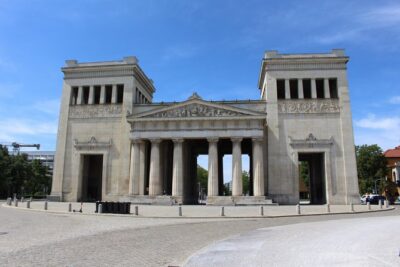
- Königsplatz: the symbolic starting point of the story
- The former Führerbau and the Munich Agreement site (1938)
- Briennerstrasse: walking the corridor of power
- Passing the former Gestapo headquarters: repression shown in place
- Odeonsplatz and Feldherrnhalle: November 9, 1933, in the middle of the city
- November 9, 1923: how earlier failure feeds later power
- Black-and-white photos: why the guide brings images instead of just speeches
- Private vs group tour: choosing the right pacing for a tough subject
- Price and value at $34 per person
- Who should book this tour (and who might want to think twice)
- Should you book this National Socialism Historical Tour?
- FAQ
- What language is the tour guide?
- How long is the Munich National Socialism Historical Tour?
- Where do I meet the tour?
- What should I bring?
- Is the tour canceled if it rains?
- What’s included in the price, and what’s not?
Key things worth knowing before you go
- Königsplatz to Odeonsplatz: a tight walking loop through the most symbolic Nazi-era sites in central Munich
- Two “November 9” moments: the guide connects events tied to both 1923 and later developments
- Führerbau / Munich Agreement context: you’ll learn what happened in 1938 at the building’s historic address
- Gestapo headquarters pass: the route moves through places tied to repression, not just speeches and parades
- Black-and-white Munich photos: the guide uses period images from the 1920s and 30s to ground the talk
- Private or group option: you can choose the format that fits your comfort level
More walks tracing Munich Third Reich and wartime history
- Munich: Third Reich & WWII Walking Tour★ 4.6 · 6,181 reviews
- Third Reich Walking Tour Munich★ 4.5 · 4,291 reviews
- Munich: Birthplace of the Third Reich Guided Walking Tour★ 4.6 · 771 reviews
- Munich World War II Sites Including Dachau Concentration Camp★ 4.5 · 570 reviews
Munich’s “City of the Movement” starts with Königsplatz
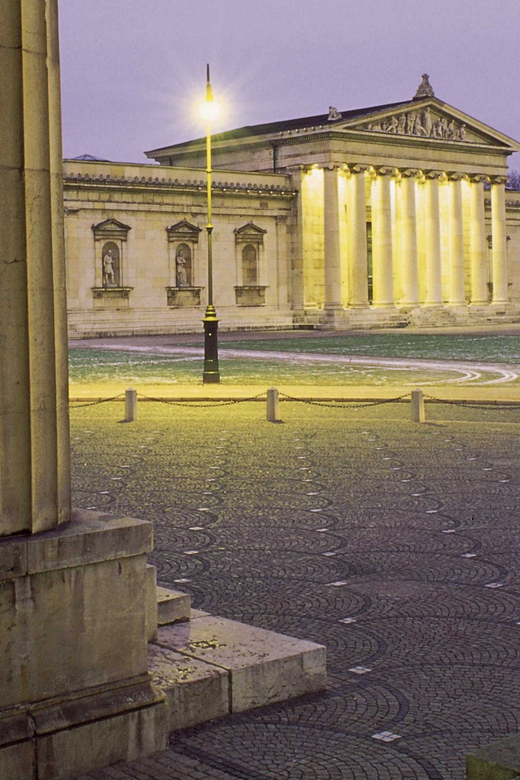
This tour is built around the fact that Munich wasn’t just a backdrop for National Socialism. It was part of the origin story—in the 1920s and 1930s, the city gained a reputation that people still recognize today. Standing where political symbolism and power-building happened helps the history feel concrete, not abstract.
I like that the tour isn’t trying to cover every page of Germany’s 20th-century tragedy. Instead, it stays on the thread that runs from early National Socialist momentum to the structures that came later. That makes it easier to follow, especially when you’re working with a 2-hour time window.
Where you meet: Staatliche Antikensammlungen and that blue-bag cue
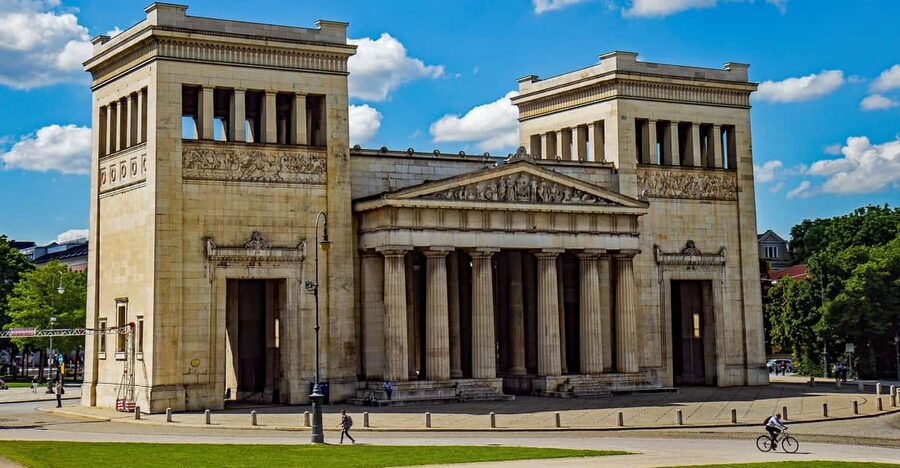
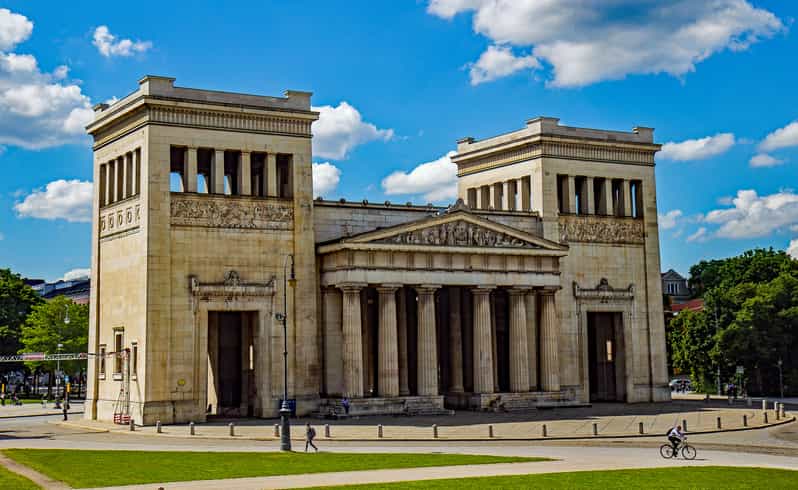
You’ll meet in front of the main entrance of the Staatliche Antikensammlungen. It’s a very “easy to find” starting point because it’s a landmark entrance, not a vague corner or hidden side street.
The guide will be wearing a BIG BLUE BAG with the white words Weis(s)er Stadtvogel. This is one of those small things that matters when you’re arriving in a new city: you don’t waste time hunting, and you can get your bearings fast.
Practical tip: arrive a bit early so you can settle in before the walk begins. Since the tour runs rain or shine, you’ll be glad you didn’t start under stress.
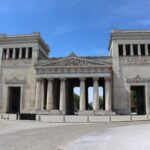
Königsplatz: the symbolic starting point of the story
The walking route begins at Königsplatz. This is where the tour frames the “why Munich?” question. Instead of treating the Nazi movement as something that appeared out of nowhere, the guide positions Munich as fertile ground during the rise of the NSDAP.
As you stand in the area and begin moving, you’ll understand what makes the tour feel different from reading a book. The guide can connect events to street geometry and prominent places—the kind of environment where political gatherings and messaging could be amplified.
Because this is a thematic tour, you’ll likely get a clearer sense of cause-and-effect than if you simply hop between monuments. You’re not just seeing buildings; you’re watching the narrative take shape.
More history-minded tours of Munich
- Munich: Guided Tour of the historic Town Hall on Marienplatz
★ 4.8 · 63 reviews - Munich Craft Beer & Cultural Tour With Snack
★ 5.0 · 46 reviews - Munich History Tour: Private & Personalized with a Local Guide
★ 4.5 · 33 reviews
The former Führerbau and the Munich Agreement site (1938)
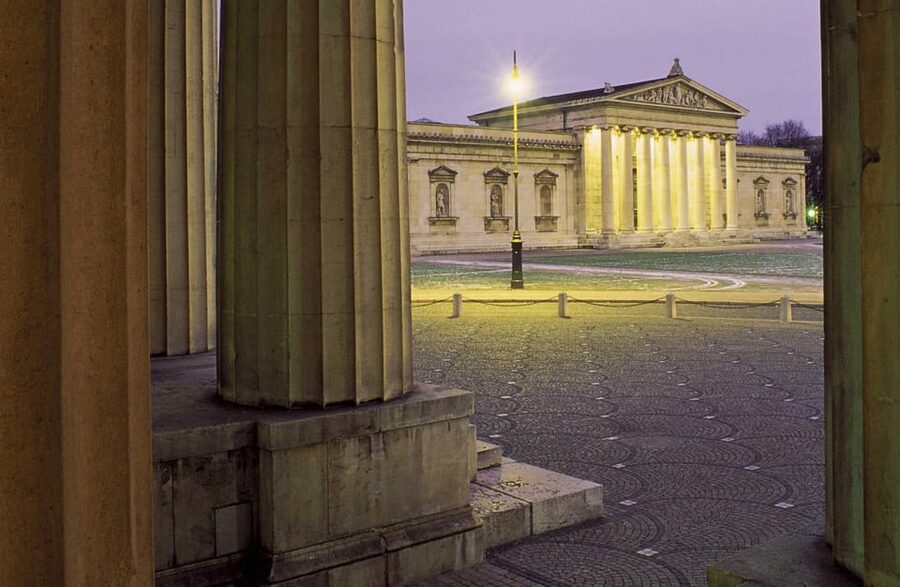
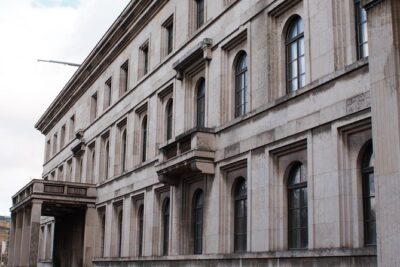
One major stop is the former Führerbau, the building associated with Adolf Hitler’s rise and the Nazi period in Munich. The guide points out that the Munich Agreement was signed in 1938 here. Today, the location is connected to what is now the Munich Documentation Centre for the History of National Socialism.
This is one of the most valuable parts of the tour because it links propaganda and power with real-world decision-making. Agreements, meetings, and public authority weren’t separate from everyday life; they were part of the same system. Seeing that the site became a documentation centre today also adds a crucial afterword: history isn’t just remembered—it’s examined.
A note for planning: this segment is likely where the tour gets most pointed. If you prefer to absorb the “context” before the “details,” lean into the earlier walk, then settle in here. If you’re the type who likes the hardest facts first, this stop will probably feel like the moment the story tightens.
Briennerstrasse: walking the corridor of power
From the Führerbau area, the tour continues along Briennerstrasse. This part works well because it’s a real street walk, not just a series of stops for photos. You get time to process what you’ve heard while you’re actually moving through Munich’s built environment.
One thing I appreciate is how the guide uses these walking stretches to reinforce points—so you’re not only gathering information when you pause at a landmark. It’s also a practical way to handle a 2-hour schedule: you learn while you walk.
If you’re visiting during cooler months, pay attention to the pace. Rain or shine means you’ll probably be outside more than you expect, and comfortable shoes matter.
Passing the former Gestapo headquarters: repression shown in place
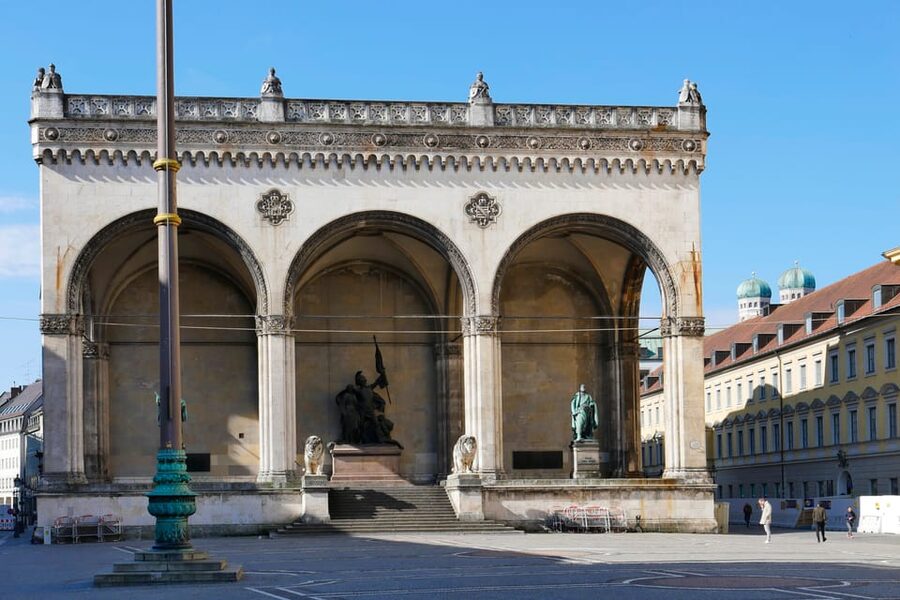
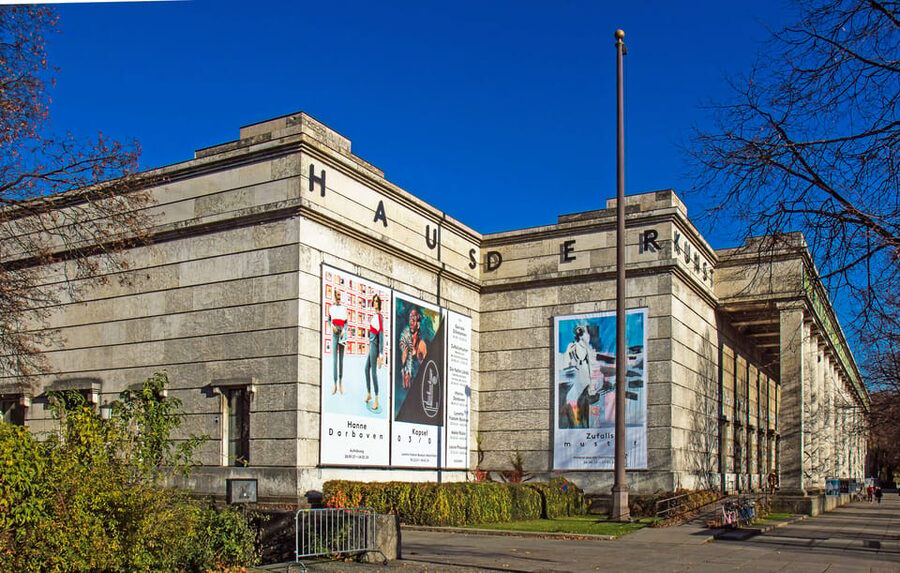
As you move forward, the route passes the former Gestapo headquarters. This stop matters because it shifts the focus from political rise and public spectacle to the mechanisms of control.
It’s not just a lesson in dates. It’s a lesson in how authority operated. Even without entering anything, the guide can connect the site to the bigger picture of Germany during National Socialism, and the walk helps keep that connection grounded.
You might find it emotionally challenging, and that’s normal. This is exactly the kind of stop that reminds you the story wasn’t only about ideology—it was about what people were forced to live with.
Odeonsplatz and Feldherrnhalle: November 9, 1933, in the middle of the city
The tour reaches Feldherrnhalle at Odeonsplatz. This is tied to the Hitler’s Beer Hall Putsch on November 9, 1933. That date is one of the tour’s big anchors, and the guide uses it to explain how the movement used events, myth-making, and public staging to gain momentum.
Here’s what I find useful: you don’t just learn that an event happened. You learn how the movement wanted people to remember it—and how those narratives helped normalize extreme power.
This is also where the locations start feeling connected. The earlier stops explain the groundwork; the Odeonsplatz stop shows how the movement attempted to turn that groundwork into legitimacy.
November 9, 1923: how earlier failure feeds later power
Another stated highlight is learning about the events of November 9, 1923. The tour’s structure helps you understand why that earlier date isn’t just a trivia point. It becomes part of the larger arc of how National Socialists framed themselves and how the story built through time.
Even if you already know a bit about the Nazi rise, this part helps you see the longer chain. You’re not only learning about one violent episode; you’re seeing how events can be repackaged and used to justify what comes next.
If you’re the kind of person who likes “timeline clarity,” this is a good tour for you. With a short duration, the guide focuses on a few dates that link multiple steps.
Black-and-white photos: why the guide brings images instead of just speeches
The tour includes a strong media element: your guide brings historic black-and-white photographs showing Munich in the 1920s and 30s. This is one of the most practical and effective features, because it reduces the gap between modern Munich and what the city looked like when the story unfolded.
I like that these photos aren’t treated like decoration. They’re used to illustrate specific events and topics as the walk goes on. That means you aren’t stuck trying to visualize everything from memory. You get a snapshot, then you connect it to where you’re standing now.
A small suggestion: if you’re someone who enjoys photography history, take a moment to study the photos for what’s in the background—streets, crowds, buildings. The visual details help you “place” the story in real Munich space.
Private vs group tour: choosing the right pacing for a tough subject
You can choose between a private or group tour. That choice can matter more than you’d think for a topic like this.
A group format usually works well if you want the energy of shared attention and you’re comfortable hearing questions from others. A private format can feel easier when you’d rather set your own pace and ask clarifying questions without worrying about group timing.
Either way, the tour is designed to stay within 2 hours, so expect a focused route rather than a long, slow walk.
Price and value at $34 per person
At $34 per person for a 2-hour guided walking tour, the value is in what you get in that time: professional interpretation, a fixed set of major sites, and the photo support that helps tie everything together. You’re not paying for transportation, meals, or entrance tickets here; the core product is the guided story and the route itself.
Included is a city guide. Not included: food and drinks, hotel pickup and drop-off, and entrance fees. That means you should plan to snack on your own schedule and budget separately if you want to enter any sites beyond what the walk covers.
For many visitors, the biggest “value win” is that you get a coherent narrative delivered on location—especially helpful if you don’t want to spend hours building context from scratch on your own.
Who should book this tour (and who might want to think twice)
This tour is best for you if you:
- want a focused, city-based explanation of how the NSDAP rose in Munich
- like learning through specific locations rather than abstract reading
- appreciate guided visual context, like the included black-and-white photographs
- can handle a subject that is historically grim and politically intense
It may feel like the wrong fit if you prefer light, casual sightseeing, or if you have mobility concerns. The tour is listed as wheelchair accessible but also marked as not suitable for people with mobility impairments, so you’ll want to check details directly with the provider before assuming it will work for you.
Should you book this National Socialism Historical Tour?
If you want a clear, location-based way to understand Munich’s role in National Socialism, I’d book it. The structure makes sense: you start at Königsplatz, learn at the former Führerbau connected to the 1938 Munich Agreement, walk along Briennerstrasse, pass the former Gestapo headquarters, and end at Odeonsplatz/Feldherrnhalle tied to November 9 events.
The two biggest reasons to choose it are the tight connection between history and place, and the guide’s use of period photographs to keep the story anchored in what Munich looked like. The main reason to hesitate is the topic’s heaviness and the fact that it’s an outdoor walk in all weather.
Go in with comfortable shoes, a realistic mindset about time, and the willingness to focus. This isn’t a “quick facts” stop; it’s a guided explanation of how a movement took hold—and how Munich fits into that story.
FAQ
What language is the tour guide?
The tour is led by a live guide in German.
How long is the Munich National Socialism Historical Tour?
It lasts 2 hours.
Where do I meet the tour?
Meet in front of the main entrance of the Staatliche Antikensammlungen.
What should I bring?
Bring comfortable shoes, since the tour takes place outdoors.
Is the tour canceled if it rains?
No. It runs rain or shine.
What’s included in the price, and what’s not?
Included is a city guide. Food and drinks, hotel pickup and drop-off, and entrance fees are not included.
More History Walks in Munich

More Third Reich and WWII History in Munich

Just added to the Munich Explorer notebook
Third Reich & WWII History Tours, compared.
 ★ 4.6Third Reich & WWII Walking TourFrom $316,181 reviews
 ★ 4.5Third Reich Walking Tour MunichFrom $454,291 reviews
 ★ 4.6Birthplace of the Third Reich Guided Walking TourFrom $29771 reviews
 ★ 4.5Munich World War II Sites Including Dachau Concentration CampFrom $105570 reviews
 ★ 5.0Munich City Walking Tour, includes Third Reich & ViktualienmarktFrom $31458 reviews
 ★ 4.5Third Reich & WWII Walking TourFrom $35417 reviews
 ★ 4.9Munich 3-Hour Segway Tour: Nazi Munich & Royal ArchitectureFrom $91194 reviews
 ★ 5.0Dachau Concentration Camp Memorial Site And Third Reich Day Tour From MunichFrom $145185 reviews
Browse the lists this tour appears in