
Reviewed · THIRD REICH & WWII HISTORY TOURS
Walking Tour on Resistance to Nazism in Munich
Munich hides resistance in plain sight. This walking tour connects real buildings to real people who pushed back against the Nazi regime, with a route that moves through politics, culture, and everyday power. You’ll get a clear sense of how quickly daily life could change, and how some people still chose resistance instead of obedience.
What I like most is the way the stops are set up around specific threads of resistance: organized politics, religious opposition, and cultural censorship. I also love the human side of the tour style—guides like Laura (and also Maca, Javier, and Jaime from other tour dates) are praised for being friendly, easy to follow, and for answering questions with real care.
One thing to consider: the material is heavy, and each stop runs about 20 minutes, so you’ll cover a lot of ground without getting stuck too long in any single moment.
In This Review
- Key things you’ll notice on the Resistance to Nazism walk
- Resistance in Munich starts at Odeonsplatz
- Hofgarten: royal life under Nazi pressure
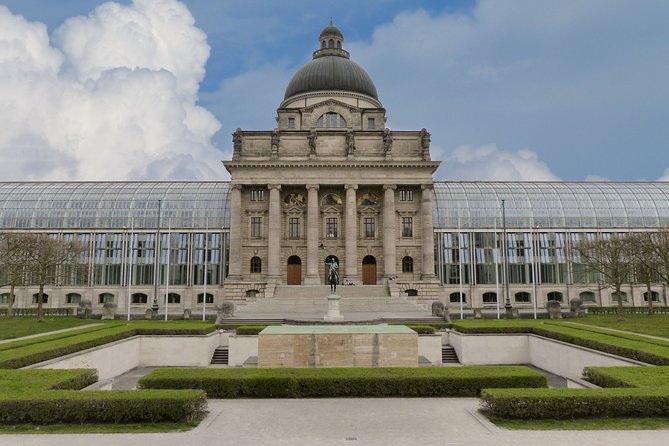
- Bayerische Staatskanzlei: political parties and the Sopade angle
- Prinzregentenstraße and the Luftwaffe command site
- Bavarian National Museum and the Valkyrie Operation
- Haus der Kunst: censorship, Degenerate Art, and propaganda
- Ludwigskirche: Church, Law T4, and religious resistance
- DenkStätte Weisse Rose: the White Rose in Munich
- Türkenstraße: Georg Elser and attention against the Führer
- Price and what you’re really paying for
- Logistics that actually matter: timing, walking flow, and transit
- Who this tour is best for
- Should you book this Resistance to Nazism walking tour in Munich?
- FAQ
- Where does the tour start?
- Where does the tour end?
- What time does the tour start?
- How long is the Walking Tour on Resistance to Nazism in Munich?
- How much does it cost?
- What ticket type do I receive?
- Is admission included at the stops?
- How many people are in a group?
- Are service animals allowed?
- What is the cancellation policy?
Key things you’ll notice on the Resistance to Nazism walk
- A tight 2.5-hour route that keeps momentum while covering eight major anti-Nazi themes and locations
- Small groups (max 25), which makes it easier to ask questions during the walk
- Free admission is built in at every listed stop, so you’re not scrambling for entry tickets
- Stories across different forms of resistance, from political groups to cultural censorship and armed plots
- Memorials that bring names into focus, including the Georg Elser memorial and the White Rose group
- A mobile ticket option, which makes the day feel simpler
More walks tracing Munich Third Reich and wartime history
- Munich: Third Reich & WWII Walking Tour★ 4.6 · 6,181 reviews
- Third Reich Walking Tour Munich★ 4.5 · 4,291 reviews
- Munich: Birthplace of the Third Reich Guided Walking Tour★ 4.6 · 771 reviews
- Munich World War II Sites Including Dachau Concentration Camp★ 4.5 · 570 reviews
Resistance in Munich starts at Odeonsplatz
If you want Munich history that goes past plaques and post cards, this is a strong pick. The tour runs from Odeonsplatz and finishes at Georg-Elser-Platz, so you’re walking through parts of central Munich that line up naturally with the story the guide tells. It lasts about 2 hours 30 minutes, which is long enough for context but short enough that you won’t feel dragged.
I like that the pace is structured. Each stop is around 20 minutes, which means you keep moving and your brain stays engaged. You also get a “then-and-now” feeling: today’s buildings look permanent, but the tour shows how fast power structures shifted—and how resistance took different shapes depending on where you stood.
Guides matter on a topic like this, and the feedback around names like Laura, Maca, Javier, and Jaime points to a consistent pattern: friendly delivery, clear explanations, and enough detail to satisfy people who want more than headlines. If you care about understanding rather than just collecting facts, this tour leans that way.
Hofgarten: royal life under Nazi pressure
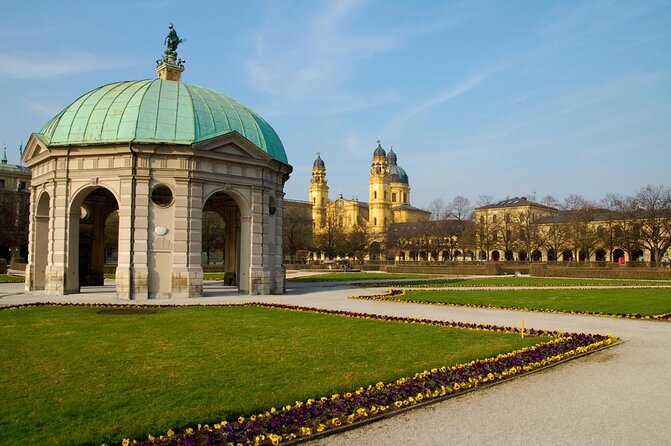
Your first stop is Hofgarten, where the guide talks about how the royal family lived during the Nazi period and what the political situation looked like at the time. This is a smart opening because it frames resistance as something that didn’t only happen in dark basements or secret pamphlets. It also involved public life, status, and the complicated choices made by people close to the center of power.
Even if you already know the broad arc of the era, you’ll likely appreciate how the tour positions this segment. It’s not only about Nazi power. It’s also about the pressure around traditional authority and what “life at the top” could look like when a dictatorship settles in.
Practical note: the stop is listed as about 20 minutes, so come ready for a focused introduction, not a long lecture.
Bayerische Staatskanzlei: political parties and the Sopade angle
Next up is Bayerische Staatskanzlei, and the topic shifts from royal life to how political parties pushed back against the Nazi regime. This is where you start seeing resistance as a spectrum. Some opposition was public and organized. Some was political maneuvering. The tour specifically highlights the Sopade, giving you a concrete entry point into the idea that not everyone stayed quiet or compliant.
I like this stop because it helps you sort out what “resistance” means in real life. It’s easy to think of resistance only as dramatic acts. But when the guide talks about political resistance and a named group like Sopade, it makes the concept feel less abstract.
Again, the stop is short—about 20 minutes—so the guide will focus on big connections rather than trying to cover every faction detail.
More laps of the Altstadt and Marienplatz
- Munich: Old Town & Viktualienmarkt City Walk in German
★ 4.7 · 2,304 reviews - Munich: Night Watchman Walking Tour
★ 4.7 · 2,092 reviews - Munich Ghosts and Spirits Evening Walking Tour
★ 5.0 · 1,900 reviews
Prinzregentenstraße and the Luftwaffe command site
At Prinzregentenstraße, you move to a former building connected with the Luftwaffe Command Center. The tour discusses resistance within the militia itself. This is one of those “wait, that makes sense” moments. If you’re used to thinking of dictatorships as monolithic, this stop adds the nuance that people can resist even from inside institutions that are usually portrayed as loyal.
It also changes the mood. You go from politics and public opposition into the machinery of state power—military structures—and then into the uncomfortable question of what dissent looks like when you’re inside the system.
This is a good stop for you if you like causal thinking: How do dissenting voices form? How do they spread? The guide’s job here is to connect the dots between environment and attitude, and the format of the walk makes it easier to keep those dots in your head.
Bavarian National Museum and the Valkyrie Operation
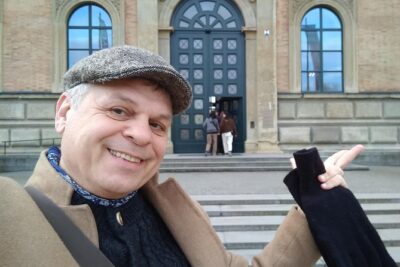
Now the tour heads to Bavarian National Museum, where the discussion turns to the Valkyrie Operation. Even without getting bogged down in heavy technicalities, this stop gives context for the kind of resistance that wasn’t just disagreement—it was plotting and action aimed at changing what the regime was doing.
I appreciate how the tour doesn’t treat this part as a movie-style plot summary. In a walking format, it feels more grounded. You’re standing in a real urban space while the guide links that location to the history of organized resistance.
One consideration: because the stop is around 20 minutes, you’ll probably leave with a strong understanding of the topic’s place in the broader story, but not with a full step-by-step of every component. If you want more detail, plan to use the key names and concepts from this stop as your next reading list.
Haus der Kunst: censorship, Degenerate Art, and propaganda
At Haus der Kunst, the tour tackles how Nazism tried to censor art. It includes discussion of the exhibition of Degenerate Art and how the press was managed through a propaganda apparatus. This stop is crucial because it shows resistance isn’t only about fighting armed threats. It’s also about defending ideas, culture, and the right to represent people without turning them into enemies or caricatures.
The best part of this stop is that it teaches you how propaganda works as a system. You don’t just hear that art was targeted. You hear how the regime used visibility, messaging, and institution power to shape what the public was allowed to see and believe.
For you, this can be a memorable “wow, it was all connected” segment. Art, media, and politics feed each other in a dictatorship. When you understand that link, other parts of the tour click more clearly.
Ludwigskirche: Church, Law T4, and religious resistance
Next is Ludwigskirche, and the tour explains the relationship between the Church and Nazism, including discussion of Law T4, along with how religious groups resisted the regime. This is a difficult stop, and it matters because it adds moral and institutional layers to the story.
I like that this segment doesn’t treat religious opposition as a generic “good guys vs bad guys” tale. It frames the relationship as contested—Churches weren’t simply outside the system. They had to navigate power, conscience, and what resistance could look like in a society being forced into one worldview.
Because the walk is structured for about 20 minutes, the guide will focus on the key connections and what they meant, rather than turning this into a full academic history seminar.
DenkStätte Weisse Rose: the White Rose in Munich
At DenkStatte Weisse Rose, you meet what the tour presents as Munich’s best-known resistance group: the White Rose. This is one of the most emotionally direct stops on the route. A resistance movement with a recognizable name becomes more than a concept. It becomes something you can place into the city’s geography.
What you’ll likely appreciate here is how the guide bridges the group’s story with the larger pattern you’ve been building: resistance wasn’t only political strategy or institutional dissent. It also came from people who chose to speak out and risk everything.
This is also a good stop to ask questions, because the White Rose segment tends to invite curiosity. If your guide has a style like Laura or Javier—friendly, clear, and willing to answer—you’ll get more from this segment than you would from walking past signs on your own.
Türkenstraße: Georg Elser and attention against the Führer
The final story stop is Türkenstraße, focused on the Georg Elser Memorial and the idea of attentive action against the life of the Führer. This ending matters because it shifts the lens again: from groups and ideology to a single person’s decision to target the regime’s top.
I like that the tour closes with a memorial element. Walking the route with heavy themes can feel abstract until you reach a place meant for remembrance. By the time you arrive at Georg-Elser-Platz, you’ve already seen resistance as politics, culture, faith, and organization—so the end lands as a concrete example of resistance as action.
Because the stop is listed as around 20 minutes, expect a focused ending rather than an extended ceremony. Still, it gives you a strong final “hook” into what resistance can look like when someone decides they can’t accept the world being built around them.
Price and what you’re really paying for
The price is $19.49 per person for an experience that runs about 2.5 hours. That may feel modest for a topic this weighty. The value comes from two things.
First, you’re getting a guided thread through multiple sites tied to resistance. You’re not just visiting one museum or one square. You’re building a connected story as you move across Munich.
Second, admission ticket is free at each listed stop, which reduces friction. You’re spending money on interpretation, not on figuring out ticket rules during a historical walk.
The tour also has a max group size of 25, which usually helps keep questions possible and keeps the tone closer to discussion than a lecture.
If you’re weighing this against doing the sites on your own, the difference is time and coherence. It’s one thing to walk past buildings. It’s another to have someone explain what to notice and how those places connect.
Logistics that actually matter: timing, walking flow, and transit
This tour starts at 3:00 pm and ends at Georg-Elser-Platz in Munich-Maxvorstadt. Starting and ending in different places is helpful if you plan the rest of your afternoon or evening. You can get dinner nearby without backtracking.
It’s also described as near public transportation, which matters if the weather turns or your schedule is tight. A mobile ticket keeps things simple on the day, and service animals are allowed.
Because the route is a walking tour, wear comfortable shoes. You’ll likely move between several stops across central Munich, and you don’t want sore feet cutting into your attention span for history.
Who this tour is best for
This works well if you want history with structure and human stakes. It’s especially good for you if you care about how resistance took multiple forms—political organizing, religious opposition, cultural pushback, and direct action.
It’s also a solid choice if you like guided clarity. The guides highlighted by name for being friendly and easy to understand suggest this tour doesn’t assume you already know all the terms.
You may want to think twice if you prefer lighter, purely architectural tours. This route is built around a dictatorship era and the people who fought it, so the tone will be serious.
Should you book this Resistance to Nazism walking tour in Munich?
Yes, if you want a guided route through key Munich sites connected to anti-Nazi resistance. At $19.49 for 2.5 hours, with free admissions at the listed stops and a small group size, it’s strong value for a story that’s bigger than any one place. It’s also worth booking if you’re aiming for understanding, not just sightseeing.
If you’re sensitive to heavy topics, go in with the right expectations. This is not background noise. It’s history with names and consequences. For many people, that’s exactly why it’s worth doing.
FAQ
Where does the tour start?
The tour starts at Odeonsplatz (Odeonspl., 80333 München, Germany).
Where does the tour end?
The tour ends at Georg-Elser-Platz, 80799 München-Maxvorstadt, Germany.
What time does the tour start?
The start time is 3:00 pm.
How long is the Walking Tour on Resistance to Nazism in Munich?
It runs for about 2 hours 30 minutes.
How much does it cost?
The price is $19.49 per person.
What ticket type do I receive?
It uses a mobile ticket.
Is admission included at the stops?
The tour information lists admission tickets as free at each listed stop.
How many people are in a group?
The tour has a maximum of 25 travelers.
Are service animals allowed?
Yes, service animals are allowed.
What is the cancellation policy?
You can cancel for a full refund up to 24 hours in advance of the experience start time. If you cancel less than 24 hours before, the amount paid is not refunded.
More Altstadt and Marienplatz Walks


More Third Reich and WWII History in Munich

Just added to the Munich Explorer notebook

Third Reich & WWII History Tours, compared.
 ★ 4.6Third Reich & WWII Walking TourFrom $316,181 reviews
 ★ 4.5Third Reich Walking Tour MunichFrom $454,291 reviews
 ★ 4.6Birthplace of the Third Reich Guided Walking TourFrom $29771 reviews
 ★ 4.5Munich World War II Sites Including Dachau Concentration CampFrom $105570 reviews
 ★ 5.0Munich City Walking Tour, includes Third Reich & ViktualienmarktFrom $31458 reviews
 ★ 4.5Third Reich & WWII Walking TourFrom $35417 reviews
 ★ 4.9Munich 3-Hour Segway Tour: Nazi Munich & Royal ArchitectureFrom $91194 reviews
 ★ 5.0Dachau Concentration Camp Memorial Site And Third Reich Day Tour From MunichFrom $145185 reviews
Browse the lists this tour appears in