
Reviewed · THIRD REICH & WWII HISTORY TOURS
Walking Tour on Origins of Nazism in Munich – English
Nazism didn’t start in a vacuum. This 2-hour walk ties ideology to real Munich locations, from beer-hall politics to propaganda architecture. I like the expert-guided storytelling that connects major episodes of the movement to what you can actually see on the street. I also like that you get a balanced tour structure: victims and resistance appear alongside the sites tied to Nazi power.
The topic is heavy, and the time is short. If you know nothing yet, you’ll likely want to pair this with a longer museum visit afterward, because the subject matter is enormous and 2 hours goes fast.
In This Review
- Key highlights
- Price and what $20.16 buys you in Munich
- Where the tour starts at Marienplatz and how the walk feels
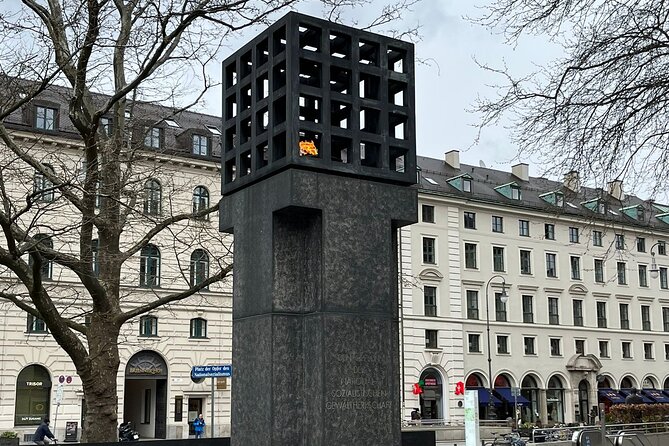
- Stop 1: Platz der Opfer des Nationalsozialismus, victims first
- Stop 2: Staatliches Hofbräuhaus, where the party gained ground
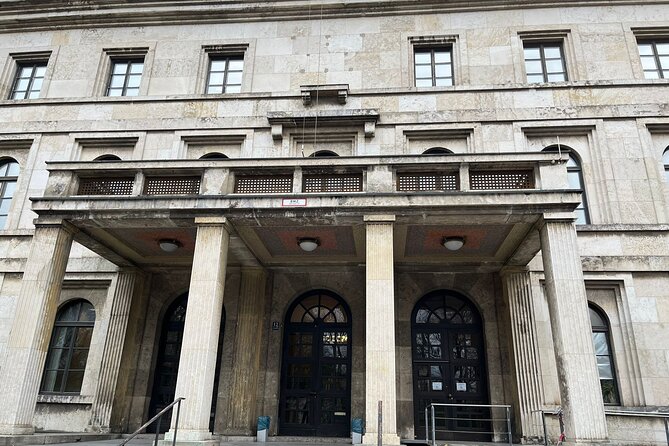
- Stop 3: Haus der Kunst, propaganda architecture with a modern use
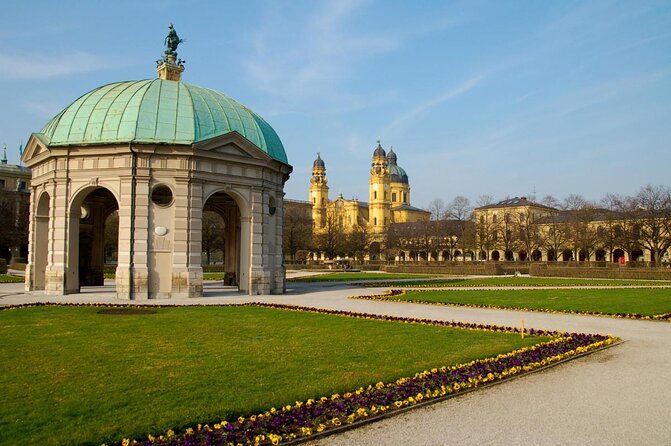
- Stop 4: Hofgarten, a necessary pause in the middle
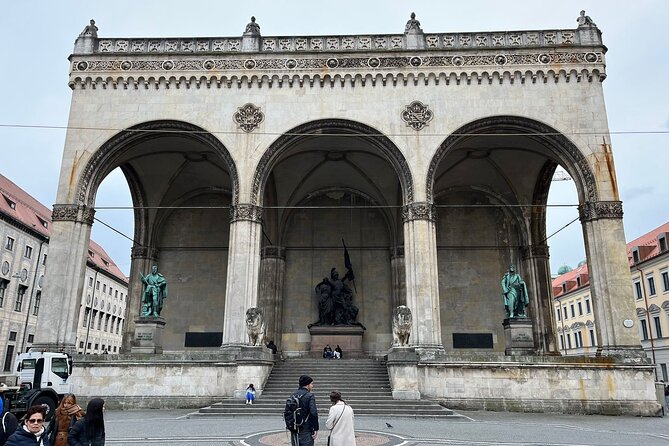
- Stop 5: Odeonsplatz, the monumental square connection
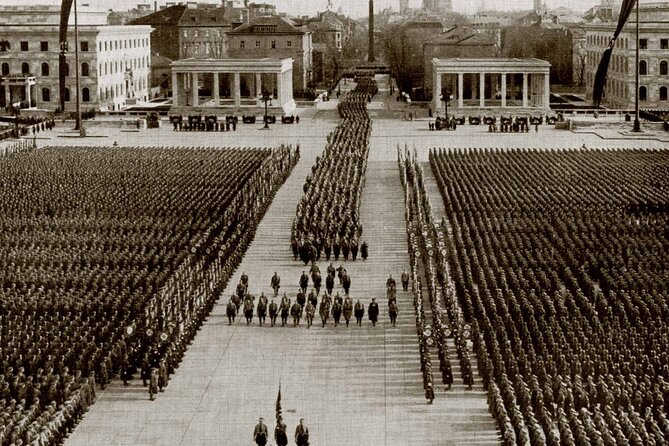
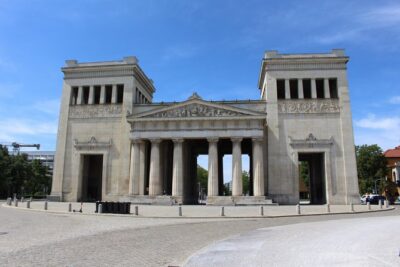
- Stop 6: Königsplatz, the backbone of the regime’s new city
- The big episodes your guide will connect to what you see
- What to watch for: how not to misread these places
- Who this tour is best for
- A simple plan to get the most out of your day
- Should you book this walking tour?
- FAQ
- How long is the walking tour?
- Where does the tour start and end?
- What language is the tour offered in?
- Is the ticket mobile?
- What is included in the price?
- What is the cancellation policy?
Key highlights
- Victims first at Platz der Opfer des Nationalsozialismus, before the tour turns to the machinery of power
- Staatliches Hofbräuhaus as the beer-hall setting where the Nazi party built its base
- Haus der Kunst as a key propaganda building turned current museum stop
- Odeonsplatz and Königsplatz for the monumental squares and spaces tied to the new regime’s vision
- Hofgarten as a breather between hard subjects, without losing the historical thread
- Built-in value: the guide and some admissions are included in the ticket price
More walks tracing Munich Third Reich and wartime history
- Munich: Third Reich & WWII Walking Tour★ 4.6 · 6,181 reviews
- Third Reich Walking Tour Munich★ 4.5 · 4,291 reviews
- Munich: Birthplace of the Third Reich Guided Walking Tour★ 4.6 · 771 reviews
- Munich World War II Sites Including Dachau Concentration Camp★ 4.5 · 570 reviews
Price and what $20.16 buys you in Munich
At about $20.16 per person, this is one of the more affordable ways to understand Munich’s role in the rise of Nazism—especially because you’re not just walking past photos. You have an English expert guide, plus included admission tickets at several stops.
The math is pretty straightforward. You’re paying for guided time (2 hours), explanation, and entry costs at the locations that require them. Some stops are free to visit, while others include tickets right in the tour. That means you’re less likely to waste time on ticket hassles or having to decide mid-walk what’s worth paying for.
One more practical point: the group size is capped at 35 travelers. That’s big enough to stay lively, but small enough that you usually won’t feel like you’re stuck behind a wall of shoulders.
Where the tour starts at Marienplatz and how the walk feels
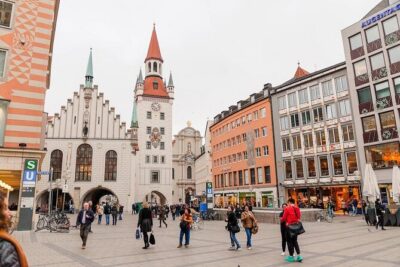
You begin at the Mariensäule at Marienplatz 22, right in the thick of Munich’s central sights. Starting here matters. It helps you anchor the story in a real city that still functions as a living place—shops, commuters, and tourists—rather than treating history like something sealed behind museum glass.
The tour runs about 2 hours and is built from short segments. Most stops are around 15 to 20 minutes, which means you’ll get focused context without the fatigue of long lectures every step. You also end at Königsplatz 1, so you finish right in another historically loaded open area instead of cutting out early.
Because it runs in a compact window, you should plan to arrive a few minutes early. This kind of walk works best when you’re not rushing to find the exact meeting spot while the group moves on.
Stop 1: Platz der Opfer des Nationalsozialismus, victims first
The tour starts at Platz der Opfer des Nationalsozialismus—the Square of the Victims of National Socialism—and that ordering is not just symbolic. It sets the tone that the story isn’t only about ideology and politics. It’s about people who suffered because of those choices.
This is the first moment where you should slow down and take in what you’re actually looking at, because the later stops can become easy to treat like “cool buildings” or “important squares.” Starting here reminds you why those places matter.
A good guide will likely explain how public memory works in Germany: how cities choose locations to acknowledge victims and resistance, not just perpetrators. Even if you’re in a rush, give this stop your attention—because it becomes your reference point for the rest of the walk.
More laps of the Altstadt and Marienplatz
- Munich: Old Town & Viktualienmarkt City Walk in German
★ 4.7 · 2,304 reviews - Munich: Night Watchman Walking Tour
★ 4.7 · 2,092 reviews - Munich Ghosts and Spirits Evening Walking Tour
★ 5.0 · 1,900 reviews
Stop 2: Staatliches Hofbräuhaus, where the party gained ground
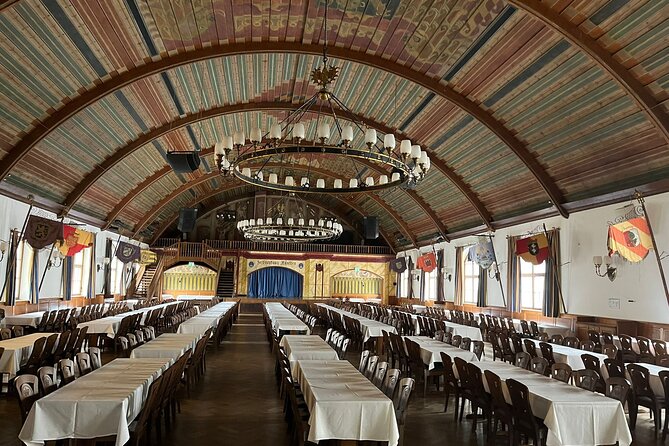
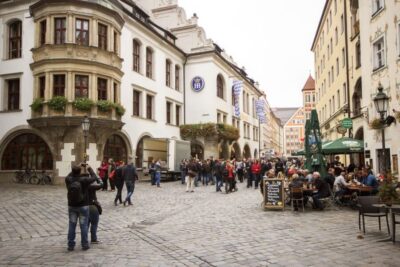
Next comes Staatliches Hofbräuhaus, often called the mother of all breweries. For this tour, it’s not about beer culture as a novelty. It’s about how political movements can take root in public social spaces—places where people gather, talk, and feel like they belong.
Your guide connects what happened here to the Nazi party establishing a base there. That connection matters because it makes the ideology feel less like an abstract theory and more like a real-world campaign built on influence, propaganda, and momentum.
Practical note: this stop includes an admission ticket. That’s a good sign. It means the visit isn’t just passing the facade. Expect you’ll be looking at parts of the site that help explain why it became part of the movement’s early foundation.
Stop 3: Haus der Kunst, propaganda architecture with a modern use
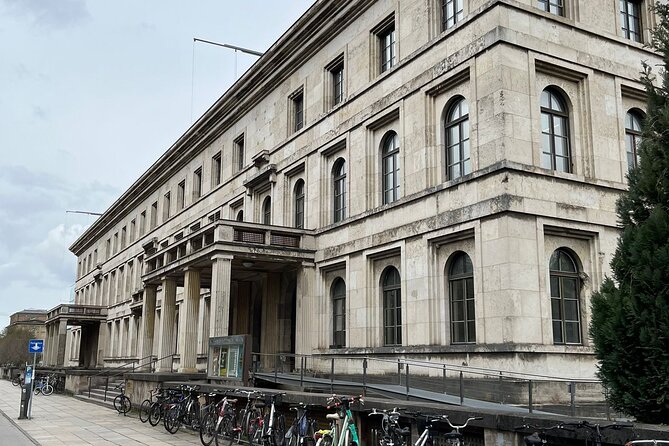
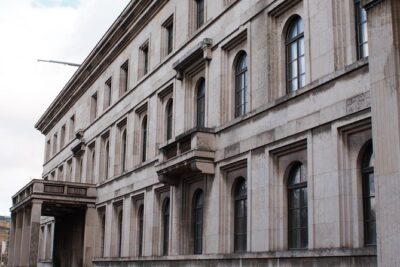
After the beer-hall politics, you shift to Haus der Kunst. The tour frames it as the current museum and the first propaganda building of the Third Reich. That combination—old purpose, new function—is exactly why this stop deserves time.
When you’re looking at a building that once served propaganda, you can see how architecture and public messaging work together. Scale, placement, and presentation aren’t neutral. They’re used to shape how people feel and what they accept.
This stop also includes admission. If you’re someone who likes to understand how messages are designed—through space, layout, and display—you’ll probably enjoy this part more than you expect. It’s also a reminder that history is often repurposed, and the repurposing can be a powerful way to teach.
Stop 4: Hofgarten, a necessary pause in the middle
Then there’s Hofgarten, one of Munich’s most important parks. In a tour like this, that park stop can feel slightly out of place—until you realize it works as a decompression point.
Your guide can use the open space to connect ideas: how society changed, how violence and repression spread, and why the regime’s message became persuasive to some people. A park is a chance to reset your attention so the next monumental sites don’t blur together.
Also, parks are honest. They don’t try to be dramatic. They let you step back and see the city as a city, even while the tour keeps its focus on the darkest parts of the twentieth century.
Stop 5: Odeonsplatz, the monumental square connection
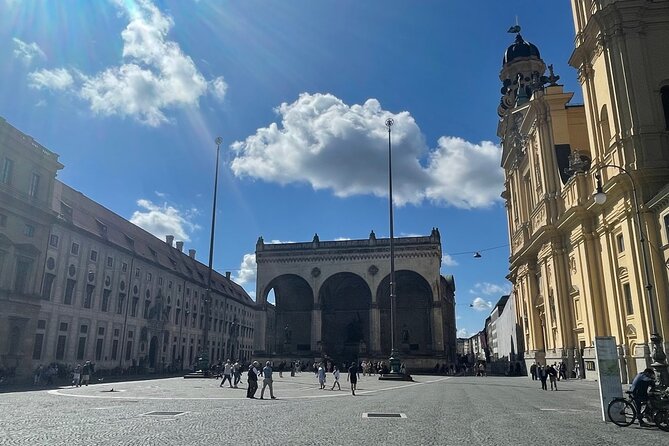
Next is Odeonsplatz, described as one of Munich’s most important squares. Squares like this are where power announces itself. You feel it in the way streets open up and buildings frame the space.
For this tour, Odeonsplatz is part of the route that helps you understand the rise of the Third Reich through the urban landscape. It’s not just what happened; it’s where it happened and how the regime used public space to reinforce authority.
This stop is free of admission, which keeps the pace efficient. You’ll likely get the historical link without spending extra time on ticketing. Still, don’t treat it as a quick photo stop. Squares can look similar if you’re skimming. Pay attention to what your guide highlights—how the story fits into the layout of the city.
Stop 6: Königsplatz, the backbone of the regime’s new city
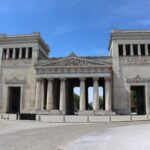
The walk finishes at Königsplatz, where you’ll feel the tour’s final weight. The square is described as one of the main spaces that formed the backbone of the new city designed by the Third Reich.
Königsplatz is where the story clicks into place for many people. In the earlier stops, you’re learning how the movement gained support and built its message. Here, you’re seeing how the regime shaped the physical city to communicate legitimacy and permanence.
This is also an open-air setting, so expect a different vibe from the indoor stops. It’s easier to stand back and take in proportions and sightlines, which can help you understand how a regime tries to make itself look permanent.
The big episodes your guide will connect to what you see
One of the reasons this walk works is that it doesn’t keep history locked in a lecture. It ties the narrative to specific episodes of the era—like Hitler’s coup attempt, the burning of Goebbels’ books, and the Night of Broken Glass—and connects those to why Munich mattered as a stage for ideology and escalation.
This is the part where your guide earns their fee. You’re not just hearing dates. You’re getting explanations that help you interpret the places: why certain locations became key nodes, how propaganda operated, and how the regime’s violence transformed from political threat into large-scale persecution.
It’s also why the tour includes stops connected to resistance and victims of the war. The story isn’t only about the machinery of Nazism; it’s also about how people opposed it—and what the city chose to remember.
What to watch for: how not to misread these places
This tour’s theme can lead people to treat historic sites like a checklist. Don’t. A few things help you get more value out of the walk:
- Treat each stop as a clue, not a performance. Your guide’s job is to connect context to the physical space.
- When you see monumental squares, think about power. What kind of message does a regime want a citizen to feel while standing there?
- When you see sites tied to propaganda, remember they were designed to persuade. Even if the modern use is different, the original purpose still influences how you should read the space.
- Keep the victims stop in mind as your moral baseline. It changes how you experience the later sites.
You’ll likely come away with better context for Munich’s later memorial landscape too, because the tour points you toward monuments dedicated to resistance and war victims, not just the famous “power” addresses.
Who this tour is best for
This is a smart fit if you want a strong introduction without committing to a full-day museum marathon. If you’re new to twentieth-century history, you’ll likely appreciate how quickly the guide gives you a framework and a sense of what matters.
It also suits you if you prefer walking tours where the guide helps you read the city. You get to see key sites in a compact route and understand why they belong together.
If you already know a lot and want deeper treatment of policies, courts, or specific political networks, you might find 2 hours feels tight. That’s not a failure of the guide—it’s just the scale of the topic. For maximum satisfaction, you may want to plan a follow-up museum visit where you can spend more time.
A simple plan to get the most out of your day
Because the tour runs about 2 hours in the afternoon (start time 3:00 pm), it’s easy to pair with other Munich classics before or after. Try this approach:
- Do a first walk or coffee stop near Marienplatz so you’re settled and not rushing.
- During the tour, focus on the meaning your guide highlights rather than hunting for perfect photos.
- After the tour ends at Königsplatz, consider adding time somewhere else in the city center for perspective and recovery, especially given how heavy the topic is.
If you want to extend the learning, plan one or two extra hours at a museum or exhibit on related themes. This helps the tour feel like part one, not the whole story.
Should you book this walking tour?
Yes—if you want a focused, English-guided introduction to how Nazism gained momentum in Munich and how the city memorializes the victims and resistance. The price is reasonable for what you get: expert guidance, a tight route, and included admissions at several key stops.
Book it especially if you’re the type who learns best by seeing places in context. You’ll leave with a clearer mental map of Munich’s most important historical nodes—from the victims square to Königsplatz—and you’ll know what to look for when you return on your own.
One caution: come prepared for difficult subject matter. This is history about persecution and violence, not just architecture. If you’re looking for a light, carefree afternoon, this isn’t that. But if you want understanding, grounding, and practical context in a short walk, it’s a strong choice.
FAQ
How long is the walking tour?
The tour lasts about 2 hours.
Where does the tour start and end?
It starts at Mariensäule, Marienplatz 22, 80331 München, Germany, and ends at Königsplatz 1, 80333 München, Germany.
What language is the tour offered in?
The tour is in English.
Is the ticket mobile?
Yes, it’s a mobile ticket.
What is included in the price?
The price includes an expert guide. Admission tickets are included for some stops, while others are free.
What is the cancellation policy?
You can cancel for a full refund up to 24 hours before the experience starts.
More Altstadt and Marienplatz Walks
More Third Reich and WWII History in Munich
Just added to the Munich Explorer notebook
Third Reich & WWII History Tours, compared.
 ★ 4.6Third Reich & WWII Walking TourFrom $316,181 reviews
 ★ 4.5Third Reich Walking Tour MunichFrom $454,291 reviews
 ★ 4.6Birthplace of the Third Reich Guided Walking TourFrom $29771 reviews
 ★ 4.5Munich World War II Sites Including Dachau Concentration CampFrom $105570 reviews
 ★ 5.0Munich City Walking Tour, includes Third Reich & ViktualienmarktFrom $31458 reviews
 ★ 4.5Third Reich & WWII Walking TourFrom $35417 reviews
 ★ 4.9Munich 3-Hour Segway Tour: Nazi Munich & Royal ArchitectureFrom $91194 reviews
 ★ 5.0Dachau Concentration Camp Memorial Site And Third Reich Day Tour From MunichFrom $145185 reviews
Browse the lists this tour appears in