
Reviewed · THIRD REICH & WWII HISTORY TOURS
Third Reich – Facts about WWII : Small Group Walking tour
Third Reich history, on foot. This small-group walking tour links the places in Munich tied to the Nazi rise and WWII aftermath, with stops from Königsplatz to the Residenz and a mobile ticket for an easy start.
I like the way the route is built around specific locations and specific stories. You’ll see the book-burning context at Königsplatz and hear how Leni Riefenstahl is connected through camera positions, not just generic Nazi slogans.
One consideration: a lot of the subject matter is heavy, and a few stops have attractions where admission is not included. If you prefer light or purely museum time, this may feel like a lot in 2–3 hours.
In This Review
- Key things to know before you go
- Munich’s Third Reich tour: a focused walk with a real guide
- Where you meet, where you end, and how long it takes
- The value of paying $109.86 for this walk
- Königsplatz: book burning, Leni Riefenstahl angles, and propaganda space
- The Paul von Trost stops: architecture built for Nazi intent
- The NS-Dokumentationszentrum stop: Brown House, organization, and church involvement
- Karolinenplatz and the Bruckmanns: how society fed the rise
- Justizpalast: trials tied to the Scholl sisters and Nazi-era proceedings
- Briennerstraße 7 and Haus der Deutsche Ärzte (No. 23): a chilling look at doctors’ decisions
- Platz der Opfer des Nationalsozialismus: Gestapo roots and a victim monument
- Residenz München: Nazi life in a royal setting and the story of the Amazones
- Hofgarten: Degenerated Art and expressionist artists
- Ludwig Maximilian University: sister Scholl and the White Rose resistance
- Odeonsplatz: the Hitler Putsch and how the story repeats in the same square
- Haus der Kunst: Paul von Trost’s art space and how the regime framed art
- Walking logistics: what this tour feels like in real life
- When and for whom this walk makes sense
- Final call: should you book this Third Reich WWII walking tour?
- FAQ
- How long is the Third Reich – Facts about WWII walking tour in Munich?
- Where do I meet the guide, and where does the tour end?
- Is this a small group tour?
- Is admission included for the stops?
- Is it easy to get to the start area?
- Can I cancel for a full refund?
- Quick decision help
Key things to know before you go
- Small group size (up to 15) means you’re not shouting over a crowd for answers
- A tight 2–3 hour route hits major Third Reich touchpoints without you building an itinerary
- Free stops are mixed with ticketed locations (some entrances aren’t included)
- Stories name real places and real figures, from White Rose connections to Munich trial sites
- It’s a walk-first plan that helps you avoid traffic and get your bearings fast
More walks tracing Munich Third Reich and wartime history
- Munich: Third Reich & WWII Walking Tour★ 4.6 · 6,181 reviews
- Third Reich Walking Tour Munich★ 4.5 · 4,291 reviews
- Munich: Birthplace of the Third Reich Guided Walking Tour★ 4.6 · 771 reviews
- Munich World War II Sites Including Dachau Concentration Camp★ 4.5 · 570 reviews
Munich’s Third Reich tour: a focused walk with a real guide
Munich can feel big and spread out. This tour keeps it human. You cover a cluster of key WWII-era sites on foot in a set window of about 2 to 3 hours, guided start to finish.
The guide lead matters here. You’re not just collecting photos. You’re getting explanations for what you’re looking at, plus direction on where to stand and what to notice. The walking pace is also meant to fit your group, so it doesn’t turn into a forced march.
And for practical peace of mind, it’s built around a mobile ticket. Bring your phone (charged), and you’ll be ready at the meeting point.
Where you meet, where you end, and how long it takes
You start at Karlstor (KarlstorNeuhauser Str., 80331 München) around 1:00 pm. You finish at Haus der Kunst (Prinzregentenstraße 1, 80538 München). That end point is handy if you want to keep going with art and architecture nearby, or grab lunch afterward without doubling back.
The tour itself is short. Each stop is usually only about 5 to 15 minutes, with the guide filling that time with context. That makes it ideal if you want WWII-focused orientation without sacrificing your whole day.
If you’re timing a museum visit right after, plan a little buffer. Some stops have admission that isn’t included, and you may want extra time depending on your interests.
The value of paying $109.86 for this walk
At $109.86 per person, the biggest value isn’t “seeing more places.” It’s seeing the right places with someone explaining what they mean.
This price includes a professional guide, and that matters because the sites are layered. For example, you’ll stand at locations tied to Nazi organization and propaganda, and the guide helps you connect those points. Without that, the buildings and squares can look like scenery instead of evidence.
You also get small-group access. With a maximum of 15 people, questions are easier to manage, and the guide can keep the pace aligned with what you actually care about. If you’re the type who likes asking Why was this here? this format tends to work well.
More laps of the Altstadt and Marienplatz
- Munich: Old Town & Viktualienmarkt City Walk in German
★ 4.7 · 2,304 reviews - Munich: Night Watchman Walking Tour
★ 4.7 · 2,092 reviews - Munich Ghosts and Spirits Evening Walking Tour
★ 5.0 · 1,900 reviews
Königsplatz: book burning, Leni Riefenstahl angles, and propaganda space
Your first major stop is Königsplatz. This is where the tour sets the tone: public space designed to carry ideology. You’ll hear about the burning of books, and you’ll also get the details tied to Leni Riefenstahl’s camera positions.
That Riefenstahl connection is useful because it reframes propaganda as something planned—angles, staging, and spectacle. It’s not only about what was said. It’s about how images were made and how they looked when people gathered.
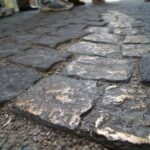
You’ll also spot granit plates over the square. The guide’s job is to translate the physical cues into a story you can actually follow in the moment. Admission here is free for the stop itself, which is a nice bonus on a tour that mixes indoor and outdoor components.
What to watch for: stand where the guide tells you to. The “right spot” is part of the point at places like this.
The Paul von Trost stops: architecture built for Nazi intent
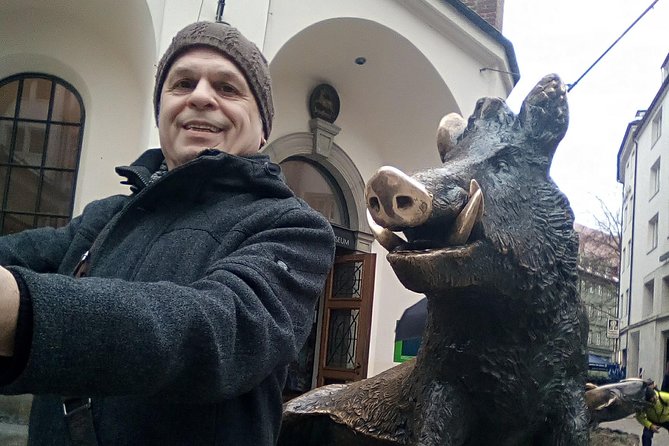
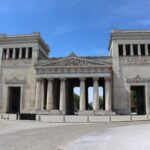
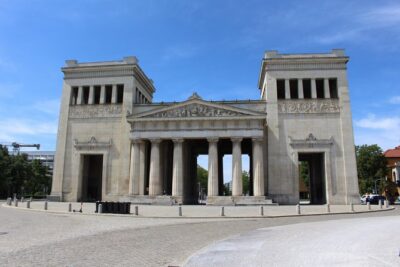
Right after Königsplatz, you’ll pass by the Museum für Abgusse Klassischer Bildwerke. These are the twin buildings designed by Paul von Trost, built for the Nazi era.
This is one of the tour’s best examples of how ideology can show up in stone. Even without entering a museum, the architecture signals “official power.” The guide will help you connect the building style to the Nazi project and what it was trying to project in public life. Admission for this stop is not included, so if you want to go inside for longer, you may need to plan for an extra ticket.
The tour continues with more von Trost connections later, so you’ll start noticing recurring themes. That repetition is helpful. You learn faster when the guide revisits the same creator across different sites.
The NS-Dokumentationszentrum stop: Brown House, organization, and church involvement
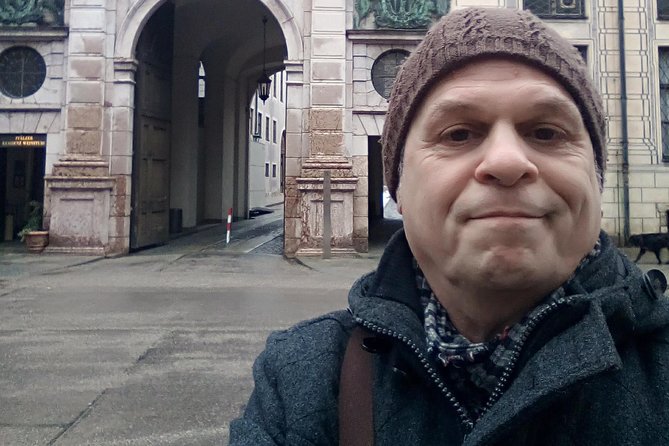
Next up is the NS-Dokumentationszentrum München. Admission is not included here. Still, the stop is meaningful because it’s tied to how the Nazi movement organized itself.
You’ll hear about the Brown House and how Hitler organized the NSDAP. You’ll also learn about the involvement from the church in WWII as part of the story the guide presents.
This is a section where the tour can feel emotionally intense. That’s because the themes aren’t abstract. They’re tied to how institutions behaved and how power was coordinated.
Possible drawback: if you’re already “museumed out,” the fact that admission isn’t included can feel a little like a tease. On the other hand, the guide’s explanation at street level can be enough to make the area click, even if you skip deeper entry.
Karolinenplatz and the Bruckmanns: how society fed the rise
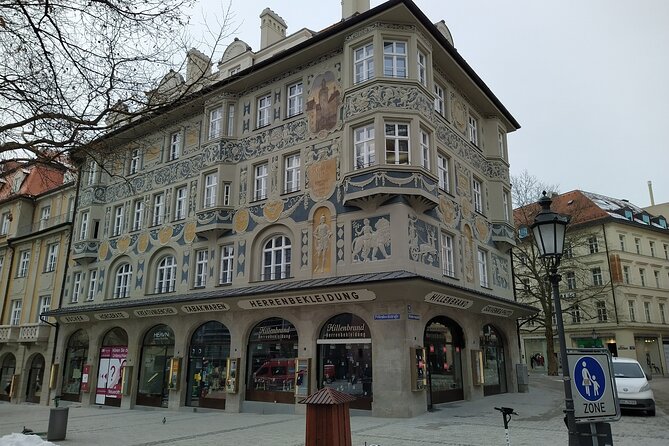
At Karolinenplatz, the tour points you toward the role of people connected to Hitler’s early social exposure. You’ll hear about the Bruckmanns, described here as significant in the rise of Hitler as a charismatic figure, and also as people who helped introduce him to society.
This stop is important because it widens the story beyond the obvious villains and visible rallies. The guide frames it as how influence can work through networks and acceptance, not only through speeches.
It’s also a quick one, with time focused on getting the point across clearly. Admission here is free.
Justizpalast: trials tied to the Scholl sisters and Nazi-era proceedings
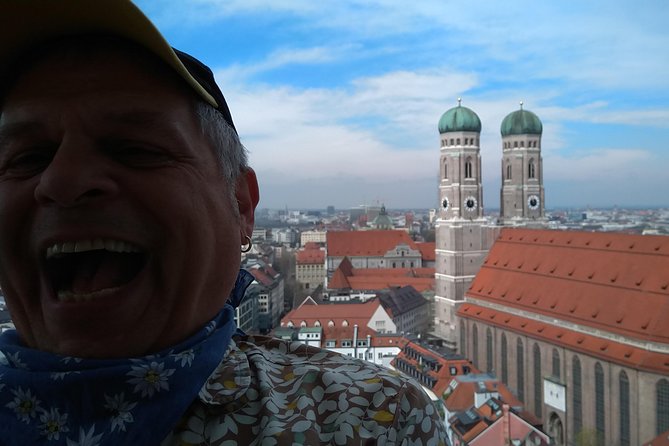
The walk then moves to Justizpalast. Admission is free for the stop itself, and the guide focuses on the trials of the Scholl sisters and on Nazi trials connected with this era.
If you’re trying to understand resistance and punishment, this is where the tour starts to feel like the WWII story turning into consequences. You’re not only seeing places where ideology was performed—you’re seeing places where decisions and trials shaped real lives.
What I like about this segment: it keeps the resistance thread visible. The Scholl name comes back later in the route, and that repetition helps your brain keep a clear line through the timeline the guide is building.
Briennerstraße 7 and Haus der Deutsche Ärzte (No. 23): a chilling look at doctors’ decisions
At Briennerstraße 7, the tour calls your attention to Haus der Deutsche Ärzte (number 23). The subject is grim: doctors deciding about life and death of many.
This stop isn’t trying to shock you with vague horror. It’s tied to a specific location and the kind of authority that can happen when institutions decide human worth. The guide gives enough context to understand why this building belongs in the “WWII facts” conversation.
Admission is free for this stop. Still, take a minute here. You’ll likely want it.
Platz der Opfer des Nationalsozialismus: Gestapo roots and a victim monument
Next is Platz der Opfer des Nationalsozialismus. Before you reach it, you’ll see the early Wittelsbacher Palais, described as central from the Gestapo. Afterward, you’ll look at the monument to the victims from the NSDAP.
That sequence matters. It forces a contrast between power and remembrance. The guide uses the geography of the area to help you feel the shift—from where fear and control were centralized, to where public memory is set in stone.
Admission is free for this stop. If you’re sensitive to symbolism, this is one of the places where you’ll probably remember exactly where you stood.
Residenz München: Nazi life in a royal setting and the story of the Amazones
The tour heads to Residenz München, where the guide notes that a Nazi man once lived there, in the Bavarian residence of kings and dukes. Admission is not included for this stop.
You’ll also hear about the night of the amazones as part of the explanation. Even if you don’t enter any rooms, the point is clear: power used the existing prestige of older institutions.
Consideration: because admission isn’t included, you’re relying on the guide’s explanation and what you can see from outside or limited viewing. If you love deep museum entry time, you may want to plan a separate visit later.
Hofgarten: Degenerated Art and expressionist artists
At Hofgarten, the tour brings up Degenerated Art—connected to an exhibit from many expressionist artists. Admission is free for the stop.
This is one of those segments that helps you understand the Nazi worldview as something that controlled culture, not just politics. The guide’s explanation turns an outdoor stop into a story about artistic suppression and what the regime considered acceptable.
It’s a calmer-feeling topic than some of the trials and medical decisions, but it still carries weight. You’ll likely come away noticing how the “arts” were treated as a political battleground.
Ludwig Maximilian University: sister Scholl and the White Rose resistance
Then you’ll reach Ludwig Maximilian University, again tied to the sister Scholl and the White Rose resistance against the Nazis. Admission is free for this stop.
This is a repeat thread that pays off. Earlier you heard about trials tied to the Scholl sisters. Here, you get the resistance angle. Together, it helps you see that resistance wasn’t only a slogan—it had human targets, outcomes, and consequences.
If you’re in Munich for WWII-specific sites, this is one of the most meaningful stops on the whole walk.
Odeonsplatz: the Hitler Putsch and how the story repeats in the same square
The tour includes Odeonsplatz, with stops that return to it more than once. You’ll learn about the Hitler Putsch, described as an “exiting chapter” from a tragedy, and later you’ll hear about the Putsch and other major events in the Nazi campaign.
Admission is free at Odeonsplatz for these stops. The guide uses the square to show how quickly the meaning of a place can shift depending on which chapter of history you’re looking at.
Why it’s useful: you see the same open space as both setting and symbol. A guide helps you keep the different events straight instead of letting them blur together.
Haus der Kunst: Paul von Trost’s art space and how the regime framed art
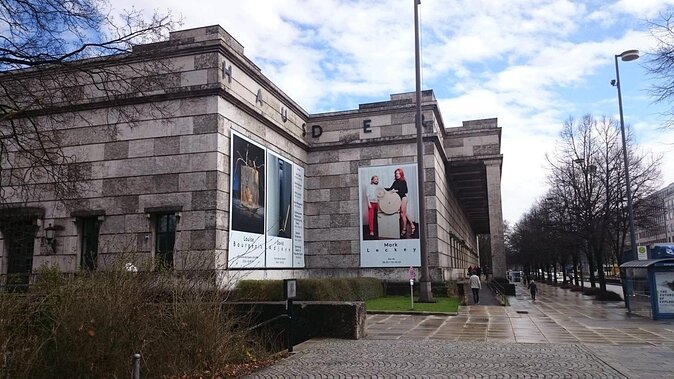
Near the end, you’ll come to Haus der Kunst, with another connection to Paul von Trost and a discussion of art in this building. Admission is not included for this stop.
This pairs well with the earlier “Degenerated Art” conversation at Hofgarten. You get a sense of how art institutions and art controversies were handled as part of Nazi cultural power.
If you want to extend your experience, this is a good place to keep going after the tour ends. The walk finishes near here, so you’re positioned to decide whether you want more inside time.
Walking logistics: what this tour feels like in real life
This is a “stand, learn, walk, repeat” format. Expect frequent short stops, not long sit-down narration. That’s good if you want to stay alert and move through a city with purpose.
Because it’s near public transportation and designed for most travelers, you’re not locked into a single neighborhood bubble. The route is set, but the rest of your day can still flex.
Also, the tour is marked as allowing service animals, which matters for practical planning.
When and for whom this walk makes sense
I think this tour works best for you if:
- you want WWII-era Nazi and resistance context without building an itinerary
- you’re short on time in Munich but still want to hit major sites on foot
- you like a guide who can keep a tight route while answering questions
It may not be the best fit if:
- you want only museum entry time (some stops have admissions not included)
- you prefer a lighter “architecture and cafés” kind of walk
This is a factual, place-based approach. It’s not a theme-park experience, and it doesn’t try to make the topic pleasant.
Final call: should you book this Third Reich WWII walking tour?
If you’re visiting Munich and you want the WWII story grounded in real locations, I’d book it. The small-group size, the guide’s pace, and the mix of major sites—from Königsplatz to Justizpalast—make it efficient and easier to follow than DIY research.
That said, go in knowing it’s serious. If you’re expecting upbeat sightseeing, you’ll be disappointed. If you want clarity, names, and place-based context in a compact 2–3 hours, this walk is a strong choice.
FAQ
How long is the Third Reich – Facts about WWII walking tour in Munich?
The tour runs for about 2 to 3 hours.
Where do I meet the guide, and where does the tour end?
You meet at KarlstorNeuhauser Str., 80331 München, Germany and end at Haus der Kunst, Prinzregentenstraße 1, 80538 München, Germany.
Is this a small group tour?
Yes. It has a maximum of 15 travelers.
Is admission included for the stops?
Not for every stop. Some stops are free, while others list admission as not included, including the Museum für Abgusse Klassischer Bildwerke, NS-Dokumentationszentrum München, Residenz München, and Haus der Kunst.
Is it easy to get to the start area?
The tour is near public transportation, and a service animal is allowed.
Can I cancel for a full refund?
Yes. There is free cancellation up to 24 hours in advance for a full refund.
Quick decision help
Book this if you want a structured, guide-led way to understand Munich’s WWII-era Third Reich sites and the resistance stories tied to them. Skip it if you only want museum time with full admissions included, or if heavy subject matter would slow you down more than you can handle on a short afternoon.
More Altstadt and Marienplatz Walks
More Third Reich and WWII History in Munich

Just added to the Munich Explorer notebook
Third Reich & WWII History Tours, compared.
 ★ 4.6Third Reich & WWII Walking TourFrom $316,181 reviews
 ★ 4.5Third Reich Walking Tour MunichFrom $454,291 reviews
 ★ 4.6Birthplace of the Third Reich Guided Walking TourFrom $29771 reviews
 ★ 4.5Munich World War II Sites Including Dachau Concentration CampFrom $105570 reviews
 ★ 5.0Munich City Walking Tour, includes Third Reich & ViktualienmarktFrom $31458 reviews
 ★ 4.5Third Reich & WWII Walking TourFrom $35417 reviews
 ★ 4.9Munich 3-Hour Segway Tour: Nazi Munich & Royal ArchitectureFrom $91194 reviews
 ★ 5.0Dachau Concentration Camp Memorial Site And Third Reich Day Tour From MunichFrom $145185 reviews
Browse the lists this tour appears in