
Reviewed · THIRD REICH & WWII HISTORY TOURS
Private Munich Old Town and Third Reich Walking Tour
Munich history walks right in front of you. This private Old Town + Third Reich walking tour strings together iconic squares and churches with key locations tied to Hitler and the Nazi rise-and-fall. You’re not stuck with a generic route either; you can nudge the pace and focus to fit what you care about most.
What I really like is the private guide experience. On my tour, guides like Ian and Anja kept the information moving at a comfortable walking pace, and the tone stayed friendly instead of lecture-mode. I also liked how the tour doesn’t treat Munich like a museum hallway. You see big landmarks like Marienplatz and Frauenkirche, then the route shifts into the darker history around the Nazi movement.
One drawback to consider: timing matters. If you start late or the day runs hot, church visits can feel rushed, and one review noted that the focus on the Third Reich portion can vary depending on the guide’s approach. In other words, you’ll get the best results if you confirm your start time and set expectations on the Nazi-era stops early.
In This Review
- Key things to know about this Munich walking tour
- How the 2-hour private format works (and why it matters)
- Starting point and route flow: from Marienplatz outward
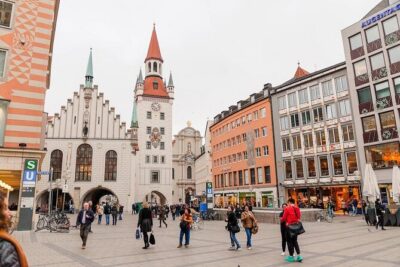
- Marienplatz: where Munich’s old center makes instant sense
- Frauenkirche: seeing the largest church without getting lost
- St. Peter’s Church: the oldest structure vibe
- Rathaus-Glockenspiel: the city’s clockwork personality
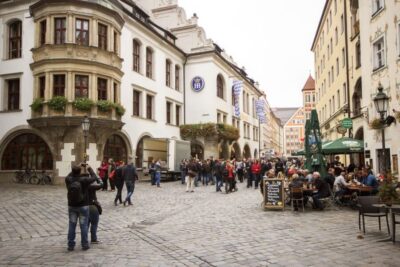
- Hofbräuhaus: classic Munich energy right on the walk
- New Town Hall (Neus Rathaus): why the Gothic look matters
- The Third Reich section: what to expect and how to get value
- Guides and pacing: where the best tours win
- Price and value: what $239.65 buys you in Munich
- Who this tour suits (and who should pick a different approach)
- Practical tips to make it work on the ground
- Should you book this Munich Old Town and Third Reich walking tour?
- FAQ
- Where does the tour start?
- How long is the walking tour?
- Is this a private tour?
- What’s included in the price?
- What language is the tour offered in?
- How big is the group?
- Is food included?
- Is free cancellation available?
Key things to know about this Munich walking tour
- Private, customized pacing for a small group (max 9) so you can ask questions on the spot
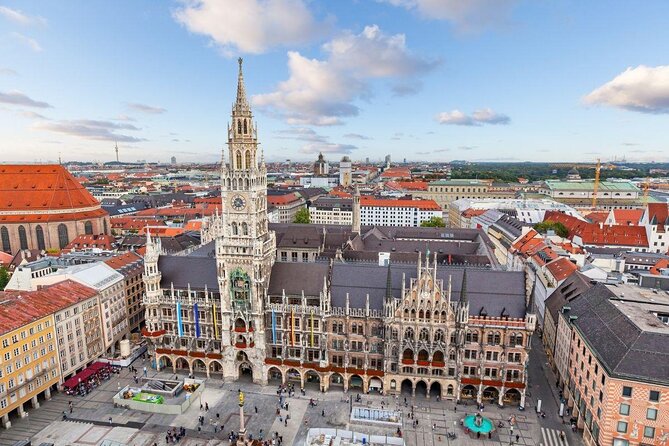
- Old Town staples you’ll recognize fast: Marienplatz, Frauenkirche, St. Peter’s Church, and the Rathaus-Glockenspiel
- Hofbräuhaus on the route for a quick sense of the classic Munich beer hall atmosphere
- Third Reich stops included such as the location tied to Hitler joining the Nazi party, former Gestapo headquarters, and the Beer Hall Putsch site
- Multiple start options: hotel pickup from central Munich or meeting at München Hauptbahnhof
More walks tracing Munich Third Reich and wartime history
- Munich: Third Reich & WWII Walking Tour★ 4.6 · 6,181 reviews
- Third Reich Walking Tour Munich★ 4.5 · 4,291 reviews
- Munich: Birthplace of the Third Reich Guided Walking Tour★ 4.6 · 771 reviews
- Munich World War II Sites Including Dachau Concentration Camp★ 4.5 · 570 reviews
How the 2-hour private format works (and why it matters)
This is a 2-hour walking tour designed to hit a lot of ground without turning into a sprint. You’ll start either with hotel pickup from central Munich or by meeting at München Hauptbahnhof, depending on what you chose. The tour ends back at the starting point, with an option to return to the Radius Tours office in the city if you prefer.
The “private” part is the real deal here. With a dedicated guide, you’re not stuck listening while a big group moves you along like furniture. You can ask follow-ups, steer the conversation, and adjust what you spend time on—especially helpful if you want more church viewing time or more focus on the Nazi-era locations.
Size also helps. The tour runs with a maximum of 9 people, so you’re usually not fighting for attention at every corner. That small-group feel shows up in how smoothly you can compare questions, photos, and quick context from the guide.
Starting point and route flow: from Marienplatz outward
Most first-time visitors to Munich want two things at the same time: orientation and stories. This tour gives you both by beginning at the city’s center of gravity, Marienplatz and then unfolding outward on foot.
In the middle of the walk, you’ll pass by a chain of major landmarks that help you understand how the historic center fits together visually. The key is that you’re not just taking snapshots; the guide uses what you see—square layout, landmark facades, and their roles in the city—to explain Munich’s past alongside its present.
At the end, you’ll return to where you started. That’s a small but important comfort for a short tour, especially if you don’t want to plan transport afterward or worry about where to meet your group.
Marienplatz: where Munich’s old center makes instant sense
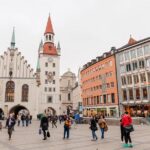
Your first stop is Marienplatz, Munich’s main square since 1158. Even if you’ve never been here before, it’s easy to see why it became the symbolic heart of the city. You get the big-square view right away, plus the kind of “this is how the city organizes itself” perspective that helps everything click later.
This is the sort of stop that works well at the start of a walking tour. You’re fresh, your legs aren’t tired yet, and it’s easier to connect the dots from the stories the guide tells. You also get a clear visual anchor for the rest of the route—like a reference point you can come back to when you’re exploring on your own.
Marienplatz also pairs well with the next big landmark on the walk: the New Town Hall area and the famous Rathaus-Glockenspiel setup that sits right in this orbit of buildings. If you’ve ever heard Munich described as theatrical in a good way, this is where that feeling begins.
More laps of the Altstadt and Marienplatz
- Munich: Old Town & Viktualienmarkt City Walk in German
★ 4.7 · 2,304 reviews - Munich: Night Watchman Walking Tour
★ 4.7 · 2,092 reviews - Munich Ghosts and Spirits Evening Walking Tour
★ 5.0 · 1,900 reviews
Frauenkirche: seeing the largest church without getting lost
Next up is Frauenkirche, described as the largest church of Munich. This stop works because the church is a landmark you can recognize from a distance, yet it still rewards your attention up close. Your guide links what you’re seeing to why it matters in Munich’s identity.
The practical win: when your tour includes obvious anchors like Frauenkirche, you stop second-guessing your bearings. You can look up, spot where you are relative to major buildings, and then follow the route without that constant “are we still in the right place?” feeling.
If you’re hoping for lots of indoor time, keep expectations modest. This is a walking tour, and the schedule is built for multiple stops, so you may not spend long inside every landmark. Still, the stop is valuable for the sheer recognition factor and the way it grounds the walk in the historic center.
St. Peter’s Church: the oldest structure vibe
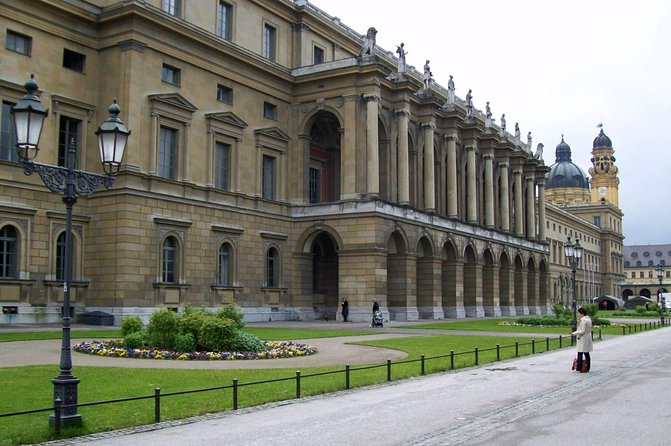
Then you reach St. Peter’s Church, noted as the oldest structure of Munich. This kind of stop is where a good guide changes everything. Instead of treating it like another church facade, they connect it to the city’s timeline and help you feel the weight of how long Munich has been shaped in this exact area.
Oldest doesn’t automatically mean it looks old in a worn-out way. It often just means it’s been there long enough to absorb layers of meaning. That’s what makes this stop worth your time on a short tour—especially when you’re also covering the much newer subject of the Nazi-era locations further along the route.
Rathaus-Glockenspiel: the city’s clockwork personality
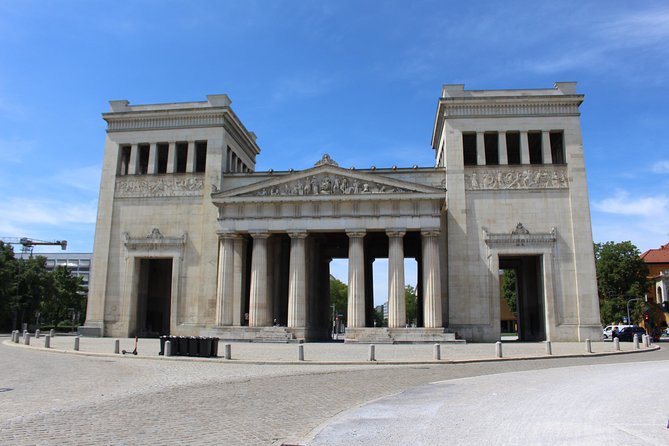
You then spend time at the Rathaus-Glockenspiel—the famous carillon associated with Munich’s town hall complex. This stop is fast but satisfying because it’s one of those Munich “only-in-Munich” details. Even if you only catch part of the action, seeing it in context helps you understand why it’s become a must-see.
This is also one of the best places to take a breath. In about 10 minutes, you can reset, look up at the building, and get ready for what comes next: the classic Munich beer-hall landmark and the square rhythm that runs through the center.
If you’re traveling with kids or anyone who gets bored by too many churches in a row, this is a good pacing break. It’s a visual moment that feels lively, even when your guide is explaining heavier topics later.
Hofbräuhaus: classic Munich energy right on the walk
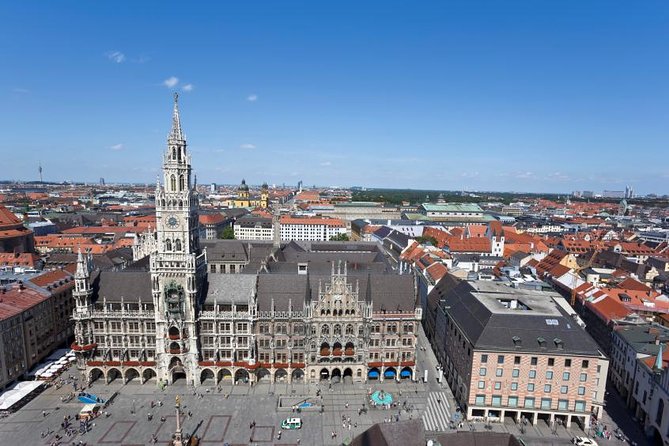
The tour hits Staatliches Hofbräuhaus—often just called Hofbräuhaus—with time for about 15 minutes. The tour description frames it as the most famous restaurant in the world and a festive, three-floor beer hall dating back to the 16th century.
Even if you don’t order anything, walking past (and seeing) Hofbräuhaus gives you a real sense of how Munich turns local traditions into public theater. You get the atmosphere without having to commit to a long meal stop. That matters on a short tour because you want your history time to stay balanced.
One practical consideration: it’s a popular place. If you want a quick look and photos, keep your group move simple. If your guide stops to explain things, lean in—but don’t forget to keep yourself positioned so you’re not stuck at the back when the tour needs to move on.
New Town Hall (Neus Rathaus): why the Gothic look matters
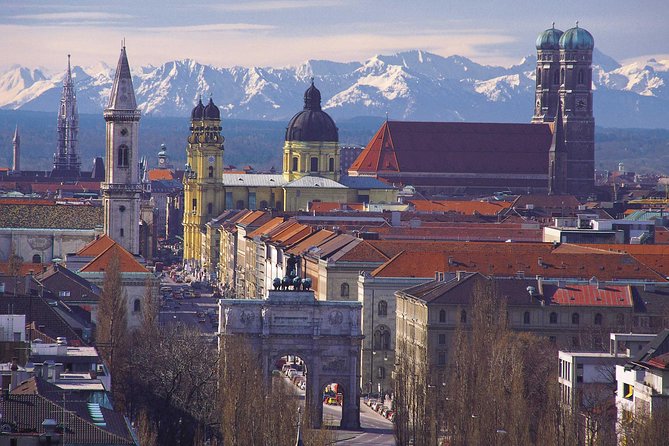
You’ll also see the New Town Hall (Neus Rathaus), part of the cluster that makes this stretch of Munich feel like it was designed to impress. It’s not just pretty architecture; the guide uses it to explain the city’s evolution and how civic power got expressed in stone.
This stop is short, but it does something useful: it ties your earlier Marienplatz viewing into a broader understanding. You start to see the square as a stage, with each building playing a role in the city’s identity.
If you’re someone who loves details, you’ll probably find yourself noticing how the buildings frame the square and guide movement. If you’re not, that’s fine too—your guide’s explanations do the heavy lifting.
The Third Reich section: what to expect and how to get value
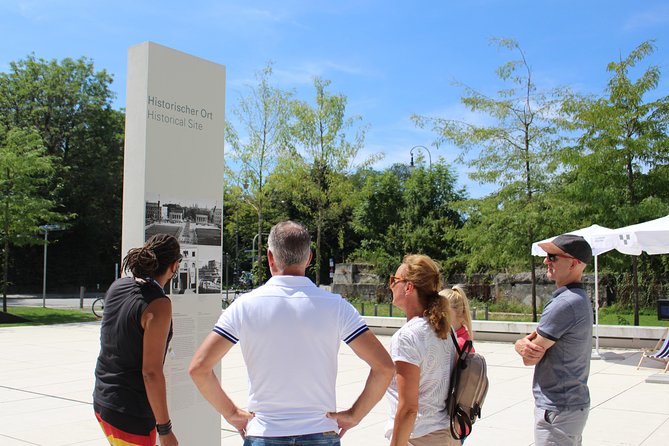
After the Old Town landmarks, the walk shifts into Munich’s Nazi-era story. The guide discusses the rise and fall of Adolf Hitler and Nazi Germany’s Third Reich while visiting places tied to that time period. Munich is specifically noted as the city where Hitler rose to power, and where many Nazi party policies were conceived.
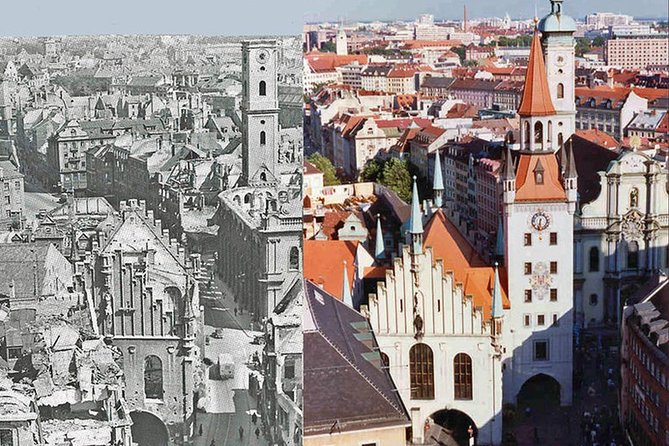
This is where you’ll appreciate the private format most. A guide can spend more or less time on the points you care about, and you can ask questions without feeling rushed. Some guides on similar private tours have been praised for bringing the topic to life with old photographs and a conversational tone, rather than a memorization-style lecture.
Key Nazi-era locations on this walk include:
- The building where Hitler first joined the Nazi party
- The former headquarters of the Gestapo
- The place where the Beer Hall Putsch took place in 1923, described as a failed coup attempt to seize power in Munich
One caution from experience-based thinking: the intensity of the Third Reich portion can vary by guide. If Nazi history is your main priority, say that early on so you get enough time on the darker stops. If it’s one portion of a broader Munich overview, you’ll still come away with a stronger sense of how the city’s story connects to the 20th century.
Guides and pacing: where the best tours win
This is a tour where the guide really makes the difference. The positive pattern in feedback is consistent: friendly delivery, strong Munich knowledge, and a pace that feels human. On my tour, the guide treated it like a chat with someone who cares about where you’re walking and why it mattered.
Names that show up in standout experiences include Ian, Anja, Mark, Franz, Steve, and Jax. While every guide will have a different style, the common thread is clear: they’re prepared to adjust. One person praised how their guide tailored the route to cut out extra church time and focus on what they wanted, which is exactly what a private tour should do.
The best practical advice: be ready with 2-3 priorities before you start. Maybe you want more time at Marienplatz and the town hall complex. Maybe you’re more focused on the Beer Hall Putsch site and related Nazi-era stops. The tour says it’s customizable, and that’s easiest to do when you start with a simple plan.
Price and value: what $239.65 buys you in Munich
At $239.65 per person, this is not a budget walking tour. You’re paying for three things: a private guide, hotel pickup/drop-off (or a convenient central meeting point), and a route that blends Old Town landmarks with specific Nazi-era locations.
So when does it feel worth it? It’s a good value when you want:
- A short, guided orientation on your first day
- A guide who can explain context instead of you reading plaques alone
- The ability to personalize how much time you spend at each stop
- A focus on Third Reich locations that you might miss if you’re self-guiding
It may feel steep if you’re comfortable walking Munich’s center solo and you only need basic landmark explanations. If that’s you, you might prefer a cheaper group tour.
But if you want a guide who can handle both the iconic Munich sites and the heavy history with care and structure, the price starts to make sense fast—especially when you compare the cost of doing multiple separate tours or hiring individual time for history.
Who this tour suits (and who should pick a different approach)
This works especially well for first-timers who want to get oriented without wasting half a day. It also fits history-minded travelers who want a guided path that links Munich’s famous buildings to the city’s Nazi-era narrative.
It’s also a solid pick if you travel with mixed ages, since the tour is manageable at about two hours and includes pacing breaks at recognizable landmarks. If your group includes people who tire of churches, you can ask the guide to keep the church stops brisk and focus more on the squares and Nazi-era sites.
If you’re strictly looking for a deep, museum-level treatment of Nazi history, this walking tour might not be enough on its own. The Nazi portion is part of a broader city walk, and you should plan to add another, more extensive history stop if that topic is your main goal.
Practical tips to make it work on the ground
This walk is mostly outdoors, so choose sensible shoes. Munich weather can be dramatic, and one review specifically flagged that hot conditions can make even a well-run tour feel just okay. Plan water breaks where your guide suggests them, even if food isn’t included.
Also, be mindful that you’re visiting churches and landmark buildings, and some will have limited hours. If your start time slips—due to confusion about where to meet or a late pickup—you can lose time at places you expected to see fully. The tour ends back at the starting point, so staying on schedule keeps the experience intact.
Lastly, bring your curiosity. Ask questions. The format is built for back-and-forth, not one-way explanation.
Should you book this Munich Old Town and Third Reich walking tour?
I’d book it if you want a tight, guided Munich experience that mixes the instantly recognizable center with specific Nazi-era locations. The private size, the option to customize, and the strength of guides like Ian and Anja (including the conversational, photo-supported approach some guides bring) make it feel like more than a checklist.
Skip it or approach with caution if you need a long, museum-style deep dive into Nazi history. This is a two-hour walk, and while it covers key Third Reich-related sites—Hitler’s early Nazi involvement location, former Gestapo headquarters, and the 1923 Beer Hall Putsch site—it’s still a city tour that also covers major Old Town landmarks.
If you want Munich with context, this is a smart way to get it fast.
FAQ
Where does the tour start?
You can start with hotel pickup from central Munich or meet at München Hauptbahnhof. The tour also lists Dachauer Str. 4, 80335 München as the meeting location, and it ends back at the starting point.
How long is the walking tour?
The tour lasts about 2 hours.
Is this a private tour?
Yes. It’s described as a private tour with a professional guide.
What’s included in the price?
Included are hotel pickup and drop-off, the private tour, and a professional guide.
What language is the tour offered in?
The tour is offered in English.
How big is the group?
The tour has a maximum of 9 people per tour (and up to 10 travelers).
Is food included?
No. Food and drinks are not included.
Is free cancellation available?
Yes. You can cancel up to 24 hours in advance for a full refund.
More Altstadt and Marienplatz Walks
More Third Reich and WWII History in Munich

Just added to the Munich Explorer notebook
Third Reich & WWII History Tours, compared.
 ★ 4.6Third Reich & WWII Walking TourFrom $316,181 reviews
 ★ 4.5Third Reich Walking Tour MunichFrom $454,291 reviews
 ★ 4.6Birthplace of the Third Reich Guided Walking TourFrom $29771 reviews
 ★ 4.5Munich World War II Sites Including Dachau Concentration CampFrom $105570 reviews
 ★ 5.0Munich City Walking Tour, includes Third Reich & ViktualienmarktFrom $31458 reviews
 ★ 4.5Third Reich & WWII Walking TourFrom $35417 reviews
 ★ 4.9Munich 3-Hour Segway Tour: Nazi Munich & Royal ArchitectureFrom $91194 reviews
 ★ 5.0Dachau Concentration Camp Memorial Site And Third Reich Day Tour From MunichFrom $145185 reviews
Browse the lists this tour appears in