
Reviewed · THIRD REICH & WWII HISTORY TOURS
Munich: Third Reich Guided City Walking Tour
Munich’s darkest politics leave clear footprints. This 2.5-hour walking tour strings together the beginnings of the Nazi movement and the key places tied to Hitler, from Marienplatz to Königsplatz. You get a guided route through serious sites like Hofbräuhaus, Haus der Kunst, and Führerbau, with clear explanations of how events built momentum.
I especially like how the tour starts in the most practical spot—Marienplatz—so you feel oriented fast. And I really value the focus on turning points: the Beer Hall Putsch and later the role of German resistance figures like Georg Elser and the White Rose. The one big drawback is simple: this tour is Spanish-only, so if you’re not comfortable in Spanish, you’ll want to skip it.
Key Points to Know Before You Go
- Marienplatz start makes it easy to find and understand the route
- Stops link major moments: Beer Hall Putsch, propaganda culture, and resistance
- A guide keeps the pace steady while covering a lot of ground in 2.5 hours
- Includes major landmarks such as Hofbräuhaus, Haus der Kunst, and Führerbau
- You’ll end at Königsplatz, wrapping the story in a very symbolic setting
- Bring comfortable shoes; this is a real walking tour
In This Review
- Starting at Marienplatz: getting oriented fast
- Odeonsplatz, the Hofbräuhaus, and the Beer Hall Putsch thread
- Haus der Kunst: Nazi propaganda and the ban on degenerate art
- Resistance in Munich: Georg Elser and the White Rose
- Führerbau and the Munich Agreement: ending at Königsplatz
- What 2.5 hours feels like on your feet
- Price and value: $23 for a content-heavy route
- Who should book this tour (and who should skip it)
- Should you book the Munich Third Reich walking tour?
- FAQ
- How long is the Munich Third Reich guided city walking tour?
- Where do I meet the guide?
- What is the tour language?
- How much does the tour cost?
- Is this tour suitable for children?
- What should I bring?
- What happens if the tour can’t operate due to low participation?
Starting at Marienplatz: getting oriented fast
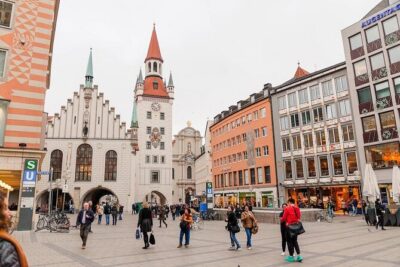
You meet your guide in front of the Tourist Information Office at Marienplatz. That’s a smart choice because it’s central, obvious, and you can line up your day around it. From there, you’ll move through the city while the guide connects politics to street-level landmarks.
I like that the tour doesn’t treat the past like an abstract textbook. Instead, it uses the walk itself to help you see how Nazi power and propaganda were rooted in specific places and public events. If you’re the type who learns better by looking at buildings and imagining what happened nearby, this format works.
More walks tracing Munich Third Reich and wartime history
- Munich: Third Reich & WWII Walking Tour★ 4.6 · 6,181 reviews
- Third Reich Walking Tour Munich★ 4.5 · 4,291 reviews
- Munich: Birthplace of the Third Reich Guided Walking Tour★ 4.6 · 771 reviews
- Munich World War II Sites Including Dachau Concentration Camp★ 4.5 · 570 reviews
Odeonsplatz, the Hofbräuhaus, and the Beer Hall Putsch thread
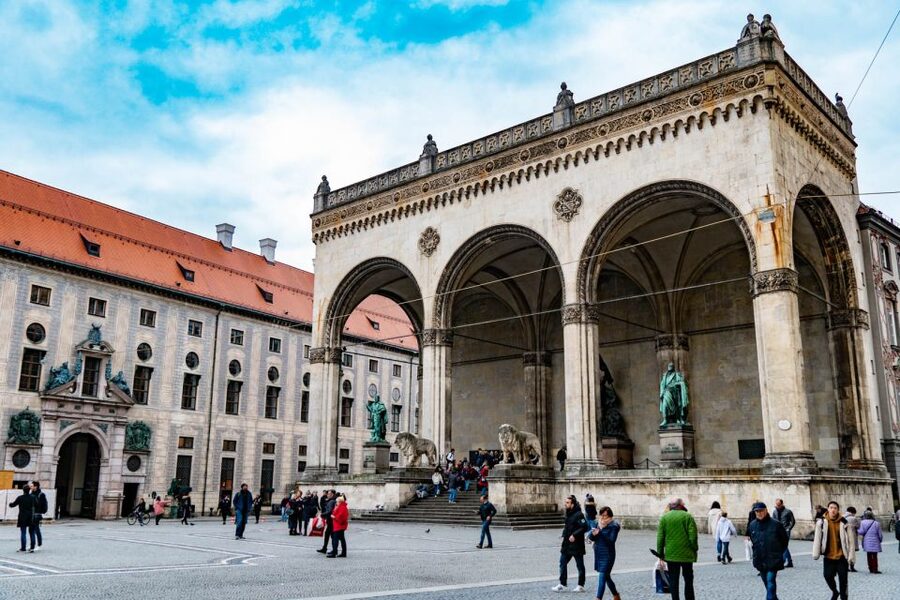
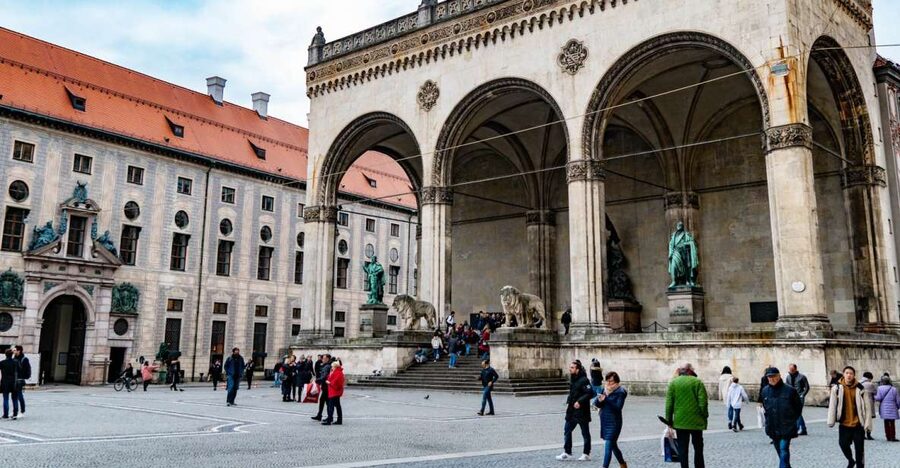
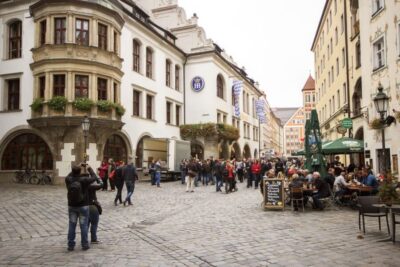
A major portion of the experience focuses on the early political rise of Adolf Hitler in Munich. You’ll work your way toward Odeonsplatz, then continue on to the Hofbräuhaus, where the story connects directly to the Beer Hall Putsch.
This is the part that helps you understand the mechanics of escalation. You’re not just hearing that things turned violent—you’re seeing the sequence of how the movement gained attention and how public momentum was used. The Hofbräuhaus stop matters because it represents how mass gatherings and political theater could be repurposed into propaganda.
The tour also explains the origins of the National Socialist German Workers’ Party and centers the Beer Hall Putsch as a key turning point. That makes the narrative easier to follow later when you hear about how the regime shaped culture and daily life.
Haus der Kunst: Nazi propaganda and the ban on degenerate art
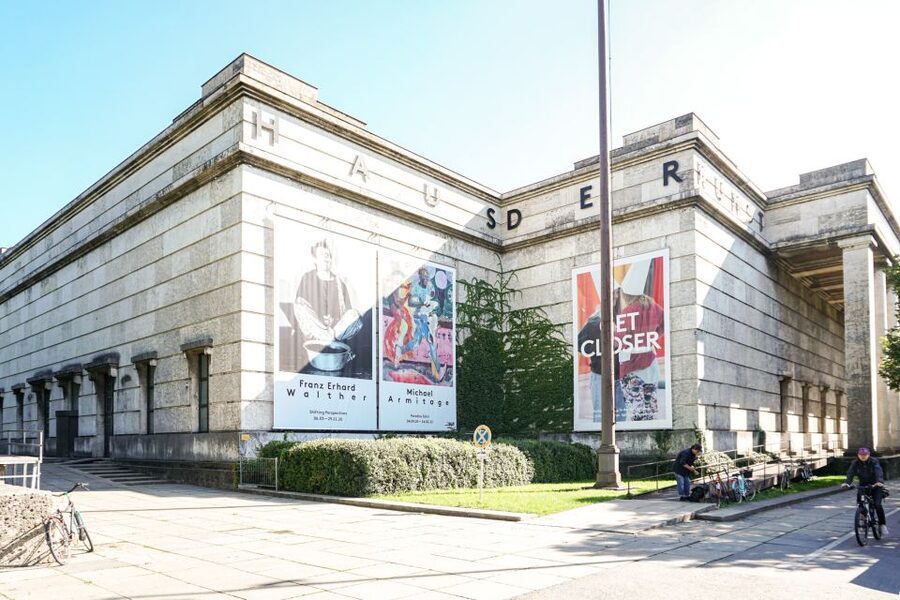
Next up is Haus der Kunst, described as the first propaganda building in Nazi Germany. This stop is powerful because it shows how the regime didn’t only control politics—it aimed to control taste, meaning, and culture.
You’ll hear stories about the influence of the Nazi state on art and the banning of degenerate art. Even if you already know the broad outline of that policy, the guide’s street-level framing helps it feel less like a slogan and more like a real institutional power. You can stand near a building and connect the concept of censorship to a physical space.
This is also where the tour becomes more than “who said what” history. It becomes about how regimes use culture as a weapon—using official buildings, exhibitions, and cultural rules to push ideology into everyday visibility.
Resistance in Munich: Georg Elser and the White Rose
After the propaganda and political rise, the tour shifts toward resistance. You’ll learn about the German Resistance movement, with specific attention to figures such as Georg Elser and the White Rose.
I like this transition because it avoids a straight line of despair. The tour still covers the Nazi ascent, but it also makes room for people who tried to oppose it, often under extreme risk. It’s not a soft ending, either—it’s more like a historical correction that reminds you resistance was real, not just a later myth.
This section is useful for your understanding of the full period. If you only focus on the Nazi movement, it’s easy to lose sight of how many Germans resisted in different ways. By putting Elser and the White Rose into the route, the tour gives the story a wider, more human scale.
More laps of the Altstadt and Marienplatz
- Munich: Old Town & Viktualienmarkt City Walk in German
★ 4.7 · 2,304 reviews - Munich: Night Watchman Walking Tour
★ 4.7 · 2,092 reviews - Munich Ghosts and Spirits Evening Walking Tour
★ 5.0 · 1,900 reviews
Führerbau and the Munich Agreement: ending at Königsplatz
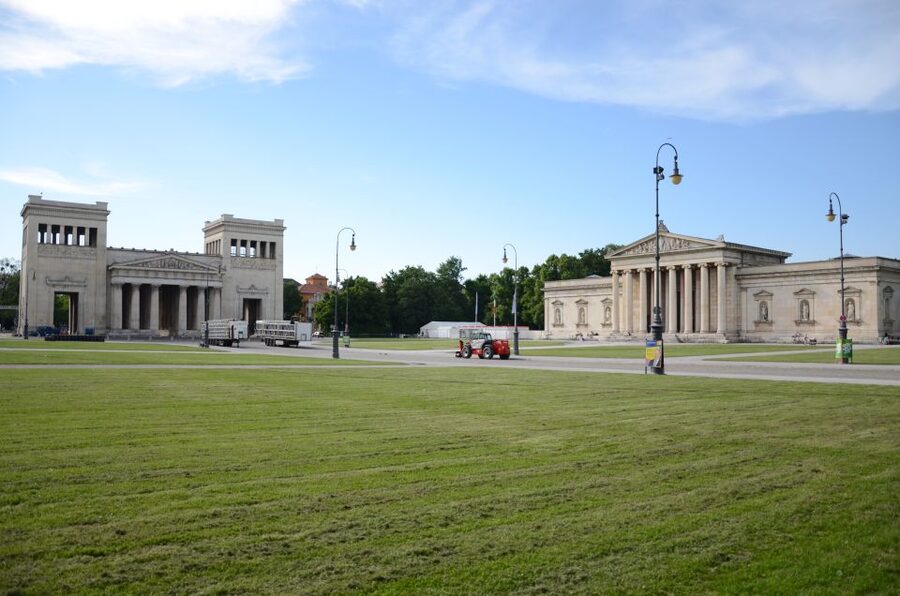
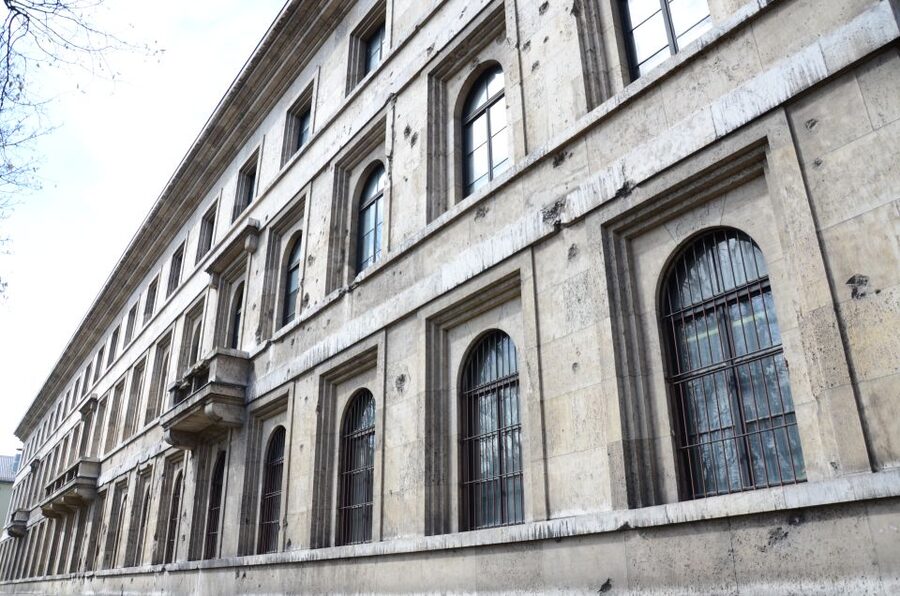
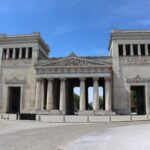
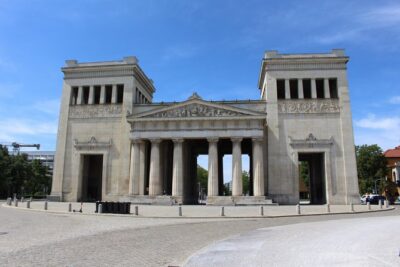
The final stretch leads to Führerbau, the place connected to the Munich Agreement signed in 1938. This stop lands with weight because it ties the street to a specific diplomatic moment—one that shaped the next phase of European catastrophe.
You’ll reach the Führerbau and then conclude the tour at Königsplatz. The value here is that the tour closes the loop from early power-building to the larger political consequences that followed. You’re not just learning “where something happened.” You’re seeing how local power and international decisions were intertwined.
If you’re someone who likes closing a day with a strong viewpoint, Königsplatz offers a fitting finish. It helps you carry the story forward even after the walk ends.
What 2.5 hours feels like on your feet
This is a 2.5-hour guided walk, so it’s long enough to cover multiple major sites but short enough that you won’t feel trapped for half a day. The pacing is clearly designed for staying power: you’ll cover a lot of content without sprinting between stops.
I also appreciate that the experience is built around meaningful landmarks instead of random corners. Reviews point to the tour as well paced and packed with important information, which matches the way the route is structured around key events and cultural turning points.
Still, don’t underestimate the walking. This is a city-center route with real distances between points, and you’ll want comfortable shoes. If your legs are sensitive, plan a lighter afternoon after.
Price and value: $23 for a content-heavy route
At about $23 per person, this feels like good value for a guided, history-focused city walk that includes entry-free landmark coverage. You’re paying for a live guide plus the time and effort it takes to shape a coherent narrative across several major sites.
The tour includes the guide and the walking format, and it doesn’t mix in food or drinks. That’s actually a plus for budgeting: you control meals separately. For the price, you’re getting a structured path through high-impact locations—exactly the kind of thing you usually end up paying more for when you do it as private guiding or when you add separate tickets.
If Spanish is your language, this is one of those deals that makes sense: you’re not just paying for “someone to walk with you.” You’re paying to learn the connections between places, events, and ideology.
Who should book this tour (and who should skip it)
This tour is best for you if you want Munich viewed through the lens of the Nazi era and the people who pushed back. You’ll be especially satisfied if you care about understanding events like the Beer Hall Putsch and want the route to include major landmarks such as Hofbräuhaus, Haus der Kunst, and Führerbau.
You should skip it if Spanish isn’t your working language. The tour is not open to travelers who do not speak Spanish, and it’s also not suitable for children under 13. If you’re traveling with mixed language skills, check that everyone can follow the guide so the experience stays worthwhile.
Also think about your expectations. This isn’t a light sightseeing loop, and it’s not trying to soften the topic. If you’re comfortable with serious, difficult history—and you want clarity tied to real locations—this route is a strong choice.
Should you book the Munich Third Reich walking tour?
If you speak Spanish and you want a single, focused route through Munich’s most important Nazi-era landmarks, I’d book this. The strength is the way the walk links major moments: the early movement around Hitler, the role of propaganda buildings like Haus der Kunst, and the resistance story with Georg Elser and the White Rose.
The only reason to hesitate is the language requirement. If you’re not fluent enough to follow a live guide, you’ll spend the tour translating instead of learning. But if Spanish is no problem, the price, the pacing, and the landmark selection make it a solid value-driven way to see the city’s political past.
FAQ
How long is the Munich Third Reich guided city walking tour?
The tour duration is 2.5 hours.
Where do I meet the guide?
Meet your guide in front of the Tourist Information Office at Marienplatz.
What is the tour language?
The live tour guide speaks Spanish, and the tour is not open to travelers who do not speak Spanish.
How much does the tour cost?
The price is $23 per person.
Is this tour suitable for children?
No. Children under the age of 13 are not allowed to participate.
What should I bring?
Wear comfortable shoes, since it is a walking tour.
What happens if the tour can’t operate due to low participation?
The tour requires a minimum of four participants. If that minimum isn’t met, the local partner will contact you and offer an alternative.
More Hop-On Hop-Off Loops in Munich

More Altstadt and Marienplatz Walks
More Third Reich and WWII History in Munich
Just added to the Munich Explorer notebook
Third Reich & WWII History Tours, compared.
 ★ 4.6Third Reich & WWII Walking TourFrom $316,181 reviews
 ★ 4.5Third Reich Walking Tour MunichFrom $454,291 reviews
 ★ 4.6Birthplace of the Third Reich Guided Walking TourFrom $29771 reviews
 ★ 4.5Munich World War II Sites Including Dachau Concentration CampFrom $105570 reviews
 ★ 5.0Munich City Walking Tour, includes Third Reich & ViktualienmarktFrom $31458 reviews
 ★ 4.5Third Reich & WWII Walking TourFrom $35417 reviews
 ★ 4.9Munich 3-Hour Segway Tour: Nazi Munich & Royal ArchitectureFrom $91194 reviews
 ★ 5.0Dachau Concentration Camp Memorial Site And Third Reich Day Tour From MunichFrom $145185 reviews
Browse the lists this tour appears in