
Reviewed · THIRD REICH & WWII HISTORY TOURS
Munich: Third Reich and World War II Segway Tour of the City
Munich comes at you fast on a Segway. I like the wind-in-your-hair glide through the center, and I really appreciate the guide’s storytelling that turns famous buildings into a clear timeline from Bavarian kings to Nazi power. One watch-out: a few road sections can feel intense, and you may wish you had a bit more Segway time in the big parks.
I’ll also say this is a route for people who want history tied to exact places. You’ll pass major landmarks tied to the Third Reich era, including Hitler’s Munich apartments and the Old Synagogue area, while your guide points out what happened in the city during World War II. If you’re new to Segways, the pre-tour practice matters, and it sounds like the guides (including Abdel and Jamal) keep things calm and step-by-step.
At about $100 per person for 3 hours, the value comes from doing a lot in one go with equipment and commentary included—no need to coordinate a long, stop-by-stop day on foot. The only practical drawback is that there’s no hotel pickup, so you’ll want to plan how to reach Robot City Segway Tour München.
In This Review
- Quick highlights you’ll actually care about
- Why a Segway Works for Munich’s Third Reich and WWII Story
- Entering the Segway: helmet, practice, and road reality
- What helps most (practical prep)
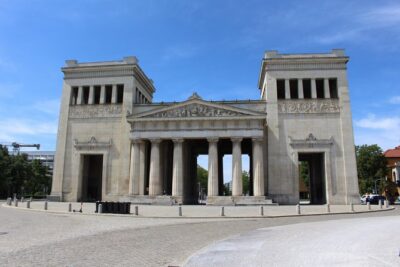
- Königsplatz and Odeonsplatz: squares that set the stage
- Brown House and the Führer’s Building: seeing ideology in architecture
- Schelling-Salon and Munich’s surviving spaces
- A small practical note
- Hitler’s Munich apartments: the timeline in two addresses
- The Old Synagogue area: remembering community in the city map
- What the “3 hours” actually buys you
- Price and value: is $100 reasonable for this route?
- Who this Segway tour suits best (and who should skip it)
- Getting there: meeting point and the no-pickup factor
- Should you book the Munich Third Reich and WWII Segway Tour?
- FAQ
- How long is the Munich Segway tour?
- Where do I meet the guide?
- What’s included in the price?
- Are hotel pickup and drop-off included?
- What languages is the tour offered in?
- Is the tour suitable for children or pregnant women?
Quick highlights you’ll actually care about
- A 3-hour, city-center way to cover lots of ground without tiring out fast
- Segway training first, so first-timers can get comfortable before you join traffic-adjacent routes
- Difficult WWII sites covered with on-the-street context, including the Old Synagogue area
- Pass-by stops built around Nazi-era locations, including Hitler’s Munich apartments
- Small groups (max 10) so you’re not lost in a crowd
- Guides like Abdel and Jamal are known for being patient, helpful, and attentive
More walks tracing Munich Third Reich and wartime history
- Munich: Third Reich & WWII Walking Tour★ 4.6 · 6,181 reviews
- Third Reich Walking Tour Munich★ 4.5 · 4,291 reviews
- Munich: Birthplace of the Third Reich Guided Walking Tour★ 4.6 · 771 reviews
- Munich World War II Sites Including Dachau Concentration Camp★ 4.5 · 570 reviews
Why a Segway Works for Munich’s Third Reich and WWII Story
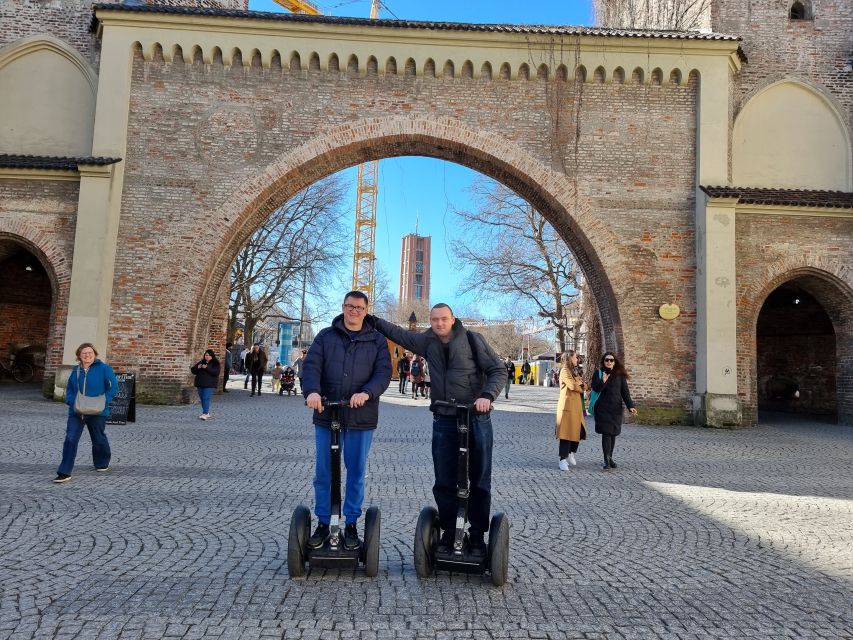
Munich’s center is made for walking, sure. But if you want to connect a bunch of specific WWII-era places into one coherent outing, a Segway is a practical shortcut. In a short 3-hour window, you can cover more than you would on foot, while still getting the “I’m right here” feeling from seeing the actual buildings and squares.
The big win is how motion changes your mindset. You’re not stuck staring at your map. You’re gliding, listening, and turning each stop into a mental picture. That matters when the topic is heavy—Nazism and World War II—because the point isn’t just facts on a page. It’s place-by-place context: where power grew, where propaganda operated, where community sites stood (like the synagogue area), and how the city moved through that period.
And because it’s a guided tour, you’re not trying to interpret everything yourself. The guide’s commentary is built to connect the dots, including Bavarian references (kings and local history) before shifting into the Third Reich era.
Entering the Segway: helmet, practice, and road reality
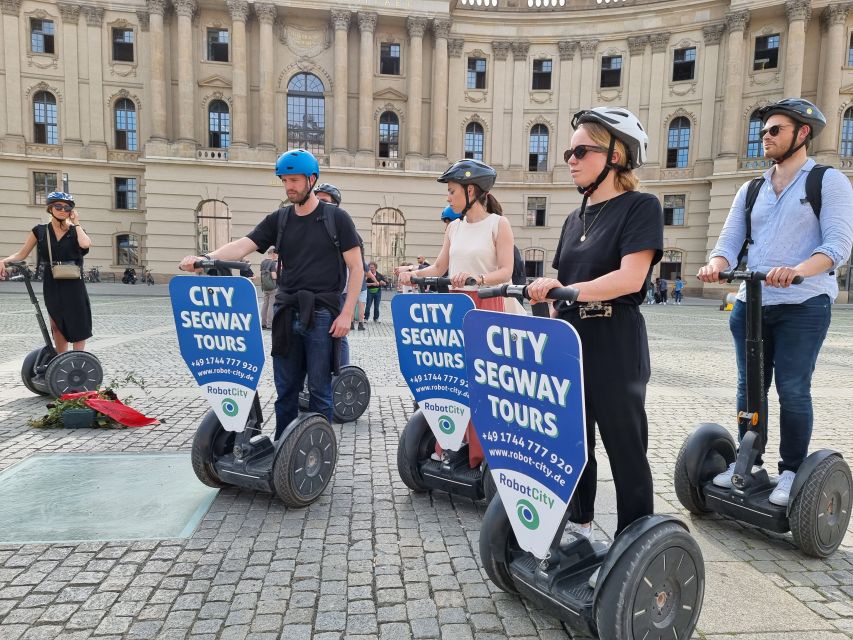
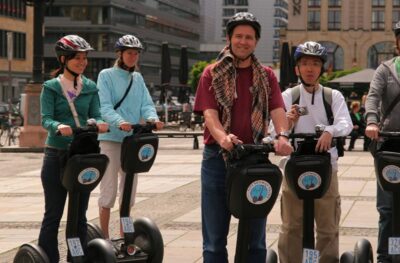
Your tour starts at the operator’s office in Munich: Robot City Segway Tour München. You’ll meet your guide there and get a quick safety briefing on how to use the Segway. After that, you ride off into the city with your guide pointing out key locations along the way.
This part is underrated. If you’ve never ridden before, it’s normal to feel a little wobbly in your first minute. The tour’s training time is designed for that, and multiple riders noted the guides were patient and helpful while you get the hang of controlling speed and staying balanced.
Still, be honest about the feel of the route. One rider described road sections as scary for a member of their group, while another praised the cycle tracks and time through green space. My advice: if you’re sensitive about traffic or narrow streets, come prepared to take it slow when you need to. A confident, careful riding approach makes the whole experience easier.
What helps most (practical prep)
Wear something warm and snug, especially in cold or wet weather. People have done this tour in snow and freezing conditions, and rain has not stopped the ride. Helmet included, but you’ll still want layers you can move in and shoes you trust on uneven pavement.
More of Munich rolling past on two wheels
- Munich: City Highlights Guided Segway Tour
★ 4.6 · 266 reviews - Munich 3-Hour Segway Tour: Nazi Munich & Royal Architecture
★ 4.9 · 194 reviews - Munich Segway Tour
★ 5.0 · 181 reviews
Königsplatz and Odeonsplatz: squares that set the stage
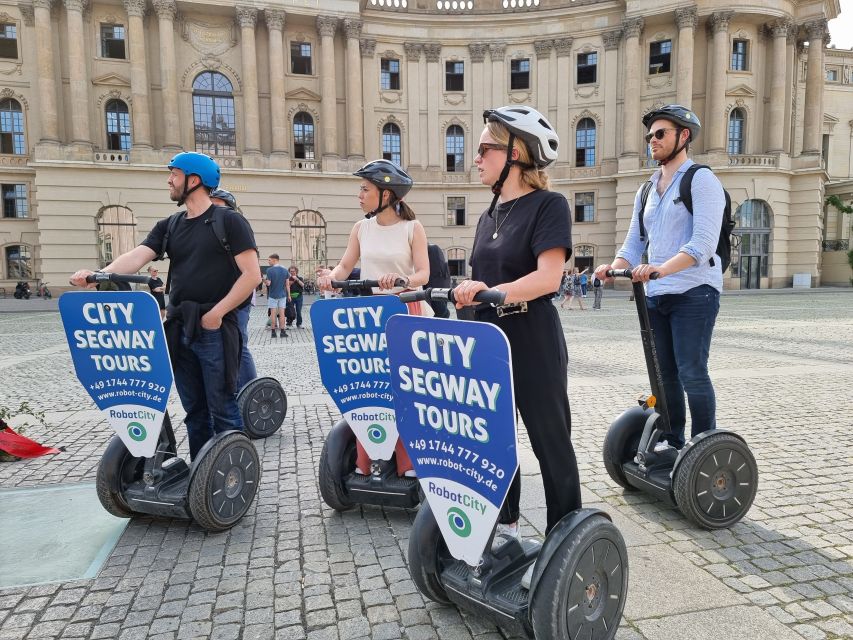
One of the tour’s strengths is that it doesn’t only show one “big” spot. It moves through recognizable Munich squares and institutions that help you understand the political theater of the era.
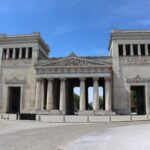
You’ll pass Königsplatz and Odeonsplatz, both of which function like stages in the city’s layout—open areas where crowds and public movements make sense. Even if you’re not a history expert, watching the city’s geometry from your Segway seat helps you visualize why these places mattered.
As you glide, your guide points out the surrounding buildings and why certain locations became meaningful during the Nazi years. If you’re the kind of traveler who likes to understand how a city shaped behavior, these squares give you the “why here” factor.
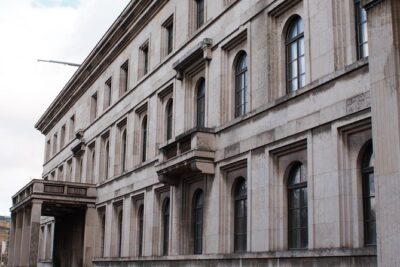
Brown House and the Führer’s Building: seeing ideology in architecture
The tour includes pass-by stops such as the Brown House and the Führer’s building. These names aren’t random. They’re tied to the physical presence of Nazi organization and influence in Munich.
What I like about covering these by Segway is pacing. You get close enough to register details, but you’re still moving, so the guide can explain what you’re seeing in context instead of giving a history lecture with no reference point. It turns the architecture into a story.
If you’re sensitive to the subject matter, this is the part where you’ll want to keep your brain on the message: the point of seeing these sites is to understand how a regime operated in public space. You don’t have to enjoy any of it. You just need to look carefully and listen.
Schelling-Salon and Munich’s surviving spaces
Not every stop is a “symbol” building. The tour also includes Schelling-Salon, a pub that remained open through World War I and World War II. That’s an interesting contrast: history isn’t only happening in offices and propaganda sites. It’s also happening in everyday places where people still ate, drank, and gathered.
You’ll also get guide recommendations for places to revisit afterward, like Hofbräuhaus am Platzl (a beer hall originally built in 1589) and Hofbraukeller for traditional Bavarian food. I find that kind of suggestion valuable because it helps you turn the tour into a full day, not just a ride.
A small practical note
Because this is a guided route, you’re not stopping for long meals on the spot. If you want a slow break, you’ll likely do it after the tour, using the recommendations as your starting list.
Hitler’s Munich apartments: the timeline in two addresses
The tour’s most direct Third Reich focus is its coverage of Hitler’s apartment locations in Munich. You’ll pass his apartment from 1920–1929 and also his later apartment in 1933, with your guide explaining the time he lived in Munich and how his rise to power unfolded.
Why this is powerful: instead of treating “history” as one big abstract era, you get a clear sequence anchored to specific addresses. You can physically connect the idea of changing influence to the way the route moves between places over time.
It’s also one of those experiences where your questions matter. If something feels confusing, ask. A good guide can connect what you’re seeing to the broader timeline in a way that makes the city feel less like a museum and more like the lived environment of events.
The Old Synagogue area: remembering community in the city map
You’ll also pass the old synagogue site, with your guide sharing what happened in the city during World War II. This stop changes the tone of the tour. It’s not about symbols of power. It’s about the impact on community life and the destruction that came with Nazi rule.
I’d treat this moment with extra focus. Even if you’ve read a lot before you arrive, seeing the city layout while someone explains what took place helps you grasp loss in a more grounded way. It also keeps the tour from being only about famous men and buildings.
If you’re traveling with someone who’s sensitive to heavy topics, this is the moment to slow down mentally and keep your expectations realistic.
What the “3 hours” actually buys you
This tour is set for 3 hours, and the format is built around covering the city’s top relevant sights within that time window. That’s the practical tradeoff: you get a concentrated route and quick context at each place, but you’re not doing a museum-level stop where you linger for ages.
The upside is efficiency. You’ll see a lot of Munich without burning half your day navigating on foot. The guide also helps you interpret things so you don’t just take photos of buildings and wonder what they meant.
One consideration: if you’re an experienced or extra-confident rider, you might wish for more Segway time in the larger green spaces. At least one rider wanted the English Garden route to be longer on Segway. So if you’re mainly in it for the thrill of riding, keep that in mind.
Price and value: is $100 reasonable for this route?
At $100 per person for a 3-hour small-group experience with a guide, Segway, and helmet included, the value comes down to what you avoid.
You avoid:
- finding your own route across multiple historical zones,
- renting Segway equipment separately,
- and paying for a separate city guide.
Also, you get the advantage of local explanation while you’re moving through the places themselves. That’s usually where guided tours justify their cost. If you’re the type who wants “what am I seeing and why does it matter,” the price starts to feel fair.
If you’re only looking for scenery, this might feel pricey. But if you want specific WWII and Third Reich locations connected with commentary, $100 for a focused 3-hour guided ride in a small group is pretty on-point.
Who this Segway tour suits best (and who should skip it)
This one is not suitable for children under 14, and it’s also not suitable for pregnant women. Beyond that, it fits best if you:
- want to see multiple key sites in one outing,
- like a guide who explains what you’re looking at,
- and feel comfortable riding a Segway after some practice.
It can work well for first-timers too, because training happens before you tour. Just be prepared to listen to the safety instructions and ride within your comfort level.
If you’re very nervous about road conditions, know that you may encounter sections that feel more intense than dedicated cycle paths. The good news is that cycle-track riding and park paths are part of the experience, based on how riders described the route.
Getting there: meeting point and the no-pickup factor
There’s no hotel pickup or drop-off, so plan your arrival to the meeting point: Robot City Segway Tour München. This matters more than you might think. In a 3-hour tour, time disappears fast if you’re unsure how to get to the office.
If you’re staying near the historic center, you’ll likely find it manageable. If you’re farther out, give yourself extra margin for transit so you’re not rushing when it’s time for training and check-in.
Also, since the tour can run in rain or snow, dress for weather. The Segway helmet helps, but it doesn’t replace warm layers.
Should you book the Munich Third Reich and WWII Segway Tour?
I think you should book this tour if you want a guided, efficient way to connect Nazi-era and WWII sites to Munich’s real streets and squares. The format makes it easier to see more than you could on foot in the same time, and the guide attention described here (including patient, helpful instruction from guides like Abdel and Jamal) is exactly what makes a Segway tour work, especially when you’re learning.
Skip it if you mainly want a relaxed, scenery-only day, or if riding a Segway makes you uneasy about traffic. Also, if you don’t like heavy history topics, the content focus here is very direct—this is built around Third Reich and WWII locations.
If you’re on the fence, do this: decide what you want most from Munich. If it’s depth and context tied to specific places, this is one of the most time-smart ways to get it.
FAQ
How long is the Munich Segway tour?
The tour runs for 3 hours.
Where do I meet the guide?
You meet your guide at Robot City Segway Tour München.
What’s included in the price?
The tour includes the guide, the Segway, and a helmet.
Are hotel pickup and drop-off included?
No. Hotel pickup and drop-off are not included.
What languages is the tour offered in?
The live guided tour is available in English and German.
Is the tour suitable for children or pregnant women?
No. It’s not suitable for children under 14, and it’s also not suitable for pregnant women.
More Hop-On Hop-Off Loops in Munich





More Segway Rides in Munich




More Third Reich and WWII History in Munich



Just added to the Munich Explorer notebook



Third Reich & WWII History Tours, compared.
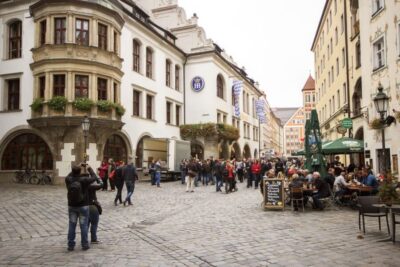 ★ 4.6Third Reich & WWII Walking TourFrom $316,181 reviews
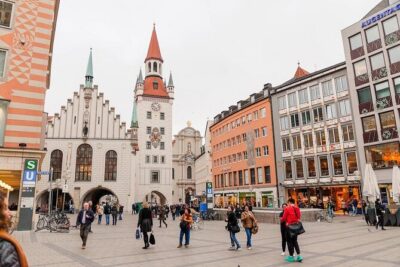 ★ 4.5Third Reich Walking Tour MunichFrom $454,291 reviews
 ★ 4.6Birthplace of the Third Reich Guided Walking TourFrom $29771 reviews
 ★ 4.5Munich World War II Sites Including Dachau Concentration CampFrom $105570 reviews
 ★ 5.0Munich City Walking Tour, includes Third Reich & ViktualienmarktFrom $31458 reviews
 ★ 4.5Third Reich & WWII Walking TourFrom $35417 reviews
 ★ 4.9Munich 3-Hour Segway Tour: Nazi Munich & Royal ArchitectureFrom $91194 reviews
 ★ 5.0Dachau Concentration Camp Memorial Site And Third Reich Day Tour From MunichFrom $145185 reviews
Browse the lists this tour appears in