
Reviewed · THIRD REICH & WWII HISTORY TOURS
Third Reich Tour Munich
Munich has a dark chapter worth reading on foot. This Third Reich Tour stitches together key Nazi-era locations you’d miss if you only followed the usual old-city sights, starting at Isartor and ending at Königsplatz. I like that the stops are specific and story-driven, and I especially like that you don’t speed past the human cost: the route includes the memorial for the persecuted, not just the power symbols. One drawback: this is a heavy, political topic, so you should be ready for uncomfortable history while you walk.
The pace works well for a half-day mindset. You’ll cover major sites in about 2 hours 30 minutes, in a group capped at 20, which means you actually get time to ask questions instead of just hearing sound bites. You’ll also use a mobile ticket, and most of the listed stops don’t require paid admission for the tour portion, which helps make the price feel fair.
In This Review
- Key highlights you’ll feel on the walk
- Walking Munich’s Nazi-era landmarks in 2.5 hours
- From Isartor Gate to the first clues on the streets
- Sterneckerbräu and Hofbräuhaus: beer halls as political machinery
- Feldherrnhalle and the 1923 Beer Hall Putsch: the turning point
- Platz der Opfer des Nationalsozialismus: facing victims with real seriousness
- Führerbau and Königsplatz: offices, agreements, and stagecraft
- Price and value: what $34.73 gets you
- Guides that matter: what makes the tour feel personal
- Practical logistics: meeting, ending, and getting back easily
- Who should book this Third Reich Tour Munich
- Should you book it?
- FAQ
- How long is the Third Reich Tour in Munich?
- Where do I meet the tour?
- Where does the tour end?
- How much does it cost?
- Is there a limit on group size?
- Is it a mobile ticket?
- Do I need to pay admission at the stops?
- When will I get confirmation after booking?
- What’s the weather like for this kind of tour?
- What if I need to cancel?
Key highlights you’ll feel on the walk
- Small group size (max 20) keeps the Q&A real, not performative
- Beer-hall politics explained through places like Sterneckerbräu and Hofbräuhaus
- The 1923 failure and its aftermath at Feldherrnhalle, with clear turning-point context
- A dedicated memorial stop that centers victims, not just ideology
- Führerbau + Königsplatz show how offices and architecture supported mass propaganda
- Ends near transit at Königsplatz, so you can keep moving without a hassle
More walks tracing Munich Third Reich and wartime history
- Munich: Third Reich & WWII Walking Tour★ 4.6 · 6,181 reviews
- Third Reich Walking Tour Munich★ 4.5 · 4,291 reviews
- Munich: Birthplace of the Third Reich Guided Walking Tour★ 4.6 · 771 reviews
- Munich World War II Sites Including Dachau Concentration Camp★ 4.5 · 570 reviews
Walking Munich’s Nazi-era landmarks in 2.5 hours
This tour is built for people who want more than a quick photo stop. In a little over two hours, you’ll move through a chain of places that connect ideas, speeches, public spectacle, and decision-making—without turning it into a classroom lecture.
The route also has a practical rhythm. You’re outside most of the time, so wear good shoes and bring layers. Even if the weather is mild, it can feel long when you’re listening carefully to serious history.
From Isartor Gate to the first clues on the streets
You start at the Isartor Gate (Tal 50, 80331 München). It’s a simple place to gather, and it’s a good “first gear” location because you’re immediately in the streets of Munich rather than stepping straight into a formal museum setting.
This matters because the story here is about how public spaces shaped political momentum. Your guide sets the tone for what you’re about to see—where crowds gathered, where messages were staged, and why certain locations became symbolic.
Sterneckerbräu and Hofbräuhaus: beer halls as political machinery
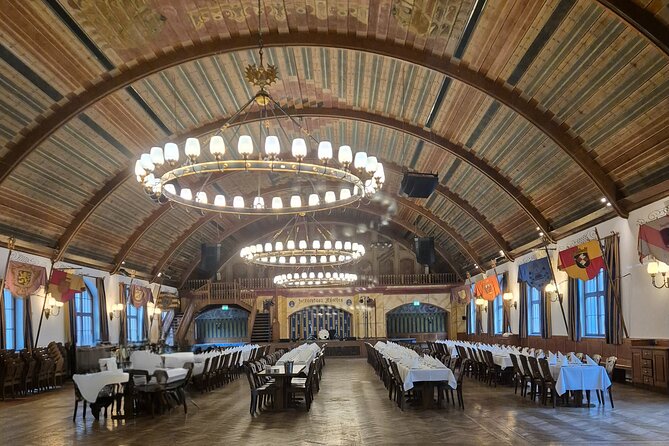
Next comes Sterneckerbräu, described as a former beer hall where the prototype Nazi Party was founded. The key point isn’t just the name on a building. It’s how ordinary social spaces became recruiting hubs, with leaders using familiar environments to normalize a new movement.
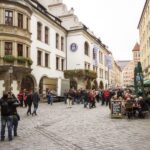
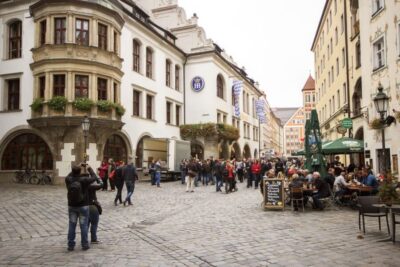
Then you’ll head to Staatliches Hofbräuhaus (Hofbräuhaus). This is one of Munich’s famous beer halls, and the tour focuses on how early Nazi meetings here drew attention as the movement gained strength. You’re not just looking at a landmark—you’re seeing how propaganda works when it rides on the momentum of a crowd.
If you’re the type who likes cause-and-effect history, this is a strong section. It helps you understand why the Nazis benefited from existing public routines: meeting, talking, celebrating, and spreading a message—often with music and beer in the background, and serious political intent on top.
A practical note: these areas can be busy at certain times of day, so the guide’s pacing and timing help you keep the flow without feeling rushed.
- From Munich: Neuschwanstein & Linderhof Castle Full-Day Trip
★ 4.6 · 14,646 reviews - Neuschwanstein & Linderhof Castle-Fairytale Day Tour from Munich
★ 4.5 · 7,275 reviews - Munich: Third Reich & WWII Walking Tour
★ 4.6 · 6,181 reviews
Feldherrnhalle and the 1923 Beer Hall Putsch: the turning point
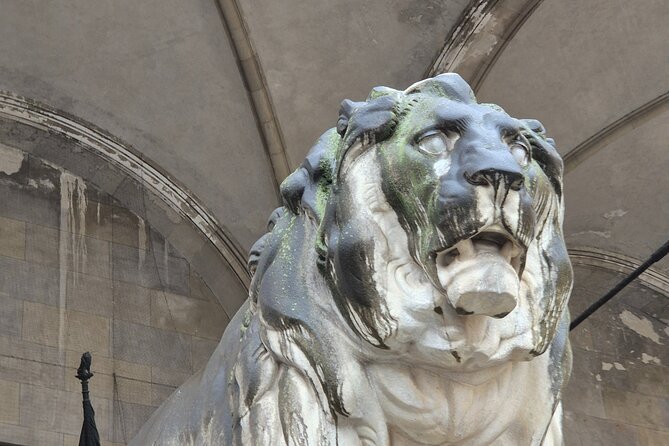
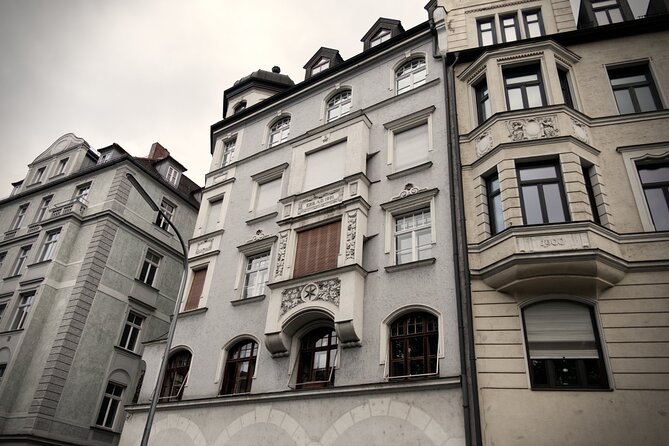
At Feldherrnhalle, the story shifts from party-building to a failed attempt to seize power. This site marks the events connected to the Beer Hall Putsch in 1923, where Adolf Hitler and followers tried to take control, and where the clash with Bavarian police turned the moment into a symbol used by the movement afterward.
Why this stop matters: the tour explains how failure can still produce momentum. In political movements, setbacks can be reframed into myths, and Feldherrnhalle is one of the places designed—by history, and then by memory—to do that work.
You’ll walk away with a clearer sense of why Munich mattered so early in Hitler’s path. The location isn’t presented as a standalone curiosity; it’s treated like a chapter that connects forward.
Platz der Opfer des Nationalsozialismus: facing victims with real seriousness
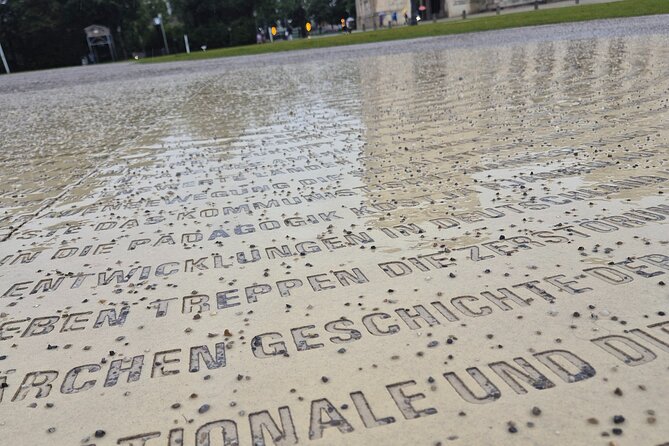
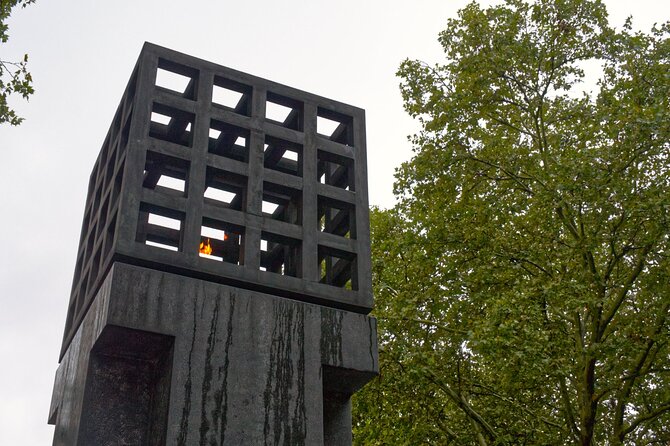
After the power-symbol sites, the tour takes you to Platz der Opfer des Nationalsozialismus—a memorial for those persecuted by the Nazi regime. The eternal flame is a central feature here, and the tone shifts accordingly.
This stop is one of the most important balances in the whole experience. It forces the history to come back to people harmed by the system, not just leaders and events. If you’ve ever felt like dark-history tours drift into “cool facts,” this memorial makes sure yours doesn’t.
I’d treat this part of the walk like a pause button. Let it land. Read what you can, stand for a minute if you need it, and then continue only when you feel ready.
Führerbau and Königsplatz: offices, agreements, and stagecraft
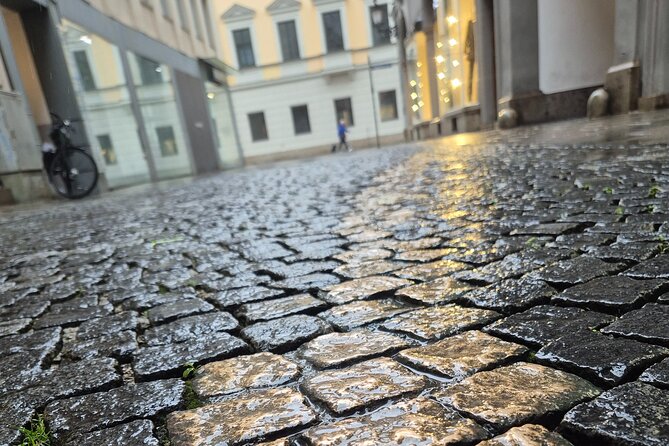
The final major historic buildings are where the story becomes about systems and staging.
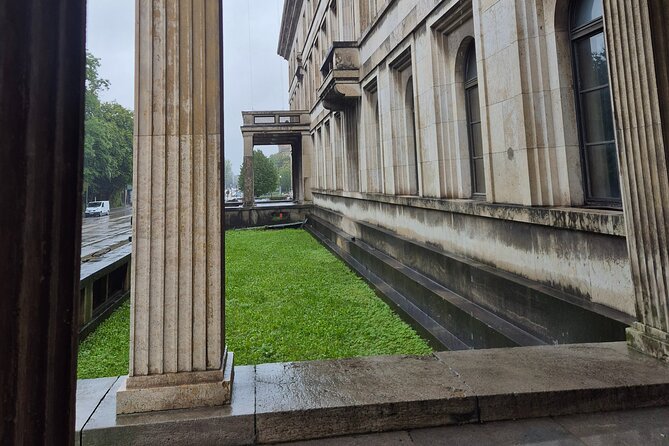
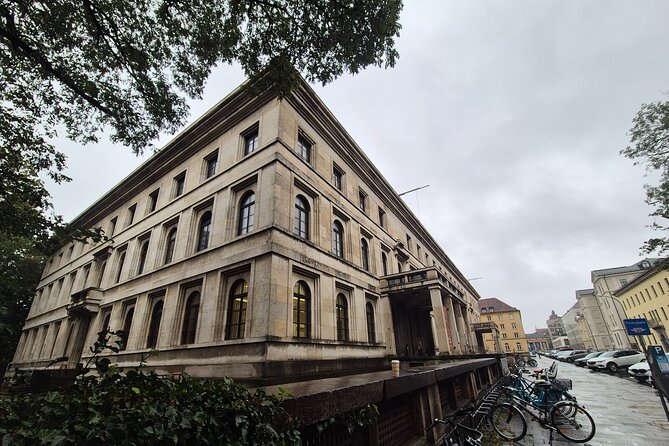
First, you visit the Führerbau (Hitler’s official offices in Munich). The tour connects the building to key high-level meetings and decision-making, including the signing of the Munich Agreement in 1938. Even if you already know that headline, seeing how a physical place is tied to political action gives it weight.
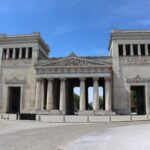
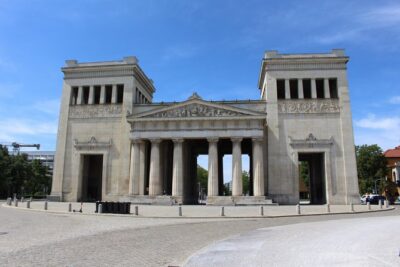
Then you finish with a walk through Königsplatz, a grand square the Nazis used for mass rallies and parades. Here, the tour explains how architecture and public ceremony were used to project power and control. You also hear about public events tied to Nazi propaganda efforts, including book-burnings.
This section is especially valuable if you want to understand how authoritarian messaging becomes “normal” through ritual. The tour doesn’t treat politics like an abstraction. It shows how buildings and ceremonies can train people to accept what they’re seeing—and to feel part of a bigger machine.
Price and value: what $34.73 gets you
At $34.73 per person for about 2.5 hours, you’re paying for two things: guided interpretation and focused time in the right places. This isn’t a generic city-walk where you pick up a few facts along the way.
The value also improves because the listed tour stops don’t involve paid admission for the tour portion. That keeps the experience from feeling like a chain of add-on costs.
Finally, the group size cap of 20 travelers is part of the value. On tours where you’re packed in tight, you get less attention and fewer chances to ask real questions. Here, the format is built for interaction.
One small heads-up: the topic is intense, so you’re getting information, not “entertainment.” If you’re hoping for light sightseeing, this won’t be that.
Guides that matter: what makes the tour feel personal
The experience hinges on the guide. In past groups, Kaevan and Jamie are both credited with strong clarity, good pacing, and answers that go beyond the basic facts.
What I like in that style is how the route turns into a story you can follow. Instead of naming locations like they’re stamps in a passport, the guide ties each stop to what came before and what came next.
Also, the pacing matters here. You don’t want to be rushed through Feldherrnhalle and then stare blankly at Königsplatz wondering what you just walked past. The guides highlighted in feedback seem to handle that balance well—enough structure to learn, enough breathing room to look and ask.
Practical logistics: meeting, ending, and getting back easily
You meet at Isar Gate (Tal 50, 80331 München) and you finish at Königsplatz 1, 80333 München. The ending point is genuinely convenient.
From Königsplatz Station, you can take the U2 U-Bahn to Central Station in one stop (about one minute), which is fast enough to keep your day from getting tangled. Or you can walk back toward Munich’s old core in less than 15 minutes, which is a nice option if the weather is cooperating.
You’ll also have a mobile ticket, and the meeting area is near public transit. Service animals are allowed, and the group is small, which makes the logistics feel simpler than bigger walking tours.
Who should book this Third Reich Tour Munich
This tour is a great fit if you:
- enjoy history that connects people, places, and propaganda strategies
- want a guided walk through major Nazi-era sites without relying on self-guided guesswork
- prefer small-group tours where questions are welcome
- care about both the rise-to-power story and the memorial for victims
You might think twice if you:
- want a casual sightseeing morning with minimal heavy content
- dislike long stretches outdoors while you listen closely
If you’re traveling with family or friends, I’d match the tour to their comfort level with serious history. The route doesn’t shy away from what happened.
Should you book it?
If you’re in Munich and you want to understand why the city became an early stage for Nazi power, I think this is a smart use of time. The strongest reason to book is the combination: beer hall origins, a clear account of the 1923 turning point, a full stop at the victims’ memorial, and then a final look at Führerbau and Königsplatz as propaganda machinery.
Book it if you want a guide to connect the dots and keep the pacing humane. Skip it only if heavy material will derail your trip mood.
FAQ
How long is the Third Reich Tour in Munich?
It runs for about 2 hours 30 minutes (approx.).
Where do I meet the tour?
The start point is Isar Gate, Tal 50, 80331 München, Germany.
Where does the tour end?
The tour ends at Königsplatz 1, 80333 München, Germany.
How much does it cost?
The price is $34.73 per person.
Is there a limit on group size?
Yes. The tour has a maximum of 20 travelers.
Is it a mobile ticket?
Yes, the tour uses a mobile ticket.
Do I need to pay admission at the stops?
The tour listing shows admission ticket free for the stops included.
When will I get confirmation after booking?
You’ll receive confirmation at the time of booking.
What’s the weather like for this kind of tour?
The tour is a walking experience across multiple outdoor locations, so you’ll want to dress for being outside for the full time.
What if I need to cancel?
You can cancel for free up to 24 hours in advance for a full refund. Cancellation within 24 hours of the start time isn’t refundable.
More Third Reich and WWII History in Munich
Just added to the Munich Explorer notebook
Third Reich & WWII History Tours, compared.
 ★ 4.6Third Reich & WWII Walking TourFrom $316,181 reviews
 ★ 4.5Third Reich Walking Tour MunichFrom $454,291 reviews
 ★ 4.6Birthplace of the Third Reich Guided Walking TourFrom $29771 reviews
 ★ 4.5Munich World War II Sites Including Dachau Concentration CampFrom $105570 reviews
 ★ 5.0Munich City Walking Tour, includes Third Reich & ViktualienmarktFrom $31458 reviews
 ★ 4.5Third Reich & WWII Walking TourFrom $35417 reviews
 ★ 4.9Munich 3-Hour Segway Tour: Nazi Munich & Royal ArchitectureFrom $91194 reviews
 ★ 5.0Dachau Concentration Camp Memorial Site And Third Reich Day Tour From MunichFrom $145185 reviews
Browse the lists this tour appears in