
Reviewed · THIRD REICH & WWII HISTORY TOURS
Superior E-Bike Tour incl. 3rd Reich Sites & a beer Garden Stop
Munich has two faces, and you’ll ride both. I love the scope a 5-hour e-bike tour gives you, moving fast between major squares and memorials, and I love how the guides (Simon, Jack, Will, and Chris) make the timeline of the Third Reich feel clear, not chaotic. The one catch: this route is serious, and you’ll be pedaling for stretches, so you should be comfortable riding and following traffic rules.
This tour is built for doing more than sightseeing. You start in the center at Marienplatz, spend real time on places like Odeonsplatz and Königsplatz, pause in a traditional beer garden (snacks at your own cost), and then finish with Jewish heritage stops near St-Jakobs-Platz. With a max group size of 14 and a helmet provided, it’s a focused, street-level way to understand Munich’s past while still getting real “Munich time.”
In This Review
- Key things that make this tour worth your attention
- Starting at Marienplatz: why you begin with a short walk
- Odeonsplatz and the Feldherrnhalle: royal grandeur, then a Nazi shootout
- Max-Joseph-Platz: the royal-cultural stage you ride past
- Königsplatz and Nazi rallies: classical design used for propaganda
- Schwabing on the route: art circles, then later contrasts
- Passing Hofbräuhaus and the early propaganda trail
- The English Garden stop: where you cool down and reset
- Haus der Kunst: how art and power collided
- Feldherrnhalle: the Nazi shrine phase, then the post-war cleanup
- Beer garden stop: snacks on your schedule, not the tour schedule
- Finishing near St-Jakobs-Platz: Jewish Munich, new synagogue area
- Timing, pace, and practical ride tips that make the day easier
- Price and value: what $93.92 buys you (and why it’s fair)
- Should you book this Third Reich e-bike tour?
- FAQ
- FAQ
- How long is the tour in Munich?
- What does the tour cost?
- Is the tour offered in English?
- What’s included, and what isn’t?
- Where do you meet and where do you finish?
- How large are the groups?
- What should I wear or bring?
- What if I need to cancel?
Key things that make this tour worth your attention
- E-bike speed, less stress: you cover multiple districts and big sights without the walking grind
- Third Reich sites explained in a timeline: you connect squares and buildings to what happened there
- Odeonsplatz and Feldherrnhalle context: you see how royal monuments were later used for Nazi propaganda
- Königsplatz as a propaganda stage: classical architecture meets the reality of rallies and ideology
- A breather at the beer garden: you get snack time without turning the day into a party
- Jewish heritage stops at the end: you finish with St-Jakobs-Platz and the new synagogue area
More walks tracing Munich Third Reich and wartime history
- Munich: Third Reich & WWII Walking Tour★ 4.6 · 6,181 reviews
- Third Reich Walking Tour Munich★ 4.5 · 4,291 reviews
- Munich: Birthplace of the Third Reich Guided Walking Tour★ 4.6 · 771 reviews
- Munich World War II Sites Including Dachau Concentration Camp★ 4.5 · 570 reviews
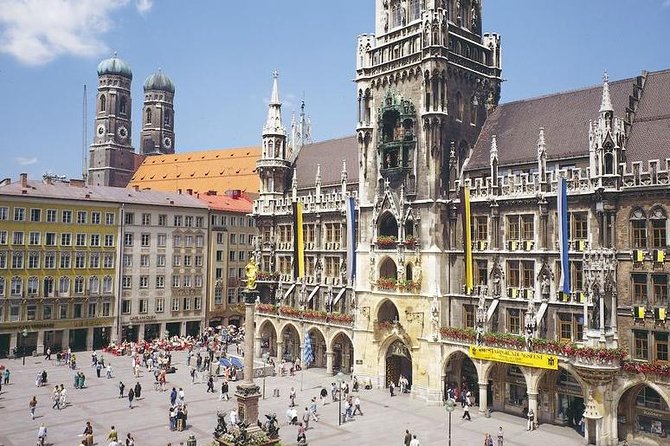
Starting at Marienplatz: why you begin with a short walk
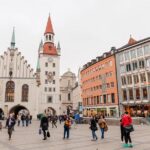
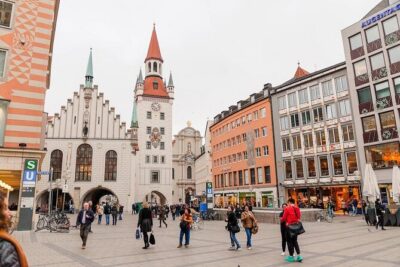
You meet near Marienplatz at Munich Stories – Stadtführungen München. The tour kicks off with a quick overview of the square on foot, because cycling isn’t allowed there. Once you’ve gotten your bearings, you head over to the bikes, pop on helmets, and roll out at an easy pace.
This matters because Marienplatz is the kind of place where it’s easy to get “lost in postcards.” Starting with orientation helps you understand where you are before the history gets heavy. And since the tour is in English, you get the story without having to piece it together yourself from plaques.
Odeonsplatz and the Feldherrnhalle: royal grandeur, then a Nazi shootout
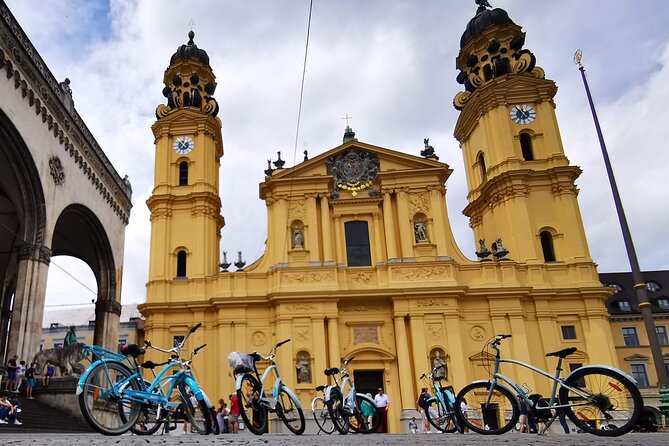
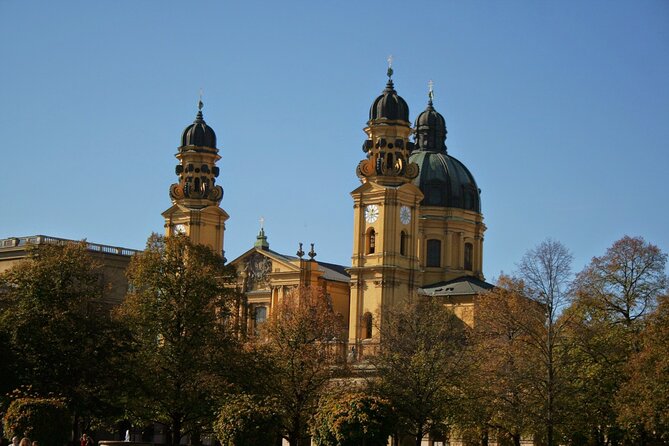
Odeonsplatz is one of those Munich squares where the architecture grabs you first—and the events grab you afterward. You get the sense of the area’s design goals near the Residenz, with big landmarks around you, including the Theatinerkirche and the Feldherrnhalle loggia style.
Then your guide puts the site into a hard chapter: the failed Beer Hall Putsch in 1923, led by Adolf Hitler. The square becomes a focal point for what happened when political violence collided with Bavarian authorities, including the fatal shootout connected to the Feldherrnhalle.
Practical note: this portion is short, but the mental weight is not. The best way to handle it is to ask questions as you go—your guide is there to help you follow the thread without getting lost.
Max-Joseph-Platz: the royal-cultural stage you ride past
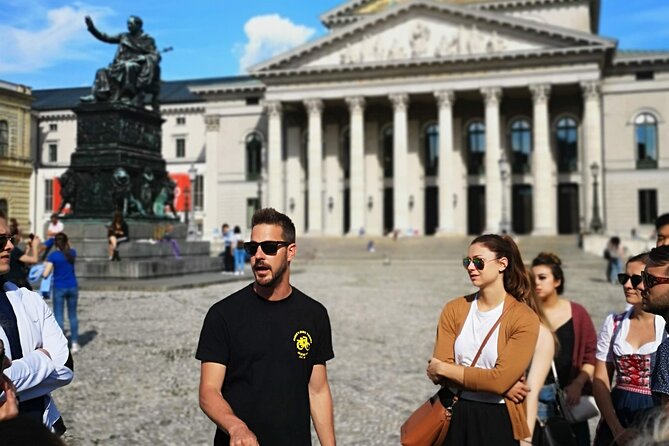
At Max-Joseph-Platz, the vibe shifts again. The square is tied closely to Bavaria’s royal identity, named after King Maximilian I Joseph, and framed by landmarks that pull the eye toward the Residenz complex and the Bayerische Staatsoper.
Why I like this stop in the tour flow: it gives your brain a breather. You’re not only riding from one shock to the next. This area helps you understand that Munich’s Nazi-era story didn’t happen in a vacuum—these were real city spaces with cultural and royal significance long before the slogans took over.
Even in just a few minutes, you get a strong sense of where the city’s prestige architecture sits in relation to later political changes.
More beer halls, cellars and Munich brewery stops
- Bavarian Beer and Food Evening Tour in Munich
★ 4.5 · 1,575 reviews - Classic Mike’s Bike Tour daily @ 11.30 incl Beer Garden & Surfers
★ 5.0 · 1,246 reviews - Munich’s Beer Halls and Breweries: 3-Hour Guided Tour
★ 4.6 · 928 reviews
Königsplatz and Nazi rallies: classical design used for propaganda
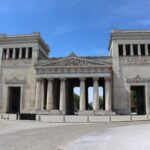
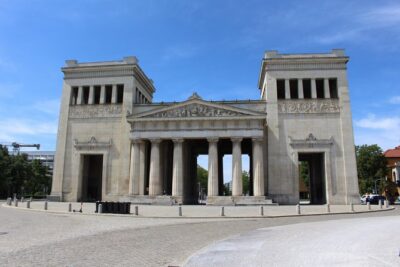
Königsplatz is the moment when you really notice how space can be manipulated. You’re shown how the square was commissioned in the 19th century to showcase classical Greek architecture, with the Glyptothek and other nearby antiquities institutions shaping the area.
Then the tour’s darker turn hits: during the Nazi regime, Königsplatz was used for rallies and propaganda events. The nearby Brown House (Nazi Party HQ) comes up as part of understanding how the ideology physically occupied the city.
This stop can feel unsettling because it’s so easy to admire the buildings. Your guide’s job here is to keep you from separating the beauty of architecture from what it was used for. If you’re the type who likes clear cause-and-effect, this is one of the most valuable parts of the day.
Schwabing on the route: art circles, then later contrasts
Swabbing (Schwabing) adds a different texture. It started as an independent village and later became part of Munich, but what the tour emphasizes is its role as an artist and intellectual hub—linked to names like Kandinsky, Klee, and Thomas Mann.
In the early 20th century, Schwabing developed a bohemian reputation, and after World War II it retained that student and counterculture pull. Today, it’s trendy, full of cafes and nightlife, though that art-energy has been affected by gentrification.
Why this stop belongs in a “Third Reich” tour: it helps you see the contrast. You’re learning how ideology doesn’t only work through big monuments—it also tries to control culture, people, and the kinds of lives that can flourish in a city.
Passing Hofbräuhaus and the early propaganda trail
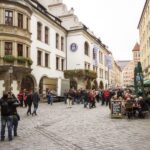
As you pedal, you’ll hear about early Nazi communications and public influence. One key moment on the route is Hofbräuhaus beer hall, where Hitler delivered one of his first speeches on Nazism.
The tour also includes time tied to the former head office of Hitler’s initial political party, the National Socialist German Workers Party (NSDAP). Even without a long museum-style stop, these street-level mentions are powerful because you’re connecting the political story to the physical city you can actually see.
I like the way this tour treats these places like evidence. Instead of just naming dates, the guide ties what you see—beer hall, offices, prominent squares—to how the movement gained attention in public.
The English Garden stop: where you cool down and reset
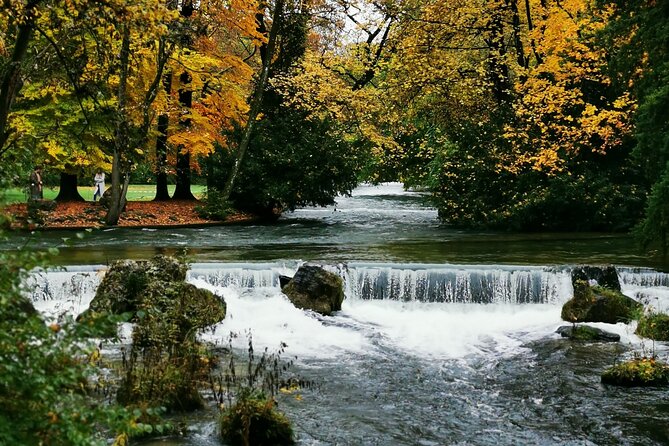
Mid-tour you reach the Englischer Garten (English Garden), one of the world’s largest urban public parks. The tour gives you about an hour here, and it’s not just a photo stop. You get time to ride paths and take in the park’s big-air feeling after several history-heavy sections.
The tour highlights the Chinese Tower area (with the beer garden nearby), the Eisbach Wave where surfers ride an urban current, and the Monopteros viewpoint temple. Even if you don’t go deep into every feature, the point is simple: you get to experience Munich’s everyday outdoors life.
This break is also smart for attention span. When the day switches back toward more memorial-heavy areas, you’re less likely to feel mentally overloaded.
Haus der Kunst: how art and power collided
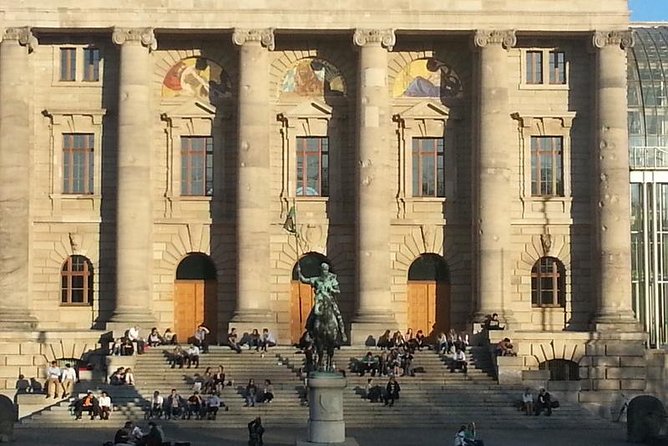
Haus der Kunst is the kind of stop that stays with you because it forces a conversation about culture under dictatorship. The tour focuses on the building’s Nazi origins: it was commissioned by Adolf Hitler and opened in 1937 as the House of German Art, meant to showcase art labeled acceptable by Nazi standards, while attacking degenerate art.
During World War II, it was repurposed for wartime uses like storage and an officers’ club. After the war, it returned as an international contemporary art museum—a symbol of cultural rebuilding, while still bearing the weight of its beginnings.
In a bike tour format, you don’t get a full museum experience. But you do get enough guidance to understand what you’re seeing and why it matters. If you care about how ideology affects everyday life—what gets shown, funded, or banned—this is one of the most meaningful stops.
Feldherrnhalle: the Nazi shrine phase, then the post-war cleanup
The Feldherrnhalle is the second time this tour really leans into the 1923 putsch story, but this stop is more about what happened after. The area has a 19th-century royal monument background, tied to Bavarian military ceremonies. Then, after the Nazis seized power, it was transformed into a shrine honoring the putsch’s martyrs, with SS guards stationed there and locals required to give the Nazi salute.
After World War II, Nazi symbols were removed and the monument returned to its historical role. Even standing there, you get the feeling that the same architecture can be re-scripted by whoever holds power.
This is also where your guide’s pacing becomes important. The best tours don’t rush the emotional part. If you want to understand how public rituals work—how they pressure people to perform loyalty—this stop delivers.
Beer garden stop: snacks on your schedule, not the tour schedule
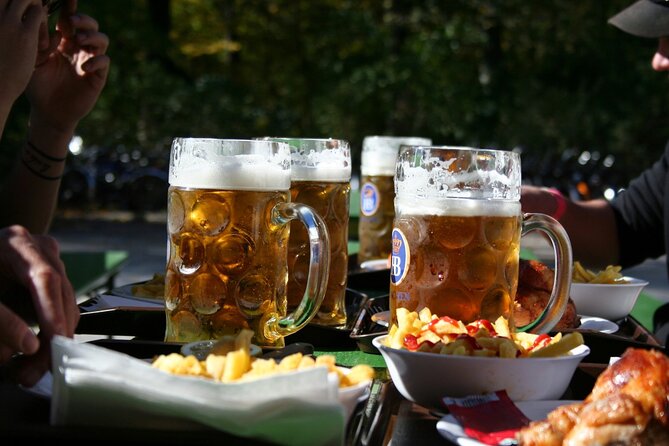
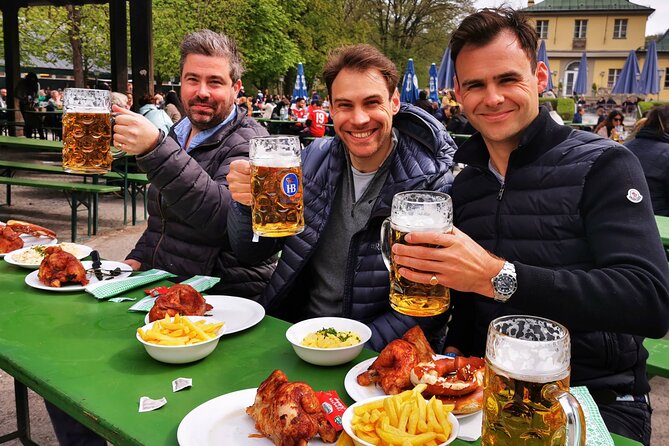
Sometime during the ride you pause at a traditional Munich beer garden. You’ll get a chance to reset with snacks, but food and drinks are at your own expense unless specifically stated otherwise.
I like this setup because it keeps the day flexible. You can grab something quick and move on, or slow down and take in the atmosphere. Either way, you’re not stuck listening or pedaling nonstop. And since Munich’s beer gardens are a core part of local culture, it’s a practical way to feel the city beyond monuments.
Finishing near St-Jakobs-Platz: Jewish Munich, new synagogue area
The last stretch brings you toward St-Jakobs-Platz, described as the Jewish heart of the city and the site of the new Jewish Synagogue. The tour also includes quieter memorial time earlier, dedicated to those who fought against the Third Reich—so the ending has an intentional emotional arc.
This matters for balance. You get the story of how a dictatorship spread through public life and propaganda, but you also end with a reminder that the city’s identity didn’t stop at that era. You’re finishing with present-day significance, not just ruins of the past.
The tour ends at Mike’s Bike Tours & Rentals, at the corner near Hochbrückenstrasse and Bräuhausstraße, where you can plan your next move.
Timing, pace, and practical ride tips that make the day easier
The tour lasts about 5 hours, starting at 9:30 am. It’s offered in English, uses a mobile ticket, and is designed for most travelers who can comfortably ride a bike. The group is capped at 14, which keeps it from feeling like a cattle-car history lecture.
Because this is an e-bike tour, the biggest real variable is not effort—it’s attention and comfort. You’ll want to wear comfortable clothes and shoes, bring rain gear just in case, and use sunscreen in summer. A helmet is provided, but you should still bring your best riding focus.
One more tip worth taking: since you’re riding in an urban area, make sure you understand international bike/car signals before you start. If green means go and red means stop (as in many systems), don’t assume your instincts will handle it when you’re also listening to your guide. Also, be ready to sign acknowledgment forms that you understand the basics of bike touring and road signals.
Price and value: what $93.92 buys you (and why it’s fair)
At $93.92 per person, you’re paying for four things: an expert guide, an e-bike, a helmet, and a route that hits many major sites in one go. Food and drinks aren’t included (snacks at the beer garden are on your own expense), and hotel pickup/drop-off isn’t part of the package.
Here’s the value logic: if you tried to do this by yourself on foot, you’d spend a lot more time walking between distant squares and parks, and you’d lose the “connected story” your guide stitches together. The e-bike format turns Munich’s size into an advantage. You can spend your energy on listening and looking, not on logistics.
Also, you’ll likely find it’s not just about the number of stops. It’s about the order—royal-to-political, architecture-to-propaganda, culture-to-control, then back to memory and present-day Jewish heritage.
Should you book this Third Reich e-bike tour?
Book it if you want a guided, street-level understanding of Munich’s darkest decades without sacrificing the chance to experience real Munich life—parks, squares, and even a beer garden pause. It’s especially a good fit if you like your history explained clearly as you ride past the places where it happened.
Skip it (or choose something else) if you’re likely to struggle with the physical side of a 5-hour bike day, or if you prefer a lighter, purely sightseeing-style tour. This one is built for people who can handle serious topics in outdoor public spaces.
If you do book, come prepared to ask questions. The guides here are praised for keeping the tone upbeat while still treating the subject with the weight it deserves. And with a small group size, you should feel like you’re part of the ride, not just watching from behind someone else’s handlebars.
FAQ
FAQ
How long is the tour in Munich?
It runs for about 5 hours.
What does the tour cost?
The price is listed as $93.92 per person.
Is the tour offered in English?
Yes, the tour is offered in English.
What’s included, and what isn’t?
Included: a professional guide, plus a bike and a helmet. Not included: food and drinks unless specified, and hotel pickup/drop-off.
Where do you meet and where do you finish?
You start at Munich Stories – Stadtführungen München, Marienplatz 15, 80331 München, Germany. The tour ends at Mike’s Bike Tours & Rentals near Hochbrückenstrasse and Bräuhausstraße 10, 80331 München.
How large are the groups?
The tour has a maximum of 14 travelers.
What should I wear or bring?
Wear comfortable clothes and shoes, bring rain gear, and in summer sunscreen is recommended.
What if I need to cancel?
Free cancellation is available up to 24 hours before the experience’s start time for a full refund.
More Bavarian Plates in Munich


More Beer Halls and Breweries in Munich
More Third Reich and WWII History in Munich
Just added to the Munich Explorer notebook
Third Reich & WWII History Tours, compared.
 ★ 4.6Third Reich & WWII Walking TourFrom $316,181 reviews
 ★ 4.5Third Reich Walking Tour MunichFrom $454,291 reviews
 ★ 4.6Birthplace of the Third Reich Guided Walking TourFrom $29771 reviews
 ★ 4.5Munich World War II Sites Including Dachau Concentration CampFrom $105570 reviews
 ★ 5.0Munich City Walking Tour, includes Third Reich & ViktualienmarktFrom $31458 reviews
 ★ 4.5Third Reich & WWII Walking TourFrom $35417 reviews
 ★ 4.9Munich 3-Hour Segway Tour: Nazi Munich & Royal ArchitectureFrom $91194 reviews
 ★ 5.0Dachau Concentration Camp Memorial Site And Third Reich Day Tour From MunichFrom $145185 reviews
Browse the lists this tour appears in