
Reviewed · THIRD REICH & WWII HISTORY TOURS
National Socialism WWII with licensed guide – private tour
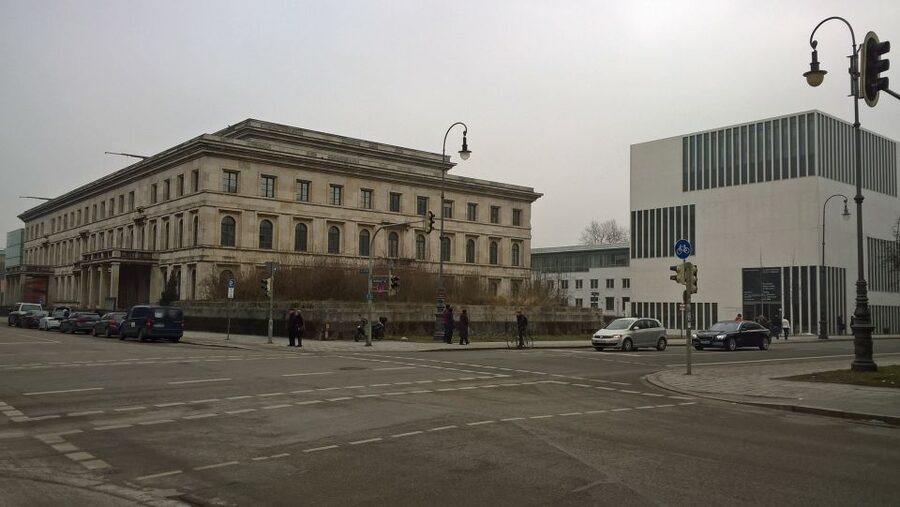
Munich looks different after this walk. This is a focused way to follow how National Socialism took root in the city, from Feldherrnhalle to Königsplatz, with help from extensive photo material.
I also like how the tour keeps the story moving: you’re not stuck staring at plaques all day. You walk, you listen, and you start connecting what you see on the street to what was happening politically.
Two things I especially liked were the stop-by-stop clarity and the way resistance is treated as more than an afterthought. The walk covers the “White Rose” at LMU and then brings you to the NS Documentation Centre so you finish with context, not just buildings.
One drawback to consider: this is heavy history. If you’re hoping for casual sightseeing, the mood may feel intense for the full 2 hours.
In This Review
- Key things to know before you go
- Munich’s role in National Socialism: what you’ll actually learn
- Expect a serious, educational tone (not a sightseeing mood)
- Where the tour starts near Odeonsplatz
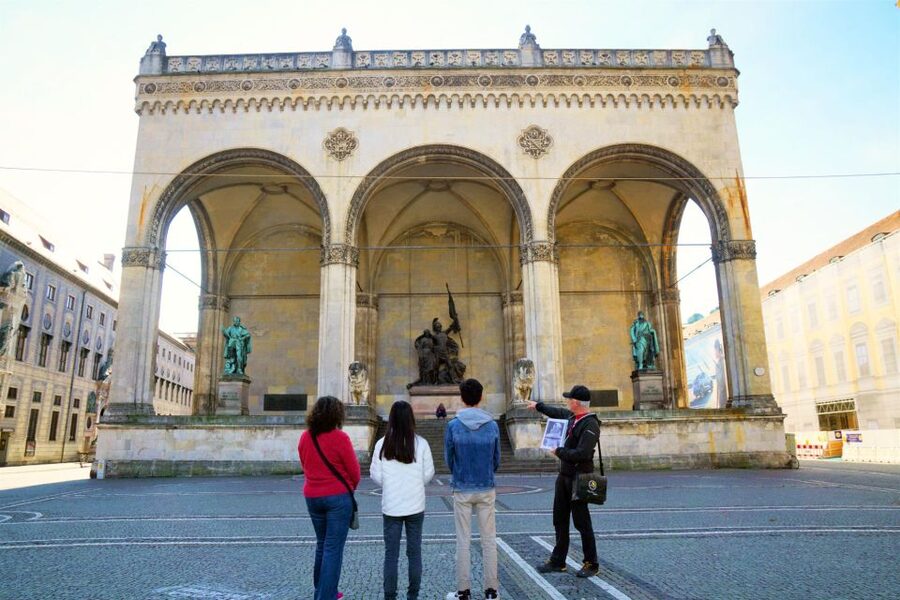
- Feldherrnhalle and Odeonsplatz: Hitler’s Munich entrance
- Court garden and resistance memorials: the opposition side of Munich
- LMU and the White Rose: flyers, fear, and consequences
- The Square for the Victims of National Socialism: shifting from power to people
- Haus der Kunst, Degenerate Art, and control of culture
- Karolinenplatz and the sponsors: ideology also needs funding
- Königsplatz finale: the Brown House, Führerbau, and the NS Documentation Centre
- Wolfgang Brehm and why the tour doesn’t drag
- Price and value: $259 per group up to 30 people
- Who this tour fits best
- Should you book this Munich Nazi sites private tour?
- FAQ
- FAQ
- Where does the tour start?
- How long is the tour?
- What is the price?
- Is the tour private?
- What languages are available?
- What stops are included in the route?
- Do I get to visit the NS Documentation Centre?
- What’s included in the price?
- Is admission to the NS Documentation Centre included?
- Is the tour wheelchair accessible?
- Is free cancellation available?
Key things to know before you go
- Private group, short and efficient: 2 hours covers multiple major sites without feeling endless.
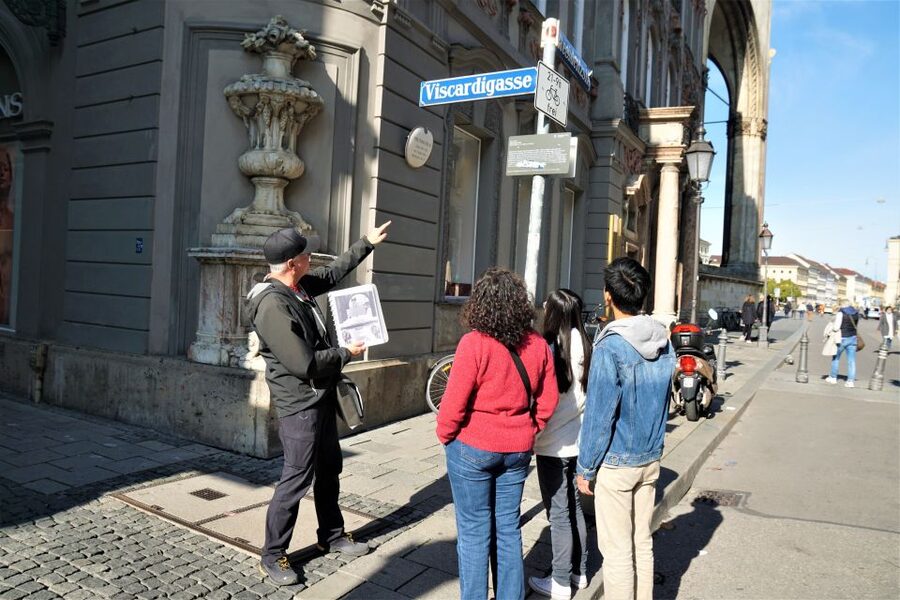
- Photo-based storytelling: the guide uses extensive photo material to make events and locations easier to grasp.
- Resistance is front and center: you don’t just learn about the Nazis; you also learn about Munich opposition like the White Rose.
- Culture under the Nazis: you’ll connect propaganda and control of art to specific places like Haus der Kunst and Galeriestraße.
- You end at the party center: Königsplatz links buildings tied to the NSDAP, plus the NS Documentation Centre (opened in 2015).
- Optional museum time after: you can visit the NS Documentation Centre more, but admission is not included.
More walks tracing Munich Third Reich and wartime history
- Munich: Third Reich & WWII Walking Tour★ 4.6 · 6,181 reviews
- Third Reich Walking Tour Munich★ 4.5 · 4,291 reviews
- Munich: Birthplace of the Third Reich Guided Walking Tour★ 4.6 · 771 reviews
- Munich World War II Sites Including Dachau Concentration Camp★ 4.5 · 570 reviews
Munich’s role in National Socialism: what you’ll actually learn
Munich isn’t just another German city in WWII history. The tour frames it as a place where an ideology gained traction, grew into a movement, and then used public space as a stage for power. That matters because you’re not only learning dates. You’re learning how a political movement tried to make itself look inevitable.
One good thing about the pacing is that it mirrors the logic of the subject. You start with why Hitler came to Munich and how the early National Socialist party got moving. Then the route shifts to symbols, buildings, and public rituals. After that, it turns toward resistance and victims, so the story doesn’t stay trapped in the myth-making of the Third Reich.
If you care about history you can see, this tour is built for you. It trains your eye. You begin noticing how certain plazas, arcades, and institutions were used for propaganda, intimidation, and administration.
Expect a serious, educational tone (not a sightseeing mood)
The tour specifically warns that it’s not for right-wing radical or Nazi fans. You should treat that as a clue about the emotional intent. The walk is about understanding, accountability, and the cost to real people.
You also get a built-in shift in perspective as the route goes on. Early stops focus on Nazi leadership and their public power. Midway stops bring in resistance and the victims of National Socialism. By the time you reach the NS Documentation Centre, you’re in a setting designed to interpret the system, not admire its aesthetics.
So yes, it’s a walking tour through famous sites. But it’s also a guided reading of what those sites meant.
Where the tour starts near Odeonsplatz
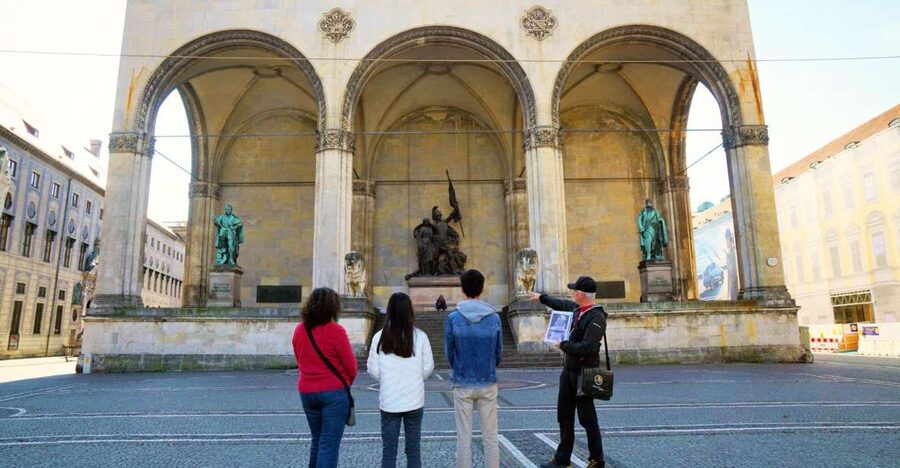
You’ll meet at the steps at Feldherrnhalle at Odeonsplatz. The tour info also lists Residenzstraße 1 as the starting location, so expect to be in that immediate central area right from the start.
The route is designed for an efficient 2-hour loop, ending at Königsplatz 1, 80333 München. That end point is useful because it concentrates the final concentration of Nazi-era administration and memorial interpretation in one area, so the tour lands with a strong closing note.
You’ll also have a live guide in English or German, and it runs as a private group. That usually helps with questions, pacing, and keeping the tour grounded in what your group wants to understand.
- From Munich: Neuschwanstein & Linderhof Castle Full-Day Trip
★ 4.6 · 14,646 reviews - Neuschwanstein & Linderhof Castle-Fairytale Day Tour from Munich
★ 4.5 · 7,275 reviews - Munich: Third Reich & WWII Walking Tour
★ 4.6 · 6,181 reviews
Feldherrnhalle and Odeonsplatz: Hitler’s Munich entrance
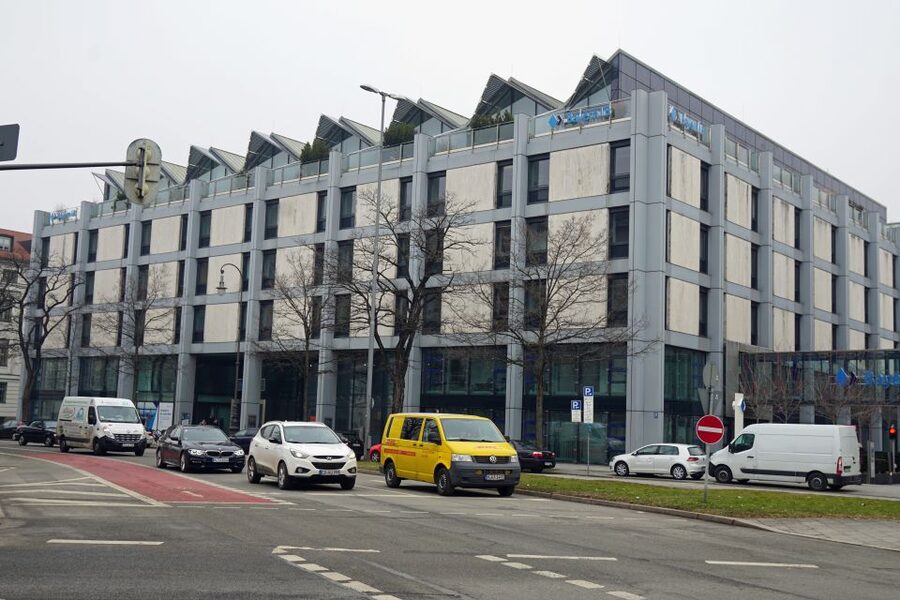
The first stretch is all about origin and orientation. At Feldherrnhalle at Odeonsplatz, the guide explains why Hitler came to Munich and how he lived there, including where he lived and how he made a living. That gives you a human anchor early on, without turning the story into a character study.
You then get guided attention to where the so-called Hitler coup ended, plus a look at a former monument erected for the deceased putschists. This is one of those moments where a building or square suddenly becomes more than architecture. It becomes a propaganda instrument, and the tour teaches you to notice how public monuments were used to shape memory.
There’s a second guided stop connected to Feldherrnhalle, too. The structure suggests the guide may return to refine details and keep you from getting lost in the early timeline. For many people, that repetition is helpful: it reinforces the idea that ideology spread through events and then through ceremonies around those events.
Practical tip: wear comfortable walking shoes. You’ll be on your feet through central Munich squares and streets for the full 2-hour experience.
Court garden and resistance memorials: the opposition side of Munich
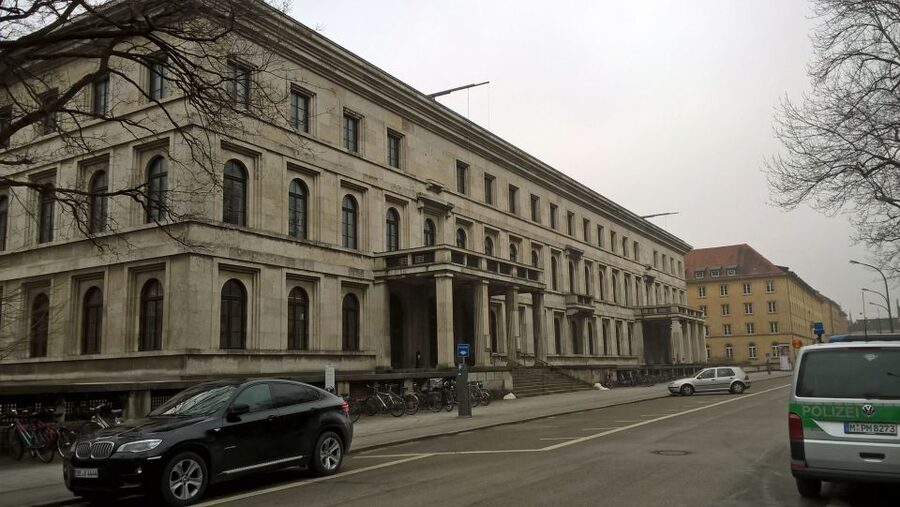
After you’ve framed how Nazi power gained visibility, the tour shifts you into a quieter, more morally complicated space: the court garden. Here, you explore a monument erected for resistance fighters.
This matters because it changes the tour’s emotional temperature. Instead of only seeing the Nazi project as a story of leaders and rallies, you start recognizing that opposition existed nearby and that people resisted even when it was dangerous.
The tour’s choice of where to place this stop is smart. It gives you a pause from the heavier imagery, while still keeping everything connected to the same city geography and the same power network. You begin to feel how resistance wasn’t a distant idea. It was something that lived alongside the Nazi presence.
LMU and the White Rose: flyers, fear, and consequences
Next is LMU, the largest university in Germany. This is where the guide brings in the resistance group known as the White Rose, including how they created flyers and what ultimately happened to them, including that group members were beheaded.
Even if you already know the basics, a guided walk helps because you’re seeing the context of place. A university isn’t just a backdrop in history. It’s part of the social world where ideas circulate, and the tour treats that seriously.
What I like about this section is that it’s not only tragedy. It’s a story about action—about choosing to speak or print or distribute information when the regime demanded silence.
If you’re traveling with students, this stop tends to land well. One review highlighted how the tour was useful for GCSE history, which makes sense: the White Rose story is a compact way to connect ideology, propaganda, and resistance into one understandable arc.
The Square for the Victims of National Socialism: shifting from power to people
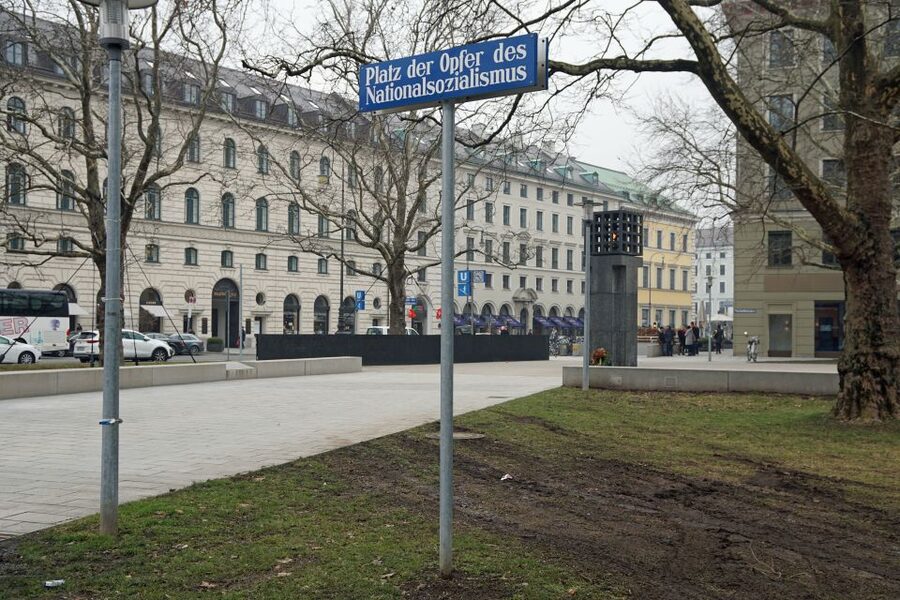
Then the tour turns toward victims at the Square for the Victims of National Socialism. This stop is important because it clarifies who the victims were, and it refuses to let the tour end as only a story about Nazi leadership.
The experience here is different from earlier stops. You’re not looking for symbolism to decode. You’re being guided to recognize that the regime’s machinery affected human lives in specific, brutal ways.
I find this moment essential for balancing the rest of the route. Without it, a walking tour could drift into fascination with sites. With it, the tour keeps you focused on responsibility and harm.
Haus der Kunst, Degenerate Art, and control of culture
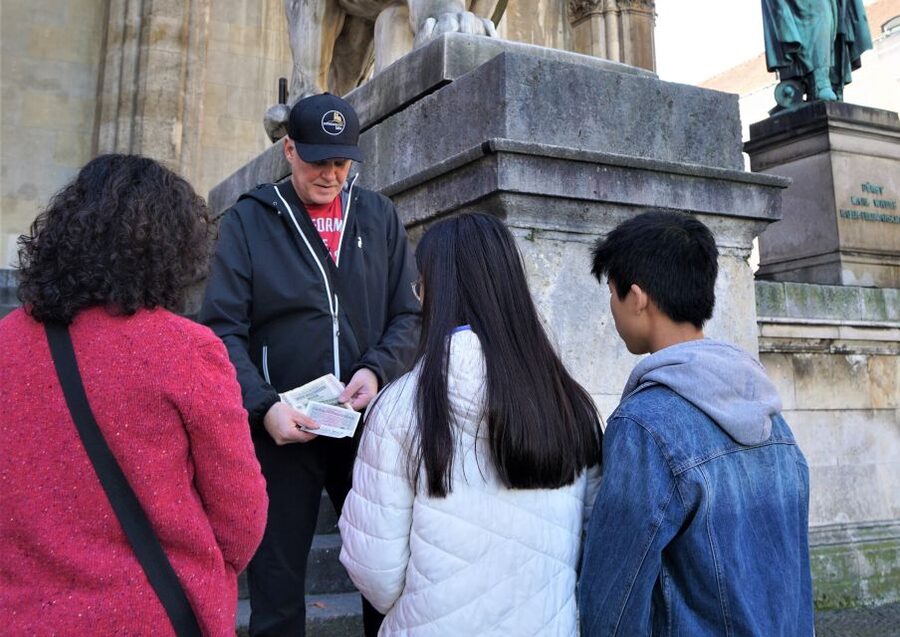
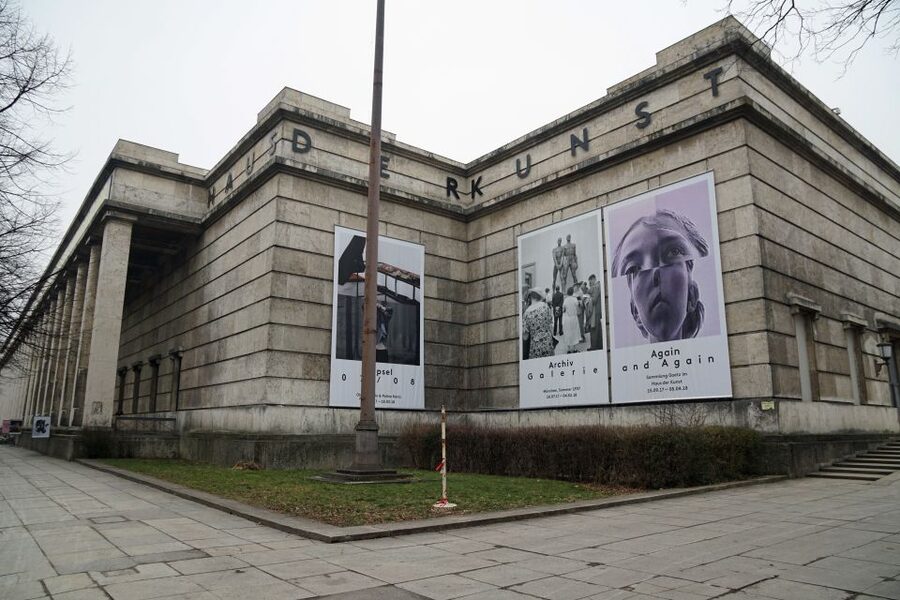
Next up is Haus der Kunst, where you learn how the Nazis influenced art. The tour then connects that message to Galeriestraße, where you can still see where the exhibition Degenerate Art took place.
This is one of the most practical sections of the whole tour because it shows something people often forget. The Nazis didn’t just govern with police and laws. They tried to govern culture—what was acceptable, what was mocked, what was labeled dangerous.
When you look at a building like Haus der Kunst with that lens, it changes how you understand the brick and the façade. You start seeing the institution as part of the regime’s messaging system.
If you’re an art lover, this section is worth the walk even if you’re not a hardcore WWII person. It gives you a clearer explanation for why art history is political history in Nazi Germany.
Karolinenplatz and the sponsors: ideology also needs funding
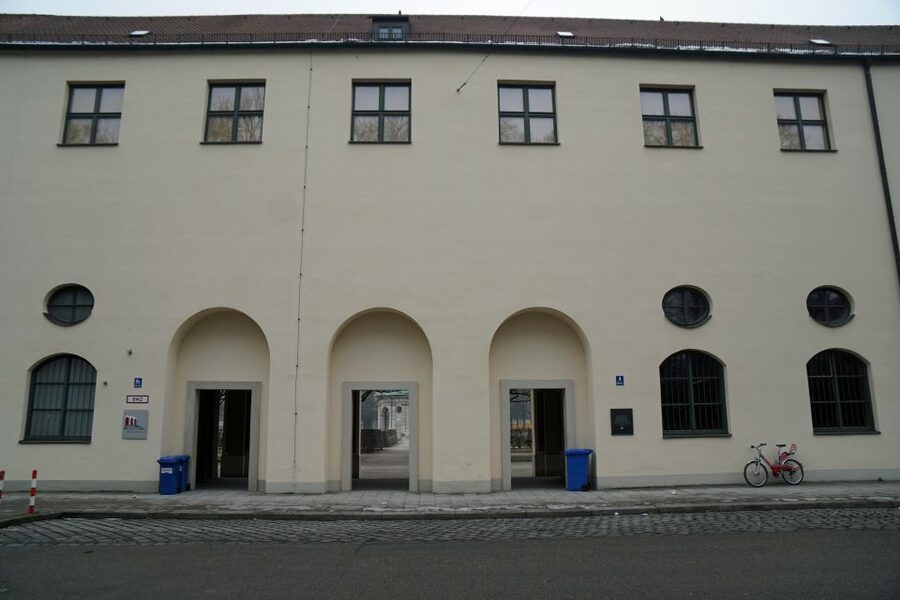
At Karolinenplatz, you learn about the main sponsors of the Nazis. This part is a reminder that movements don’t grow on ideology alone. They need money, influence, and networks.
I like that the tour doesn’t keep the story trapped in one-directional propaganda. It treats the regime as something supported by people and institutions, which makes the history feel less like a fantasy and more like a system with accountability.
You’ll leave this section with a better grasp of how power can spread when supporters align around shared goals.
Königsplatz finale: the Brown House, Führerbau, and the NS Documentation Centre
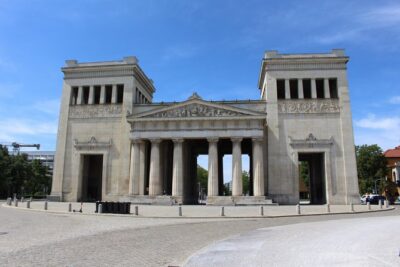
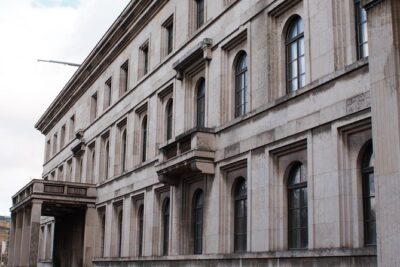
The final stretch concentrates at Königsplatz, a party center area that ties together Nazi headquarters and administrative power. This is where you discover the Nazi headquarters known as the Brown House, plus the Führer building (Hitler’s office), and the NSDAP administration.
Ending here is smart because these weren’t just symbolic structures. They were functional spaces where the regime could coordinate, present itself, and enforce its agenda.
Then comes the NS Documentation Centre, opened in 2015. The tour includes a guided visit at the end, and you’ll have the option to visit more on your own after the tour, since admission is not included.
This is where your previous stops start working like a set of connected puzzle pieces. You’ve seen the earlier symbols and propaganda sites. You’ve seen how resistance and victims fit into the same city. Now you’re at an interpretation center that helps you make sense of how it all worked together.
Wolfgang Brehm and why the tour doesn’t drag
A big reason people rate this tour highly is the guide. The experience provider is schwarzgold.info – Wolfgang Brehm, and multiple reviews highlight how competent and engaging his leadership feels.
One review explicitly called out Wolfgang Brehm by name, another mentioned how the tour was never boring, and another pointed out how useful it was for a history student. That combination suggests the guide knows how to explain difficult material without turning it into a lecture you tune out of.
If you’re choosing between tours on this topic, pay attention to delivery. With Nazi-era history, clarity matters. You want context, not sensationalism. You want facts, not rumor. Based on the praise, this tour aims for exactly that.
Price and value: $259 per group up to 30 people
The price is $259 per group up to 30, and the tour lasts 2 hours. That pricing can be a bargain or a splurge depending on how many people you bring.
- If your group is close to the maximum size, you’re effectively paying a small per-person amount for a certified guide and a tight set of major stops.
- If it’s only a couple of people, it’s pricier per person, but you still get the advantage of a private guide who can answer questions.
This is the kind of tour that can be especially good value for families, small school groups, or friends who want a guided “greatest hits” route without joining a large crowd.
Also remember the NS Documentation Centre part: the guided visit is included in the tour experience, but additional self-visit time may require extra admission since it’s not included.
Who this tour fits best
This walking tour is a strong fit if you want a clear, place-based understanding of Munich under the Nazis, including resistance and victims.
You’ll probably enjoy it most if:
- you like history you can see in the streets
- you’re traveling with a student or someone studying WWII history
- you want both the Nazi story and the resistance story, not just one side
If you’re looking for a light, upbeat day, or if you’re uncomfortable with memorial sites and brutal historical subjects, you may not love the experience.
Should you book this Munich Nazi sites private tour?
If you want a short, well-guided route through major Nazi-era sites in Munich, this is a solid choice. I especially like that the tour uses photo material, includes resistance and victim-focused stops, and ends with the NS Documentation Centre rather than leaving you with only street-level monuments.
Book it if you value context and guided interpretation, and if you’re ready to face a difficult chapter of history with care. Skip it only if you’re hoping for casual sightseeing or you want something celebratory or entertaining, because this tour is built for understanding and remembrance, not spectacle.
FAQ
FAQ
Where does the tour start?
The meeting point is at the steps at Feldherrnhalle at Odeonsplatz. The starting location is also listed as Residenzstraße 1.
How long is the tour?
The tour duration is 2 hours.
What is the price?
The price is $259 per group up to 30 people.
Is the tour private?
Yes, it’s a private group tour.
What languages are available?
The live tour guide offers English and German.
What stops are included in the route?
The tour includes Feldherrnhalle, Haus der Kunst, the Munich Residenz, the Square for the Victims of National Socialism, the NS Documentation Centre, the Führerbau, and it ends at Königsplatz.
Do I get to visit the NS Documentation Centre?
A guided visit to the NS Documentation Centre is part of the tour. You can also visit after the tour, but admission is not included.
What’s included in the price?
You get a professional, certified tour guide with more than 10 years of experience.
Is admission to the NS Documentation Centre included?
No. Admission is not included.
Is the tour wheelchair accessible?
Yes, the tour is wheelchair accessible.
Is free cancellation available?
Free cancellation is available up to 24 hours in advance for a full refund.
More Third Reich and WWII History in Munich

Just added to the Munich Explorer notebook
Third Reich & WWII History Tours, compared.
 ★ 4.6Third Reich & WWII Walking TourFrom $316,181 reviews
 ★ 4.5Third Reich Walking Tour MunichFrom $454,291 reviews
 ★ 4.6Birthplace of the Third Reich Guided Walking TourFrom $29771 reviews
 ★ 4.5Munich World War II Sites Including Dachau Concentration CampFrom $105570 reviews
 ★ 5.0Munich City Walking Tour, includes Third Reich & ViktualienmarktFrom $31458 reviews
 ★ 4.5Third Reich & WWII Walking TourFrom $35417 reviews
 ★ 4.9Munich 3-Hour Segway Tour: Nazi Munich & Royal ArchitectureFrom $91194 reviews
 ★ 5.0Dachau Concentration Camp Memorial Site And Third Reich Day Tour From MunichFrom $145185 reviews
Browse the lists this tour appears in