
Reviewed · DACHAU MEMORIAL SITE TOURS
Munich WWII and Dachau Concentration Camp Private Tour with Licensed Guide
WWII in Munich hits differently when you walk its actual sites. This private day pairs downtown landmarks tied to the Nazi era with a guided visit to the Dachau Concentration Camp Memorial.
I like two things a lot here: you get a licensed professional guide who connects what you see to what happened, and you travel in a private, chauffeured Mercedes or VW minivan (or a small coach for larger groups), which keeps the day efficient. That means less time herding around and more time actually understanding.
One consideration: this is a long, emotionally heavy day. Dachau alone takes about 1.5 to 2.5 hours, and the memorial’s footpaths include coarse pebbles, so plan for walking and for serious historical content (it’s not recommended for kids under 12).
In This Review
- Key Highlights You’ll Care About
- How This Munich WWII + Dachau Route Works as One Day
- Price and Value: What You’re Really Paying For
- Getting to the Sites: Pickup, Transport, and Timing That Makes Sense
- Munich’s WWII-Era Landmarks: What Each Stop Is Doing for the Story
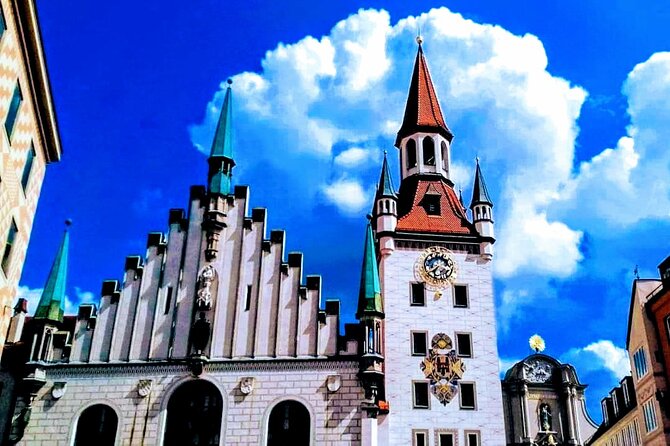
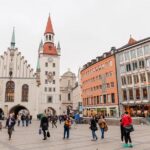
- Marienplatz: The Civic Center With a Nazi Overlay
- Frauenkirche: Damage and Reconstruction Visible in Architecture
- St. Michael: The Second Largest Barrel Vault in the World
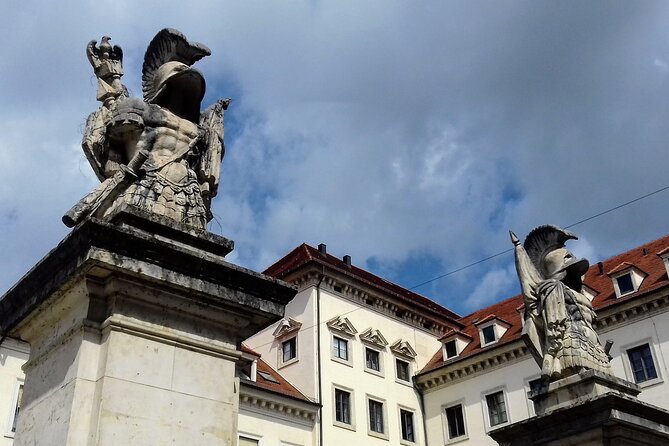
- Residenz München: Power, Prestige, and Petting the Lions
- Viscardigasse: A Name With a History-Flavor
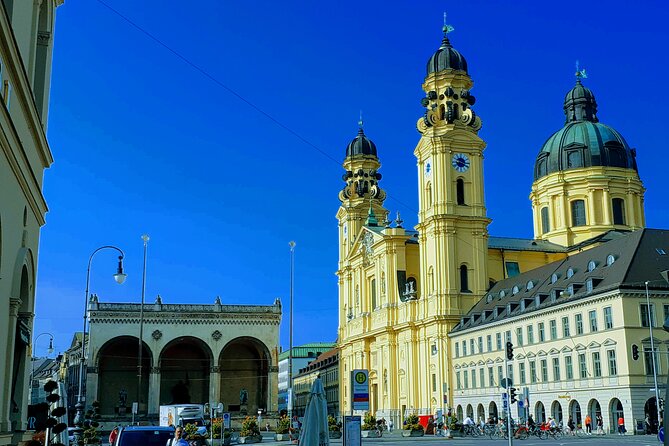
- Feldherrnhalle: The 1923 Putsch’s Bloody End Point
- Platz der Opfer des Nationalsozialismus: An Eternal Flame for Victims
- Ludwig Maximilians University: White Rose Memorial and the Cost of Resistance
- Schwabing: Where Nazi Figures Worked and Lived
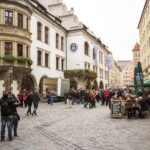
- Staatliches Hofbräuhaus: Munich’s Most Famous Beer Hall, With a Nazi Footnote
- Altstadt-Lehel and Haus der Kunst: Monumental Nazi-Era Building Styles
- Eisbachwelle: A Brief Reset From Horror
- Bogenhausen and Prinzregentenstraße: Residences, Air Raid Shelters, and the Elite
- Ramersdorf and Stadelheimer Straße: Nazi Model Housing and the Guillotine
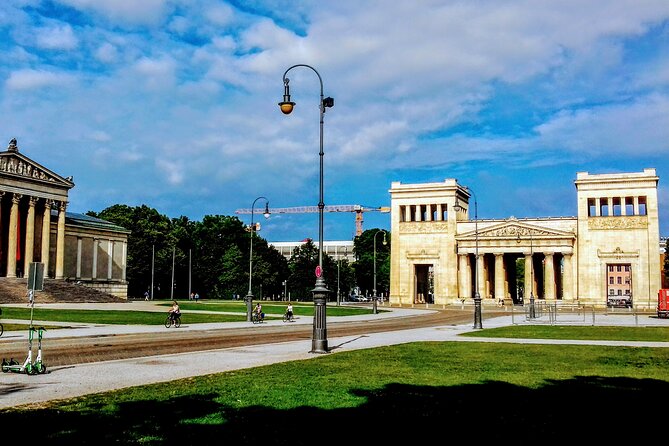
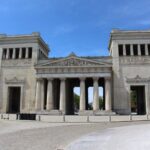
- Königsplatz and Karolinenplatz: Party Power, Surviving Buildings, and Documentation
- Maxvorstadt: A Shabby Room and a Planned Mausoleum
- From Munich to Dachau
- Dachau Concentration Camp Memorial: What the Guided Visit Emphasizes
- Pre-Memorial Context on Former SS Grounds
- How Long to Plan and What Footwear to Use
- The Licensed-Guide Difference (and Why It Matters for This Topic)
- Who This Private Tour Fits Best
- Should You Book This Tour?
- FAQ
- How long is the tour?
- Is this tour private?
- What language is the tour offered in?
- Where do you pick up in Munich?
- What transportation is included?
- How much time is spent at the Dachau Concentration Camp Memorial?
- What should I wear for Dachau?
- Is lunch included in the price?
- Is Dachau recommended for children?
- Can I cancel for free?
Key Highlights You’ll Care About
- Private door-to-door pickup in Munich (and even possible airport pickup on request) means fewer logistics headaches
- A licensed guide who handles the context for Munich’s Nazi-era power sites and the Dachau memorial
- Munich’s “power trail” runs from Marienplatz through Königsplatz and Karolinenplatz
- White Rose connection at Ludwig Maximilians University, including Hans and Sophie Scholl and the 1943 execution context
- Dachau by the numbers: 200,000+ imprisoned and 41,500 murdered, plus the guide-supported visit length
- Real-world comfort tip: bring suitable footwear for coarse pebble paths at Dachau
Other guided visits to the Dachau Memorial Site
- Dachau Concentration Camp Memorial Site Tour from Munich by Train★ 4.5 · 5,637 reviews
- From Munich: Dachau Memorial Site Day Tour★ 4.8 · 2,723 reviews
- From Munich: Dachau Memorial Site Half-Day Trip★ 4.7 · 2,526 reviews
- From Munich: Dachau Memorial Site Full-Day Tour★ 4.9 · 1,406 reviews
How This Munich WWII + Dachau Route Works as One Day
This tour is built like a timeline you can see. You start in central Munich with places that still shape the city’s layout and identity. Then you move outward to specific sites tied to Nazi politics, propaganda, and the machinery of power. The final chapter is Dachau, where the story shifts from ideology and architecture to human suffering.
The private format matters because it keeps things focused. Instead of rushing between scattered stops, you get a sequence that flows. Your guide can adjust the pace to your group—especially important at Dachau, where there’s no point “speed-running” a memorial.
You also avoid the annoying parts of self-guided history travel: sorting transit, figuring out where to stand for the right sightlines, and guessing what each building meant. Here, the guide does the heavy lifting so you can spend your energy on noticing details.
Price and Value: What You’re Really Paying For
The price is $804.18 per person, and it’s not cheap. But when you break it down, you’re paying for three big things that add up fast on a day like this:
- A private, chauffeured vehicle (new Mercedes or VW minivan with A/C, or a small coach for bigger groups)
- A licensed professional guide for both Munich and Dachau
- A full-day structure with many free admission stops plus water and no hidden extras
The “no hidden costs” promise is also worth attention. You still have to handle lunch yourself, and you’ll want to budget tips, but the core tour cost is straightforward.
So the real question isn’t just the dollar amount. It’s whether you want a day that’s tightly organized, guided in depth, and logistically smooth—especially for a destination like Dachau, where context changes everything.
Getting to the Sites: Pickup, Transport, and Timing That Makes Sense
Pickup starts at 8:00 a.m., 9:00 a.m., or 9:30 a.m. in any hotel or address in Munich. You can also request another pickup time, and pickup/return outside Munich (like MUC airport) may be possible with additional costs.
The transport setup is built for comfort and pace:
- If your group is small, you go in a chauffeured minivan so everyone stays together.
- If you’re over 7 people, you ride in a small coach.
This matters because the Munich portion includes a lot of stops in different areas (Schwabing, Maxvorstadt, Bogenhausen, and more). Being in a vehicle avoids wasting hours on transit transfers and walking between scattered points.
Plan on a 9 hours 30 minutes day. That long duration can be great if you like big historical days. If you prefer lighter mornings and lots of downtime, you may find it tiring—especially once Dachau begins.
More walks tracing Munich Third Reich and wartime history
- Munich: Third Reich & WWII Walking Tour
★ 4.6 · 6,181 reviews - Third Reich Walking Tour Munich
★ 4.5 · 4,291 reviews - Munich: Birthplace of the Third Reich Guided Walking Tour
★ 4.6 · 771 reviews
Munich’s WWII-Era Landmarks: What Each Stop Is Doing for the Story
This part of the tour isn’t just sightseeing. The stops are chosen to show how Nazi power expressed itself in city planning, public spaces, institutions, and propaganda.
Marienplatz: The Civic Center With a Nazi Overlay
You begin at Marienplatz, Munich’s “bourgeois center” dating back to the 12th century. The tour uses the city square and the old town layout to explain how Nazi-era symbolism was threaded into ordinary public life—down to the town hall being fitted with swastika flags.
You’ll get about one hour here for an old-town introduction. It’s a good mental warm-up. You’ll be better prepared to spot the meaning behind what you see later.
Frauenkirche: Damage and Reconstruction Visible in Architecture
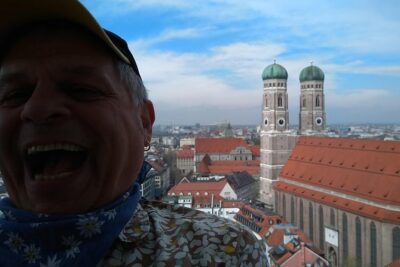
Next is the Frauenkirche. It’s a late Gothic icon built in just 20 years, and the guide uses historical images to show destruction from Allied bombings and changes during reconstruction.
This stop is short, but it’s important because it reminds you that the city itself was physically reshaped. When the guide shows the before/after images, you get a clearer sense of what “history” meant to daily life—suddenly and violently.
St. Michael: The Second Largest Barrel Vault in the World
At St. Michael, you’re also using the building itself as a lens. The church has the second largest barrel vault in the world (as stated on this tour), built about a century later in Mannerist style. Again, the guide connects bomb damage and reconstruction with historical images.
If you like architecture, this is a satisfying quick hit. If you’re purely focused on WWII politics, it still helps because it shows how the war altered what remained.
Residenz München: Power, Prestige, and Petting the Lions
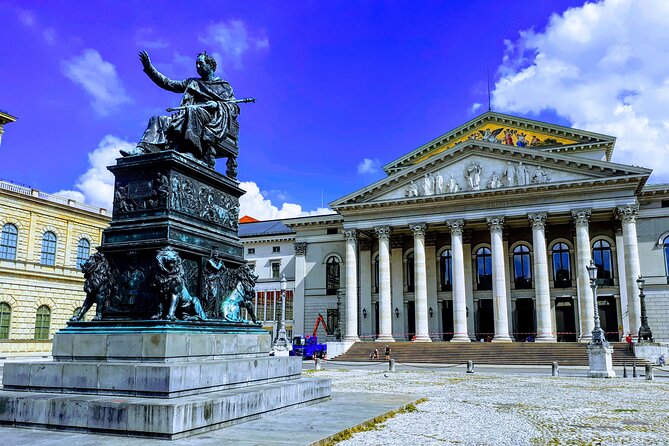
Then you reach the Residenz München, where the guide explains how different stylistic epochs coexist in the complex. You’ll also hear about Christian Weber setting up a residence there in 1933, which adds a personal-political layer to a place most people think of as just grand and historical.
And yes—there are lions at side entrances, and the tour mentions the idea of petting one (or all). It’s a small, oddly human detail that gives you a break from the heavier content without turning away from it.
Viscardigasse: A Name With a History-Flavor
At Viscardigasse, you’ll hear why this tiny street is called Drückebergergäßchen. It’s one of those short stops that works like a garnish: quick, memorable, and tied to language and local meaning.
Feldherrnhalle: The 1923 Putsch’s Bloody End Point
At Feldherrnhalle on Ludwigstraße, the guide points out the location tied to the attempted Hitler putsch in 1923, which ended in blood.
This is a high-signal stop because it ties a public landmark to a specific turning point. It’s also where you can feel the tour’s structure shift from “era overview” to “events with consequences.”
Platz der Opfer des Nationalsozialismus: An Eternal Flame for Victims
The tour moves to Platz der Opfer des Nationalsozialismus, built in 1985. There’s an eternal flame and a symbolic memorial design tied to the site of a destroyed Schiller memorial.
This stop is brief, but it serves a crucial function: it keeps the focus on victims and not just perpetrators. For me, that balance is part of what makes a WWII tour worth it.
Ludwig Maximilians University: White Rose Memorial and the Cost of Resistance
At Ludwig Maximilians University, your guide takes you to the White Rose memorial. The tour explains that the resistance group formed after the university moved from Ingolstadt to Munich in 1826, and it names key members including Hans and Sophie Scholl, Christoph Probst, Alexander Schmorell, Willi Graf, and Professor Kurt Huber, with the executions tied to 1943.
This is one of the most meaningful stops on the Munich side, because it gives you something more than a timeline of power. It shows courage, dissent, and real consequences.
Schwabing: Where Nazi Figures Worked and Lived
In Schwabing, the guide connects Hitler’s social world to places tied to media and influence. You’ll hear about the Osteria Italiana location still existing today, plus the editorial house Völkischer Beobachter and Heinrich Hoffmann’s National Socialist picture publishing.
You also learn Hitler met Eva Braun in 1929 at the later Photohaus Hoffmann. That detail shifts the tone from politics to the private-cum-public world the regime depended on.
Staatliches Hofbräuhaus: Munich’s Most Famous Beer Hall, With a Nazi Footnote
At the Staatliches Hofbräuhaus, the tour points out how Hitler and entourage enjoyed meeting there, and notes a niche on the first floor connected to their gatherings.
This stop has a built-in practical option: the guide recommends a hearty lunch nearby, but lunch is not included. If you want a pause that still feels authentic to Munich, the Hofbräuhaus can do that.
Altstadt-Lehel and Haus der Kunst: Monumental Nazi-Era Building Styles
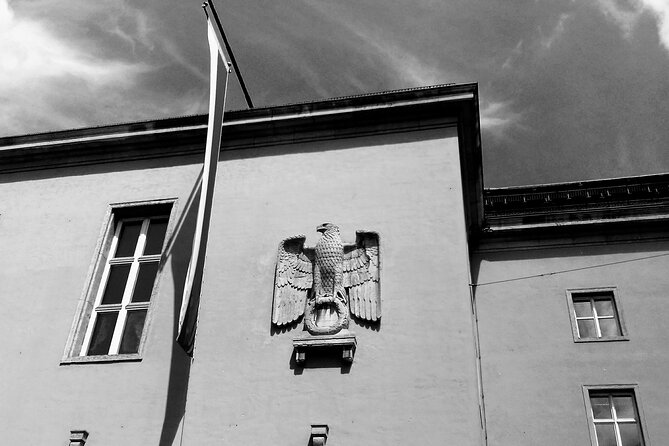
In Altstadt-Lehel, you see a large 1937 building tied to Hermann Göring’s Reich Aviation Ministry. The tour notes swastikas on window grilles and steel helmets on house walls—clear, unmistakable decoration.
Then Haus der Kunst is framed as a Nazi-era art venue, called House of German Art at the time, showing works conforming to the Nazi regime. Today, the tour says you’ll see Nazi swastika decor, which is emotionally uncomfortable, but historically important.
If you’re sensitive to propaganda symbols, it’s good to know these stops include them as visible elements.
Eisbachwelle: A Brief Reset From Horror
Near the Eisbachwelle, you can watch Eisbach surfers on the artificially generated standing wave. It’s a quiet reminder that Munich didn’t disappear after WWII. The tour still includes it for a reason: it gives your brain a breather without pretending the past wasn’t real.
Bogenhausen and Prinzregentenstraße: Residences, Air Raid Shelters, and the Elite
In Bogenhausen, the tour describes Adolf Hitler’s apartment in 1929 and mentions that today the building is a police station viewed from outside. It also notes an Eva Braun villa property that was demolished a few years ago.
Then at Prinzregentenstraße, you’ll see a Nazi apartment building with flanking air raid shelters designed as a model for the Nazi upper class.
These stops aren’t long, but they’re sharp. They highlight how the regime’s leaders and “elite” lived inside the same cities they helped endanger.
Ramersdorf and Stadelheimer Straße: Nazi Model Housing and the Guillotine
In Ramersdorf, you visit a Nazi model settlement built in 1934 with almost 200 settlement houses with gardens. It’s now listed and preserved.
Later at Stadelheimer Straße, the tour explains that White Rose members Hans and Sophie Scholl, Christoph Probst, Alexander Schmorell, Willi Graf, and Professor Kurt Huber were guillotined in 1943 at the penal institution in Stadelheim. Their graves are in the nearby cemetery in the Perlacher Forest.
This is the part where the day becomes unavoidably heavy. The guide-led structure matters here because it keeps the focus on the people affected, not just the architecture.
Königsplatz and Karolinenplatz: Party Power, Surviving Buildings, and Documentation
At Königsplatz, you’ll learn that the area between Karolinenplatz and Königsplatz became the NSDAP party center with administrative buildings and the Führerbau. The tour also notes that almost all Nazi buildings survived bombing attacks and that the NS Documentation Center opened in 2015 on the site of the destroyed Brown House.
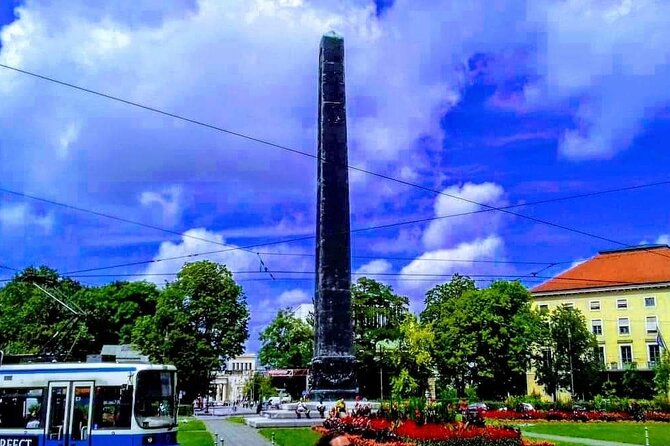
Karolinenplatz adds a second layer with an obelisk ordered in 1833 by King Ludwig I.
This pair is valuable because it shows how “power spaces” are built to impress—then later turned into places where you face history directly.
Maxvorstadt: A Shabby Room and a Planned Mausoleum
In Maxvorstadt, the tour points out a renovated apartment house where Adolf Hitler shared a shabby room with Rudolf Häusler after moving from Vienna in May 1913. The guide also shows the location of a mausoleum planned by Hitler and the adjoining Hall of the Party, referencing his inspiration after visiting Paris in 1940.
It’s a small stop with big themes: how early life environments feed later ideology, and how the regime tried to plan permanence.
From Munich to Dachau
After Munich’s sequence, you’ll be ready for the destination that makes it all real. The tour’s order helps: you’ve seen how power expressed itself in buildings and institutions, so Dachau lands with far more meaning.
Dachau Concentration Camp Memorial: What the Guided Visit Emphasizes
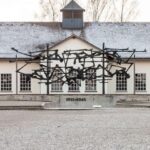
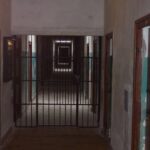
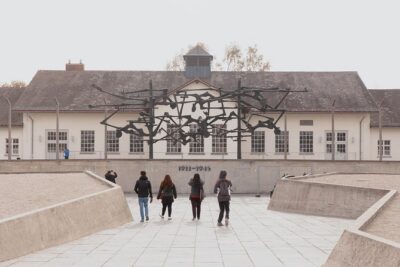
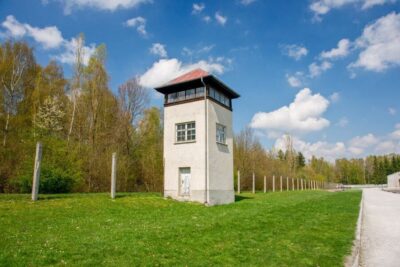
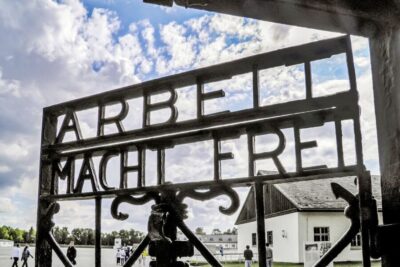
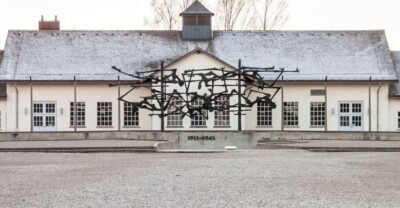
Dachau is the heart of this tour. The guided visit is described as going far beyond what you might expect, and the numbers included in the tour info make the scale clear: over 200,000 imprisoned and 41,500 murdered, over the camp’s 12 years of operation.
The tour also includes a reminder of timing: Dachau opened just 6 weeks after Hitler was appointed Chancellor. That sets up why the camp is so central to any WWII-related visit—this wasn’t a late-war afterthought.
Pre-Memorial Context on Former SS Grounds
Before you start touring the memorial, the guide shows you some luxurious villas on the former SS grounds. That contrast—comfort and authority placed near terror and imprisonment—can hit hard, but it helps explain the regime’s total worldview.
How Long to Plan and What Footwear to Use
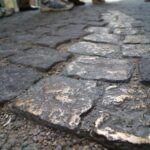
Average time at the memorial is 1.5 to 2.5 hours. Some footpaths have coarse pebbles, so suitable footwear isn’t optional if you want to focus instead of worrying about your ankles.
This is also why the overall day length matters. You’ll likely feel tired after Dachau even if you’ve paced yourself, so avoid making tight plans for evening after the tour.
The Licensed-Guide Difference (and Why It Matters for This Topic)
A WWII tour can turn into a list of names and dates if you’re unlucky. Here, you’re paying for something more useful: the guide is guiding your attention.
Because the tour covers so many types of places—public squares, churches, party centers, universities, residences, and a concentration camp memorial—the guide’s job is to stitch them together so the story doesn’t feel random. You get a framework for why each stop is included.
The fact that the Dachau portion is also with a licensed guide is key. Dachau isn’t just another attraction. It demands careful handling, and you’ll want someone who can keep the visit respectful and comprehensible.
Also, there’s evidence the service quality is taken seriously. Past feedback highlights a guide named Max who made sure you see everything you came for and more. That’s the kind of follow-through you should look for in a private, history-heavy tour.
Who This Private Tour Fits Best
This is a great match if:
- you want a private, guided WWII-focused day without worrying about transport and timing
- you’re interested in the connection between architecture, public spaces, and ideology
- you want Dachau handled with guide-led context, not just a self-guided walk
It may feel like too much if:
- you prefer light sightseeing with lots of free time
- you don’t handle heavy history well
- you’re traveling with children under 12 (the tour notes Dachau is not recommended for them)
If you’re celebrating a special trip anniversary, or you just want one day where the “why” is explained clearly, this kind of route is often worth it.
Should You Book This Tour?
If you want a structured, private Munich WWII + Dachau experience with a licensed guide and a smooth door-to-door day, I think it’s a strong booking. The price is high, but you’re buying guided depth and private transport for a long day with a major memorial.
What tips the scale toward booking: the combination of Munich’s Nazi-era power trail with a guided Dachau visit, plus practical details like water and no hidden costs. What should make you pause: the emotional weight of Dachau and the long total duration.
If you can handle serious history and you value expert guidance over wandering, this is the kind of day you’ll remember for the right reasons.
FAQ
How long is the tour?
The total duration is about 9 hours 30 minutes.
Is this tour private?
Yes. It’s private, and only your group participates.
What language is the tour offered in?
It’s offered in English.
Where do you pick up in Munich?
Pickup is available at any hotel/address in Munich. Pickup can be at 8:00 a.m., 9:00 a.m., or 9:30 a.m., or at another time you request (let them know as soon as possible).
What transportation is included?
You travel in a new luxurious VW or Mercedes minivan with A/C (with a chauffeur). For groups over 7 people, you use a small coach also with a driver.
How much time is spent at the Dachau Concentration Camp Memorial?
The typical time at the memorial is about 1.5 to 2.5 hours.
What should I wear for Dachau?
The tour notes some footpaths have coarse pebbles, so wear suitable footwear.
Is lunch included in the price?
No. Having lunch is not included in the tour price (the guide can recommend places, including the Hofbräuhaus area).
Is Dachau recommended for children?
Visiting the Dachau Concentration Camp Memorial is not recommended for people under 12 years of age.
Can I cancel for free?
Free cancellation is available. You can cancel up to 24 hours in advance for a full refund, based on the experience start time in local time.
More Third Reich and WWII History in Munich
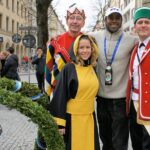
Visiting the Dachau Memorial Site
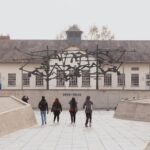
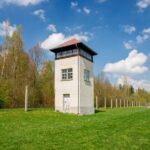
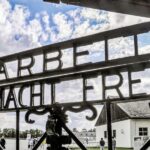
Just added to the Munich Explorer notebook
Dachau Memorial Site Tours, compared.
 ★ 4.5Dachau Concentration Camp Memorial Site Tour from Munich by TrainFrom $645,637 reviews
 ★ 4.8Dachau Memorial Site Day TourFrom $492,723 reviews
 ★ 4.7Dachau Memorial Site Half-Day TripFrom $622,526 reviews
 ★ 4.9Dachau Memorial Site Full-Day TourFrom $511,406 reviews
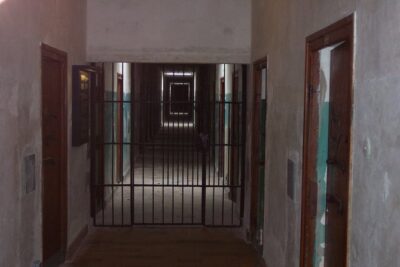 ★ 4.5Dachau Concentration Camp Memorial Tour with Train from MunichFrom $56955 reviews
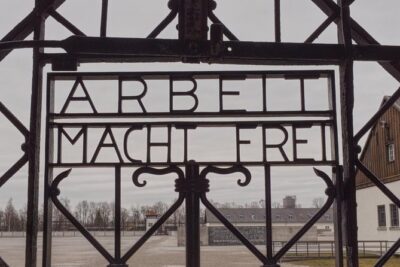 ★ 5.0Early-Start Dachau Memorial Half-Day Tour from MunichFrom $62942 reviews
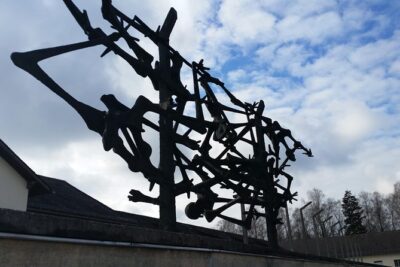 ★ 5.0Guided Dachau Concentration Camp Memorial Site Tour with Train from MunichFrom $90920 reviews
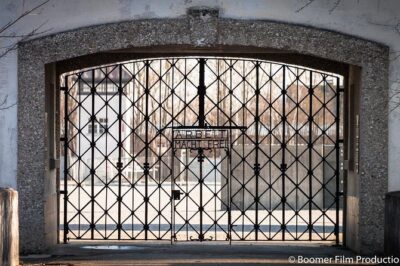 ★ 5.0Full-Day Dachau Concentration Camp Memorial Site Tour from MunichFrom $48897 reviews
Browse the lists this tour appears in