
Reviewed · THIRD REICH & WWII HISTORY TOURS
Munich Third Reich and WWII Segway Tour
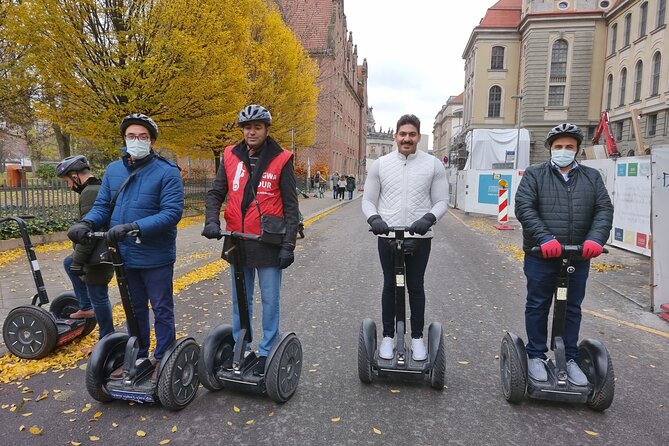
Munich’s dark history meets fun wheels. This 3-hour Segway ride turns Nazi-era streets into an easy, car-free loop, with stops that include the Führerbau and other key Third Reich landmarks. I love the way Segway travel lets you slip past barriers and move faster than walking, so you cover a lot without feeling rushed.
I also love the patient guidance I see in guides like Josef and Karl, plus the way the tour frames Hitler’s rise, the failed Beer Hall Putsch, and the people who tried to fight the Nazi regime along the route. One possible drawback: downtown can get crowded, and the focus may still include regular shopping streets, not only WWII buildings.
In This Review
- Key highlights to know before you go
- Why a WWII Segway route makes sense in Munich
- The Artur-Kutscher-Platz start: your first checkpoints
- Segway training that helps nervous riders relax
- The story arc: how the tour connects streets to events
- Alte Synagoge and Königsplatz: setting the scene before the power story
- Führerbau and Braunes Haus: the Third Reich chapter you can point to
- Schelling-Salon, White Rose, and Haus der Kunst: more than propaganda buildings
- Angel of Peace and Hofbraukeller: shifting tone without losing context
- Hitler’s apartments (1933 and 1920–29): making dates feel real
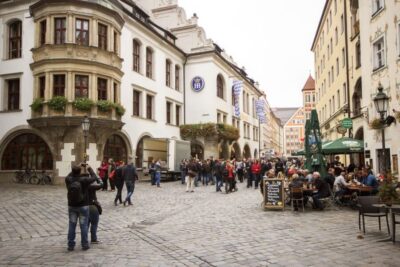
- Hofbräuhaus, Residenz München, and Odeonsplatz: history next to ordinary Munich
- Guides make it feel personal: Josef, Karl, Claudia, Rawen
- Cold weather tip: dress for wind, not just temperature
- Price and value: $82.82 for 3 hours on wheels
- Who this tour is perfect for (and who should reconsider)
- Should you book this Munich Third Reich and WWII Segway Tour?
- FAQ
- Where does the Munich Third Reich and WWII Segway Tour start?
- What time does the tour begin?
- How long is the tour?
- How much does the tour cost?
- Is the tour offered in English?
- Do I need a printed ticket?
- How big are the groups?
- Is the Segway tour suitable for first-time riders?
- What is the cancellation policy?
- What if the tour is canceled due to minimum travelers?
Key highlights to know before you go
- Car-free routes for fast city coverage that walking tours can’t match in 3 hours
- Segway support from guides like Josef and Rawen, including time to get comfortable
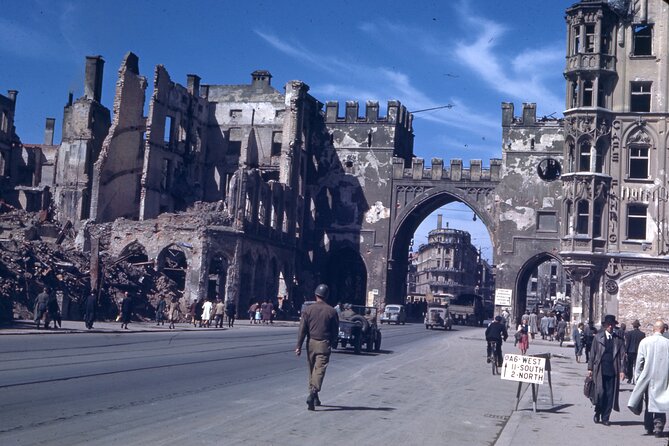
- Third Reich landmarks on a single loop, with stops such as the Führerbau and Braunes Haus
- Small groups (max 20), which helps with questions, pauses, and photos
- Cold-weather reality: you’ll be outside most of the ride, so dress warm
More walks tracing Munich Third Reich and wartime history
- Munich: Third Reich & WWII Walking Tour★ 4.6 · 6,181 reviews
- Third Reich Walking Tour Munich★ 4.5 · 4,291 reviews
- Munich: Birthplace of the Third Reich Guided Walking Tour★ 4.6 · 771 reviews
- Munich World War II Sites Including Dachau Concentration Camp★ 4.5 · 570 reviews
Why a WWII Segway route makes sense in Munich
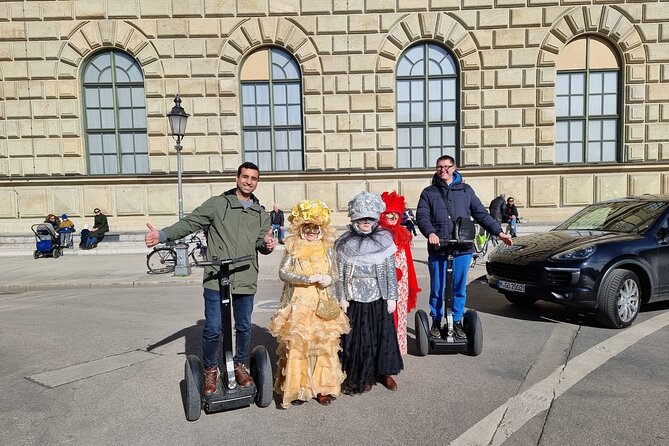
Munich is a city of long sightlines and big public buildings. That’s great for walking, but it can also slow you down when you’re trying to connect history to real streets. A Segway helps because you can keep moving while still stopping often enough to understand what you’re seeing.
This tour also has a smart angle: it focuses on the rise of the first and last führer of Germany and ties the story to locations in Munich. Instead of only hearing about events in the abstract, you get a street-level “this is where it happened” feel. And because you can go where cars can’t, you spend less time stuck in bottlenecks and more time actually progressing through the city.
You’ll also get a day that works for couples and families. It’s not a museum day that eats your whole schedule. It’s a controlled, guided overview that fits neatly into a busy travel itinerary—especially if you want context before you visit other sites later.
The Artur-Kutscher-Platz start: your first checkpoints
The tour starts at Artur-Kutscher-Platz 2A, 80802 München, and it ends back at the same meeting point. The scheduled start time is 10:00 am, and it runs about 3 hours.
Two practical things matter here:
- You’ll want to arrive early enough to find the group and get ready before you roll out.
- Because it’s near public transportation, you can plan to link it with other parts of your day without complicated logistics.
The tour uses a mobile ticket, so you won’t be hunting for paper. Just make sure your phone battery is decent before you head out.
Also, it’s offered in English, which is a big deal if you’re not traveling with German speakers. And with a maximum of 20 people, you’re less likely to feel swallowed by the crowd during stops.
Segway training that helps nervous riders relax
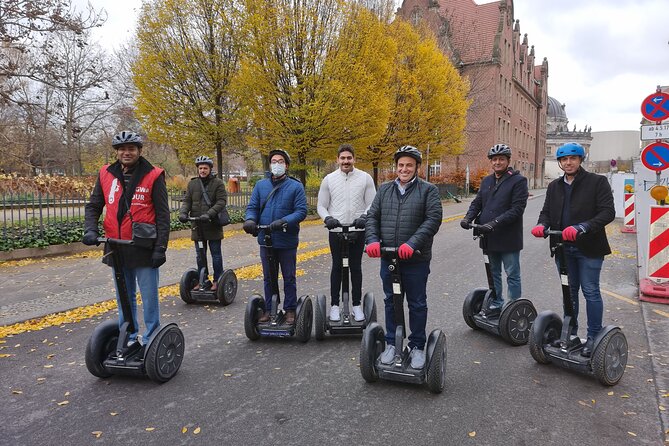
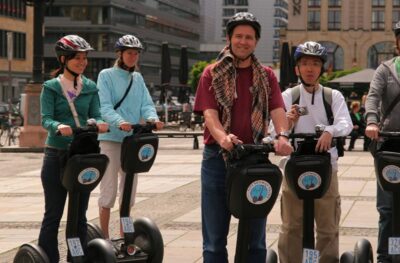
If you’ve never ridden a Segway, you’re not alone. The experience is designed so most travelers can participate, and guides tend to give extra time at the start so you don’t feel rushed into the traffic flow.
From real-world accounts, the pattern is consistent: guides take time to teach the basics and support people who are a little worried. That’s especially useful in a city center where pedestrians pop up, sidewalks narrow, and you need your balance to feel automatic.
A good rule for you: treat the first few minutes as practice time, not “the tour yet.” Once you’ve got the hang of turning, slowing, and stopping on command, the rest of the route feels much easier. And if you’re traveling with kids or teens, this is usually a big part of why the Segway feels like an activity, not just a lecture.
More of Munich rolling past on two wheels
- Munich: City Highlights Guided Segway Tour
★ 4.6 · 266 reviews - Munich 3-Hour Segway Tour: Nazi Munich & Royal Architecture
★ 4.9 · 194 reviews - Munich Segway Tour
★ 5.0 · 181 reviews
The story arc: how the tour connects streets to events
The tour’s main theme is Munich’s role in Nazi Germany—told with a clear narrative. You’ll hear about the rise of Adolf Hitler, why the Beer Hall Putsch didn’t succeed, and who was trying to fight against the Nazi regime. It also includes the idea of how Hitler wanted to rebuild Munich, which helps you understand that this wasn’t only about meetings and speeches—it was also about plans for the city.
Here’s what I like about this structure from a traveler’s point of view: it gives you a timeline you can carry into the rest of your day. Even if you’re not a history person, you’ll usually walk away knowing which “chapter” each cluster of stops belongs to.
Now, let’s walk through the big stop names you’ll pass, and what they’re doing for the story.
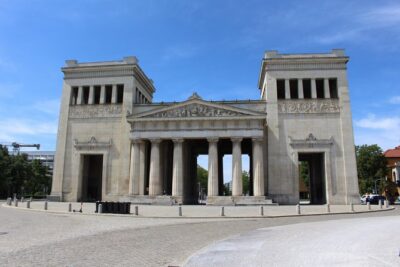
Alte Synagoge and Königsplatz: setting the scene before the power story
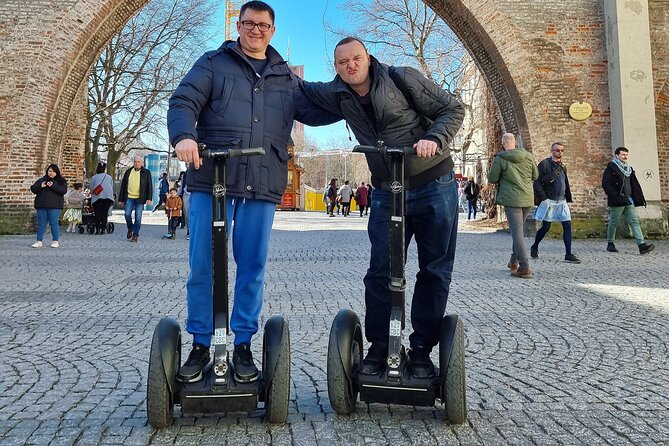
You start with Alte Synagoge and move toward Königsplatz. Those early stops are important because they shift you from “tour mode” to “place mode.” You’re not just ticking off famous squares—you’re building a mental map of Munich as a stage.
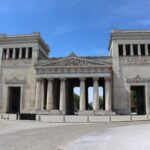
Then the route heads toward the political center. Königsplatz matters in this kind of narrative because it’s a visible, public setting. In practical terms, it’s also a good place for your guide to set expectations: what you’ll see next and how the story is going to unfold.
If you want to learn, these early minutes matter. Listen closely when your guide starts linking what you see to what happened later. The tour moves fast once it gets into the core landmarks.
Führerbau and Braunes Haus: the Third Reich chapter you can point to
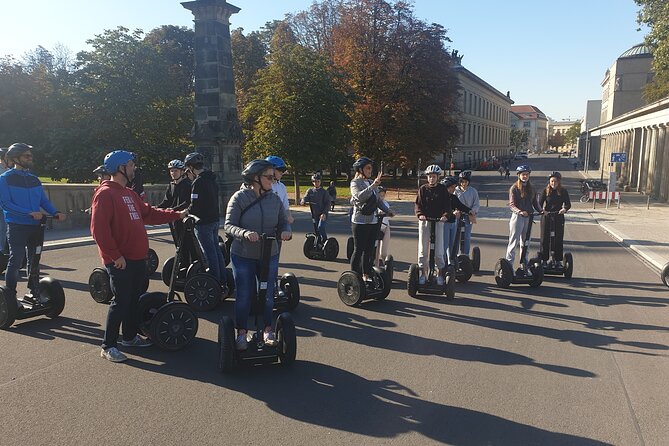
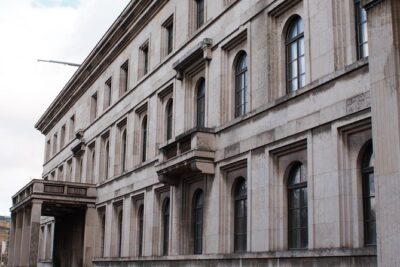
Next you’ll see stops tied closely to Nazi Germany, including Führerbau and Braunes Haus. The tour highlights the Führerbau specifically, so if you’re coming for that exact landmark, you’re in the right place.
These stops do two useful things:
- They give you a concrete reference point for the Nazi movement in Munich.
- They help you connect leadership and ideology to physical buildings, not just printed history.
This is where the Segway advantage really shows. Walking might get you there, but you’d likely spend longer “getting between” places. Here, you’re able to string together multiple named sites while staying part of the same guided narrative.
Schelling-Salon, White Rose, and Haus der Kunst: more than propaganda buildings
The tour keeps widening the lens. You’ll pass Schelling-Salon, then White Rose appears in the route, and Haus der Kunst is also listed.
For you, the value is the contrast. The tour isn’t only about Nazi power structures. It also points toward resistance and the broader cultural and public-facing side of the era. The White Rose stop name alone signals that the tour wants you to remember there were people who pushed back, not just the people in command.
From a “how to think about it” point of view, these stops are useful because they help you avoid a one-note story. It’s easy to remember history as slogans. A guided route like this pushes you to see how many different parts of city life were involved.
Angel of Peace and Hofbraukeller: shifting tone without losing context
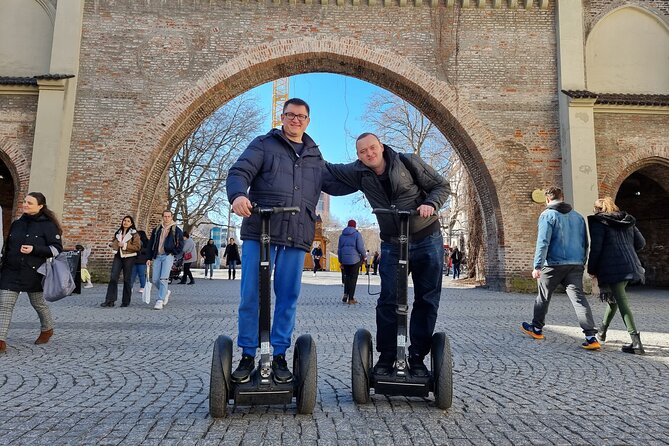
You’ll also see Angel of Peace and Hofbraukeller. This part of the route is interesting because it often changes your emotional rhythm. You’re still learning about the Nazi-era story, but the city landmarks can feel less like hard-edged political architecture and more like places people actually moved through.
That matters if you’re traveling with family. A heavy topic can wear you down if every stop is the same kind of building and the same kind of tone. Spreading the narrative across different types of sites helps you keep your attention.
Still, I’d read this as a reminder for you to go in expecting a mixed city experience. Even if you care most about WWII, you’re riding through Munich streets, and that includes the normal urban texture of a major European city.
Hitler’s apartments (1933 and 1920–29): making dates feel real
One of the route’s most compelling parts for visitors is the inclusion of Hitler’s apartment 1933 and Hitler’s apartment 1920-29. When a tour uses locations like “apartment years,” it stops being generic and becomes time-based.
You end up with a mental timeline you can reference:
- earlier years linked to the apartment from 1920–29
- later years tied to the apartment from 1933
Then the tour ties that time feeling into nearby landmarks like Odeonsplatz, Maximilianeum, and Maximilianeum Strasse, plus iconic civic space such as Residenz München.
It’s a practical way to learn. Instead of only knowing when something happened, you start connecting when it happened to where in the city you’d find the story.
Hofbräuhaus, Residenz München, and Odeonsplatz: history next to ordinary Munich
You’ll see classic Munich names along the way, including Hofbraukeller and Hofbräuhaus, plus Residenz München and Odeonsplatz.
This isn’t random. It’s part of the tour’s value: it shows you that Nazi history wasn’t sealed off in some separate museum bubble. It sat in the middle of a functioning city. The result is a more unsettling, and often more memorable, learning experience.
If you’re worried the tour will feel only like grim facts, this mix helps. It gives your brain a breather while still keeping the historical frame alive.
Guides make it feel personal: Josef, Karl, Claudia, Rawen
What really lifts this tour is the human side. The Segway is the vehicle, but the guide is the translator between street names and meaning.
You’ll get a lot of positive signal around guides taking time for questions and photos:
- Josef comes up as a great match for families, with a fun learning vibe and patience.
- Karl is praised for friendliness, knowledge, and taking the time to answer questions and help with picture timing.
- Rawen is noted for tailoring the experience to what people want to know.
- Claudia is mentioned as strong with the group dynamic, though one day had a hiccup when a guide didn’t arrive.
That last point is worth keeping in mind as a practical consideration: on rare occasions, operations can go sideways. If you’re traveling on a tight schedule, plan a little slack rather than assuming every minute will follow a perfect script.
Cold weather tip: dress for wind, not just temperature
Multiple accounts point to how cold it can feel while riding. Even on a mild day, you’re moving on open-air wheels through city air.
My practical advice:
- Wear layers you can peel off if you warm up.
- Bring a hat or something that covers your ears.
- If it’s spring or early/late season, treat it like a “wrap up” activity.
This is one of those tours where comfort changes your attention span. If you’re cold, you’ll want the ride to end sooner. If you dress right, you’ll actually enjoy the motion and the stops more.
Price and value: $82.82 for 3 hours on wheels
At $82.82 per person for about 3 hours, you’re paying for more than storytelling. You’re also paying for the Segway experience itself—training time, equipment, and the logistics of keeping a small group moving through central Munich.
Here’s why that can be a good value:
- You cover multiple named landmarks in a short block of time.
- You get guidance in English.
- The group size cap at 20 supports a more interactive feel than big-bus tours.
One more helpful detail: the tour notes admission ticket free for the time on the route. That means you’re not likely to face surprise entry costs mid-tour.
Booking-wise, it’s commonly reserved about 36 days in advance, which is a hint that it’s popular. If your dates are fixed, I’d try not to wait until the last week.
Who this tour is perfect for (and who should reconsider)
This tour is a strong fit if you:
- want a high-impact overview of Nazi-era Munich without committing to a full museum afternoon
- enjoy learning outdoors with real place names
- are traveling as a couple, or with kids who handle historical topics better when they’re mixed with an activity
It’s also a good choice if you like photos. With the way guides take time for picture stops, you’ll usually have chances to capture the landmarks without sprinting between them.
I’d consider a different option if you:
- only want WWII buildings and nothing else, because downtown routes can include regular city streets
- hate crowds and narrow sidewalks, since central Munich can get packed during the day
- are sensitive to cold and haven’t planned warm layers
Should you book this Munich Third Reich and WWII Segway Tour?
Book it if you want a guided, place-based overview that moves fast, feels fun, and connects major Nazi-era sites to the streets of Munich. The Segway is the point: you’ll cover more than walking in the same time block, and the small group setup keeps it interactive.
Just go in with two expectations dialed in:
- Dress warm and be ready for an outdoor ride.
- Accept that the route runs through busy city areas, so you may not get a perfectly “WWII-only” view of every minute.
If you’re pairing Munich history with other stops, this tour works as a strong context builder. And if your guide is someone like Josef, Karl, or Rawen, you’ll likely come away with both stories and a sense of how the city fits into the timeline.
FAQ
Where does the Munich Third Reich and WWII Segway Tour start?
It starts at Artur-Kutscher-Platz 2A, 80802 München, Germany.
What time does the tour begin?
The start time is 10:00 am.
How long is the tour?
The duration is about 3 hours.
How much does the tour cost?
The price is $82.82 per person.
Is the tour offered in English?
Yes, it’s offered in English.
Do I need a printed ticket?
No. It uses a mobile ticket.
How big are the groups?
The maximum group size is 20 travelers.
Is the Segway tour suitable for first-time riders?
Most travelers can participate, and guides provide time to get used to the Segway, with easy learning mentioned in feedback.
What is the cancellation policy?
Free cancellation is available up to 24 hours in advance for a full refund.
What if the tour is canceled due to minimum travelers?
If it’s canceled because the minimum isn’t met, you’ll be offered a different date/experience or a full refund.
More Segway Rides in Munich

More Third Reich and WWII History in Munich


Just added to the Munich Explorer notebook

Third Reich & WWII History Tours, compared.
 ★ 4.6Third Reich & WWII Walking TourFrom $316,181 reviews
 ★ 4.5Third Reich Walking Tour MunichFrom $454,291 reviews
 ★ 4.6Birthplace of the Third Reich Guided Walking TourFrom $29771 reviews
 ★ 4.5Munich World War II Sites Including Dachau Concentration CampFrom $105570 reviews
 ★ 5.0Munich City Walking Tour, includes Third Reich & ViktualienmarktFrom $31458 reviews
 ★ 4.5Third Reich & WWII Walking TourFrom $35417 reviews
 ★ 4.9Munich 3-Hour Segway Tour: Nazi Munich & Royal ArchitectureFrom $91194 reviews
 ★ 5.0Dachau Concentration Camp Memorial Site And Third Reich Day Tour From MunichFrom $145185 reviews
Browse the lists this tour appears in