
Reviewed · THIRD REICH & WWII HISTORY TOURS
Munich: Third Reich and World War II Private Guided Tour
Munich teaches fast if you listen. This private walk through Third Reich history connects the story to real buildings and real street corners, starting at Marienplatz and ending at Königsplatz. I especially like that you get a guided storyline, so each site clicks into place instead of feeling like random plaques.
My other favorite part is the balance between propaganda and accountability: you’ll hear about Hitler’s rise and also the resistance, including the White Rose group. One thing to consider is the subject is heavy and you should expect a serious, question-friendly atmosphere, not a light sightseeing stroll, even though the tour moves at a walking pace.
In This Review
- Key things that make this tour worth your time
- Munich’s Old Town, told with hard edges (and real places)
- Meeting at Marienplatz: where Munich’s center became a stage
- Hofbräuhaus and the origin story that spreads like wildfire
- Following the Beer Hall Putsch route to Feldherrnhalle and Odeonsplatz
- Munich Agreement at Führerbau: power made official in a building
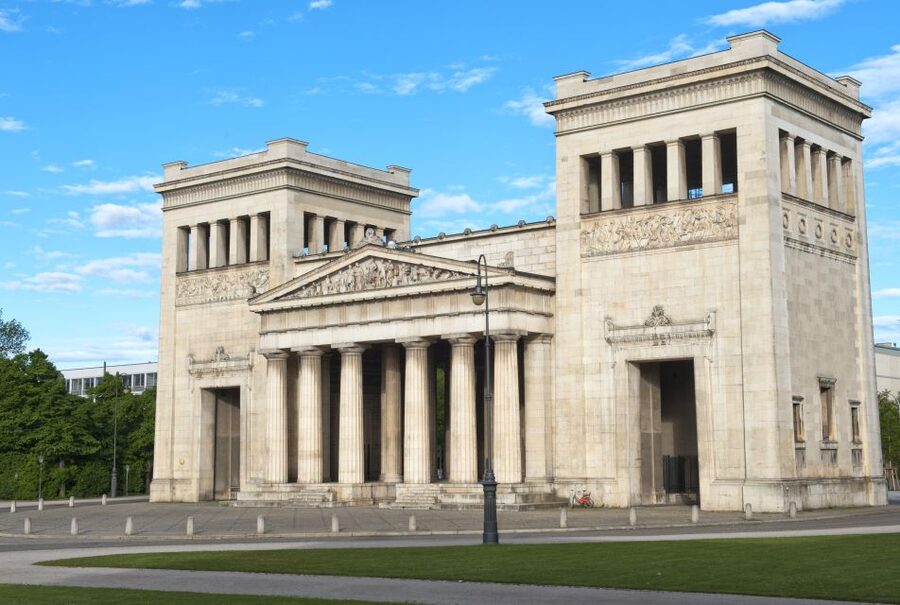
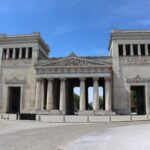
- Königsplatz: where mass rallies and book burning took center stage
- White Rose and resistance: a necessary counterweight
- The NS Documentation Center option: turning street facts into evidence
- Price and value: what $311 buys you in Munich
- Timing, walking style, and who this tour fits best
- Guide quality matters: Mireya and the importance of clear explanation
- Should you book the Munich Third Reich and WWII Private Guided Tour?
- FAQ
- How long is the Munich Third Reich and World War II private tour?
- Where do I meet the guide?
- Is this tour private?
- Which languages are available?
- Is the tour wheelchair accessible?
- What is included in the 3-hour tour?
- Do I visit the NS Documentation Center?
- Can I get a refund if my plans change?
Key things that make this tour worth your time
- Marienplatz to Hofbräuhaus: the speech-making ground where Nazi momentum took off
- Beer Hall Putsch route: you follow the logic of the failed power grab toward Feldherrnhalle and Odeonsplatz
- Führerbau and the Munich Agreement: you see where major political theater turned into policy
- Königsplatz mass rallies and book burning: crowd control explained through the geography
- Resistance alongside the regime: White Rose comes into the conversation, not as an afterthought
More walks tracing Munich Third Reich and wartime history
- Munich: Third Reich & WWII Walking Tour★ 4.6 · 6,181 reviews
- Third Reich Walking Tour Munich★ 4.5 · 4,291 reviews
- Munich: Birthplace of the Third Reich Guided Walking Tour★ 4.6 · 771 reviews
- Munich World War II Sites Including Dachau Concentration Camp★ 4.5 · 570 reviews
Munich’s Old Town, told with hard edges (and real places)
A lot of history tours in Europe try to be cheerful. This one doesn’t. It is a walking tour focused on the Third Reich era—how the Nazi Party grew, how power worked in Munich, and what happened to the city during World War II, including the bombing and liberation in 1945.
The value here is not just what you see. It is how the guide connects it. You start in the center of town where mass moments happened, then you move site to site so the story feels like cause and effect. That’s a big deal with Nazi-era history, because the details matter: speeches, organizations, and public rituals weren’t random. They were tools.
Because it’s a private group, you’re not stuck with a loud herd of people. You can ask difficult questions and get answers in context. If you’ve ever left a museum feeling like you have pieces but no picture, this is the kind of tour that helps you assemble the picture fast—without turning the topic into spectacle.
Meeting at Marienplatz: where Munich’s center became a stage
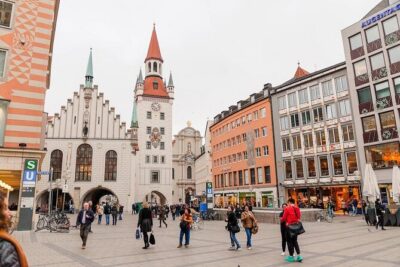
The tour begins at Marienplatz, the old core of Munich, with the meeting point in front of the BEYOND by Geisel hotel at Marienplatz 22, opposite St Peter. The hotel is only a meeting spot, and the staff isn’t informed about the tour—so go meet your guide outside.
Marienplatz is more than a landmark. It’s the kind of central square where big announcements, public gatherings, and propaganda can take hold quickly. In this tour, the guide uses that geography to frame an uncomfortable truth: political power often starts with performance. When you stand in the place where events gathered attention, the idea stops being abstract.
From there, you’ll walk through the streets that supported the Nazi movement’s growth—while also seeing parts of downtown that still carry the scars from the 1945 bombings. Even the rebuilt Neues Rathaus (New Town Hall) becomes a way to talk about what war did to the city’s heart.
Hofbräuhaus and the origin story that spreads like wildfire
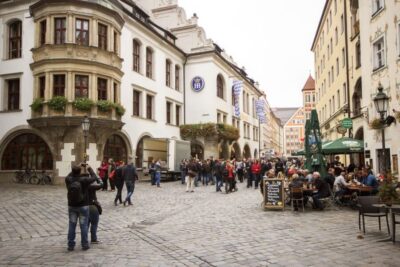
One of the tour’s anchor stops is Hofbräuhaus am Platzl. The guide points to how Adolf Hitler made a speech there in 1920, founding the National Socialist German Workers’ Party. That matters because it shows you the moment an idea transitioned into an organized political movement.
Beer halls are often treated like casual social spaces. Here, you learn why that setting was useful to the Nazis: it offered a ready audience, a public atmosphere, and the kind of emotional momentum that can turn supporters into believers. When your guide ties that to what came next, you understand why the early Nazi era isn’t just a timeline—it’s a strategy.
This is also a good moment to watch yourself. The story can feel gripping, and that’s exactly why the facts are important. This tour doesn’t pretend the past was inevitable. It shows the steps.
- From Munich: Neuschwanstein & Linderhof Castle Full-Day Trip
★ 4.6 · 14,646 reviews - Neuschwanstein & Linderhof Castle-Fairytale Day Tour from Munich
★ 4.5 · 7,275 reviews - Munich: Third Reich & WWII Walking Tour
★ 4.6 · 6,181 reviews
Following the Beer Hall Putsch route to Feldherrnhalle and Odeonsplatz
After Hofbräuhaus, you’ll walk the route connected to the Beer Hall Putsch, ending up around Feldherrnhalle and Odeonsplatz. The point of this segment isn’t to reenact drama. It’s to explain the logic behind the attempted storming and why it became part of Nazi mythology.
You’ll hear about the Nazi attempt to storm the Bavarian Defense Ministry, and how that failure helped inspire Hitler’s political manifesto, Mein Kampf. The guide uses this connection to show how propaganda often recycles events—especially failures—into tools for recruiting and re-branding.
If you’re worried the tour will be too dense, this part usually works because you’re moving. The street route gives your brain something to “hold onto,” and your guide can focus the story on the key beats without you feeling stuck in one lecture spot.
Munich Agreement at Führerbau: power made official in a building
At several points, the tour shifts from public theater to official machinery. One standout stop is Führerbau—the former office building known as the Führer’s building.
Here, you’ll hear about the Munich Agreement in 1938, including that Chamberlain and Hitler signed it there. That detail is useful because it underlines a crucial point for understanding the era: decisions weren’t made only in the realm of ideology. They were made in rooms, offices, and documents—by leaders who shaped policy outcomes.
Seeing Führerbau and learning how it fits into the Nazi power structure helps you connect the dots between rallies and real-world consequence. You stop thinking of symbols as mere symbols.
And yes, this section stays serious. It should. The guide’s job is to help you understand cause and consequence, not just name places.
Königsplatz: where mass rallies and book burning took center stage
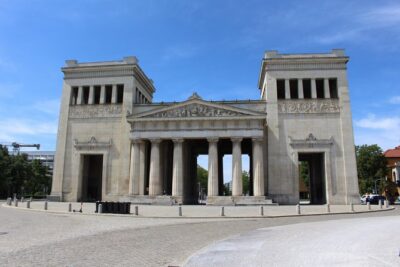
The tour’s final street stop is Königsplatz. This is one of those locations where the architecture and layout help explain crowd psychology.
At Königsplatz, you learn about the Nazi Party’s mass rallies and book burning. Book burning is easy to treat as an odd historical fact. In a guided context like this, it comes into focus as an attack on thought, education, and cultural control—an attempt to decide what society is allowed to remember and discuss.
What I like about ending here is that it ties the storyline together. You start with the movement’s origin, follow key power moves, and then arrive at the place where ideology became public enforcement. The route feels like an argument you’re walking through.
White Rose and resistance: a necessary counterweight
Munich’s Nazi story is only half the story if you end it at party headquarters and rally grounds. This tour includes the resistance, including the White Rose Group, led by five university students.
You don’t get resistance as a sidebar. It’s part of the narrative, which is exactly what you want. When your guide pairs the Nazi rise with opposition inside the city, you understand something important: repression wasn’t only met from outside Germany. There were people in Munich who resisted within the system.
This also helps you ask better questions. Instead of only wondering how Nazis gained power, you can start thinking about how ordinary people navigated the pressure—and what choices were available, even when the risks were extreme.
The NS Documentation Center option: turning street facts into evidence
There’s an upgrade option if you want more than the walking route: the 4.5-hour version includes a visit to the NS Documentation Center for the History of National Socialism.
This part is designed to give you more than locations. It adds photographs, documents, and texts, plus film projections and media stations that cover the origin, rise of the Nazi movement, war period, and postwar period in Munich. Your expert guide helps make sense of causes and consequences, and it’s built for those moments when you want to ask, So what does this mean, really?
If the 3-hour tour feels like you’re learning the map, the Documentation Center is where you get the evidence behind the map. And because it’s tied to Munich specifically—not just a generic Germany summary—it helps you understand why the city’s role in the movement wasn’t incidental.
If you’re short on time, the 3-hour route can still be powerful. But if you want deeper clarity and fewer gaps, the 4.5-hour option is the one that gives your questions somewhere to land.
Price and value: what $311 buys you in Munich
At $311 per person for a 3-hour private walking tour, this is not a budget activity. But private WWII guiding can cost a lot because you’re paying for expert attention and for someone to handle the moral and historical weight properly.
Here’s what you’re really buying for that price:
- A structured walking route through major Third Reich sites in central Munich
- A guide who can explain not just what happened, but why it mattered
- Time for tough questions in a private setting
- Access to key locations like Marienplatz, Hofbräuhaus, sites tied to the Beer Hall Putsch, Führerbau, and Königsplatz
Is it “worth it” depends on what you want from Munich. If you want museums and casual wandering, you might be better off choosing a self-guided plan. If you want interpretation and a coherent story tied to specific places, this kind of guided tour can actually save you time, because you won’t spend hours piecing together connections on your own.
Also, the topic is heavy enough that a good guide matters. This isn’t a “read a sign and move on” subject.
Timing, walking style, and who this tour fits best
The tour runs 3 hours (270 minutes) for the standard option. It is a walking tour of Old Town Munich, so expect you’ll spend most of your time on foot. The pace is geared toward understanding history through a route, not clocking a checklist of photos.
It is wheelchair accessible, and it’s offered as a private group. That combination is helpful if you want control over your experience without needing to fit into a big bus-group rhythm.
This tour suits you best if:
- you want a serious, guided explanation of the Third Reich and WWII in Munich
- you care about how propaganda worked on the street level
- you like asking questions and getting context, not just dates
- you prefer a route-based story over a museum-only experience
It may be less ideal if you want a casual, lighthearted afternoon. This is education with emotional gravity, and you should go in ready for that.
Guide quality matters: Mireya and the importance of clear explanation
The feedback on the guides is consistently positive, including a note from an English-speaking review that specifically praised Mireya as great. That kind of targeted praise tends to mean the guide was clear, responsive, and effective at explaining a difficult subject.
Why does this matter? In Nazi-era history, small interpretive choices can change how you understand events. A strong guide can help you see the links between ideology, public performance, and real decisions made by real people.
With a private tour, the guide’s skill becomes part of the value you’re paying for.
Should you book the Munich Third Reich and WWII Private Guided Tour?
If you’re interested in Munich’s role in the Third Reich and you want the story tied to the exact places where it played out, this is a smart, high-effort choice. The route makes the history feel connected, and the inclusion of resistance (White Rose) keeps the story from becoming one-sided.
If you only have a short window, the 3-hour version is still substantial. If you want supporting evidence and a clearer cause-and-effect explanation—especially around the broader WWII and postwar context—book the 4.5-hour option with the NS Documentation Center.
Go with an open mind, wear comfortable shoes, and come ready to ask questions. Munich is not asking you to forget. This tour helps you understand why remembering matters.
FAQ
How long is the Munich Third Reich and World War II private tour?
The standard walking tour is 3 hours (270 minutes). There is also a longer 4.5-hour option that includes the NS Documentation Center.
Where do I meet the guide?
Meet in front of the hotel BEYOND by Geisel, Marienplatz 22, 80331 Munich, Germany, opposite St Peter. Do not enter the hotel; it is only a meeting point.
Is this tour private?
Yes. It is listed as a private group.
Which languages are available?
The live guide is offered in English, German, French, Italian, and Spanish.
Is the tour wheelchair accessible?
Yes, the tour is wheelchair accessible.
What is included in the 3-hour tour?
The 3-hour walking route includes Third Reich history sites in central Munich connected to the Nazi Party and events such as the Beer Hall Putsch, plus stops like Hofbräuhaus, Führerbau, and Königsplatz.
Do I visit the NS Documentation Center?
You visit the NS Documentation Center only with the 4.5-hour option.
Can I get a refund if my plans change?
The experience offers free cancellation up to 24 hours in advance for a full refund.
More Third Reich and WWII History in Munich
Just added to the Munich Explorer notebook
Third Reich & WWII History Tours, compared.
 ★ 4.6Third Reich & WWII Walking TourFrom $316,181 reviews
 ★ 4.5Third Reich Walking Tour MunichFrom $454,291 reviews
 ★ 4.6Birthplace of the Third Reich Guided Walking TourFrom $29771 reviews
 ★ 4.5Munich World War II Sites Including Dachau Concentration CampFrom $105570 reviews
 ★ 5.0Munich City Walking Tour, includes Third Reich & ViktualienmarktFrom $31458 reviews
 ★ 4.5Third Reich & WWII Walking TourFrom $35417 reviews
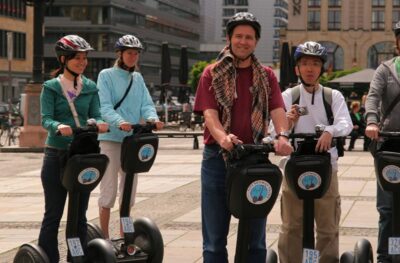 ★ 4.9Munich 3-Hour Segway Tour: Nazi Munich & Royal ArchitectureFrom $91194 reviews
 ★ 5.0Dachau Concentration Camp Memorial Site And Third Reich Day Tour From MunichFrom $145185 reviews
Browse the lists this tour appears in