
Reviewed · OLD TOWN & MARIENPLATZ WALKS
Munich Macabre Group Walking Tour
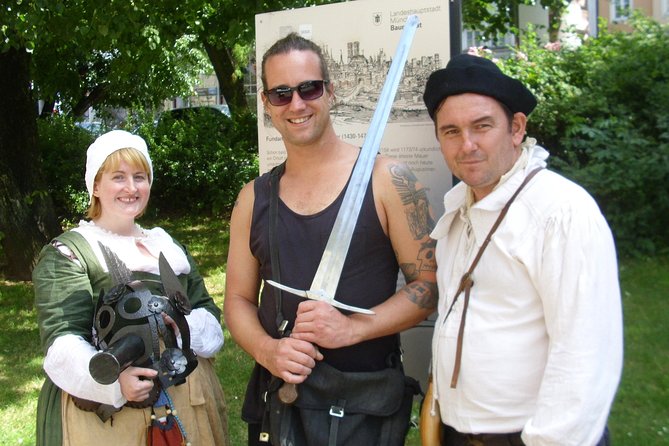
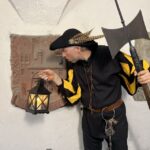
This is Munich’s past with teeth. You’ll walk from Marienplatz into plague-era stories, witch trials, and medieval brew culture, guided by archaeologist and historian Taff Simon in full costume. I love the hands-on style, especially getting to hold ancient coins and examine burial details up close. I also love that the stories come with real archaeology behind them, not just memorized facts. One drawback: if you prefer light, surface sightseeing, the subject matter can get graphic and uncomfortable at a few stops.
The route is built for an easy evening stroll—no map work, small group size, and a guide who turns history into something you can follow step by step. You’ll end where you started, with recommendations for food and drinks in the old-town area, plus a chance to ask questions.
In This Review
- Key things to know before you go
- Where this tour fits in your Munich trip
- Meeting at Marienplatz and getting the city’s “why” first
- Landschaftstraße: how one street ties to Jewish history and false accusations
- St. Peter’s Church: deciphering graves, and why “rest in peace” wasn’t always simple
- Viktualienmarkt and the medieval twist on beer and food
- Alter Hof: royal power, medieval combat, and pottery from 1944
- Old Town Hall: the witch trial and how “evidence” was manufactured
- Ending back at Marienplatz: wrap-up, questions, and where to go next
- Comfort, pace, and practical tips that matter
- Should you book Munich Macabre?
- FAQ
- Is this tour offered in German?
- Where do we meet, and does the tour end nearby?
- What is included in the price?
- How long is the walking tour?
- Is it a good choice for families?
- What about uneven ground and mobility?
Key things to know before you go
- An archaeologist leads it: Taff Simon combines local history with hands-on excavation finds and artifact handling.
- You handle real things: you’ll examine ancient coins and pottery, plus replica medieval arms and armor.
- Medieval beer samples are included: you get at least two historical beverage tastes, and the guide explains the rules and penalties behind brewing.
- You’ll cover big dark themes: the Black Death, blood libel accusations, burial rites, and the notorious witch trial at Old Town Hall.
- Small group feel: capped at 15 people, which keeps the pace interactive rather than lecture-like.
- Sensitive topics are handled carefully: there’s content not ideal for very young kids, and some excavation photos are used as examples.
More laps of the Altstadt and Marienplatz
- Munich: Third Reich & WWII Walking Tour★ 4.6 · 6,181 reviews
- Third Reich Walking Tour Munich★ 4.5 · 4,291 reviews
- Munich: Old Town & Viktualienmarkt City Walk in German★ 4.7 · 2,304 reviews
- Munich: Night Watchman Walking Tour★ 4.7 · 2,092 reviews
Where this tour fits in your Munich trip
If your Munich plan is all beer halls and postcard views, this tour adds the other half: the medieval reality that sat under the city’s pretty streets. It runs in the early evening (start time listed as 6:00 pm), so you get a payoff that feels different from daytime history tours. The whole thing takes about 2 hours 30 minutes to 2 hours 45 minutes, and it’s designed to be walked at a comfortable pace.
The price is $42.24 per person, which sounds like more than a basic city walk—until you look at what’s actually included. You’re paying for (1) a specialist guide who is an archaeologist and historian, (2) time on foot between major landmarks, and (3) artifact handling plus beer sampling. That combination is the real value. It’s not just where you go; it’s what you get to do.
This tour is offered in English only, and it’s a good choice if you want local history explained in plain language with humor, not thick academic delivery. It’s also capped at 15 travelers, so you won’t be lost in a crowd.
Meeting at Marienplatz and getting the city’s “why” first
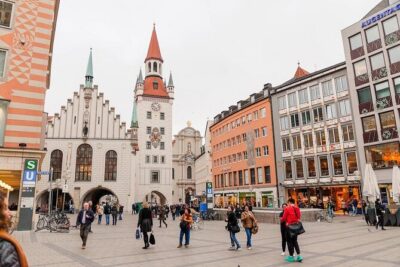
You meet at the fountain at Fischbrunnen, Marienplatz 8. The start here matters. Marienplatz is the ancient market square, and your guide uses it to set the map in your head: where Munich’s shape came from and why so many later events orbit this same core.
This first stretch is short, but it helps a lot. You’ll stop thinking of the old buildings as background scenery and start seeing how the city’s layout connected with commerce, power, and later fear. Even if you’ve already walked around Marienplatz before, this beginning gives you a reason to pay attention to details you might have otherwise skipped.
Landschaftstraße: how one street ties to Jewish history and false accusations
Next you head to Landschaftstraße, which looks fairly ordinary today—but it sat alongside the medieval Jewish quarter. This is one of the tour’s most important educational stops because it explains how a community contributed to Munich’s economic and cultural life, and then how that same community was targeted by baseless accusations.
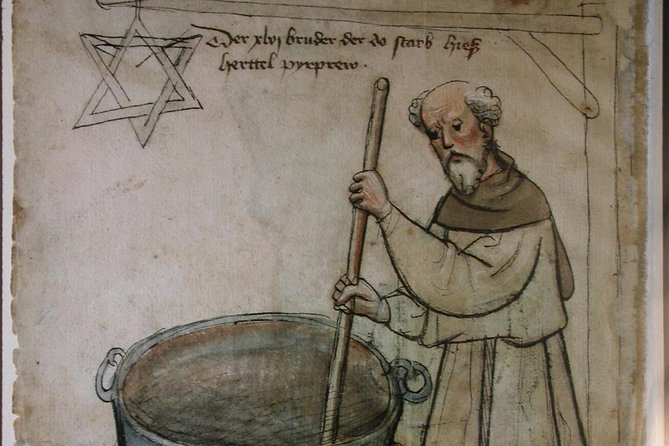
You’ll talk about blood libel—the claim that Jewish people caused harm through false stories—and you’ll connect that kind of rumor to the wider climate of terror during plague-era times. The tour also points to what modern archaeology has helped clarify, including evidence connected to a new U-Bahn project. In other words, you’re not just absorbing tragedy; you’re seeing how digging and records help separate myth from what’s knowable.
Practical note: the content here can feel heavy. If you’re going with teens or adults who can handle serious topics, this stop lands well because it’s contextual and connected to physical locations.
More of old Munich darker corners and legends
- Munich: Spooky Tour of Old Town in German
★ 4.6 · 1,112 reviews - Munich: Witches and Executioners Guided Tour
★ 4.7 · 353 reviews - Mystic Munich – Sagas and Legends of the Old Town
★ 4.8 · 208 reviews
St. Peter’s Church: deciphering graves, and why “rest in peace” wasn’t always simple
At St. Peter’s Church, you shift from civic history to personal history. The church is described as the oldest in Munich, and that matters because it means there’s an unusually deep trail of burial history nearby.
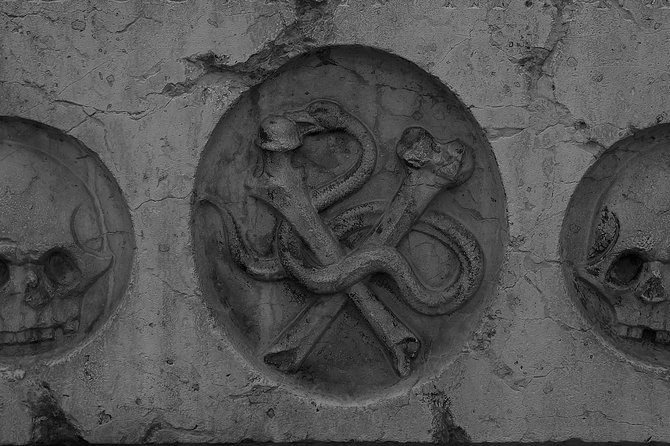
You’ll learn how to read symbols on gravestones and understand how burial rites changed across time. This part gets real fast: the tour contrasts earlier interpretations of peace with later realities, and it covers how class, trade, and guild life show up in burial markers and church features.
One of the most memorable experiences on the route is the practical element. You’ll handle original ancient coins that would have been given as alms. The guide also discusses grave goods, including the kind of jewelry and weaponry that sometimes appears in graves. This is not just shock value; it’s used to explain what people believed and how social structure showed up in the ground.
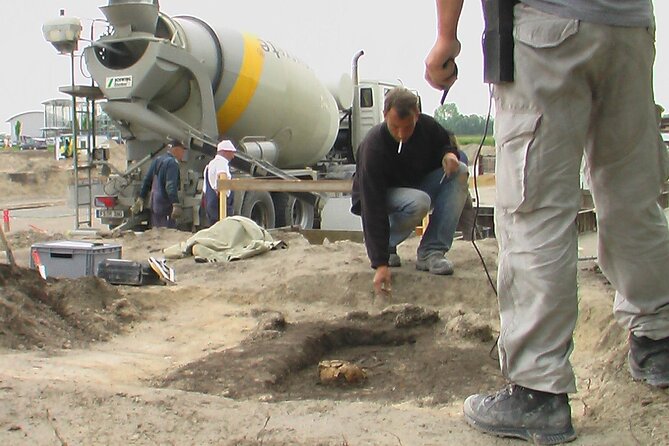
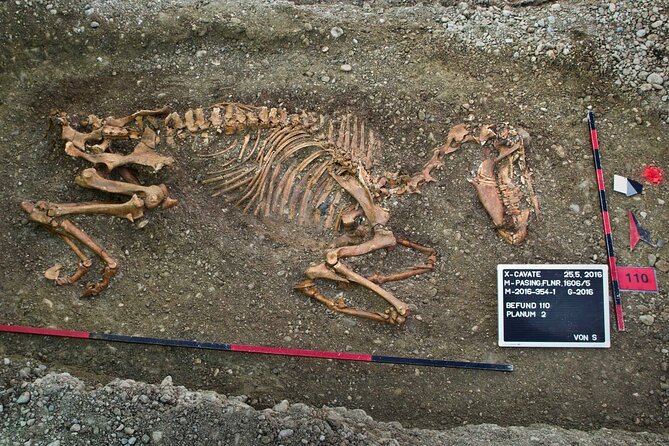
Sensitive-content note: the tour uses example photos of Dark Age/early Medieval burial rites from excavations the guide has been involved with, often on construction sites. That can be difficult for some people, and the tour is candid about it. The purpose is education: seeing how people treated their dead helps you understand their religion and social world.
If you’re bringing kids, this is the stop where you’ll want to gauge their comfort level in advance.
Viktualienmarkt and the medieval twist on beer and food
Then you reach Viktualienmarkt, which today reads as a cheerful food market—pretzels, cheese, and the kind of beer garden vibe Munich does so well. The tour flips it by asking: what would this place have meant in medieval times?
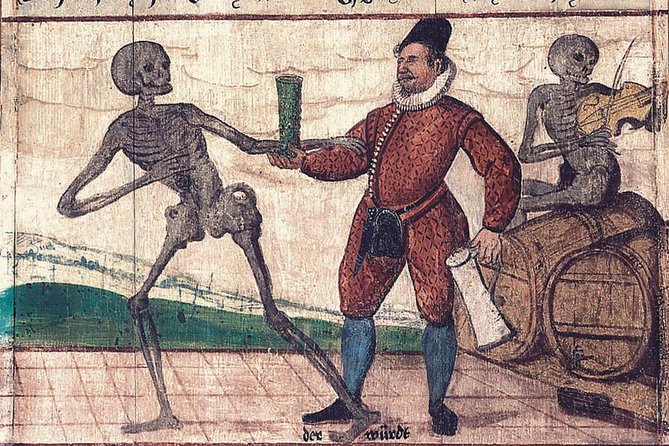
You get a story about people who would have been in trouble here, and you’ll hear about why penalties around bad beer and pretzels mattered. This isn’t random. Brewing in medieval Munich was tied to public order, trust, and survival. If you’ve ever wondered why beer was treated like more than a drink, this stop answers it directly.
And yes, you get to taste authentic medieval beer. The samples are just that—samples, not full pours. The goal is to taste the difference and understand why brewing rules existed, not to turn the tour into a drinking binge. The tour also aims for at least two historical beverages overall, and it notes that supplies can change; when that happens, the guide swaps in a more modern style but still explains the brewing history thread.
From the reviews and the guide’s tone, this beer tasting is one of the most popular parts because it turns abstract brewing history into something you can physically react to. Medieval beer can be a surprise on the palate, especially if your taste expectations were built by modern styles.
Alter Hof: royal power, medieval combat, and pottery from 1944
At Alter Hof, you enter the orbit of the Wittelsbacher family, the Bavarian ruling line. The tour starts with a murder that shocked medieval Europe, then shows the long ripple effects for later generations. This is where you see the city’s dark side wasn’t only plague and poverty—it also involved power struggles and consequences that lasted.
After that, the tour moves into medieval combat theory using ideas tied to Hans Talhoffer, a late medieval sword master. Here’s where the tour becomes very hands-on. You’ll handle replica swords and may be able to handle some armor too. This isn’t meant to turn you into a fighter; it’s meant to help you visualize what weapons and technique looked like and why certain approaches mattered in that era.
Time permitting, the guide adds a bonus thread: an archaeological discovery connected to 1944, when an Allied bomb inadvertently unearthed seriously ancient artifacts. You’ll get to compare different types of ancient pottery and other artifacts. Again, the emphasis is on interpretation through object handling: cracks, shapes, materials, and what that suggests about everyday life.
For many people, this stop is the reason they book. It’s one thing to hear about medieval warfare; it’s another to hold the replica and realize how physical and specific it is.
Old Town Hall: the witch trial and how “evidence” was manufactured
The penultimate major stop is Old Town Hall, where the tour focuses on the most vicious witch trial in German history. You’ll hear the background to the charges, the methods used to gather evidence, and the fate of one unlucky family, the Pappenheimers.
One of the sharper parts of this segment is how it connects Munich’s events to later fears far away. The tour notes that the fallout was felt as far as a town in colonial Massachusetts, which is a helpful reminder that witch-hunting wasn’t only local hysteria—it traveled through ideas and stories.
If you’re the type who likes learning how courts actually worked on the ground, this is a great stop. It helps you understand how people in power used fear as a tool, and how evidence was shaped to fit what authorities already wanted to believe.
Ending back at Marienplatz: wrap-up, questions, and where to go next
You finish back at Marienplatz, the starting point. The final stretch is brief but useful: you’ll get a recap of the themes you covered and recommendations for places to eat and drink around the neighborhood. It’s also your best moment to ask questions, especially if any of the artifact details or medieval brewing facts sparked follow-ups.
Because the group size is small, the guide can handle questions without it turning into a rushed Q&A line.
Comfort, pace, and practical tips that matter
This is a walking tour with some uneven surfaces, so wear shoes with grip. Bring clothing for the weather; the tour notes it depends on good conditions. In bad weather, the route can change while still covering the same historical themes.
If you need seating at specific times or have mobility and/or speed concerns, you should tell the organizer at booking. The tour can slightly adapt the route at no cost to help accommodate you, though it can’t control whether other people take seats first.
The tour also says it’s not recommended for an overly vivid imagination. That’s basically a heads-up: some themes are darker, and the guide keeps the content grounded and educational, but you should still know it’s not a fluffy evening stroll.
Finally, the tour uses a mobile ticket, and it runs in English only.
Should you book Munich Macabre?
Book this tour if you want Munich beyond the obvious and you enjoy history that’s story-driven and physical—where you can handle artifacts, not just look at monuments. It’s especially worth it if you like medieval Europe’s everyday texture: burial rites, brewing culture, guild life, and how rumors and fear shaped real communities.
Skip it if you want a light, purely scenic walk, or if you’d rather avoid dark topics altogether. Also think carefully if you’re traveling with very young kids; the tour notes that some content isn’t really suitable for young children, though they’ll try to temper it.
If you’re already planning to visit multiple historic sites, this one gives you something different: a guided march through the city’s medieval “understory,” paired with hands-on archaeology and beer tasting.
FAQ
Is this tour offered in German?
No. This one is only offered in English.
Where do we meet, and does the tour end nearby?
You meet at Fischbrunnen, Marienplatz 8, 80331 München. The tour ends back at the meeting point.
What is included in the price?
It includes medieval beer samples, guidance from an archaeologist and historian, and time to handle original ancient artifacts (like coins) plus replica medieval arms and armor.
How long is the walking tour?
It runs about 2 hours 30 minutes to 2 hours 45 minutes.
Is it a good choice for families?
It includes some content that may not be suitable for particularly young children. The organizers say you can bring kids and they’ll try to temper the more descriptive elements, but you should use your judgment based on your child’s comfort level.
What about uneven ground and mobility?
The tour notes some uneven surfaces, so good footwear helps. If mobility or speed is an issue, let them know at booking so they can slightly adjust the route and timing to accommodate you.
More Ghosts and Legends of Munich
More Altstadt and Marienplatz Walks
Just added to the Munich Explorer notebook

Old Town & Marienplatz Walks, compared.
 ★ 4.6Third Reich & WWII Walking TourFrom $316,181 reviews
 ★ 4.5Third Reich Walking Tour MunichFrom $454,291 reviews
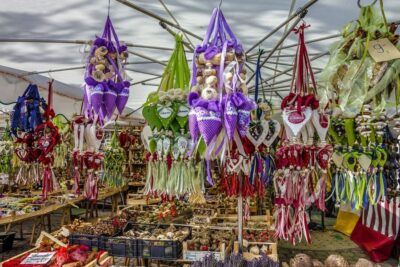 ★ 4.7Old Town & Viktualienmarkt City Walk in GermanFrom $232,304 reviews
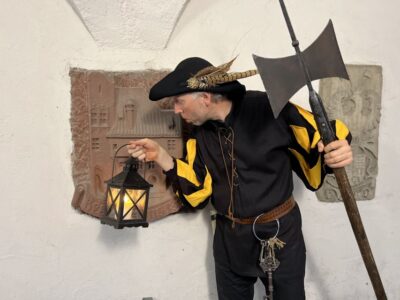 ★ 4.7Night Watchman Walking TourFrom $5302,092 reviews
 ★ 5.0Munich Ghosts and Spirits Evening Walking TourFrom $601,900 reviews
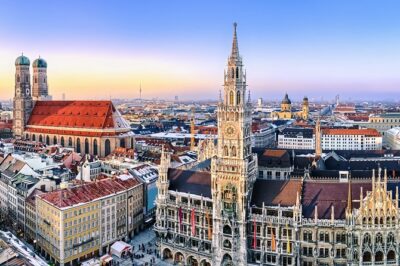 ★ 4.5Munich Old Town Walking TourFrom $271,287 reviews
 ★ 4.6Spooky Tour of Old Town in GermanFrom $261,112 reviews
 ★ 4.7Walking Tour Old Town and ViktualienmarktFrom $282839 reviews
Browse the lists this tour appears in