
Reviewed · GHOSTS, LEGENDS & TRUE CRIME WALKS
Munich – Illuminati & other Secret Societies, Tour in German
Munich has secret symbols hiding in plain sight. This 2-hour walk pulls you into the stories behind Illuminati, Freemasons, and other groups that left markings on the city. What I like most is that the guide doesn’t just name-drop conspiracies; you actually learn how to read clues in the streets and buildings.
I also love the way the tour connects ideas to real places, starting right under the Karlstor arch at Karlsplatz and moving through the center with clear, on-foot stops. You’ll hear specifics like how a Bavarian Elector ended the Illuminati and Freemasons conspiracy, plus the connection between Freemasons and medieval dombau huts.
One consideration: it’s a German-only tour (English only for private tours), and a couple of the stops and explanations may feel more thematic than deeply site-by-site historical proof for Munich.
In This Review
- Key points I’d circle before you book
- What This Tour Feels Like on the Ground (2 Hours, City-Center Walking)
- Meeting Under Karlstor: The Route Starts Where Munich Looks Like Munich
- Illuminati and the Bavarian Elector: How the Story Gets Its Ending
- Freemasons Meet Medieval Dombau Huts: The Part That Feels Most Grounded
- Michael’s Church and Frauenkirche: Churches as Symbol Maps
- Old Academy to Promenade Square: The City as a Classroom
- The Order of the Golden Fleece: Why One Insignia Shows Up Everywhere
- Who’s the Guglmen, and What About Those Still-Running Conspiracies?
- Price and Value: Why $29 for a 2-Hour Walk Can Be Worth It
- Language Reality Check: Plan German or Pick a Different Option
- What Guides Do Well Here (Albert Gets Mentioned)
- Who Should Book This Tour (and Who Might Skip It)
- Should You Book Munich: Illuminati & Other Secret Societies (German)?
- FAQ
- Where does the tour start?
- How long is the tour?
- What language is the tour in?
- What’s included in the price?
- Is the tour wheelchair accessible?
- Is there free cancellation?
Key points I’d circle before you book
- Karlstor start point: you meet under the arch on Neuhauser Str., right where the city feels most “walkable and central.”
- Freemasons origins explained: the tour frames them through medieval dombau huts, not just modern lodge myths.
- Symbol spotting with a guide: you’re taught what to look for so you’re not just staring at stone wondering.
- Kingdom of Bavaria connections: the masons’ role in founding the Kingdom of Bavaria is part of the story arc.
- Golden Fleece clues: you’ll encounter the Order of the Golden Fleece insignia across Munich.
- Albert-style storytelling: at least some guides (like Albert) are praised for strong teaching and handling questions well.
More of old Munich darker corners and legends
- Munich Ghosts and Spirits Evening Walking Tour★ 5.0 · 1,900 reviews
- Munich: Spooky Tour of Old Town in German★ 4.6 · 1,112 reviews
- Munich: Witches and Executioners Guided Tour★ 4.7 · 353 reviews
- Mystic Munich – Sagas and Legends of the Old Town★ 4.8 · 208 reviews
What This Tour Feels Like on the Ground (2 Hours, City-Center Walking)
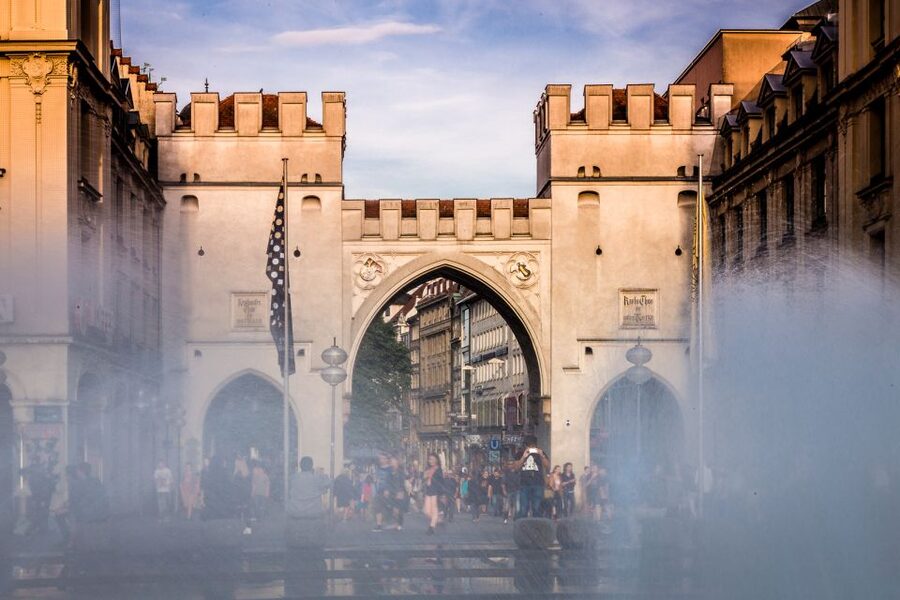
This is the kind of tour that works best when you let it be a walking “clue hunt.” You meet at Karlsplatz, directly under the archway of Karlstor (Karlsgate), on Neuhauser Str. 47 (80331). From there, your guide steers the pace through the old center, pointing out details you’d normally miss.
The tone is part educational, part “wait, what’s that symbol?” Even if you’re skeptical about secret societies, you still get something practical: a method for looking at buildings and symbols in context. And if you’re curious about the whole conspiracy genre, you’ll feel right at home, because the tour explicitly talks about groups that supposedly improved the world and groups that allegedly tried to manipulate politics and social life.
Duration matters here. At 2 hours, it’s not trying to cover every square inch of Munich. It’s trying to give you a focused route plus a set of interpretive tools—so you leave with more confidence than when you arrived.
Meeting Under Karlstor: The Route Starts Where Munich Looks Like Munich
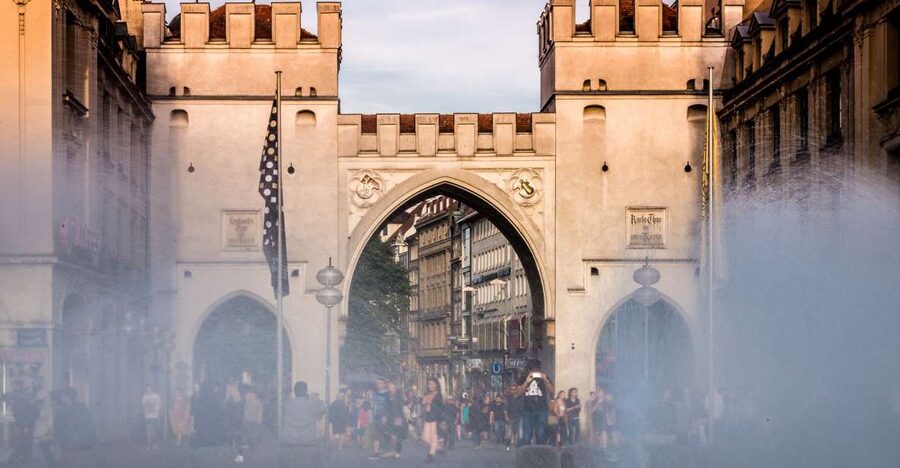
Your tour begins at Karlstor—the arch itself is the visual “gateway” the guide uses to set the mood. Meeting directly under the archway is useful in two ways: it’s easy to find, and it puts you in the middle of the pedestrian flow so you can see how symbols blend into everyday sightseeing.
From there, expect a guided walk through the center with stop-and-explain moments. The tour description also hints at a “symbol decoding” approach, meaning you won’t just hear names. You’ll be asked to notice specific kinds of marks and insignia, and then the guide helps translate what they mean in the larger story.
If you like structure—like knowing where you’re going and why—that helps a lot. You’ll be moving from area to area that the guide ties to these secret-society threads, rather than doing random photo stops.
Illuminati and the Bavarian Elector: How the Story Gets Its Ending
A big hook of this tour is the claim that a Bavarian Elector helped end the Illuminati and Freemasons conspiracy “once and for all.” That’s exactly the kind of dramatic historical moment that makes people pay attention. Even if you treat the conspiracy angle with caution, the educational value is in understanding how power structures tried to control movements—religious, political, and social.
Here’s what I’d pay attention to during this part: the guide frames the debate in a way that keeps your questions alive. The tour doesn’t only say what happened; it also asks the annoying follow-up: were these groups simply radical Enlighteners, or is there something longer-lasting in how their ideas spread?
That’s the tour’s recurring trick. It gives you a storyline with recognizable names—Knights Templar, Freemasons, Illuminati—and then it connects that storyline to what you can still see in Munich. It’s less about proving a single conspiracy theory and more about showing why these stories keep recurring across centuries.
- From Munich: Neuschwanstein & Linderhof Castle Full-Day Trip
★ 4.6 · 14,646 reviews - Neuschwanstein & Linderhof Castle-Fairytale Day Tour from Munich
★ 4.5 · 7,275 reviews - Munich: Third Reich & WWII Walking Tour
★ 4.6 · 6,181 reviews
Freemasons Meet Medieval Dombau Huts: The Part That Feels Most Grounded
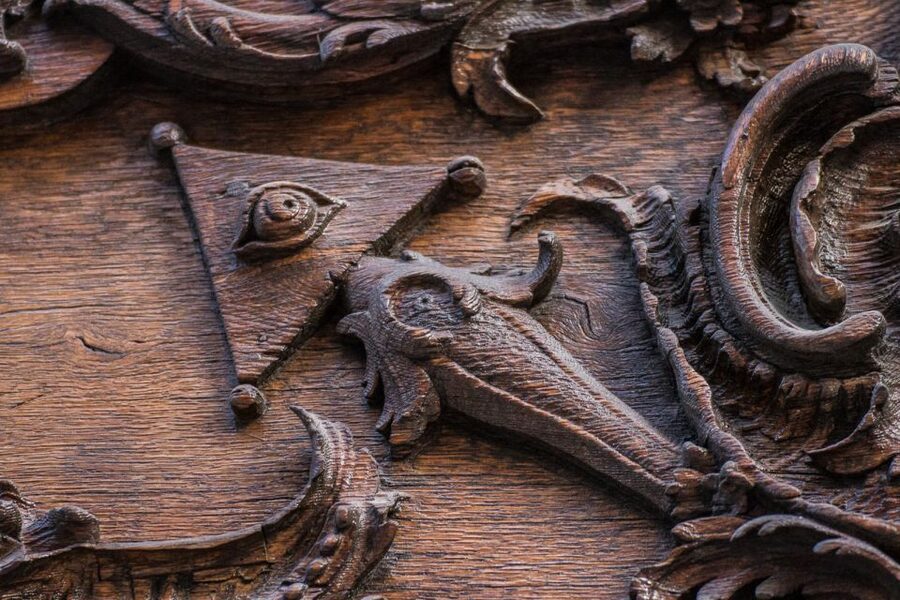
One of the tour’s standout themes is the origins of the Freemasons in medieval dombau huts. That matters because “Freemasons” is often treated like a vague mystery club in pop culture. Here, you get a concrete historical angle: a link to builders and construction culture.
This is also where you’ll likely find the most satisfying explanation if you enjoy “how things actually got started.” The tour is not just about lodge symbols; it’s about craft spaces and how practical work can become social identity over time. You may not leave with a single definitive answer, but you’ll leave with a clearer picture of why Freemasonry and architecture show up together so often.
Keep an eye out for how the guide connects this back to Munich—especially when the walk gets closer to major church spaces and older civic buildings. Even if you don’t remember every detail, you’ll understand the logic of the connection.
Michael’s Church and Frauenkirche: Churches as Symbol Maps
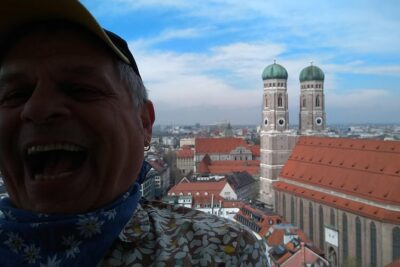
The route includes stops tied to Michael’s Church and Frauenkirche, both central anchors in Munich. Churches are a smart place to teach this subject because they’re loaded with stonework, iconography, and long timelines. They also make the tour feel less like a theme park. It’s still Munich—just with an extra set of lenses.
During church-area stops, your guide points out “secret symbols” found on buildings across the city. The phrasing is dramatic, but the practical take is simple: you’re learning to notice recurring motifs and then interpret them using the tour’s historical framework.
What’s valuable for you: you get practice at symbol reading. If you keep your eyes open after the tour, you’ll start catching patterns on your own—on plaques, carvings, and insignia—without needing someone to hold your hand forever.
Small drawback: churches and grand interiors can be timing-sensitive. The tour description emphasizes guided points of interest, not extended time inside. So if your dream is a long deep interior visit, this isn’t that kind of day.
Old Academy to Promenade Square: The City as a Classroom
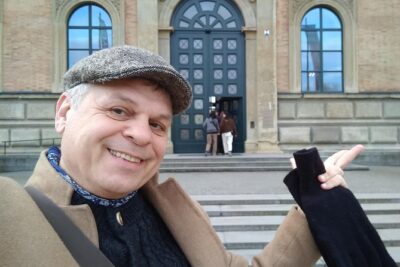
The tour’s path is framed as a sequence: Old Academy → Michael’s Church → Frauenkirche → Promenade square. That gives the walk a beginning-middle-end shape, so you can mentally map it as you go.
Old Academy is a good early stop because it signals the tour’s shift from general background into specific “look here” moments. Then you keep walking into the church-heavy portion, where the symbols and story themes tend to click more easily. By the time you reach Promenade square, the whole experience tends to feel like a complete circle: you’ve seen the key named landmarks, and now the guide can tie them back to the larger themes—hidden influence, surviving insignias, and the question of whether anything remains of these groups beyond official existence.
Promenade square is also a useful end point because it’s open enough for a “questions and answers” style wrap-up. If you like interactive tours, this end section is where you’ll likely get the most from the guide’s explanations.
The Order of the Golden Fleece: Why One Insignia Shows Up Everywhere
One of the most concrete parts of the tour is the Order of the Golden Fleece. You encounter its insignia around Munich, and the guide uses that as a way to connect symbolism to identity and authority.
Even if you’ve never heard of the order, this segment helps because it teaches you to treat insignias as information, not decoration. In practical terms, once you spot a recognizable symbol, you start noticing where else it appears. That makes your future independent sightseeing easier and more fun.
This is also the portion where the tour’s “secret societies” label starts to make sense as a theme, not a promise of spy plots. The guide is showing how reputation, networks, and symbolic systems can persist through time—even when the original organization changes or fades from public view.
Who’s the Guglmen, and What About Those Still-Running Conspiracies?
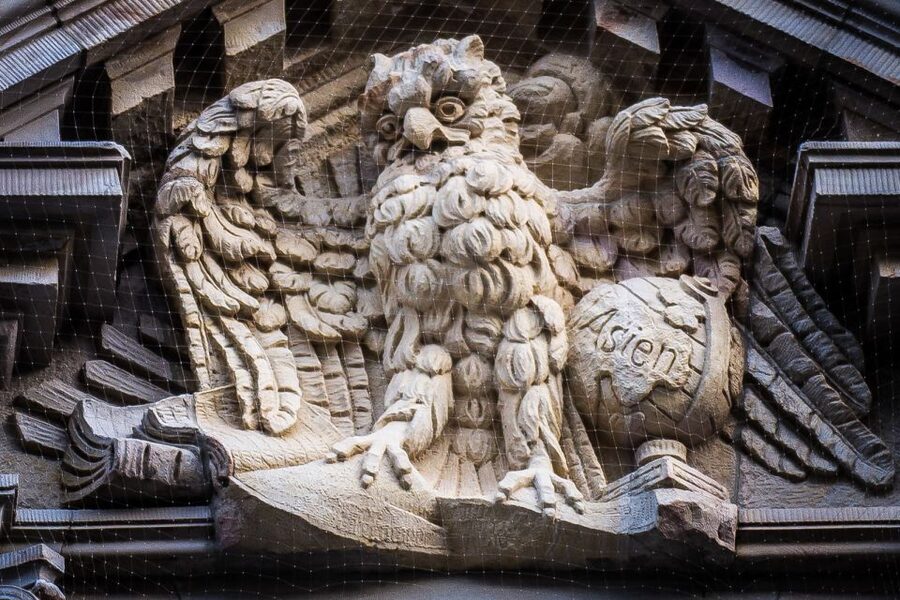
The tour explicitly mentions the Guglmen and raises a big question: are secret societies still dominating our world today, or is it all myth?
That’s the part where I’d encourage you to keep a calm brain. You’re not being asked to blindly believe anything. You’re being invited to compare stories with what you can observe—architecture, insignias, and historical framing provided by the guide.
This is also where the tour can feel most entertaining. It balances real anchors (named groups, civic and religious locations, and historical “endings”) with the unresolved human habit of turning uncertainty into a narrative.
If you enjoy history as a debate—how rumors form, how symbols spread, and how institutions build identities—this section is likely your favorite.
Price and Value: Why $29 for a 2-Hour Walk Can Be Worth It
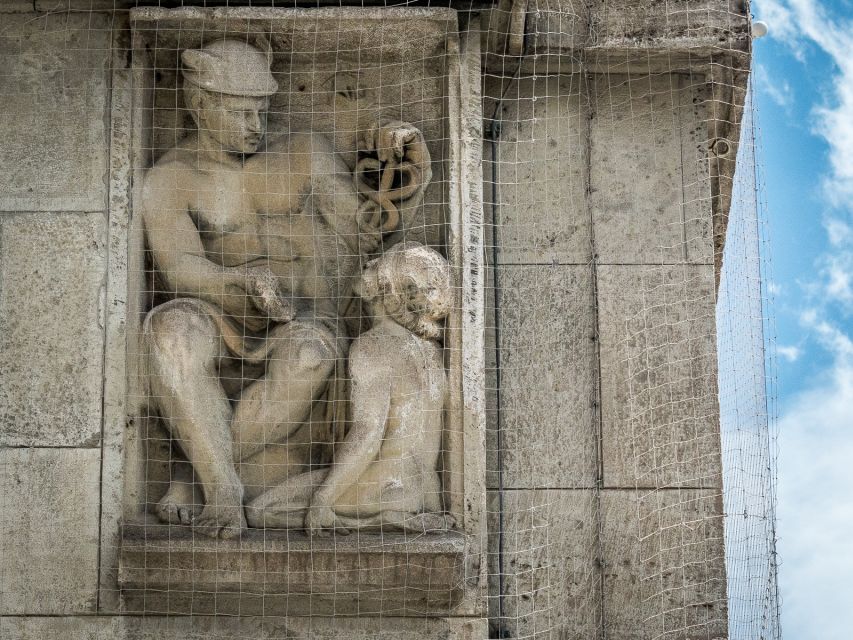
At about $29 per person for a 2-hour live-guided walk, you’re paying for three things: a focused city-center route, interpretation of symbols, and a guide who can answer questions in real time. And there’s a small gift included, which is minor but still a nice touch.
Is it “cheap entertainment”? Not really—because the subject is dense, and the guide’s job is to keep it understandable. But is it expensive for what you get? Also no. Two hours is enough time to feel like you learned something, especially in a compact area like central Munich.
The best value comes if you’re the type of person who likes to look closely at what you see. If you prefer only major sights with obvious facts, you might find the “decoding symbols” style less satisfying. If you like stories that connect people, power, and stonework, this pricing makes sense.
Language Reality Check: Plan German or Pick a Different Option
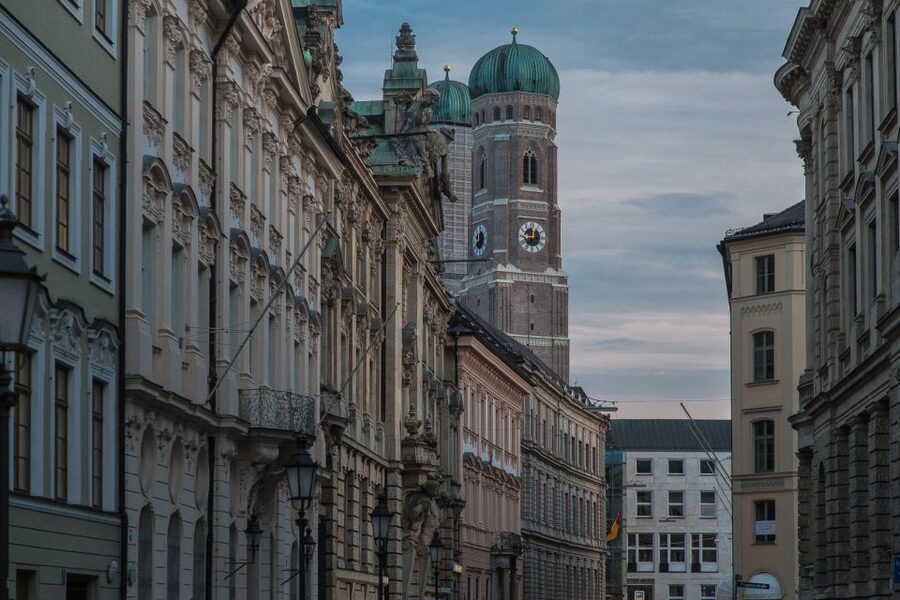
This tour is in German. English is only available for a private tour. That’s not a small detail. It affects whether you’ll follow the explanations and symbol decoding, especially for names and historical connections like the Bavarian Elector or the Order of the Golden Fleece.
So here’s the practical advice: if you’re not comfortable with German, don’t rely on having the gist. Ask about private English options if that’s a must for you. If German is workable, you’ll likely get more out of the Q&A and the guide’s explanations.
Also, note that the guide is live, and the experience is wheelchair accessible—good to know if you need a route that can be navigated without major barriers.
What Guides Do Well Here (Albert Gets Mentioned)
A couple of guides get named in the feedback you can reasonably interpret as a pattern. For example, Albert is praised for making the topic genuinely interesting and for handling questions and comments well. That matters more than people think. In tours about secret societies, the questions are half the fun: Why that symbol? Is it official or just legend? What’s the connection?
So if you book, come ready to ask at least one question. Even simple ones help: whether something is explained as history, tradition, or interpretation. A strong guide makes that difference between a tour you enjoyed and one you remember.
Who Should Book This Tour (and Who Might Skip It)
I’d recommend this tour if you want:
- a walking route with named stops in central Munich
- a practical guide to spotting symbols
- a story-driven approach to secret-society myths and their historical anchors
- a quick two-hour hit that leaves you free afterward to explore on your own
I’d consider skipping or adjusting expectations if you:
- want an English tour in a standard group setting
- expect a deeply time-inside-the-church schedule
- prefer purely mainstream sightseeing with fewer “interpretation” elements
It’s best for curious minds with decent patience and a willingness to look closer than average.
Should You Book Munich: Illuminati & Other Secret Societies (German)?
Yes—if German works for you and you like learning to read the city. The symbol-spotting approach is the real value, and it’s supported by a tour structure built around major landmarks like Karlstor, Michael’s Church, and Frauenkirche. At 2 hours and around $29, it’s a low-commitment way to turn Munich sightseeing into something more like investigation.
If German is a deal-breaker, or you want only straightforward sightseeing facts, you’ll probably enjoy a different tour more. But if you’re here for stories you can still see in stone, this is a fun, focused choice.
FAQ
Where does the tour start?
It starts directly under the archway of Karlstor (Karlsgate), at Neuhauser Str. 47, 80331.
How long is the tour?
The tour lasts 2 hours.
What language is the tour in?
The tour is in German. English is only available for a private tour.
What’s included in the price?
A small gift is included.
Is the tour wheelchair accessible?
Yes, the tour is listed as wheelchair accessible.
Is there free cancellation?
Yes. You can cancel up to 24 hours in advance for a full refund.
More Ghosts and Legends of Munich
Just added to the Munich Explorer notebook

Ghosts, Legends & True Crime Walks, compared.
 ★ 5.0Munich Ghosts and Spirits Evening Walking TourFrom $601,900 reviews
 ★ 4.6Spooky Tour of Old Town in GermanFrom $261,112 reviews
 ★ 4.7Witches and Executioners Guided TourFrom $26353 reviews
 ★ 4.8Mystic Munich – Sagas and Legends of the Old TownFrom $26208 reviews
 ★ 5.0The Original True Crime Walking Tour of MunichFrom $4296 reviews
 ★ 5.0Munich Macabre Group Walking TourFrom $4271 reviews
 ★ 4.7Scary Tour with actors in GERMANFrom $4659 reviews
 ★ 4.0Ghosts of Munich: The Haunted Apprentice Exploration GameFrom $719 reviews
Browse the lists this tour appears in