
Reviewed · THIRD REICH & WWII HISTORY TOURS
Inside the Third Reich (Private Tour)
Munich gets darker the moment you start walking. This private tour links together key Third Reich locations in the city center, with Curt Milburn explaining Hitler’s rise and fall in plain, human terms. You’ll also get an iPad packed with films and images to help you make sense of what you’re seeing on the street. And because it’s private, you can ask questions as you go.
I love the stop-by-stop pacing. Each stop is short, focused, and tied to a moment in the story, so you never feel lost or stuck waiting for the group to catch up. I also like the emphasis on evidence you can still see, including war damage on Munich buildings, plus memorials that force the topic to stay grounded in reality.
One consideration: this is history about persecution and violence, including Kristallnacht-era events and Nazi propaganda space. If you’re looking for a light, carefree city stroll, you may find the tone heavy.
In This Review
- Key highlights at a glance
- A Private Third Reich Walk Makes the City Click
- Meet Curt Milburn and His iPad Timeline
- Your 2–3 Hour Route in Central Munich
- Isartor: Where Nazi Meetings Entered Public Space
- Platzl: Hitler’s First Speech and the Rise Years
- Old Town Hall: Kristallnacht-Era Violence and an Assassination Attempt
- Odeonsplatz: The Purge of the SA and Public Speeches
- Platz der Opfer des Nationalsozialismus: A Memorial Stop That Matters
- Glyptothek: Rally Grounds and Still-Standing Fascist Space
- Alter Botanischer Garten: The Largest Nazi Eagle on Public Display
- Residenz München: Failed Putsch and Resistance During the Third Reich
- Price and Logistics: What $180.72 Really Buys
- Who Should Book This Private Tour (and Who Might Skip It)
- FAQ
- How long is the Inside the Third Reich private tour in Munich?
- Where do we meet, and when does the tour start?
- Is this tour really private for my group only?
- Do I need tickets or paid entry for the scheduled stops?
- What ticket format will I receive?
- Can I bring a service animal?
- What happens if I cancel close to the start date?
- Should you book this tour?
Key highlights at a glance
- Private group, real conversation: Only your group participates, so you can steer questions your way.
- Curt Milburn’s iPad visuals: Hundreds of films and images help you read the buildings and streets like a timeline.
- Munich sites tied to major Nazi moments: From early meetings to speeches, purges, failed plots, and memorials.
- War damage you might otherwise miss: You’ll look at architecture with a new, unsparing focus.
- Memorial and accountability stop: A dedicated stop honors those who died under National Socialism.
- Free-entry stops on the route: The listed sites are marked free, which keeps your money going to the guide.
More walks tracing Munich Third Reich and wartime history
- Munich: Third Reich & WWII Walking Tour★ 4.6 · 6,181 reviews
- Third Reich Walking Tour Munich★ 4.5 · 4,291 reviews
- Munich: Birthplace of the Third Reich Guided Walking Tour★ 4.6 · 771 reviews
- Munich World War II Sites Including Dachau Concentration Camp★ 4.5 · 570 reviews
A Private Third Reich Walk Makes the City Click
If you only tour Munich’s postcard sights, you’ll still miss a huge layer of what the city went through. This experience takes the opposite approach: it points you at specific streets and buildings tied to Nazi power and its consequences. You’re not just hearing dates. You’re learning how people acted, how propaganda spread, and how events played out in real space.
What makes the private format matter is simple: you can pause the story when something feels confusing or personal. Curt Milburn’s commentary is built for questions, not a monologue. That means you can stop and ask, Why did that speech land? How did resistance work here? Or what does this building hide in plain sight?
You also get a visual aid that’s actually useful while you’re standing outside: an iPad with hundreds of films and images from over 1000 years of European history. It turns the place from a set of facades into a readable sequence of events.
Meet Curt Milburn and His iPad Timeline
Curt Milburn is the guide at the heart of this tour, and the style is built around clear storytelling plus flexibility. Curt has over 7 years of experience, is rated #1 in Munich, and has more than 700 reviews. In practice, that usually means two things: you get structure, and you don’t feel rushed.
The tour also gives you the key advantage of visuals on-site. The iPad isn’t just for entertainment. It supports the way the route is taught. When you’re at a location connected to a speech, a meeting, or a violent turn in events, you can see what came before and what followed. That helps you connect what the city looks like today with what it symbolized then.
From the reviews, one theme comes through strongly: Curt is willing to tailor the level of detail to you. If you want the straight narrative, you’ll get it. If you want individual people, behind-the-scenes context, and extra explanation, he’ll work with that. The tone is also patient and easy to talk with, which matters a lot when the subject is uncomfortable.
Your 2–3 Hour Route in Central Munich
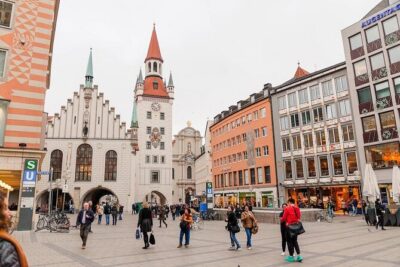
The tour runs about 2 to 3 hours. It starts at 10:30 am and begins at Marienplatz 18, 80331 München. It ends back at the meeting point. It’s near public transportation, and it’s a good-sized block of time for an intense topic without dragging on.
The route is designed as a sequence of linked moments, with short stops. That’s helpful because you’ll be outdoors and processing emotional material. Instead of one long lecture, you get a rhythm: arrive, learn the story tied to that exact spot, look closely, ask questions, and move on.
Each stop on the schedule is marked as free to enter, which is a practical bonus. You’re paying for the guide and the storytelling, not for a stack of ticketed admissions. That keeps the experience focused.
Also, your ticket is mobile, so you’ll want your phone charged and ready. The tour is for a private group up to 15, which changes the feel immediately. You’re not stuck listening over other people, and your questions don’t get swallowed by the crowd noise.
- From Munich: Neuschwanstein & Linderhof Castle Full-Day Trip
★ 4.6 · 14,646 reviews - Neuschwanstein & Linderhof Castle-Fairytale Day Tour from Munich
★ 4.5 · 7,275 reviews - Munich: Third Reich & WWII Walking Tour
★ 4.6 · 6,181 reviews
Isartor: Where Nazi Meetings Entered Public Space
The first stop is Isartor, the Isar Gate area. The story here is about the early moment when Hitler met the Nazis. Even if you don’t know much going in, the guide framing helps you understand why this matters: early alliances and political momentum often start in ordinary, accessible public settings.
The real value of this stop is that it trains your eyes for what propaganda later tried to project. You’re looking at a recognizable piece of Munich street life, then hearing how that normal public world became a stage for radical ideas. This is one of those moments where you start to notice how power doesn’t always announce itself. It often starts with meetings, networks, and persuasive speeches.
Because the stop is short, you won’t feel stuck. You’ll get a focused explanation, then move on before the story gets cloudy. And you’ll have the chance to ask what you’re unsure about before the tour builds to the bigger events.
Platzl: Hitler’s First Speech and the Rise Years
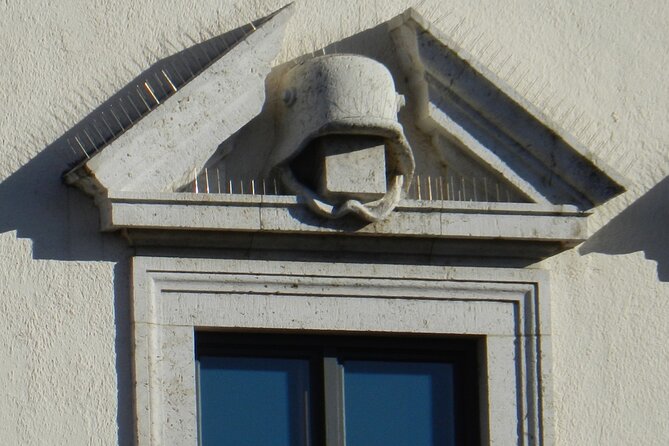
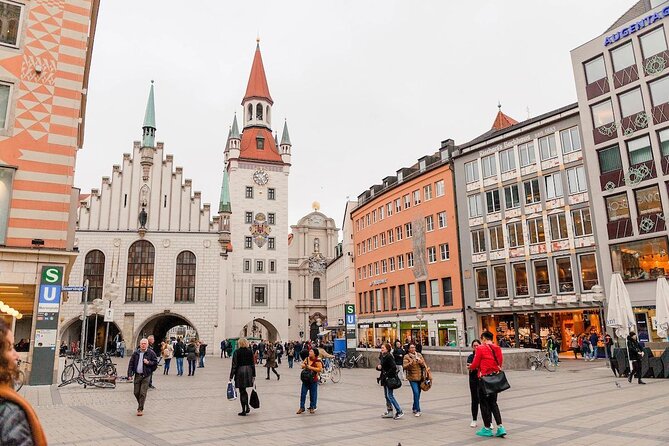
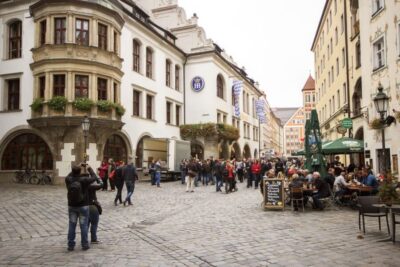
Next you’ll head to Platzl for Hitler’s first speech and his rise to success. This is where the tour starts to explain the mechanics of political traction. The guide doesn’t treat it like a fairy tale of destiny. Instead, you learn how people gained attention, how messaging spread, and how Munich’s public spaces played a role.
There’s a second Platzl stop later in the route, and that one turns your gaze from speeches to the city’s physical scars. That switch is important. It reminds you that rhetoric leads to real-world damage. The building façades are beautiful, but the tour points out evidence of war damage that many people walk past without noticing.
Practical tip: if you’re sensitive to images or heavy themes, ask for how much detail is needed. Curt can adjust the discussion to your level and your comfort. The point is to help you understand, not to overwhelm you.
Old Town Hall: Kristallnacht-Era Violence and an Assassination Attempt
At Old Town Hall, you’ll hear about the beginning of Kristallnacht and also about the site of an assassination attempt on Hitler’s life. This stop carries a lot of emotional weight because it ties a shift in violence to a specific civic location.
Even without deep historical background, this is the moment where the tour pushes you to connect events to consequences. Kristallnacht wasn’t random chaos. It was orchestrated terror with deep human impact. Hearing that tied to a place helps you grasp how far policies traveled into daily life.
The assassination attempt angle adds another layer: the story isn’t only about Hitler. It’s also about the fact that opposition existed and that there were moments when events could have turned differently. Curt’s delivery keeps this balanced and grounded in how individuals and groups acted under pressure.
Odeonsplatz: The Purge of the SA and Public Speeches
Odeonsplatz is next, with a stop tied to Hitler’s purge of the SA and the site of his speeches. The guide uses this location to show how public performance and internal political force could work together. If you’ve ever wondered how leaders build loyalty, this is the kind of place where the answer gets clearer.
The takeaway is not just who spoke, but what the speeches were doing. They helped normalize control, shape identity, and set the stage for tougher moves. The purge story then gives you the contrast: while propaganda worked on the outside, power struggles and violence were happening within the political machinery.
Because this stop is only about 10 minutes in the plan, you’ll want to listen closely for how the guide links the speech culture to the purge dynamics. If you have follow-up questions, that’s exactly the kind of stop where a private setup becomes useful.
Platz der Opfer des Nationalsozialismus: A Memorial Stop That Matters
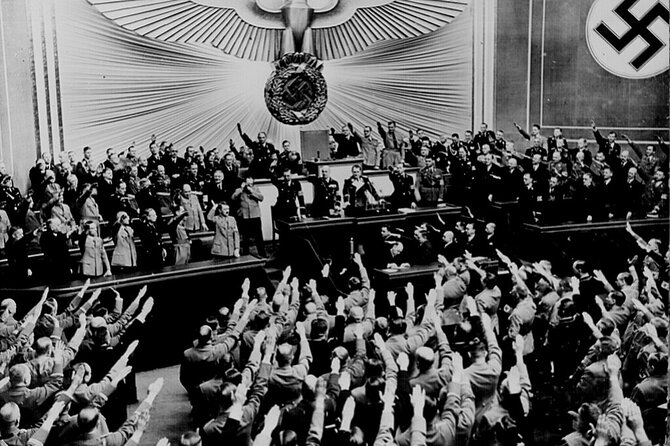
Then comes Platz der Opfer des Nationalsozialismus, Munich’s memorial to those who died at the hands of the Third Reich. This is a crucial emotional and ethical turn in the route. It keeps the tour from becoming just political theater or architecture appreciation.
A lot of tours “mention” tragedy. Here, you actually stop and give it space. That changes the tone of everything that came before and after. You’re reminded that the story of Nazi power isn’t complete without the human cost.
If you’re traveling with kids or teens, this is also often a good moment to pause and talk about what a memorial means and why societies build them. For adults, it’s simply a needed correction to keep things real.
Glyptothek: Rally Grounds and Still-Standing Fascist Space
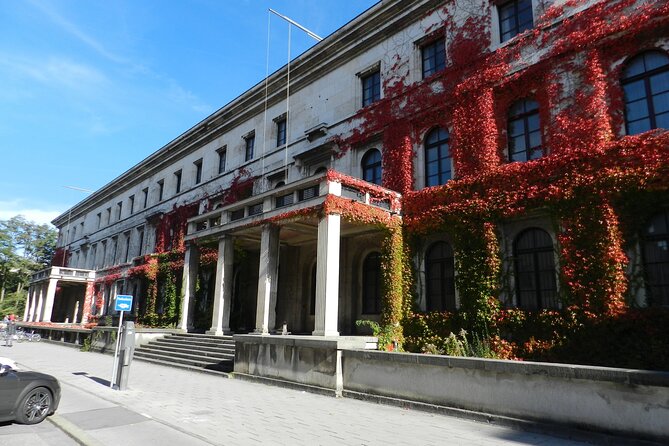
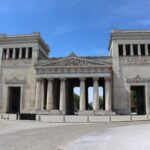
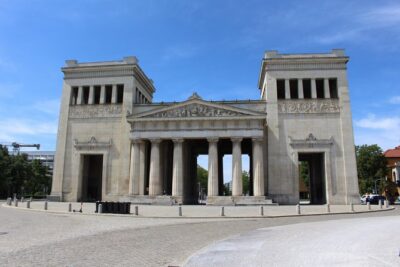
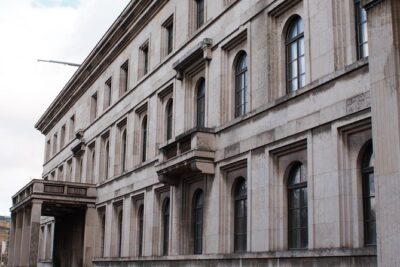
At Glyptothek, you’ll hear about Munich’s rally grounds and fascist buildings of Hitler that still stand. This stop is one of the more unsettling parts of the route because you get to see how ideology can get mixed into respectable-looking structures.
The guide framing helps you look at the space in two layers: what it looks like today, and what it was used to do then. That’s where Curt’s iPad visuals can be especially helpful, because seeing historical context alongside the present-day view makes the propaganda goal easier to understand.
There’s also an educational value here: you start learning the difference between architecture as art and architecture as message. The buildings weren’t just functional. They were part of how power tried to look permanent.
Alter Botanischer Garten: The Largest Nazi Eagle on Public Display
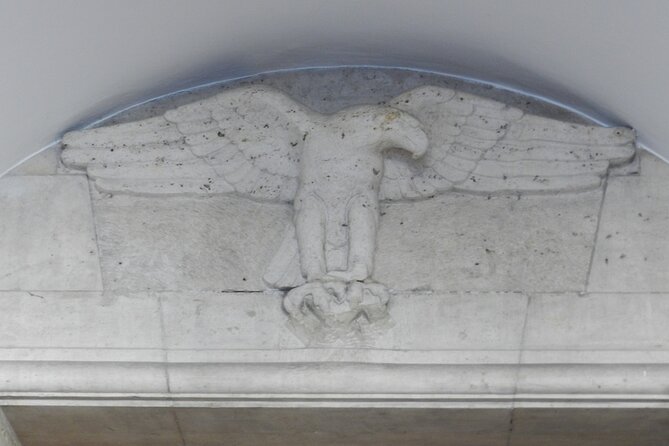
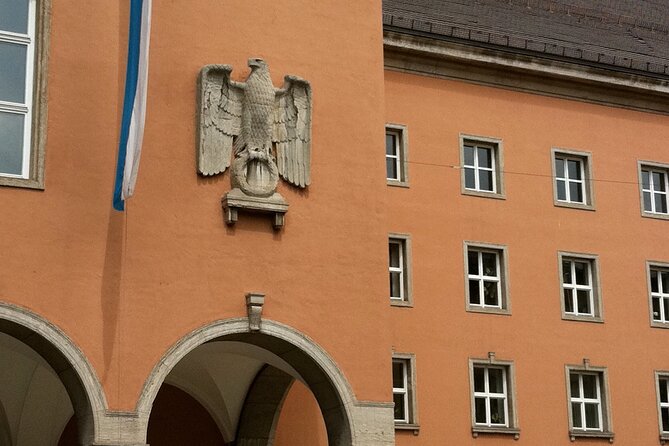
Next is Alter Botanischer Garten, where the tour focuses on the largest Nazi eagle still on public display in Germany, plus evidence of Nazi architecture and art. This stop is graphic in theme even if the setting is still beautiful in a sightseeing way, so it’s worth taking your time with it.
The value for you is that you see the visual language. Nazi ideology wasn’t only written in documents. It was designed, stylized, and built into symbols meant to be seen and admired. The eagle, as presented here, is the kind of symbol that helps you understand why propaganda is so effective. It’s designed to feel official and inevitable.
If you’re on the fence about whether to bring children or if you should mentally prepare first, this stop is a good point to decide. You can always ask Curt about the level of detail beforehand so the tour fits your comfort.
Residenz München: Failed Putsch and Resistance During the Third Reich
The final stop is Residenz München, tied to Hitler’s failed putsch and stories of resistance to the Nazis during the Third Reich. This end point gives the tour a longer arc than many people expect. You’re not only learning how the movement rose. You’re also hearing about moments when it could have failed and the people who pushed back.
For a lot of visitors, this is the most hopeful part of the tour, even though the broader story remains dark. Resistance is easy to forget when you’re only focused on the leaders and their public moments. Here, it comes back into view.
It’s also a good way to wrap up the visual thinking the guide started early. By the time you reach the Residenz, you’ve spent the morning connecting speeches, symbols, and civic spaces to real outcomes. The resistance angle helps you understand that history isn’t just one-directional.
Price and Logistics: What $180.72 Really Buys
The tour costs $180.72 per group for up to 15 people, lasting about 2 to 3 hours. That pricing can look high or low depending on how many people are in your group.
Here’s the practical way to think about it:
- If you fill closer to the 15-person end, the per-person cost drops sharply.
- If it’s only a couple of people, you’re paying more for the private experience.
The reason this can still be good value is that your money is funding an expert guide plus visual tools. You’re not just getting someone to point at buildings. You’re getting a guided explanation tied to each location, with time to ask questions. Plus, the scheduled sites are marked free to enter, so you’re not stacking entry fees.
Timing also helps. It’s typically booked about 66 days in advance on average, so if you have a date in mind, plan early. The tour includes a mobile ticket, and the meeting point is at Marienplatz 18, which is easy to find and easy to return to.
If you want a flexible plan, the cancellation policy is free cancellation up to 24 hours before the start time for a full refund. That reduces the risk if your schedule shifts.
Who Should Book This Private Tour (and Who Might Skip It)
This is a strong choice if you:
- Want history told at street level, not only in a classroom.
- Prefer a private pace with room for questions.
- Like architecture and symbols, but want their meaning explained.
- Are curious about the way propaganda worked in public spaces in Munich.
You might consider skipping or pairing it with lighter sightseeing if you:
- Want mostly upbeat travel experiences today.
- Don’t handle heavy subject matter well.
- Prefer a broader, less focused survey of Germany rather than a concentrated Munich story.
The private format also makes sense for couples, friends, and small families who can benefit from tailored answers. If you’re traveling with people who know a lot already, you’ll still get use out of the visuals and the on-the-ground connections; if you’re new to the subject, the stop-by-stop structure helps you build understanding fast.
FAQ
How long is the Inside the Third Reich private tour in Munich?
It runs about 2 to 3 hours.
Where do we meet, and when does the tour start?
The start point is Marienplatz 18, 80331 München, Germany, and it starts at 10:30 am.
Is this tour really private for my group only?
Yes. It’s listed as a private tour/activity, so only your group will participate.
Do I need tickets or paid entry for the scheduled stops?
The stops listed on the route are marked as Admission Ticket Free, so you’re not paying separate admission for those specific places.
What ticket format will I receive?
You’ll receive a mobile ticket.
Can I bring a service animal?
Service animals are allowed.
What happens if I cancel close to the start date?
You can cancel up to 24 hours in advance for a full refund. If you cancel less than 24 hours before the start time, you won’t get a refund.
Should you book this tour?
If you want Munich to feel like a real story with visible evidence, this is worth it. If you like asking questions and seeing how speeches, symbols, and buildings connect to events, you’ll get a lot out of Curt Milburn’s approach. Just make sure you’re ready for heavy subject matter, and plan your day so you can process it afterward.
More Third Reich and WWII History in Munich
Just added to the Munich Explorer notebook

Third Reich & WWII History Tours, compared.
 ★ 4.6Third Reich & WWII Walking TourFrom $316,181 reviews
 ★ 4.5Third Reich Walking Tour MunichFrom $454,291 reviews
 ★ 4.6Birthplace of the Third Reich Guided Walking TourFrom $29771 reviews
 ★ 4.5Munich World War II Sites Including Dachau Concentration CampFrom $105570 reviews
 ★ 5.0Munich City Walking Tour, includes Third Reich & ViktualienmarktFrom $31458 reviews
 ★ 4.5Third Reich & WWII Walking TourFrom $35417 reviews
 ★ 4.9Munich 3-Hour Segway Tour: Nazi Munich & Royal ArchitectureFrom $91194 reviews
 ★ 5.0Dachau Concentration Camp Memorial Site And Third Reich Day Tour From MunichFrom $145185 reviews
Browse the lists this tour appears in