
Reviewed · HISTORICAL TOURS
800 Years of History: A Munich GPS Audio Tour
Munich becomes a timeline in your headphones. This English GPS audio tour (VoiceMap) connects landmark after landmark as you move from Marienplatz toward Frauenkirche, with narration that covers the centuries in between. You start when you’re ready by downloading to your phone, and you can keep going at your own pace.
I especially like the offline access to audio plus maps and geodata. That means you’re not stuck hunting for signal when you pause for a snack or duck into a church doorway. Second, you can stop and restart freely, and you get lifetime access, so if you want to redo parts the next day, you can.
One thing to consider: in large city squares, construction and foot traffic can make directions feel less precise than you’d hope, and the audio guide’s style (including accent/clarity) may not be equally easy for everyone. The good news is that you can use the on-screen map to stay oriented.
In This Review
- Key things worth knowing before you go
- How the VoiceMap audio tour starts at Marienplatz
- From Marienplatz to St. Peter’s Church: a fast orientation to old Munich
- Viktualienmarkt and Honighäusl: where history meets snack time
- Hofbräuhaus, Alter Hof, and Max Joseph Platz: power, beer, and purpose
- Residenz and Feldherrnhalle: court life to public monuments
- Palais Holnstein and Frauenkirche: the walk ends with Munich’s signature look
- Price and time: what $9.99 gets you on foot
- Small navigation issues to watch for (and how to handle them)
- Who should book this Munich GPS history walk
- Should you book 800 Years of History: A Munich GPS Audio Tour?
- FAQ
- How much does the Munich GPS audio tour cost?
- How long is the tour?
- What language is the audio offered in?
- Do I need internet while walking?
- Where do I start and where does it end?
- Is this a private experience?
- What should I bring with me?
- Can I cancel for a full refund?
Key things worth knowing before you go
- Download-first setup: You get started by downloading to your smartphone when you want, not on someone’s group schedule.
- Offline audio + maps: Audio, maps, and geodata work without mobile data.
- Stop, pause, restart: You control the timing, so you can shop, snack, and step inside sights when they’re calling your name.
- Private for your group: It’s limited to just your group rather than mixing you into a crowd.
- A strong walk through major landmarks: The route keeps you moving past the city’s headline buildings instead of cutting away to quiet side streets.
More history-minded tours of Munich
- Munich: Guided Tour of the historic Town Hall on Marienplatz★ 4.8 · 63 reviews
- Munich Craft Beer & Cultural Tour With Snack★ 5.0 · 46 reviews
- Munich and Nazi History Combination Day Tour Small Group★ 5.0 · 32 reviews
- Munich: Nazi History 2-Hour Small Group Walking Tour★ 5.0 · 30 reviews
How the VoiceMap audio tour starts at Marienplatz
Start at Marienplatz, right in the heart of Munich’s old center. This matters because it gives you an immediate orientation point: you’re beginning where major streets converge, and everything you see later on makes more sense once you’ve got the central square as your anchor.
You’ll use the VoiceMap app on Android or iOS, and the tour is GPS-guided. In plain terms, your phone tells the audio what’s “next” as you walk, so you’re not trying to keep track of a printed route or constant button presses. The tour is designed to be self-paced, and the itinerary returns to the starting point.
You should also plan around what the tour doesn’t include: smartphone and headphones aren’t provided, and you’ll want your own. Since the route is meant to be enjoyed on foot, it’s smart to bring comfy shoes and treat this like a walk with optional stops, not a speed run.
Timing is flexible too. The walk is listed at about 1 hour 10 minutes to 1 hour 30 minutes depending on how long you pause for pictures, shop windows, or church interiors.
From Marienplatz to St. Peter’s Church: a fast orientation to old Munich
The tour begins at Marienplatz, where Munich’s center square helps you quickly build a mental map. Even if you’ve seen photos of the place, listening while you’re standing there changes how the buildings and streets connect.
As you head toward St. Peters Church, you’re moving from the “here’s the scene” feeling of the square into the more layered character of the old town. This is one of the best parts of an audio walk: the narration can stitch together what you’re seeing with what it used to mean, without forcing you to read plaques while you’re dodging pedestrians.
What I like about routes like this is that you’re not just looking at a single landmark. You’re walking between them, and that makes the timeline feel physical. The audio format also gives you a way to slow down at the spots you care about most.
Do keep expectations realistic: you may not get every single detail a professional guided tour might deliver. You’re paying for a smart framework of big ideas and key places—and then you can add your own exploration as you go.
Viktualienmarkt and Honighäusl: where history meets snack time
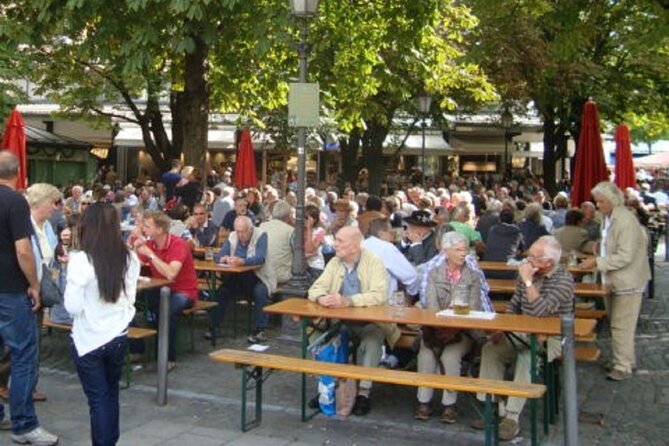
Once the route brings you through Viktualienmarkt, you’re in the part of Munich where history and everyday life overlap. Markets aren’t just places to buy food; they’re where a city’s rhythm shows up in real time. This is one of the moments where your self-paced control really pays off.
You’ll also pass Honighäusl, which is exactly the kind of landmark that makes you want to pause even if you’re not hungry. The tour’s structure helps here because it encourages you to stop and restart based on your energy and your plans. If you want to grab a drink or browse stalls, you don’t feel like you’re falling behind a group.
This is also a practical benefit for non-ideal travel moments. If the weather changes, or you need a breather, the “pause when you need to” format keeps the day from spiraling. You’re not stuck waiting for the next departure time or trying to coordinate with strangers.
Tip: if your phone battery is a concern, keep brightness reasonable and use the offline download. The tour’s offline access is there for a reason, and it supports long walk days.
More self-guided routes through Munich
- Munich: Scavenger Hunt Self-Guided Tour for Children
★ 4.5 · 101 reviews - 800 Years of History: A Munich GPS Audio Tour
★ 4.5 · 12 reviews - Munich Scavenger Hunt and Sights Self-Guided Tour
★ 4.5 · 8 reviews
Hofbräuhaus, Alter Hof, and Max Joseph Platz: power, beer, and purpose
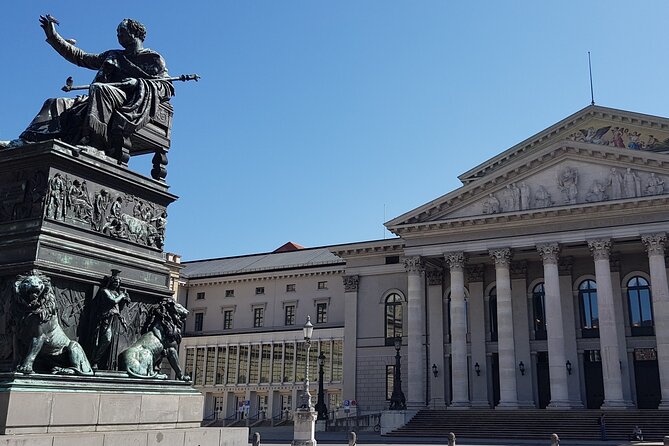
Next, the route takes you past Hofbräuhaus, then touches Alter Hof, and continues through Max Joseph Platz. This stretch works well because it shifts the story from “what Munich looked like” to “how Munich functioned.” Beer halls and historic squares are more than tourist magnets here; they’re part of how the city remembers itself.
Hofbräuhaus is the kind of place where you can feel the pull to step closer and soak in the atmosphere even if you’re not doing a full stop. The audio tour gives you the context to understand why this matters beyond the surface.
Then Alter Hof offers a different vibe—still central, but with a more historic institutional feel. Finally, Max Joseph Platz gives you open space where you can reset your bearings. The route keeps moving, but these pauses-in-space help you avoid the common problem with walking tours: fatigue without meaning.
One small drawback to keep in mind: big squares can be confusing when you’re navigating by GPS. If construction is happening nearby or crowds are thick, don’t wrestle your phone blindly. Check the on-screen map and use it to confirm your exact position before you assume the next turn.
Residenz and Feldherrnhalle: court life to public monuments
The tour continues toward Residenz, then passes Feldherrnhalle, and goes on to Theatine Church. This portion is where the “800 years” promise starts to feel more than a marketing line. You’re seeing buildings tied to power, ceremony, and public identity—things that tend to echo through centuries even after the original purpose changes.
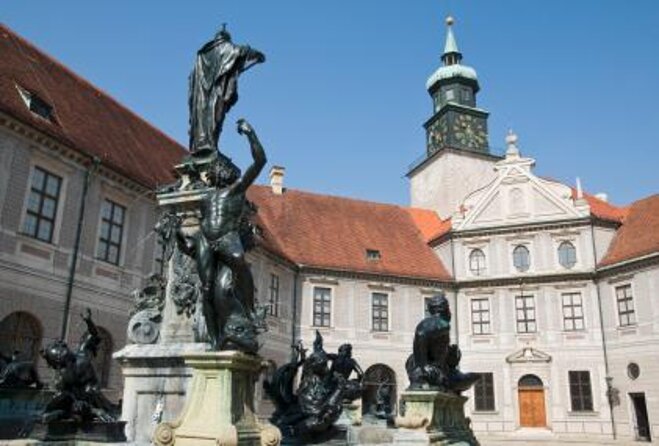
Residenz is a natural anchor for thinking about court life: it’s the kind of place that invites you to imagine how the city’s leaders shaped Munich’s growth. Even if you only catch views from the outside, the narration can help you connect why this area feels important.
Feldherrnhalle adds a different angle: it’s about public memory, monuments, and how societies choose symbols. Walking past it instead of just reading about it gives your brain a stronger sense of place.
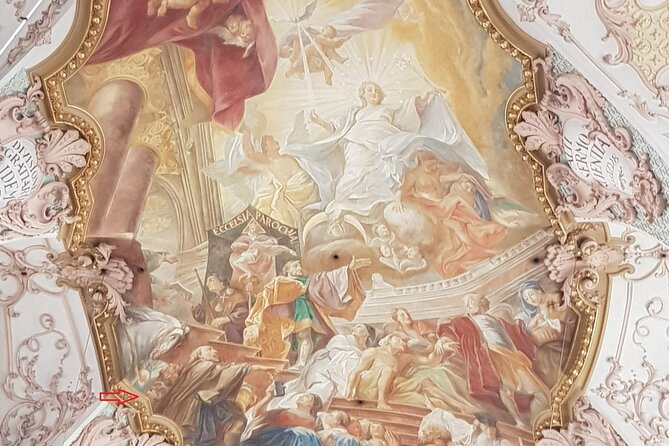
And Theatine Church brings you back to architecture and religious tradition. Churches are often the most rewarding stops in an audio tour because the guide can tie details to the meaning—so even without going deep on museum explanations, you still learn how to look.
If churches are open when you pass, you might want to step in. The tour is built for stop-and-go, so you can take a quick look rather than treating the building as a drive-by photo opportunity.
Palais Holnstein and Frauenkirche: the walk ends with Munich’s signature look
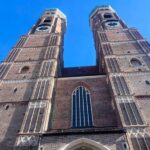
As you move on, the route passes Palais Holnstein, then heads toward Frauenkirche and the nearby Frauenplatz area. This is a strong finish, because it ends the walk with a truly recognizable Munich landmark.
Frauenkirche is where your timeline view starts to click. Earlier stops gave you context, and now the tour points you at a building that’s hard to ignore. Even if you don’t go inside, it’s the kind of church where the shape and presence help you “read” the city in one glance.
Frauenplatz also helps your brain land the story. You’ve been moving through squares and landmarks that each have their own meaning, and the final area is roomy enough to slow down and re-check your direction.
If you’re the type who loves hunting for visual details, here’s a practical note from the way people tend to experience this style of tour: some spot-on details may be easy to miss without extra guidance. If that kind of scavenger vibe matters to you, don’t be shy about pausing the audio and looking carefully at what’s right in front of you.
When you’re ready, the tour ends back at Marienplatz, so you’re not left wandering with an uncertain end point.
Price and time: what $9.99 gets you on foot
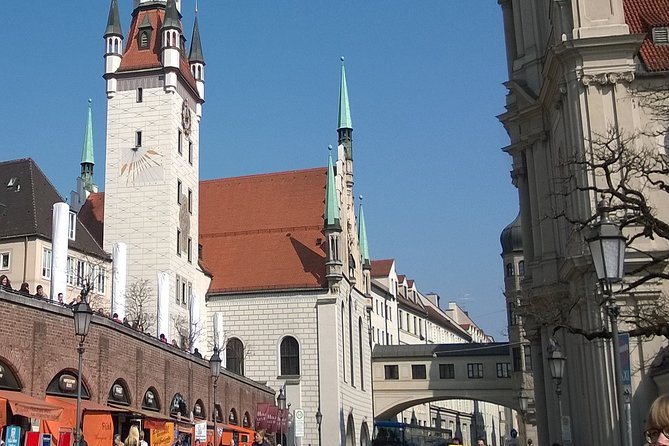
At $9.99 per person, this is priced like a budget-friendly “learning walk” rather than a full guided tour. The value comes from how much flexibility you get for the cost:
- Lifetime access: you can revisit parts later instead of losing your money when timing gets messy.
- Offline audio + maps: you’re paying for a toolset, not just a one-time narration.
- Private format for your group: you’re not sharing the experience with random strangers.
The typical duration—about 70 to 90 minutes—is also realistic for city center walking. You won’t be doing a long day hike, and you can fit it before dinner or after a museum visit. If you plan smart stops (bathroom, quick snack, one church interior), it feels like a complete “first contact” with Munich’s center.
If you’re short on time, I’d treat it as a foundation walk. It helps you decide what deserves deeper attention later, because you’ll finish the route with a clearer sense of where things are and what each landmark is doing in the story.
Small navigation issues to watch for (and how to handle them)
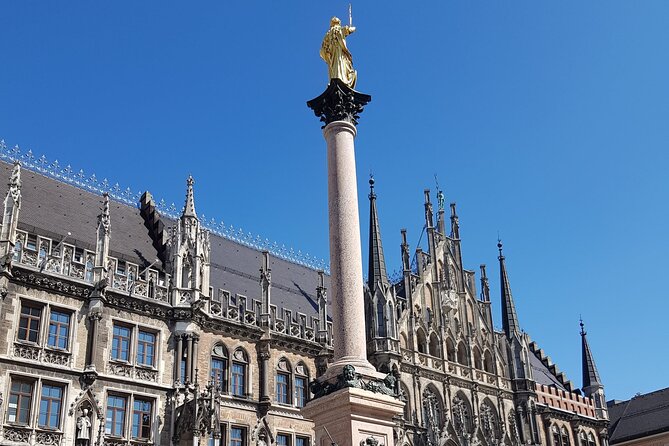
Audio GPS tours are great—until they aren’t. The most common hiccups are practical, not dramatic.
Here’s what to watch for on this route:
- Construction or crowd pressure can make turning instructions feel less obvious in big squares.
- Pronunciation/voice clarity can be a factor if you’re sensitive to accents.
- If your tour loads in a non-app format, you might lose some of the hands-free flow. To avoid that, make sure you’re using the VoiceMap app you downloaded for iOS or Android.
Your best fix is simple: use the on-screen map to confirm where you are. When in doubt, pause, check the map, then continue. You’ll lose less time than if you keep guessing turns.
Also, don’t underestimate headphones. If your audio is muffled or you’re competing with street noise, you’ll miss the story beats that make this tour worth doing in the first place.
Who should book this Munich GPS history walk
This tour is ideal if you want a structured walk but don’t want to be stuck in a group rhythm. The stop-and-restart approach works especially well if you like to:
- pause for market browsing or a quick drink
- step into churches only when you feel like it
- take photos without worrying that you’re holding anyone up
It’s also a good pick for a “first evening” in Munich. Starting at Marienplatz gives you orientation fast, and ending back there makes it easy to connect with dinner plans.
On the other hand, it may not be the best match if you strongly prefer turn-by-turn navigation with zero ambiguity. If you’re the kind of person who hates checking screens while walking, consider pairing this with a simple street map habit or saving it for a day with clearer weather and lighter crowd levels.
Should you book 800 Years of History: A Munich GPS Audio Tour?
Yes—if you want an offline-capable, flexible way to learn Munich’s center without hiring a person to herd you. The value is strongest when you like freedom: you’ll use the pause button, you’ll treat it like a guided walk you can shape, and you’ll appreciate the fact that the tour stays yours with lifetime access.
I’d skip it only if you need heavy step-by-step precision in busy squares, or if you’re worried about understanding narration through street noise and accents. Otherwise, it’s a smart way to turn a 70 to 90 minute walk into something that actually sticks.
FAQ
How much does the Munich GPS audio tour cost?
It’s $9.99 per person.
How long is the tour?
Plan for about 1 hour 10 minutes to 1 hour 30 minutes (approx.).
What language is the audio offered in?
The tour is offered in English.
Do I need internet while walking?
No. It includes offline access to the audio, maps, and geodata.
Where do I start and where does it end?
You start at Marienplatz in Munich and the tour ends back at the meeting point.
Is this a private experience?
Yes. It’s a private tour/activity limited to just your group.
What should I bring with me?
Bring a smartphone and headphones. Transportation and food/drink aren’t included either, and any admission fees for stops are not included.
Can I cancel for a full refund?
Yes. You can cancel up to 24 hours in advance for a full refund. If you cancel less than 24 hours before the start time, the amount paid isn’t refunded.
More Audio Walks in Munich

More Self-Guided Routes in Munich



More History Walks in Munich




Just added to the Munich Explorer notebook


Historical Tours, compared.
 ★ 5.0Eagle’s Nest-Berchtesgaden-Obersalzberg Private Half Day WWII Historical TourFrom $59164 reviews
 ★ 4.8Guided Tour of the historic Town Hall on MarienplatzFrom $2963 reviews
 ★ 5.0Munich Craft Beer & Cultural Tour With Snack46 reviews
 ★ 4.5Munich History Tour: Private & Personalized with a Local GuideFrom $11133 reviews
 ★ 5.0Munich and Nazi History Combination Day Tour Small GroupFrom $14132 reviews
 ★ 5.0Nazi History 2-Hour Small Group Walking TourFrom $5830 reviews
 ★ 5.0Private Sound-of-Music and Historic Salzburg Tour from MunichFrom $92128 reviews
 ★ 4.5Salzburg History & Food Private Tour with Munich train add-onFrom $12024 reviews
Browse the lists this tour appears in