

Reviewed · AUDIO TOURS
Self Guided Tours Munich With 100 Captivating Audio Stories
Munich turns into a storybook when you walk. This self-guided audio tour pairs a mobile map with 100 location-based audio stories, so you can wander key sights and listen to short soundscapes tied to each spot. Even the “where do we go next?” problem gets handled for you.
I especially like how each stop is short and focused (about 10 minutes), which makes it easy to match your energy level. I also like that the app nudges you to places you might skip on your own, including big landmarks like the Frauenkirche, plus quieter corners like St. Peter and the Isar.
One thing to consider: there’s no offline access included, so you’ll want reliable mobile data while you’re out.
In This Review
- Key highlights worth planning around
- 100 short stories, 1 flexible day
- Price and value: what $3.62 buys you in Munich
- Getting started: mobile ticket, map, and your own headphones
- How the route “feels”: 10-minute stops that keep you moving
- Marienplatz to the town halls: where Munich’s center sets the tone
- Churches that tell stories: from Frauenkirche to St. Michael and beyond
- Squares, power, and political Munich: Odeonsplatz through Feldherrnhalle
- Beer, markets, and shopping streets: Hofbräuhaus and Viktualienmarkt
- Gates, plazas, and hidden angles: Karlsplatz, Isartor, Karlstor, Propylaea
- The Isar and the green belt: Olympiapark, parks, lakes, and Flaucher
- Monuments, festivals, and symbolic stops
- Fountains and public art: Märchenbrunnen, bowl fountains, Strauss, and more
- Castles, royal grounds, and a memorial that changes the tone
- Choose your own length: a practical way to plan your day
- Should you book this Munich self-guided audio tour?
Key highlights worth planning around
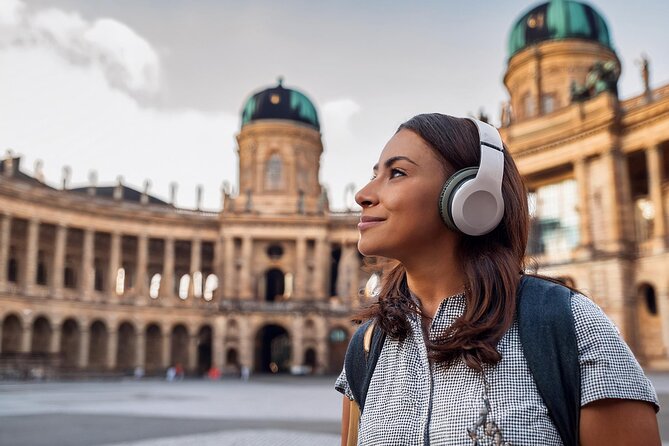
- 100 audio stories tied to real Munich locations so your walk feels guided without a group
- About 10 minutes per stop, which makes it simple to pick 5 stops or do much more
- Web app map + mobile ticket + 1-step audio access to get going fast
- Free-admission stops listed for each location, so you’re paying mainly for the stories
- Bring your own smartphone and headphones and plan for coverage since offline isn’t included
- Private experience for your group only, with service animals allowed
More self-guided routes through Munich
- Munich: Scavenger Hunt Self-Guided Tour for Children★ 4.5 · 101 reviews
- Ghosts of Munich: The Haunted Apprentice Exploration Game★ 4.0 · 19 reviews
- 800 Years of History: A Munich GPS Audio Tour★ 4.5 · 12 reviews
- Munich Scavenger Hunt and Sights Self-Guided Tour★ 4.5 · 8 reviews
100 short stories, 1 flexible day
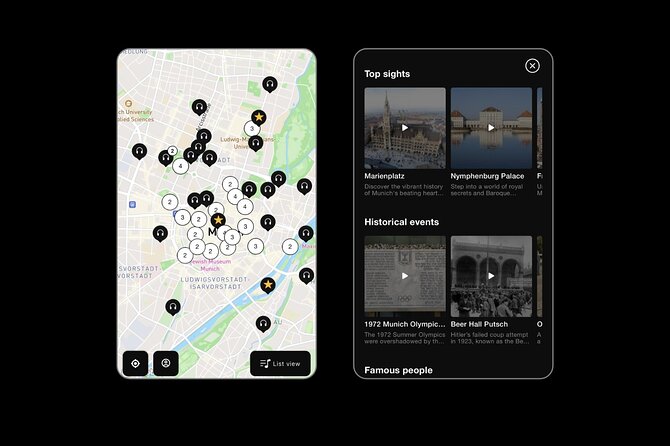
This experience is built for people who want Munich to feel personal, not scheduled. You get a web app with a map, and a simple link that helps you activate and access your audio guide in one step. Then you walk from stop to stop while the audio does the heavy lifting.
The format is straightforward: you’ll listen to short stories at a sequence of famous sights and also some calmer places. The tour length is listed as 1 to 12 hours, so you can do a quick taste or stretch it into a full day. It’s offered in English, and the audio covers top sights, historic events, and famous people, with storytelling and soundscapes designed to keep you interested while you move.
Because each story is around 10 minutes, you’re not trapped listening for an hour at every stop. You can pause, skip ahead, or slow down near the spots that catch your attention.
Price and value: what $3.62 buys you in Munich
At $3.62 per person, you’re not paying for museum entries or a guide’s time. You’re paying for the audio layer that makes locations easier to understand and more fun to notice.
A big value signal here is that the stops are listed with admission ticket free. That matters because you can build a day around landmarks without stacking entry fees. You still get a structured route (mapped in the app), but you’re not forced to spend money each time you arrive somewhere.
The only real “cost” is practical: you need your own smartphone and headphones, and the audio depends on access to the app while you’re outside. If you come prepared with a charged phone and decent reception, the price feels like a smart way to turn walking into learning.
Getting started: mobile ticket, map, and your own headphones
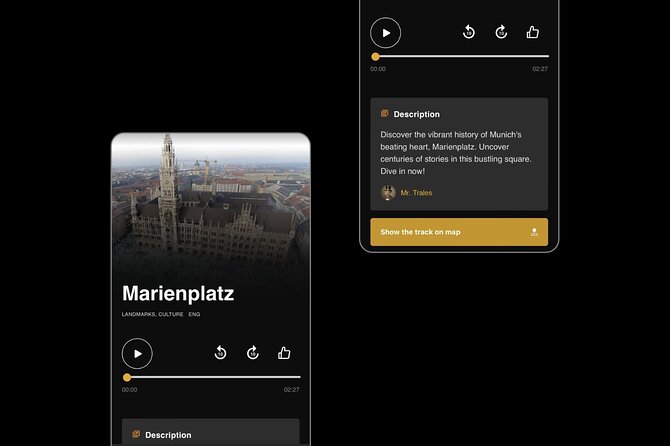
You’ll use your own phone and headphones. A smartphone is mentioned as not included, and headphones are also not included, so plan accordingly. The good news is you don’t need an in-person guide—this is designed for self-guided use.
The tour includes:
- a web app with map
- a mobile ticket
- 1-step access to activate and reach your audio guide link
- audio stories for top sights and historic events
It’s also near public transportation, which helps when you want to break the route into chunks. When you’re planning your day, think in “audio blocks.” Example: do 10–15 minutes of listening, take a short break, then continue.
Two practical notes from the tour info:
- Offline access isn’t included, so don’t rely on your phone working without a connection.
- This is not recommended for travelers with hearing impairment, since it depends on audio.
More audio walks around Munich
- Private audio book city rally in Munich city centre
★ 4.0 · 4 reviews
How the route “feels”: 10-minute stops that keep you moving

This tour is organized as a sequence of location-based stories. The pacing is part of the value. After you park yourself at a spot, you press play, listen, and then you’re free to walk on.
That structure is also why it works for both fast walkers and slow sitters. If you only have an hour, you can sample the center. If you have a half day or more, you can keep going into parks, bridges, fountains, and even memorial ground.
And because it’s private (just your group), there’s no awkward waiting for anyone else. Your rhythm is the schedule.
Marienplatz to the town halls: where Munich’s center sets the tone
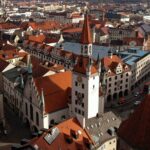
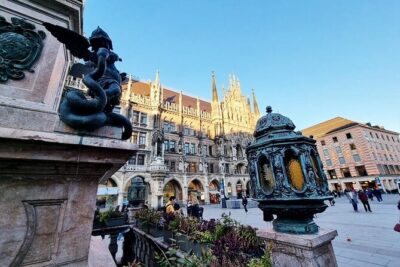
Start with Munich Marienplatz (Stop 1). The story frames it as Munich’s beating heart—simple, direct, and a good way to get your bearings. Right nearby, the audio takes you to New Town Hall (Neus Rathaus) (Stop 33), where you’ll hear the theme of power and history at the Marienplatz.
If you’re still in “center mode,” continue to Old Town Hall (Alte Rathaus) (Stop 34), described as a Gothic marvel and a witness to the city’s evolution. This cluster works well because the buildings and squares keep everything walkable and easy to connect without extra planning.
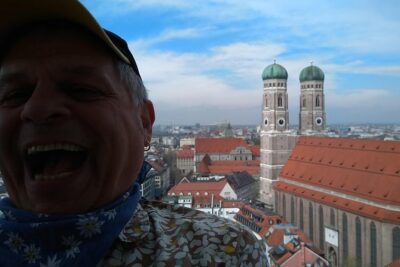
You’ll also encounter the religious landmarks that shape the skyline around the center. Frauenkirche (Stop 2) is next on the route, with the audio focusing on its Gothic style and a hidden story theme. It’s a good anchor stop because it gives context before you branch into smaller churches and side squares.
If you only do a few stops today, this is where I’d concentrate: Marienplatz, Frauenkirche, and the two town halls.
Churches that tell stories: from Frauenkirche to St. Michael and beyond
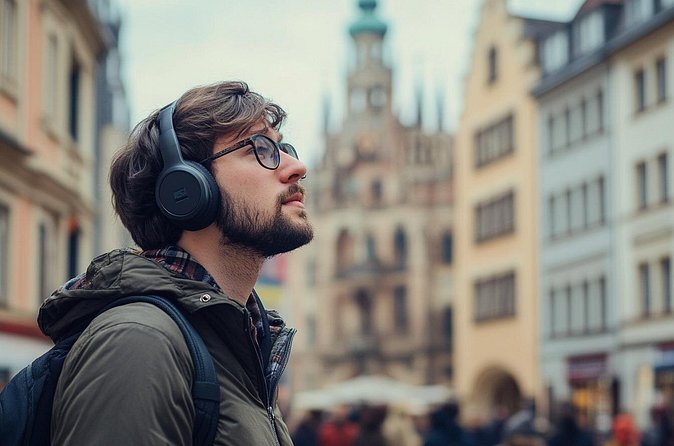
Munich has a lot of churches in a small radius, and this audio tour uses that density well. After Frauenkirche (Stop 2) and Asamkirche (Stop 4), you get a shift from the big Gothic presence to a more crafted, personality-driven style tied to the Asam brothers.
Then the audio moves through a spread of sacred sites:
- St. Peter (Stop 11), with an emphasis on its ancient allure and role as a timeless beacon in the skyline
- St. Michael (St. Michael München) (Stop 17), where the story highlights the Jesuit Church and the idea that it nearly bankrupted a state
- Theatine Church (Stop 18), tied to a vow and its creation in 1675
- St. Benno’s Church (Stop 26), focused on the tale behind this Catholic parish church
- St. Lukas Kirche (Stop 27), with a story about faith, architecture, and grandeur
- St. Anna Damenstiftskirche (Stop 38), the Ladies Collegiate Church of St. Anna
- Heilig-Geist-Kirche (Stop 42), described as a Gothic gem that has stood the test of time
- Allerheiligen-Hofkirche (Stop 48), which the story presents as a Catholic church turned into a cultural hub
A special stop for perspective is Bürgersaalkirche / Bürgersaalkirche (Stop 30). The audio frames it as a quieter place where silence meets grandeur—exactly the kind of stop that works well if you’ve been walking and want something less “tour bus loud.”
If you’re not into churches, you can still enjoy this section for the way the audio themes vary. It’s not just repeats of the same “old building” vibe; the stories shift by creator, purpose, and era.
Squares, power, and political Munich: Odeonsplatz through Feldherrnhalle
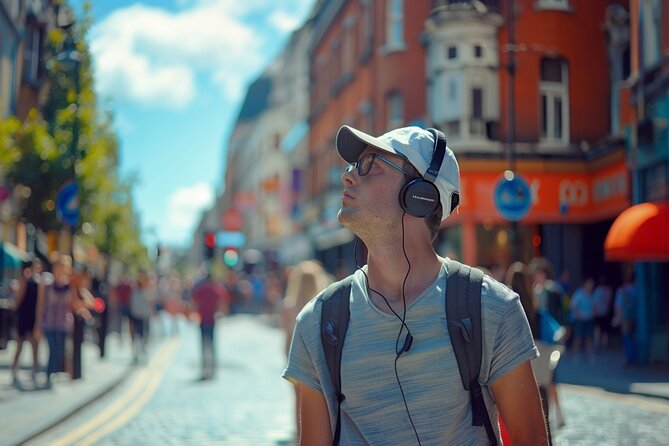
Once you’re comfortable in the center, the tour leans into politics and power—because Munich’s landmarks did not grow in a vacuum.
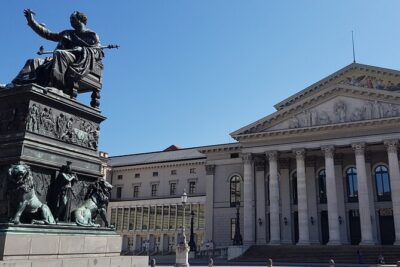
At Odeonsplatz (Stop 3), the audio story is about where power and politics collide, with each echoing hoofbeat guiding the theme. Nearby, Maximilianeum (Stop 6) is described as where history meets brilliance, with a legacy that has shaped minds for over a century.
You’ll also meet monuments that push bigger emotions:
- Siegestor (Stop 8), a symbol of triumph and turmoil
- Feldherrnhalle (Stop 14), tied to tales of glory and turmoil
Civic authority shows up too:
- Justizpalast (Stop 35) is presented as a symbol of righteousness and power
- Friedensengel / Friedensdenkmal (Stop 36) focuses on a timeless symbol of peace
And if you want a break from stone-and-statue overload, the audio sends you through creative city life at Kulturzentrum Gasteig (Stop 37), where the story mentions world-class performances and education.
This set of stops is for you if you like your landmarks with a little tension behind them—where art and politics share the same sidewalk.
Beer, markets, and shopping streets: Hofbräuhaus and Viktualienmarkt
This route doesn’t treat food as an afterthought. It gives you social spaces on purpose.
At Hofbräuhaus München / Hofbräuhaus am Platzl (Stop 9), the audio story frames it as where beer, history, and culture collide. Then you land at Viktualienmarkt (Stop 10), where the story is about history meeting flavors in a sensory stop.
Two more market-and-street moments round out the experience:
- Rindermarkt (Stop 44), told as a street steeped in tales etched in stone
- Sendlinger Strasse (Stop 45), which the audio frames as old town history mixed with modern retail
A practical tip: treat these stops like “meal decisions.” Listen for 10 minutes, then choose whether you want to snack right there or move on. The audio keeps you engaged, but it doesn’t force you to eat at a specific place.
Gates, plazas, and hidden angles: Karlsplatz, Isartor, Karlstor, Propylaea
Munich’s edges matter, and this tour gives you that sense through gates, entrances, and in-between squares.
Karlsplatz (Stop 7) is described through what’s beneath the bustling Stachus plaza—history, secrets, and intrigue. Then you walk to Sendlinger Tor (Stop 13), a medieval gateway with royal intrigue baked into the audio theme.
Next comes Isartor (Stop 21), another medieval gateway framed with royal intrigue and architectural wonders. You’ll also hear about more formal gateways:
- Karlstor (Stop 39) as a historic sentinel guarding secrets
- Propylaea (Stop 40) as a majestic gateway into history
Civic “old core” energy continues at Alter Hof (Stop 41), described as a medieval stronghold that shaped Bavarian history.
And if you like quick wins between big landmarks, don’t skip the smaller route moments like Promenadeplatz (Stop 31), presented as a hidden gem revealing Munich’s past as you wander.
The Isar and the green belt: Olympiapark, parks, lakes, and Flaucher
If you want your day to breathe, this audio tour hands you several green and water stops. Some are famous parks, others are calmer corners that feel like a pause button.
Olympiapark (Stop 5) is framed as a place where history and nature intertwine, tied to a thrilling tale of the 1972 Olympic Games and treated as an urban oasis. Then the route heads to Isar (Stop 12), where the story points to fairy tale landscapes of the Alps and Bavaria.
You’ll also get:
- Luitpoldpark (Stop 22), a nature-and-history spot atop Luitpoldhill with views
- Westpark (Stop 23), an urban oasis described through unexpected wonders and natural rhythms
- Kleinhesseloher See (Stop 25) in the English Garden, presented as a serene oasis and a place to find calm
- Flaucher (Stop 47), told as locals’ fun and relaxation space tied to Johann Flaucher’s legacy
- Schlosspark Nymphenburg (Stop 50), where history and nature mix into a story of beauty and mystery
This is also where you’ll feel why the stop timing matters. You can do 10 minutes of listening, walk a loop, and then decide whether you’re done or ready for one more story.
Monuments, festivals, and symbolic stops
This part of the route makes Munich feel emotional—sometimes proud, sometimes haunted, often both.
Bavaria Statue (Stop 15) is tied to Oktoberfest and described as a colossal symbol of Bavaria’s past glory and spirit. Auer Dult (Stop 28) brings in tradition through a festival story.
For emotional intensity, you get:
- Dachau Concentration Camp Memorial Site (Stop 20), which the audio frames as haunting past and chilling stories that echo through time
For “symbol with a story” energy, the tour adds Friedensengel (Stop 36) for peace and Siegestor (Stop 8) for triumph and turmoil.
This set is not about light entertainment. It’s about context—what the buildings and monuments want you to remember, not just what they look like.
Fountains and public art: Märchenbrunnen, bowl fountains, Strauss, and more
Munich loves a good public-art moment, and the audio guide turns several fountain stops into short story detours.
You’ll pass:
- Fountain of Fairytales (Märchenbrunnen) (Stop 51) with a whimsical story theme
- Richard-Strauss-Brunnen (Stop 52) tied to operatic grandeur and city charm
- Stiefelbrunnen (Stop 54) at Petuelpark, where the story emphasizes unexpected surprises
- Schalenbrunnen (Stop 55), Roman-inspired bowl fountains presented as twin fountains
- Wittelsbacher Brunnen (Stop 57), a tribute to water’s power and artistry
- WM-Brunnen (Stop 58), described through the 2006 Football World Cup and the passion of the game
There’s also a more playful tech angle built into the route: you’ll keep noticing street-level surprises because the audio encourages you to stop at places that aren’t always on your first mental map.
If you like stopping for photos but don’t want to waste time guessing what you’re looking at, this section is ideal.
Castles, royal grounds, and a memorial that changes the tone
This route expands beyond the center with palaces, castles, and a memorial site that deserves your full attention.
- Blutenburg Castle (Stop 16) in Obermenzing, described as a tale of love and marvels
- Schloss Lustheim (Stop 29), a majestic palatial complex in Bavaria with a story about Schleißheim’s history and grandeur
- Kabinettsgarten (Stop 49) at the royal residence, described as a serene escape from grandeur
- Alte Botanischer Garten (Stop 32), a place where history and nature intertwine through time and passion
- Dachau Concentration Camp Memorial Site (Stop 20), the heaviest stop on the list
Also, if you want the quieter side of Munich’s past, the audio includes multiple cemetery stops:
- Alter Sudfriedhof (Stop 24), framed as 16th century Munich tied to Duke Albrecht’s cemetery
- Alter Nordlicher Friedhof (Stop 46), presented as history among gravestones
- Forest Cemetery – Old part (Waldfriedhof) (Stop 56), described as a unique blend of nature and history
And don’t miss Maximiliansbrücke (Stop 59), where the story is about a bridge blending history and beauty over the Isar River.
This “bigger edges” section is for you if you don’t just want landmarks—you want layers.
Choose your own length: a practical way to plan your day
Because the tour is 1 to 12 hours long, the best strategy is to match stops to your time.
If you only have an hour or two, focus on:
- Marienplatz (1) + Frauenkirche (2)
- Neus Rathaus (33) and Alte Rathaus (34)
- Add one church stop like Theatine Church (18) or St. Peter (11)
If you have half a day, add:
- Odeonsplatz (3) and Siegestor (8)
- One market stop like Viktualienmarkt (10)
- One park stop like Olympiapark (5) or Kleinhesseloher See (25)
If you’re going for a full day, include at least one “tone shift” stop:
- Dachau (20) for remembrance and context
- then balance it with lighter story spots like Märchenbrunnen (51) or Richard-Strauss-Brunnen (52) so you don’t feel wrecked for the rest of the walk
The app map helps you stitch these together without overthinking routes.
Should you book this Munich self-guided audio tour?
I’d book it if you like walking and you want Munich explained in small, motivating chunks. The standout strength is the way the audio turns familiar sights and lesser-noticed spots into something you can actually follow on the street. With a 5/5 rating and feedback that the app showed special places you wouldn’t find on your own, it’s clearly good at guiding your attention.
I’d think twice if you don’t want to use a phone outdoors or if you’re counting on offline audio. Since offline access isn’t included and the tour relies on your device and headphones, make sure you can handle the practical side.
If you’re happy to bring your own audio gear and you want Munich with more story per step, this one’s a smart value.
More Audio Walks in Munich

More Self-Guided Routes in Munich



Just added to the Munich Explorer notebook

Audio Tours, compared.
 ★ 4.4Neuschwanstein Castle Skip-the-Line Ticket with Audio GuideFrom $511,388 reviews
 ★ 3.9Füssen: Neuschwanstein Castle Express Ticket and Audio GuideFrom $50788 reviews
 ★ 3.5Neuschwanstein Castle Ticket With Audio Guided TourFrom $54473 reviews
 ★ 4.5800 Years of History: A Munich GPS Audio TourFrom $912 reviews
 ★ 4.0Private audio book city rally in Munich city centreFrom $464 reviews
Browse the lists this tour appears in