
Reviewed · OLD TOWN & MARIENPLATZ WALKS
Paul’s Private Tour in Munich old City
Munich gets easier fast with a great guide. This private Old City walk is built to help you get your bearings while you hit big landmarks like Frauenkirche and Marienplatz, then connect the dots between buildings, rulers, and everyday life. I especially like the flexibility: your route can bend around what you care about most, instead of feeling locked to one script.
I also like that the tour doesn’t end at monuments. You’ll get practical pointers for what to eat and where to shop, which is gold on day one. The main drawback is simple: it’s about two hours, so interiors (like church visits) depend on opening or service hours, and you’ll move on quickly if you’re hoping to linger.
In This Review
- Key things to know before you go
- Entering Munich: what a private Old Town walk actually solves
- Frauenkirche: the skyline icon and the inside-if-open payoff
- Viktualienmarkt area: Heilig Geist and a Biergarten-style photo mission
- St. Peter’s Church: Munich’s early roots without the lecture fatigue
- Maximilianstrasse: royalty-grade street energy and shopping reality
- Marienplatz and the town evolution story
- Residenz Munich and the feel of power
- Bayerische Staatsoper: Ludwig II and Wagner in one story thread
- Odeonsplatz and Bavaria’s big-picture story
- Fünf Höfe and Promenadeplatz: modern city life between major monuments
- Platzl and the Rathaus-Glockenspiel: medieval streets to clockwork drama
- New Town Hall and Old Town Hall: architecture plus the moral weight of history
- Mariensaule and Viscardigasse: finishing with 30 Years War and Nazi-era context
- Timing, walking pace, and what to expect at each stop
- Price and value: when $127.72 per person makes sense
- Should you book Paul’s Private Tour in Munich Old City?
- FAQ
- How long is the Munich Old City private tour?
- Is this tour private or shared?
- Where do we meet, and where does the tour end?
- Is pickup offered?
- Are any entrance tickets required?
- Does the tour include visits inside churches and other buildings?
- What is included in the price?
- Do I need to tip the guide?
- Is this tour good for seniors or people with mobility needs?
Key things to know before you go
- Private, just-your-group format: no waiting for a big herd, and you can ask questions as you walk.
- Flexible pacing for your interests: the route can adjust while still covering the core sights.
- Major Old Town anchors: Frauenkirche, Marienplatz, both town halls, and the Residenz area are all in play.
- Food and shop direction built in: restaurant and shopping suggestions are part of the experience, not an afterthought.
- Church and palace stops with realistic timing: inside access is optional and depends on what’s happening.
- Finish near Odeonsplatz: a logical landing spot for continuing your day in central Munich.
More laps of the Altstadt and Marienplatz
- Munich: Third Reich & WWII Walking Tour★ 4.6 · 6,181 reviews
- Third Reich Walking Tour Munich★ 4.5 · 4,291 reviews
- Munich: Old Town & Viktualienmarkt City Walk in German★ 4.7 · 2,304 reviews
- Munich: Night Watchman Walking Tour★ 4.7 · 2,092 reviews
Entering Munich: what a private Old Town walk actually solves
Munich’s Old Town can feel like a lot of stone at first. Big squares. Long streets. Churches that all look impressive from the outside. This tour solves the “where do I start?” problem quickly.
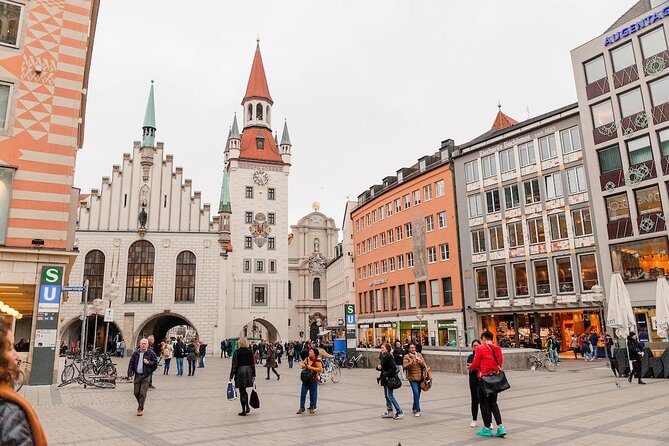
You start near Karlstor (KarlstorNeuhauser Str.) and finish at Odeonsplatz. That matters because you don’t just get a list of sights. You get a route that helps you understand how the center is laid out, and you leave with an internal map. Even better, you’re in control of the conversation. Your guide can tailor emphasis—more architecture, more royal history, more wartime context, more practical travel tips—without turning it into a lecture hall.
Two hours also makes it a useful arrival-day or first-day option. When your legs are awake and your schedule is flexible, this is the moment to learn what matters and what you should revisit later.
Frauenkirche: the skyline icon and the inside-if-open payoff
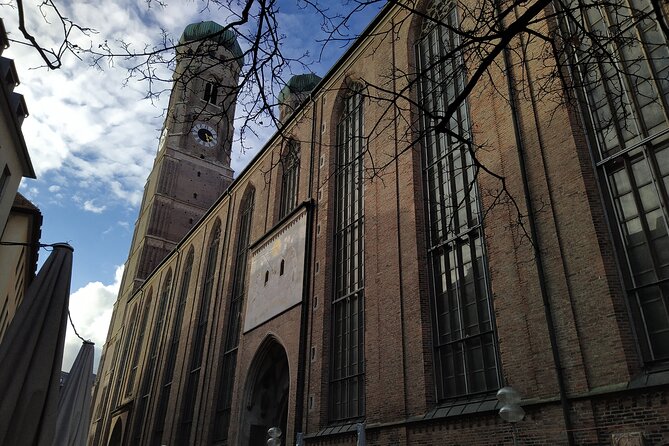
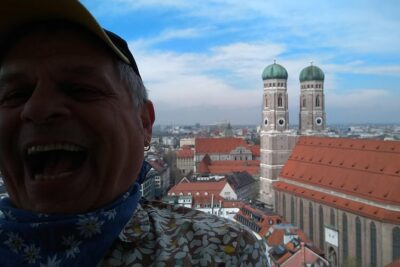
Your tour begins at the city’s most recognizable church: the Frauenkirche. From here, you get the “why this matters” explanation that most first-timers miss. The guide focuses on what you’re looking at—construction details, how the building shaped the city’s identity, and how people have used the space over time.
The inside visit is optional. If you want to go in, you’ll likely be able to—just know that church service hours affect timing. The good part is that the guide doesn’t treat the interior as an automatic stop. You’re told what to expect, and the visit length adjusts to what’s happening when you arrive.
Practical tip: if you’re planning to visit multiple churches during your trip, build this one early. You’ll have a better frame of reference for everything else you see the rest of the day.
Viktualienmarkt area: Heilig Geist and a Biergarten-style photo mission
Right after the Frauenkirche area, you switch gears from one major landmark to the neighborhood of daily life.
You’ll spend time around Heilig Geist near the Viktualienmarkt. The key value here is the interpretation. You don’t just walk past a building; you hear the transformation story—how this place became a church in its current form. If you’d like, you can also go inside, again depending on what’s possible at that moment.
Then comes the biergarten visit. This is short, but it’s deliberately included. It gives you a “Munich in real life” moment, not only monuments. If photos are part of your travel ritual, this stop is set up for that. Your guide knows where to stand for memorable pictures, which saves time and guesswork.
This is also where you’ll start receiving practical restaurant and shop suggestions that connect to what you’re seeing. That’s how a walking tour becomes useful for the next day, not just a memory for your camera roll.
More open-top loops around the sights
- Munich Hop-On Hop-Off Tour: 1-Day or 2-Day Ticket
★ 4.3 · 4,161 reviews - Munich: Old Town & Viktualienmarkt City Walk in German
★ 4.7 · 2,304 reviews - Munich: City Bus Tour & FC Bayern Munich Allianz Arena Tour
★ 4.5 · 2,071 reviews
St. Peter’s Church: Munich’s early roots without the lecture fatigue
Next up is St. Peter’s Church, presented as the first church in Munich—before the city existed as you know it. That timeline framing is what makes the stop click. You understand why it’s not just another church, but an anchor for Munich’s early development.
If you want to go inside, you can. The focus here includes Baroque works and reliquaries, so you’re not stuck only with architecture from the street. The trade-off is time: you’ll spend roughly around ten minutes here, and it’s designed for first-time orientation.
Wear shoes you can stand in. This tour is built for moving, and these short interior moments add up quickly. If you’re prone to rushing through places when you’re excited, take one slower breath inside here. It’s a smart place to slow down.
Maximilianstrasse: royalty-grade street energy and shopping reality
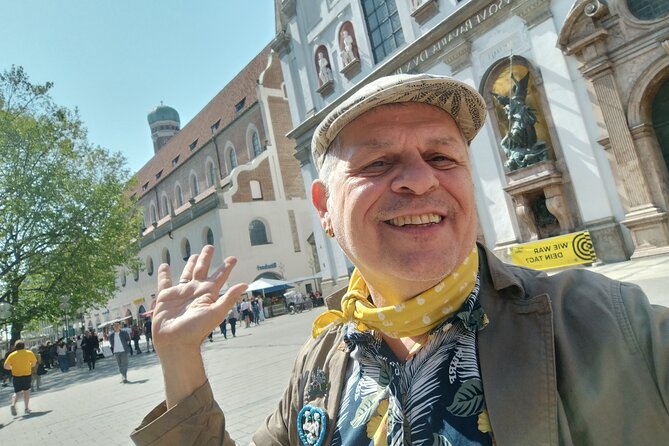
After St. Peter’s, you head to Maximilianstrasse. This street is known for monumental constructions and for shopping that skews toward the upscale side of Munich.
The guide keeps it grounded. You’re not just seeing storefronts. You’re learning how the street’s prominence fits the city’s self-image—especially the connection to wealth, influence, and the kind of patronage that shaped Munich.
If you’re on a budget, don’t worry. Even if you’re not buying anything, this is still a valuable walk. You’ll better understand the city’s “who lived here and why” story, and you’ll spot areas you might want to return to for browsing later.
Marienplatz and the town evolution story
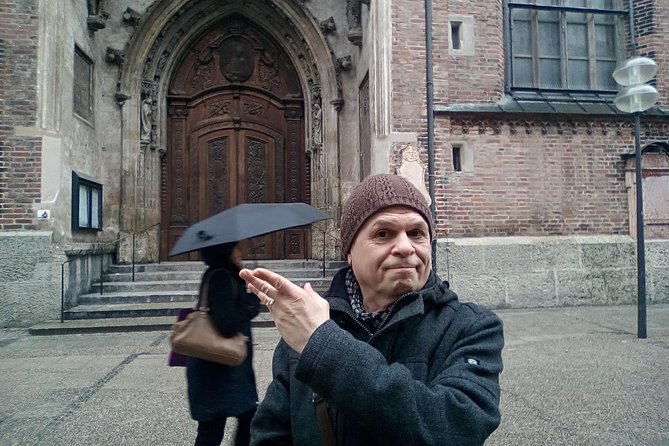
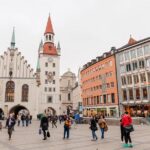
You hit Marienplatz—Munich’s central stage. The guide explains how Munich grew from something smaller and market-focused into a larger town with political weight. This isn’t abstract. It helps you understand why the squares feel the way they do today.
It’s also one of the best places to ask questions because the view lines up so much of the city’s center. From here you can see why adjacent buildings matter, and how the public spaces supported trade, ceremonies, and announcements.
Expect about five minutes here in the “orientation and story” mode. That’s the point: you learn the big picture quickly, then use the rest of your day to explore at your own speed.
Residenz Munich and the feel of power
Your next stop is the Residenz area, Munich’s royal palace. Here, you’ll visit the outside, focused on what you can observe from street level.
If you want more, the guide offers an additional special visit inside the palace. That’s great if your schedule lines up with opening hours and your interests skew toward museums or royal collections.
Even without going in, the outside visit helps you read Munich differently. You stop seeing “pretty buildings” and start noticing where authority sat, how it looked, and how it wanted to be seen.
If you’re traveling with kids or you’re short on museum time, this outside approach can still be satisfying. It’s a strong compromise: enough palace context without demanding a full museum commitment.
Bayerische Staatsoper: Ludwig II and Wagner in one story thread
From the palace atmosphere, you move toward Bayerische Staatsoper. This stop connects two heavyweight names: King Ludwig II and Richard Wagner. You’ll learn facts across time periods—covering the 18th century background, the Second World War era, and how the venue fits into today.
What I like about this kind of stop is that it gives you “soundtrack history.” Opera isn’t just culture trivia. It’s a lens on power, identity, and taste—especially in a city shaped by rulers and artists.
You’ll spend about ten minutes here. It’s long enough for context, short enough that you don’t lose your energy before the later square stops.
Odeonsplatz and Bavaria’s big-picture story
Odeonsplatz is where the tour shifts again into broader Bavarian context. You’ll hear about architecture and about consequences tied to the World Wars—framed as part of the city’s transformation, not only as a list of dates.
This is also a key transition point for many travelers. After you understand Munich’s public spaces and cultural institutions, it becomes easier to appreciate the heavier historical parts later on.
If you’re someone who prefers lighter history, you don’t have to tune out. Think of it as the way to make sense of what you’re looking at. Buildings and streets here aren’t neutral—they’re reminders.
Fünf Höfe and Promenadeplatz: modern city life between major monuments
Once you’ve had the “old center” stories, you get a modern interruption: Funf Höfe (Five Courts). It’s a modern, luxury shopping mall in the city, and you’ll also see Elyasson Sculpture.
Then you continue to Promenadeplatz, where the guide does something useful: connects the historical walk to where to eat and relax. Michael Jackson is referenced as having been there many times, but the real takeaway is the practical list of the finest restaurants, cafes, and options for your stay.
I like these stops because they prevent that “tour hangover” where you only remember monuments and feel too tired to enjoy dinner. By the time you reach Promenadeplatz, your guide’s suggestions can become your actual plan.
This portion also works well for families because it’s a change of pace from church and palace exteriors.
Platzl and the Rathaus-Glockenspiel: medieval streets to clockwork drama
Next comes Platzl, including a passage through a reconstruction from the medieval city. Even in a short walk, that reconstruction helps you imagine what these streets used to feel like—tight, purposeful, and oriented around community life.
Then you arrive at the Rathaus-Glockenspiel area. This is one of those sights people rush through because they think they already know it. Your guide slows it down. You learn the most current and fascinating histories about the engineering and the stories behind the moving figures.
You’ll also hear context that makes the clock feel like more than a gimmick. It becomes a symbol of how the city staged announcements and identity in public space.
New Town Hall and Old Town Hall: architecture plus the moral weight of history
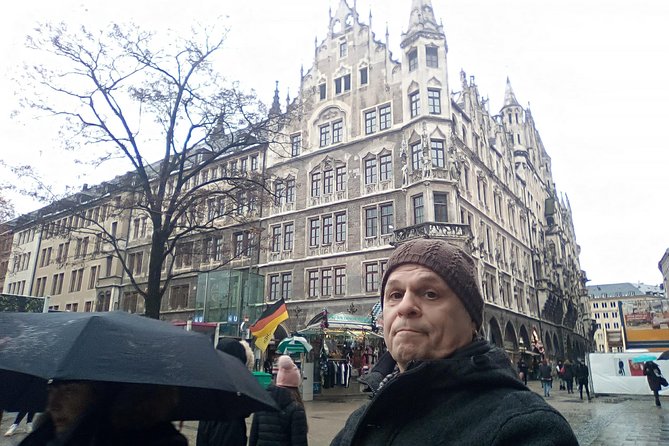
At the New Town Hall (Neus Rathaus), your guide explains the architecture and points out personalities on the façade. It’s an easy stop to photograph because details are built into the design.
Then comes the Old Town Hall. Here, the tour doesn’t dodge hard history. You’ll hear that Goebbels once signed the Reichspogromnacht order here. That’s a heavy moment in the walk, and it’s placed intentionally so you understand why certain spaces carry scars.
This is one of the most important balancing points of the whole tour. You’re not only enjoying Munich’s aesthetics. You’re seeing how history shaped institutions and laws, and why careful storytelling matters when you stand in front of the symbols of power.
Mariensaule and Viscardigasse: finishing with 30 Years War and Nazi-era context
Your final story stops move into memorial and conflict narratives.
At Mariensaule, you finish with the history behind Holy Mary and the 30 Years War. It’s a reminder that this city’s monuments are often tied to survival, politics, and gratitude narratives that formed in real moments of fear and rebuilding.
Then you end at Viscardigasse, where you’ll hear about Hitler’s Putsch, the Second World War, and the way over Nazi terror. It’s direct, factual context designed to help you understand what you’re seeing in the modern street grid.
The tour ends at Odeonsplatz. By then, you’ve walked from the city’s signature church to the heart of its most public institutions, and you’ve picked up a strong mental timeline. That’s what makes this tour more than a checklist.
Timing, walking pace, and what to expect at each stop
This experience runs about two hours. That time budget shapes everything.
You’ll spend around five minutes at many stops for orientation and story, and longer at a few (like Residenz outside and the Staatsoper area). Church interior access is optional, and even when you choose it, you’ll be working with service hours.
So if you’re the type who wants long museum-style pacing, you might find the tour a bit short for that. But if your goal is first-day orientation plus real context plus practical food guidance, two hours is a sweet spot.
For comfort, you’ll want solid walking shoes. The route includes multiple parts of the center and several short transitions, and your time will be spent standing, walking, and occasionally entering churches when possible.
Also, keep an eye on what you want more of. If churches are your thing, say so early so your guide can manage timing. If you’re more into history and politics, your guide can emphasize the squares and institutions more.
Price and value: when $127.72 per person makes sense
At $127.72 per person for a private two-hour walking tour, this isn’t a “budget-only” option. But it can be good value if you use it the way it’s designed: to get a tailored orientation plus actionable local guidance.
Here’s where the value comes from:
- Private format means you lose less time and can ask questions without rushing.
- Multiple major sights in one loop reduces the need to plan separate visits on your first day.
- Built-in restaurant and shop suggestions help you spend your remaining time better. That’s often worth more than people think, especially if you want Bavarian food without wandering blindly.
- The included book, Loving Munich, gives you a take-home angle so the visit doesn’t vanish after a photo dump.
A small caution: the tour is priced per person and stays private for your group. If you’re traveling solo, you’ll pay the per-person rate. If you’re traveling as a small group, the private experience can feel more “worth it” because you’re splitting the benefit of one guide over a wider set of viewpoints.
Should you book Paul’s Private Tour in Munich Old City?
Book it if you want a fast, human way to understand Munich’s center—church landmarks, squares, royal spaces, and the heavy historical chapters—without needing to study maps or guess where to go next. It’s also a strong choice if you like getting practical suggestions for where to eat and shop while you’re still on your first day.
Skip it (or add extra time) if you need a very slow pace, want long indoor museum hours, or are mostly there for one single attraction. This tour is about orientation and context in a compact window.
If you do book, go in with two priorities: one “must-see” landmark and one “what should I do after this?” question. That way, you get the most out of both the stories and the real-world Munich help.
FAQ
How long is the Munich Old City private tour?
It lasts about 2 hours.
Is this tour private or shared?
It’s a private tour/activity, so only your group participates.
Where do we meet, and where does the tour end?
You start at KarlstorNeuhauser Str., 80331 München, Germany, and the tour ends at OdeonsplatzOdeonspl., 80333 München, Germany.
Is pickup offered?
Pickup is offered, with the start point acting as the fallback if you don’t have pickup.
Are any entrance tickets required?
The listed stops include admission ticket free entries (where noted). Some optional inside visits depend on timing, such as church service hours.
Does the tour include visits inside churches and other buildings?
You may be able to go inside for certain stops (like Frauenkirche, Heilig Geist, and St. Peter’s Church), but the duration depends on service hours and what’s possible during your visit. The palace visit is outside by default, with an optional inside visit offered if you want.
What is included in the price?
You get a guided tour with full background from a professional local guide, restaurant and shop suggestions, and Paul’s book Loving Munich.
Do I need to tip the guide?
Tips or gratuity for the guide are not included.
Is this tour good for seniors or people with mobility needs?
Most travelers can participate, and seniors adaptation is possible. You’ll also be near public transportation.
More Hop-On Hop-Off Loops in Munich


More Altstadt and Marienplatz Walks
Just added to the Munich Explorer notebook

Old Town & Marienplatz Walks, compared.
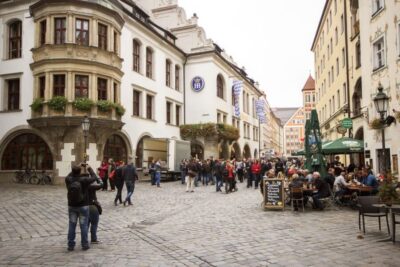 ★ 4.6Third Reich & WWII Walking TourFrom $316,181 reviews
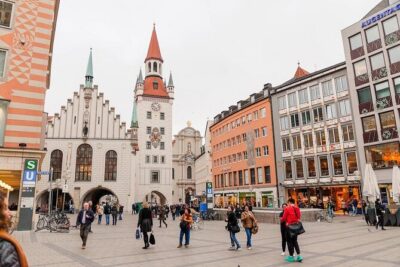 ★ 4.5Third Reich Walking Tour MunichFrom $454,291 reviews
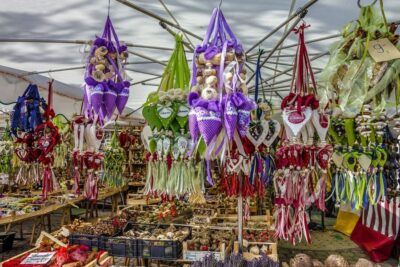 ★ 4.7Old Town & Viktualienmarkt City Walk in GermanFrom $232,304 reviews
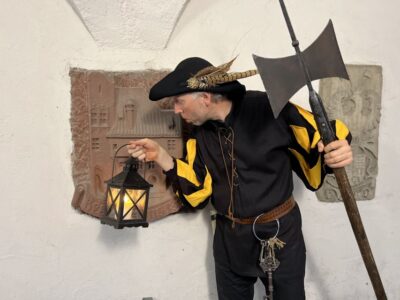 ★ 4.7Night Watchman Walking TourFrom $5302,092 reviews
 ★ 5.0Munich Ghosts and Spirits Evening Walking TourFrom $601,900 reviews
 ★ 4.5Munich Old Town Walking TourFrom $271,287 reviews
 ★ 4.6Spooky Tour of Old Town in GermanFrom $261,112 reviews
 ★ 4.7Walking Tour Old Town and ViktualienmarktFrom $282839 reviews
Browse the lists this tour appears in