
Reviewed · OLD TOWN & MARIENPLATZ WALKS
Munich – the essential walking tour
Marienplatz sets the tone for Munich fast. This private walking tour strings together the city’s major sights in a logical loop, guided by a local voice that turns stone and statues into stories. I especially like the easy meetup near the central squares and the local-guided feel that keeps the whole walk practical, not just scenic.
One thing to plan for: it’s still a walking tour. You’ll want moderate walking stamina, and it runs best in good weather, since the experience can be adjusted or refunded if conditions are poor.
In This Review
- Key things to know before you start
- A Munich tour that hits the essentials without dragging
- Meeting at Marienplatz and why the group stays small
- Frauenkirche: the brick cathedral and the devil story you can’t un-hear
- Neues Rathaus (New Town Hall): Glockenspiel, marriage stories, and a dance legend
- Old Town Hall: broken glass lore and the Moriskentanz connection
- Viktualienmarkt: tasting, smelling, and learning Munich by eating
- St. Peter’s Church: how the styles changed, plus a tower view over Munich
- Ohel Jakob Synagogue: a striking Jerusalem-like design in Munich
- How the timing makes sense in real life
- Price and value: $360.42 per group up to 10
- What the best guides do (and why it shows in the reviews)
- Who should book this Munich essential walking tour
- Should you book this Munich essential walking tour?
- FAQ
- FAQ
- What language is the tour offered in?
- How long does the Munich essential walking tour take?
- Is this tour private or shared with other groups?
- Where does the tour meet, and what time does it start?
- How many people are in a group?
- Are admission tickets included for the stops?
- Is the tour strenuous?
- What happens if the weather is poor?
Key things to know before you start
- Private for your group (up to 10): you move at a human pace and can ask questions.
- Mobile ticket included: it’s simple to show up without extra paperwork.
- A tight old-town route: major stops cluster around the core squares, so it stays easy to manage.
- Iconic architecture with real details: from brickwork at Frauenkirche to the tower view at St. Peter’s.
- Food time that feels local: Viktualienmarkt isn’t just a photo stop; it’s built for tasting.
- English-led, question-friendly pacing: guides like Michael and Mr Schwennen are often praised for keeping the timing smart.
More laps of the Altstadt and Marienplatz
- Munich: Third Reich & WWII Walking Tour★ 4.6 · 6,181 reviews
- Third Reich Walking Tour Munich★ 4.5 · 4,291 reviews
- Munich: Old Town & Viktualienmarkt City Walk in German★ 4.7 · 2,304 reviews
- Munich: Night Watchman Walking Tour★ 4.7 · 2,092 reviews
A Munich tour that hits the essentials without dragging
This is the kind of Munich walk you want when you have limited time but still want the city to make sense. In a couple of hours, you get the major landmarks most first-timers chase, plus the connective tissue: why they matter and how Munich became Munich.
The real value is the format. It’s private (up to 10 people), so you’re not stuck watching a guide talk to a crowd while you fall behind. And the itinerary is built around iconic exteriors plus a couple of stops where you get to slow down: a market tasting and a church with a tower payoff.
If you enjoy learning while you walk, this works well. It also suits you if you want good photo windows, since the schedule is paced so you can actually stop and take pictures.
Meeting at Marienplatz and why the group stays small
The experience starts at Marienplatz (80331 München), with the meetup described as easy near the central squares around Karlsplatz. Either way, you’re getting dropped into the middle of Munich’s old-town action, not trekking across town first.
Because it’s private for just your group (up to 10), the guide can tailor the rhythm. You’ll have time to ask questions and to linger without feeling like you’re holding up a busload.
You also get a mobile ticket. That matters in cities where paper tickets can turn into a scramble. Here, you’re set up to go straight from your hotel plans into the walk.
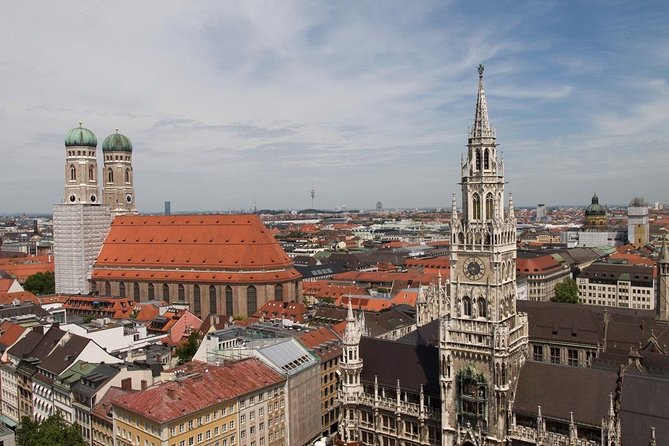
Frauenkirche: the brick cathedral and the devil story you can’t un-hear
Your first big sight is Frauenkirche, Munich’s famous brick cathedral. The tour frames it with a legendary line—something like even the devil was astonished by it—which is exactly the kind of hook that makes architecture memorable.
What I like about this stop is that it’s not only about admiring the building from outside. You get a clear introduction that helps you recognize what you’re looking at and why the church became such a signature symbol for the city.
Practical note: the admission ticket at this stop is listed as free, which makes it easy to build into your day without surprise costs. The stop is planned for about 45 minutes, giving you time to see the details without rushing.
- From Munich: Neuschwanstein & Linderhof Castle Full-Day Trip
★ 4.6 · 14,646 reviews - Neuschwanstein & Linderhof Castle-Fairytale Day Tour from Munich
★ 4.5 · 7,275 reviews - Munich: Third Reich & WWII Walking Tour
★ 4.6 · 6,181 reviews
Neues Rathaus (New Town Hall): Glockenspiel, marriage stories, and a dance legend
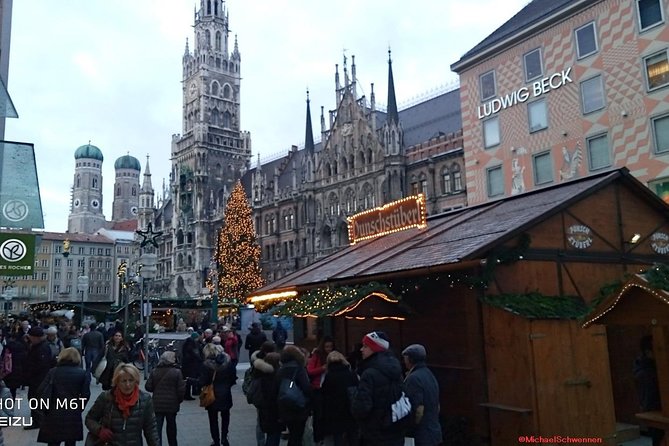
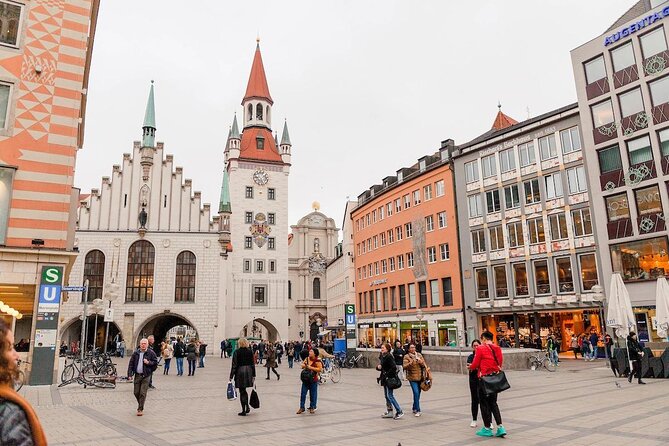
Next up is the New Town Hall—the part locals care about for its drama: the Glockenspiel. You’ll hear and see the famous figures and the story behind them, including a marriage theme and the legendary Scheffler dance.
This stop works because it teaches you how Munich turns “civic building” into theater. Even if you’ve seen photos of the Glockenspiel before, the context makes it feel like more than a timed show. It also helps you understand why this area became a gathering place, not just a landmark cluster.
Timing is reasonable—about 30 minutes—and admission is listed as free. It’s a nice break point after Frauenkirche, with the tour switching from cathedral grandeur to something more playful and rhythmic.
Old Town Hall: broken glass lore and the Moriskentanz connection

You then move to the Old Town Hall, where the tour connects civic life to darker historical moments. The highlight here includes the lore around the Night of the broken glass starting in this area, plus references to the Moriekendancer continuing since late medieval times.
This is one of those stops where the guide’s storytelling matters. If you just look at the building, it can feel like another old façade. With the tour context, it becomes a stage where Munich’s social and cultural identity shows through.
The plan for this stop is about 20 minutes, with admission listed as free. That length is enough to get the story and still keep the walk moving.
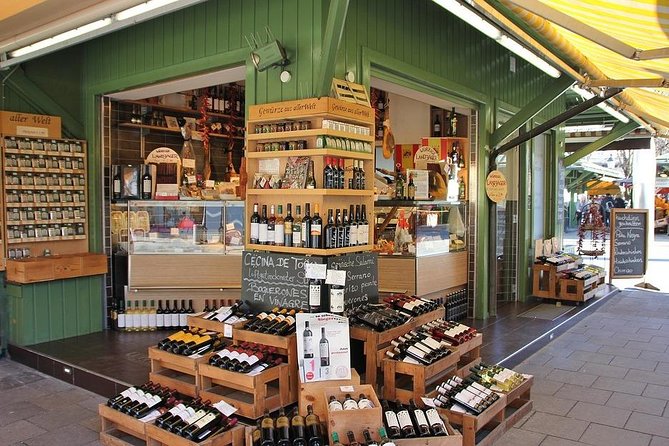
Viktualienmarkt: tasting, smelling, and learning Munich by eating
Now you get a very practical, very Munich moment: Viktualienmarkt. This is where the tour shifts from monuments to everyday life, and it’s also where it becomes easier to imagine what the city feels like on a normal day.
The tasting is part of the design. You’ll sample, smell, and enjoy local specialty items, including soup, bread, coffee, and beer. Even if you don’t go heavy on food, the sensory focus helps you remember the place.
The stop is about 1 hour, and admission is listed as free. I like this length because it gives you breathing room. You can listen to the guide, ask questions, and still have time to slow down and enjoy the market atmosphere.
St. Peter’s Church: how the styles changed, plus a tower view over Munich
Next is St. Peter’s Church, planned for about 45 minutes, with admission listed as included. This is a strong stop if you enjoy buildings that show layers of change.
The tour explains how the church began as the first church built in Munich, then moved through stylistic changes—starting in Romanesque-style influence, shifting into Gothic, and later being baroqued. You’ll hear about ceiling paintings and a great high altar, so it’s not just exterior viewing.
Then comes the payoff: the tower view. You get a chance to see the old city of Munich from above, which turns the walk into a map in your head.
This is also where the tour’s pacing shows. You get time to look around, listen, and still climb/view without feeling rushed.
Ohel Jakob Synagogue: a striking Jerusalem-like design in Munich
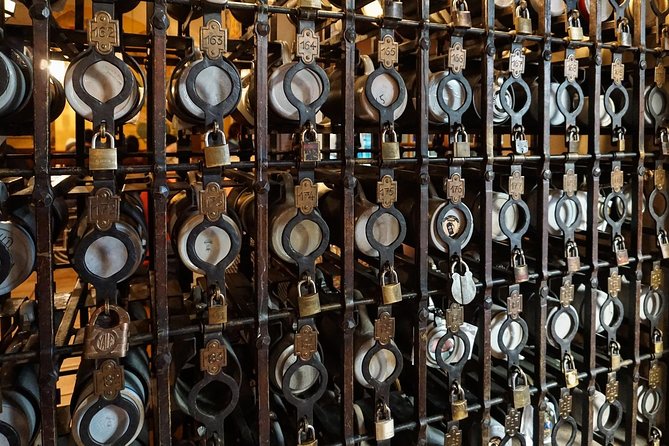
The final major stop is Ohel Jakob Synagogue at Saint Jakobs Square. It’s described as a new synagogue that resembles the Temple in Jerusalem, which gives it a specific visual identity that’s easy to spot and remember.
This stop adds another layer to the tour: Munich isn’t just churches and town halls. It has a wider set of faith and community histories, and the architecture reflects that.
Plan time here is about 15 minutes, with admission listed as free. It’s short, but it works as a respectful ending that broadens the city beyond the most famous Christian landmarks.
How the timing makes sense in real life
The tour runs about 2 to 3 hours, starting at 12:00 pm. That midday timing is useful if you want a morning free for museums or beer gardens, then an afternoon plan that doesn’t sprawl into all evening.
The stops are planned so you’re not stuck with long stretches. One review theme is that the stations feel close enough that it doesn’t turn into an exhausting hike, and that matters for comfort—especially if you have time limits.
The pacing also matters for photos and questions. Guides are praised for giving the group time to ask things and move around for pictures. If you like learning but you hate feeling herded, this style usually fits.
Price and value: $360.42 per group up to 10
The price is listed as $360.42 per group (up to 10). On paper, that looks high if you’re thinking per person, but you have to price it as a shared private experience.
Here’s the value angle: you’re paying for a single group tour with a guide focusing on your questions and your pace. If you’re traveling with family or friends, the cost can work out very reasonably compared with buying separate tickets and piecing together self-guided plans that require more planning effort.
Also, many of the stops have free admission, and St. Peter’s is included. So you’re not constantly calculating add-on costs while you’re in the middle of the walking route.
If you’re a solo traveler, it’s still worth considering if you value guided context over squeezing into a larger public group. But if you’re purely budget-first, you might compare it to self-guided options.
What the best guides do (and why it shows in the reviews)
Names that come up include Michael, and a guide referred to as Mr Schwennen. The common thread is clear: the guide’s storytelling is structured, and the pacing is controlled.
I like that the tour isn’t just a list of monuments. It’s set up with supporting materials—some guides provide printed pages and historical pictures that make the stops easier to follow. That’s especially helpful in Munich, where a lot of buildings look similar until you know what to look for.
You’ll also get practical advice. One example mentioned was guidance for breakfast around closures during New Year’s Day—exactly the kind of local, real-life help that self-guided walks can’t provide.
Who should book this Munich essential walking tour
This tour fits best if you:
- Want the core sights without building a complicated route yourself
- Like your sightseeing explained, not just pointed at
- Travel with a small group (up to 10) and prefer private pacing
- Want a market stop that’s more than a stroll
It might be less ideal if you:
- Have very limited mobility and want lots of sitting time (it’s still a walking tour)
- Are hoping for a long church interior deep-dive with extended museum-style time at every stop
Should you book this Munich essential walking tour?
If you want a clean way to understand central Munich in a short window, I think this is a strong yes. You’re getting the big symbols (Frauenkirche, New Town Hall, old civic buildings), a church with both architectural context and a tower view, and a market tasting that feels like the city living in real time.
The biggest deciding factors are simple: your comfort with a couple of hours of walking and whether your day is likely to have decent weather. If both check out, booking is an easy call.
FAQ
FAQ
What language is the tour offered in?
It’s offered in English.
How long does the Munich essential walking tour take?
The duration is about 2 to 3 hours.
Is this tour private or shared with other groups?
It’s a private tour/activity. Only your group participates.
Where does the tour meet, and what time does it start?
The meeting point is Marienplatz, 80331 München, Germany, and it starts at 12:00 pm. The tour notes an easy meetup near Karlsplatz as well.
How many people are in a group?
The tour price is listed per group, up to 10 people.
Are admission tickets included for the stops?
Most stops are listed with free admission tickets, while St. Peter’s Church is listed as admission included. (Ohel Jakob Synagogue is listed as free.)
Is the tour strenuous?
The tour recommends travelers have a moderate physical fitness level.
What happens if the weather is poor?
The experience requires good weather. If it’s canceled due to poor weather, you’ll be offered a different date or a full refund.
More Altstadt and Marienplatz Walks
Just added to the Munich Explorer notebook

Old Town & Marienplatz Walks, compared.
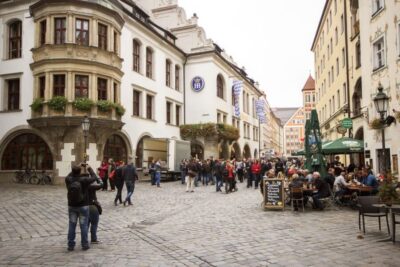 ★ 4.6Third Reich & WWII Walking TourFrom $316,181 reviews
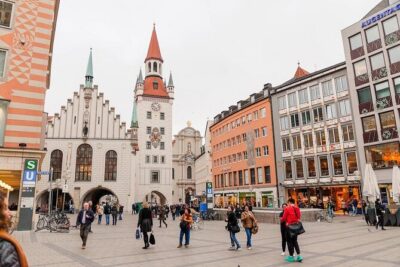 ★ 4.5Third Reich Walking Tour MunichFrom $454,291 reviews
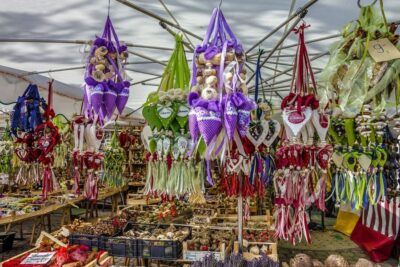 ★ 4.7Old Town & Viktualienmarkt City Walk in GermanFrom $232,304 reviews
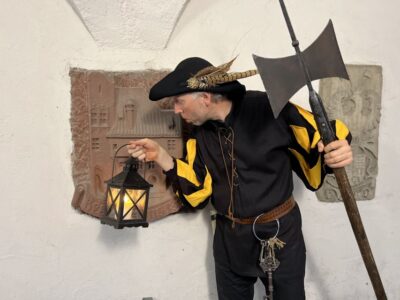 ★ 4.7Night Watchman Walking TourFrom $5302,092 reviews
 ★ 5.0Munich Ghosts and Spirits Evening Walking TourFrom $601,900 reviews
 ★ 4.5Munich Old Town Walking TourFrom $271,287 reviews
 ★ 4.6Spooky Tour of Old Town in GermanFrom $261,112 reviews
 ★ 4.7Walking Tour Old Town and ViktualienmarktFrom $282839 reviews
Browse the lists this tour appears in