
Reviewed · GHOSTS, LEGENDS & TRUE CRIME WALKS
Munich: Scary Tour with actors in GERMAN
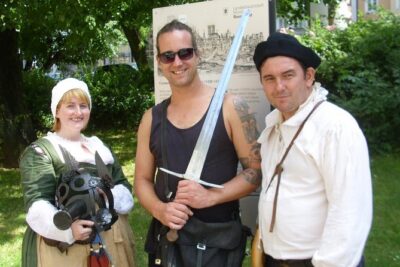
Munich gets scary after dark. This German walking tour turns historic streets into living scenes, with actors in period costume. I love how the theater pulls you along while the guide keeps it grounded in real Munich places and dates.
You’ll see the story sites people usually rush past, like the Neuhauser Tor and the route toward the execution grounds. The big win for me is the balance: grim topics are handled with clear explanations, not just shock value. If you only speak English, one possible drawback is that the tour runs in German, so jokes and details may be harder to catch.
The other thing to know is tone. You’re walking at night through episodes of witch hunts, torture, prostitution, and executions, so it’s spooky and uncomfortable in places. If you want something purely lighthearted, you might choose a different kind of evening tour.
In This Review
- Key highlights you can’t miss
- Munich’s dark theater: what this tour does better than most
- Where you meet and how to start smoothly at Karlsplatz/Stachus
- The story theme: witch hunts and punishment in Munich, explained as you walk
- Stop-by-stop: from Neuhauser Tor to the Old Town Hall’s darker rooms
- Neuhauser Tor: where people were led out
- Salzstraße and the former Jesuit school: faith, accusations, and conflict
- St. Michaelis Church: the tower collapse and blaming the accursed
- Schöner Turm and the goldsmith story: tragedy with a personal angle
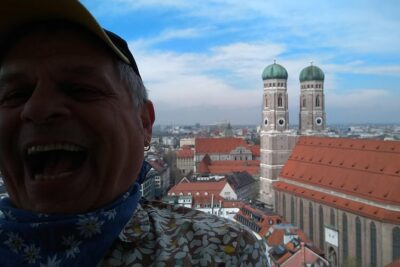
- Frauenkirche: wind, the devil, and the weirdly specific details
- Town Hall yard and St. Peter’s Church: alchemy and the daily life of a hangman
- Old Town Hall area: the former torture chamber and the red-light district history
- Acting scenes that stay funny and still teach you something
- Price and value: is $46 worth 90 minutes of spooky history?
- Language reality check: German-only storytelling
- Who should book this Munich scary tour
- Quick practical tips for a rain-or-shine night
- Should you book: my honest take
- FAQ
- How long is the Munich Scary Tour with actors in German?
- Where does the tour start?
- What language is the tour in?
- Does it run in bad weather?
- Is the tour wheelchair accessible?
- What is the price and can I cancel?
Key highlights you can’t miss
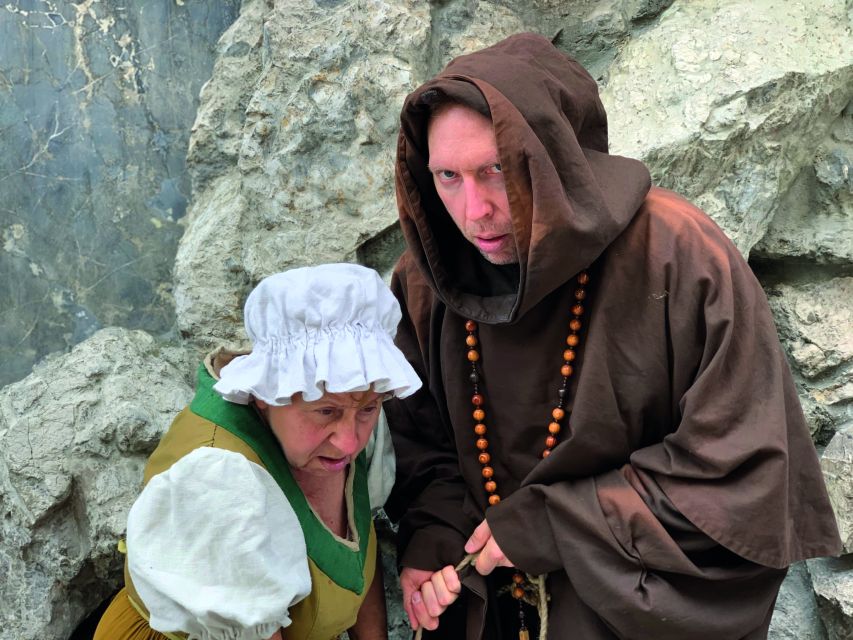
- Professional actors in historic costume who actually perform the story, not just point at buildings
- 90 minutes that move at a walking pace you can handle after dinner
- Landmarks you recognize: St. Michael’s Church, the Frauenkirche, St. Peter’s Church, and the Old Town Hall area
- A thread that connects topics like witchcraft, the wind at the Frauenkirche, and how Munich’s center changed over time
- Interactive moments where the actors may bring participants into the scene
- German-language storytelling that blends factual background with dramatic reenactment
More of old Munich darker corners and legends
- Munich Ghosts and Spirits Evening Walking Tour★ 5.0 · 1,900 reviews
- Munich: Spooky Tour of Old Town in German★ 4.6 · 1,112 reviews
- Munich: Witches and Executioners Guided Tour★ 4.7 · 353 reviews
- Mystic Munich – Sagas and Legends of the Old Town★ 4.8 · 208 reviews
Munich’s dark theater: what this tour does better than most
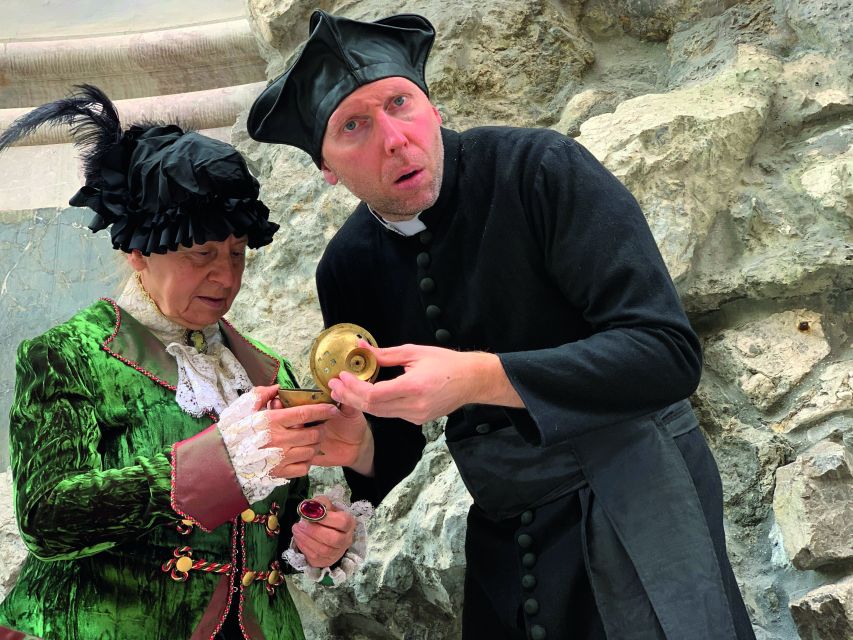
This tour works because it treats Munich like a stage, but it doesn’t forget you’re standing in the real city. After the light fades, actors step out in historic costume and dramatize the kinds of accusations and punishments that shaped life in 16th- and 17th-century Bavaria. You’re not just hearing spooky legends. You’re getting the logic behind them—what people believed, how authorities acted, and why certain sites were chosen.
I also like that the guide and cast lean into specific details. The result feels researched, not random. One scene even plays with the story of why the Frauenkirche is so famously windy, with the Prince of Darkness himself showing up. It’s dark humor, but it’s anchored to a real Munich landmark.
The content is heavy. You’ll hear about hangmen, whorehouses, witches, torture chambers, and executions. Still, the structure is readable: you’re given the “why” as you move from stop to stop. That turns the night from a collection of gory anecdotes into a coherent walk through how fear and punishment worked.
Where you meet and how to start smoothly at Karlsplatz/Stachus
You’ll want to arrive a few minutes early at Karlsplatz/Stachus, under the archway of the Karlstor. That meeting spot is central and easy to find, especially if you’re already walking around the main squares before dinner.
The tour’s identification is simple: your guide wears a big blue bag with white words that read Weis(s)er Stadtvogel. It’s a nice touch because in a crowd you won’t be guessing who’s with the group.
One practical tip: since this is an evening event, check how busy the area is around Stachus. If you’re coming from Munich’s inner transit stops, plan for a quick walk and give yourself time to regroup. You’ll start on time, and the whole point is that the darker storylines land better when you’re actually there after dusk.
The story theme: witch hunts and punishment in Munich, explained as you walk
The walking tour is built around the kinds of accusations and punishments that went far beyond one crime. The big theme is the intersection of witch hunts, prostitution, torture, and executions—and what these “professions” had in common in Munich.
A useful way to think about it: the tour uses fear as a lens. You’ll hear how people explained misfortune, illness, storms, and social deviance. You’ll also learn how authorities justified punishment as order-making, even when the accused were ordinary people.
For example, you’ll get myth-versus-reality context through questions like why witches were imagined flying on brooms. And you’ll hear why executions weren’t carried out inside town, so the city itself becomes part of the story. Then, later in the route, the tour connects these older practices to how Munich’s center changed much more recently—specifically the former red-light district disappearing from the historic center by the 1970s.
That timeline shift matters. It keeps the tour from feeling like it’s stuck in the distant past. You see how rules of public life and morality keep changing, even when the city’s stone walls stay put.
- From Munich: Neuschwanstein & Linderhof Castle Full-Day Trip
★ 4.6 · 14,646 reviews - Neuschwanstein & Linderhof Castle-Fairytale Day Tour from Munich
★ 4.5 · 7,275 reviews - Munich: Third Reich & WWII Walking Tour
★ 4.6 · 6,181 reviews
Stop-by-stop: from Neuhauser Tor to the Old Town Hall’s darker rooms
This tour strings together historic sites that make the grim theme feel real. Here’s what you’ll encounter as the story unfolds.
Neuhauser Tor: where people were led out
You begin at the Neuhauser Tor, tied to the moment when delinquents were led out toward execution. Standing there, the guide turns the location into a turning point: you’re not hearing about punishment in the abstract. You’re seeing where the city’s border and movement mattered.
It’s a strong opener because it gives you a map in your head: where life ran one way, and punishment ran another.
Salzstraße and the former Jesuit school: faith, accusations, and conflict
As you move along Salzstraße, you pass through a stretch linked to the era of witch hunts. The tour then brings you to a former Jesuit school from that period, and the story gets personal through a dramatic argument between the duchess Renata and Jesuit Father Ignatius.
That scene is important because it shows how these cases were not just “street rumors.” Institutions, power, and religious authority all played a role in shaping belief. Even if you’ve read a little about Europe’s witch-hunt years, the dramatization makes the tensions feel immediate.
St. Michaelis Church: the tower collapse and blaming the accursed
Next comes St. Michaelis Church, where the story links an unusual storm to the construction period—and to blame placed on bad women. It’s one of those moments where folklore and official explanation blur together.
The drawback for sensitive ears: some of the language is blunt. But if you’re curious about how fear worked socially, this scene gives you a clear look at how communities built explanations when they didn’t have modern science.
Schöner Turm and the goldsmith story: tragedy with a personal angle
At the Schöner Turm, you’ll hear the sad story of an unfortunate goldsmith. The tour uses that individual fate to keep the larger system from becoming only a big-picture concept.
I like this kind of storytelling because it prevents the walk from feeling like a history lecture. You get a human scale: one person caught in an accusation, and the machinery that follows.
Frauenkirche: wind, the devil, and the weirdly specific details
Then you hit the Frauenkirche, and the atmosphere changes. A strong blast of wind signals the landmark’s famously windy reputation as the Prince of Darkness steps into the story.
You’ll hear why the devil helped the master builder construct the church, along with the amusingly strange question of the devil’s shoe size. It sounds silly on paper, but it works because humor was one way people processed terrifying ideas. The point isn’t to be childish. The point is to show how stories travel through a culture.
Town Hall yard and St. Peter’s Church: alchemy and the daily life of a hangman
As you approach the town hall area, the tour shifts from myth to human roles. You’ll meet the alchemist Marco Bragadino, who is tied to the story of a supposed goldsmith warming the group with tales of his arts. It’s the kind of scene that keeps the walk lively without losing the theme.
At St. Peter’s Church, you’ll learn about everyday life of a hangman: how he looked, why he was best avoided, and how to obtain a gallows rope. This is where the tour gets especially real. It doesn’t treat execution as an abstract punishment. It shows the social consequences for the people doing it.
Old Town Hall area: the former torture chamber and the red-light district history
Finally, at the old town hall, you cross into the story of a former torture chamber. The tour doesn’t shy away from gruesome details, but it’s paced so you can keep moving.
Then the narrative ties in Munich’s later history through the Platzl, which was home to the city’s red light district until the Olympic Games in 1972. You’ll hear the background behind why that area changed, and how prostitution was no longer allowed in the historic center since the 1970s.
That end matters because it reframes everything you’ve walked past. You realize the city’s “moral rules” were enforced differently over time—and those choices shaped where people could live, work, and survive.
Acting scenes that stay funny and still teach you something
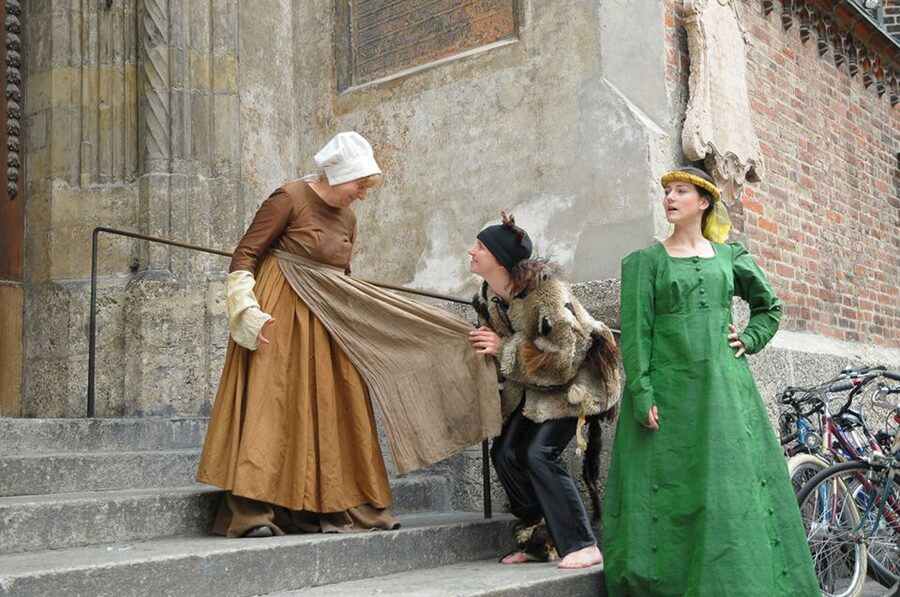
The most praised part of the experience is the acting. The performances aren’t just decorative. They interrupt the normal rhythm of a walking tour so you don’t tune out when a guide starts explaining history.
I especially like that the actors add energy to the darkest material. Scenes can be dramatic, but they’re also staged in a way that keeps the group moving through it without getting stuck. And at certain points, the actors even bring participants into the story, which is a good way to keep a 90-minute tour from turning into a march where you only listen.
That interaction can be a little uncomfortable if you hate attention. But in practice, it’s usually light enough to feel like part of the theater—not like forced embarrassment.
Price and value: is $46 worth 90 minutes of spooky history?
At $46 per person for a 90-minute walk, the value depends on what you want from a tour.
If you’re looking for a standard guided walk with facts, $46 is probably more than you’d pay. But this isn’t a typical facts-only route. You’re paying for professional actors in costume and a guided performance that ties Munich’s landmarks to a narrative theme—witch hunts, execution practices, prostitution in the old center, and the cultural stories that grew around them.
That’s why it can feel like better value than it sounds. You leave with more than dates. You leave with images: the wind cue at the Frauenkirche, the devil character, the hangman daily-life angle, and the sense of how a city enforces fear.
A practical tip on value: bring comfortable shoes and treat it like dinner-to-dessert walking. If you’ve got the energy for an evening stroll, you’ll get your money’s worth because the tour actually uses the street and the night air to make the stories land.
Language reality check: German-only storytelling
The tour guide leads in German. That’s stated clearly, and it’s the single biggest decision point for most visitors.
If your German is solid, you’ll probably enjoy the details and the humor—especially in scenes that include the devil, alchemy, and accusations framed in a dramatic dialogue style. If your German is basic or non-existent, you might still follow the landmark changes and the general theme, but you could miss nuance.
If you’re the type who enjoys history even without language mastery, you might still get a lot from the acting. But if you want to truly understand every thread, pick a German-speaking day—or a different tour in your language.
Who should book this Munich scary tour
I think this is a great fit if you like:
- Evening history walks with theater and character-driven scenes
- Munich’s old town landmarks, especially the churches and the town hall area
- Stories about how fear, religion, and public punishment shaped ordinary life
It might not be for you if:
- You want a gentle, family-friendly experience (the topics are dark)
- You dislike staged interaction
- You need a tour in English or another language
Wheelchair users should also know the tour is wheelchair accessible, and the route is built for a walking experience rather than museum seating.
Quick practical tips for a rain-or-shine night
This tour runs rain or shine, so think like a local even if you’re on vacation. Bring a small umbrella or a light rain layer so you can stay focused on the story, not your discomfort.
Because it’s a night walk, wear shoes that grip well on cobblestones. If you’re prone to cold, layer up too—church areas can feel drafty, and the story leans into windy moments at the Frauenkirche.
And if you’re joining from your hotel, plan for a short buffer time to reach Karlsplatz/Stachus under the Karlstor archway and find your guide with the big blue bag.
Should you book: my honest take
Book this tour if you want Munich after dark with professional actors, clear landmark storytelling, and a “how did this happen” explanation behind witch hunts and punishment. For $46, it’s best seen as a performance with history, not a textbook walk.
Skip it if German is a barrier, or if you need your evening drama light and carefree. The topic matter is serious, even when the acting includes humor.
If you’re excited by the idea of walking through real Munich and having it turned into a stage—devil jokes included—this one is an easy yes.
FAQ
How long is the Munich Scary Tour with actors in German?
It lasts 90 minutes.
Where does the tour start?
Meet at Karlsplatz/Stachus, under the archway of the Karlstor. Your guide wears a big blue bag with white words saying Weis(s)er Stadtvogel.
What language is the tour in?
The live tour guide speaks German.
Does it run in bad weather?
Yes. It takes place rain or shine.
Is the tour wheelchair accessible?
Yes, it is listed as wheelchair accessible.
What is the price and can I cancel?
The price is $46 per person. You can cancel up to 24 hours in advance for a full refund.
More Ghosts and Legends of Munich
Just added to the Munich Explorer notebook
Ghosts, Legends & True Crime Walks, compared.
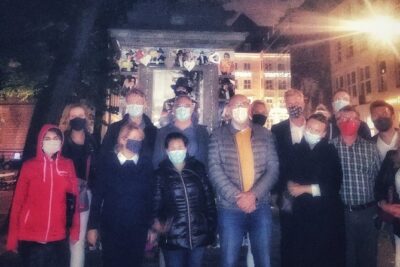 ★ 5.0Munich Ghosts and Spirits Evening Walking TourFrom $601,900 reviews
 ★ 4.6Spooky Tour of Old Town in GermanFrom $261,112 reviews
 ★ 4.7Witches and Executioners Guided TourFrom $26353 reviews
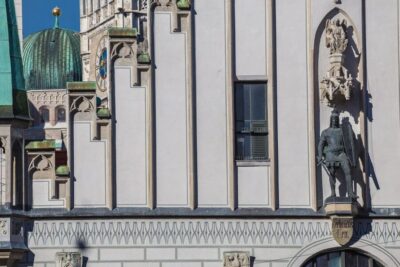 ★ 4.8Mystic Munich – Sagas and Legends of the Old TownFrom $26208 reviews
 ★ 4.7Munich – Illuminati & other Secret Societies, Tour in GermanFrom $29122 reviews
 ★ 5.0The Original True Crime Walking Tour of MunichFrom $4296 reviews
 ★ 5.0Munich Macabre Group Walking TourFrom $4271 reviews
 ★ 4.0Ghosts of Munich: The Haunted Apprentice Exploration GameFrom $719 reviews
Browse the lists this tour appears in