
Reviewed · OLD TOWN & MARIENPLATZ WALKS
Munich Private Walking Tour With A Professional Guide
Munich’s center tells its story on foot. This private walking tour is a smart way to see the historic core at a human pace, with a professional guide who keeps the big events understandable and pointed. I especially liked the Glockenspiel stop at Marienplatz, plus the way the walk links religious landmarks, royal power, and the moment Hitler tried to seize control.
There’s one practical thing to consider: this is mostly a talk-and-look experience, so if you’re stuck a bit far from the guide or your ears aren’t great in outdoor sound, you may miss finer details.
In This Review
- Key highlights to look for
- How this private Munich walk works (and why it’s worth it)
- Starting at Marienplatz: Rathaus-Glockenspiel and Mary’s Column
- St. Peter and the instant shortcut to older Munich
- Frauenkirche: double towers, the devil’s footprint, and the legends
- Odeonsplatz: beer-hall politics right where it happened
- Theatine Church: baroque gratitude tied to Prince Max Emanuel
- Ludwigstrasse and the royal-education streetscape
- Max-Joseph-Square: Opera, National Theater, and the Residence
- Hofbräuhaus: Munich’s beer-hall institution from 1589
- Viktualienmarkt: the market where local ingredients do the talking
- What I think makes the guiding style work
- Where the tour may not fit you perfectly
- Best times and smart prep tips
- Should you book this Munich private walking tour?
- FAQ
- How long is the Munich private walking tour?
- What’s the group size for this private tour?
- What language is the tour offered in?
- Is the tour wheelchair-friendly or does it require stairs?
- Is transportation included?
- What’s included in the price?
- Are entrance fees included?
- Where does the tour start?
- What should I bring for the walk?
- Can I cancel for a full refund?
Key highlights to look for
- Marienplatz and Rathaus-Glockenspiel: 43 bells, 32 figures, and two set-piece moments tied to the hour
- St. Peter and Frauenkirche views: the oldest Catholic church nearby, then the cathedral’s famous double towers
- Odeonsplatz context for 1923: the Beer-Hall-Putsch story told in the exact place it unfolded
- Ludwigstrasse and State Library area: neoclassical street sights plus the Gate of Victory
- Residence and Hofbräuhaus pairing: royal Munich, then the beer-hall institution from 1589
- Viktualienmarkt food-market stop: a practical break where local ingredients are front and center
More laps of the Altstadt and Marienplatz
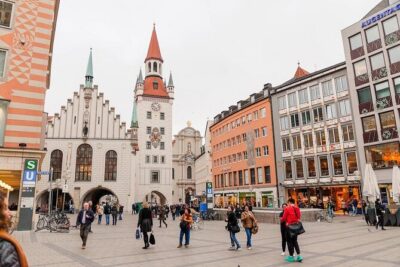
- Munich: Third Reich & WWII Walking Tour★ 4.6 · 6,181 reviews
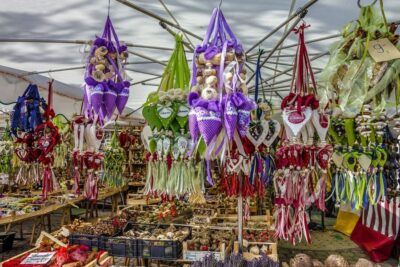
- Third Reich Walking Tour Munich★ 4.5 · 4,291 reviews
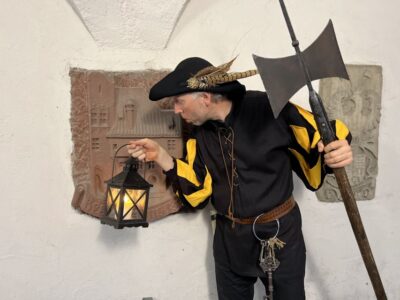
- Munich: Old Town & Viktualienmarkt City Walk in German★ 4.7 · 2,304 reviews
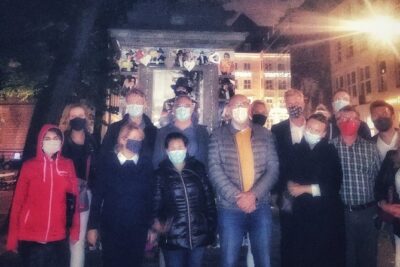
- Munich: Night Watchman Walking Tour★ 4.7 · 2,092 reviews
How this private Munich walk works (and why it’s worth it)
This is a private walking tour for up to 15 people, guided in English. That group size matters. In a large group, you spend time trying to hear and find the guide again. Here, you’re meant to stay together, and you can ask questions without feeling like you’re slowing everyone down.
The walk is rated easy, and the tour doesn’t require transportation. That’s a big deal in Munich’s center, where trams and walking can both be quick, but also easy to turn into confusion if you’re trying to navigate while reading street signs. Two hours is long enough to cover a meaningful slice of the old city, but short enough that you’re not dragging your feet by the time you reach the best viewpoints.
Price is listed as $305.11 per group. That sounds steep until you do the math. If you have a group of 6, you’re around $50 per person. If you have 10, it drops to about $31 each. With a full group, it can be a practical alternative to paying for separate tickets to museums you only partly care about. And you’re buying something you can’t “see later” on your own: a guide’s explanation of what you’re standing in front of.
Starting at Marienplatz: Rathaus-Glockenspiel and Mary’s Column
Your tour starts at the Fischbrunnen at Marienplatz (Marienplatz 8). This is prime location: you’ll be surrounded by the city’s civic heartbeat, and it’s easy to understand why Munich’s locals gather here.
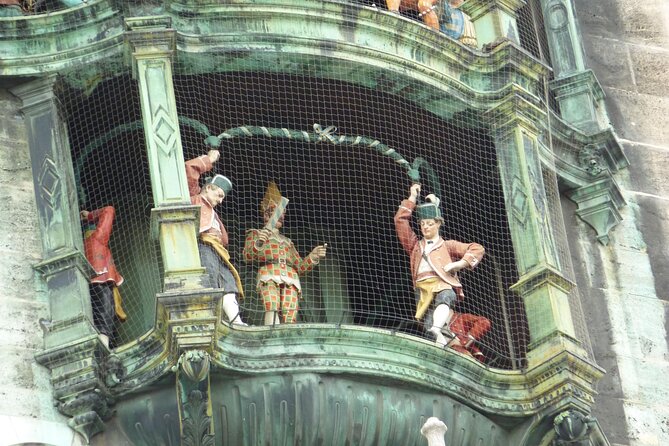
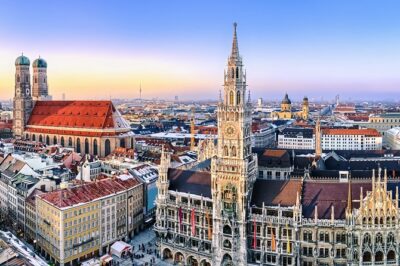
The first anchor is Rathaus-Glockenspiel, the clock tower tied to the Old and New Town Hall complex. This isn’t just a pretty facade. The tower has 43 bells and 32 figures, and your guide walks you through what’s happening when the wooden figures perform at fixed hours. Even if you don’t catch the full show, the explanation helps you read the details you’d otherwise glide past.
Right in the area, you’ll also hear about the square’s name connection, including Mary’s Column, which gave Marienplatz its meaning. It’s a neat reminder that “historic center” doesn’t just mean monuments. It also means story layers—religion, civic pride, and public drama all piled into one square.
St. Peter and the instant shortcut to older Munich
After Marienplatz, the walk moves you toward St. Peter, noted as the oldest Catholic church in Munich, and it’s close enough that the change feels immediate. This is one of those small-but-smart routing choices: you see the famous civic clock first, then you get grounded in the older spiritual anchor nearby.
If you like travel that teaches you how to look, this part helps. Instead of bouncing randomly between famous stops, you’re building a mental map: civic life here, religious roots nearby, and then the larger story expanding outward.
- From Munich: Neuschwanstein & Linderhof Castle Full-Day Trip
★ 4.6 · 14,646 reviews - Neuschwanstein & Linderhof Castle-Fairytale Day Tour from Munich
★ 4.5 · 7,275 reviews - Munich: Third Reich & WWII Walking Tour
★ 4.6 · 6,181 reviews
Frauenkirche: double towers, the devil’s footprint, and the legends
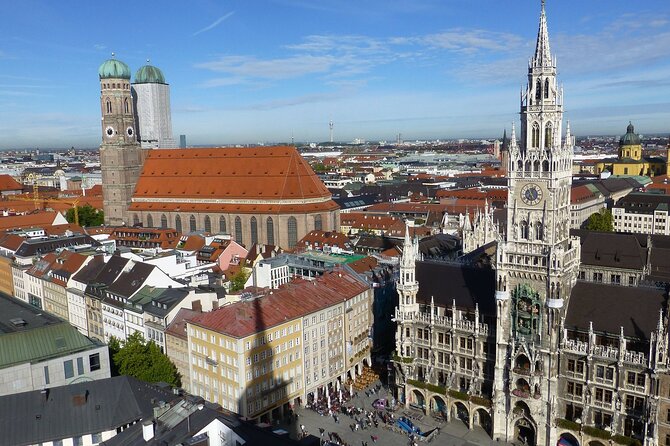
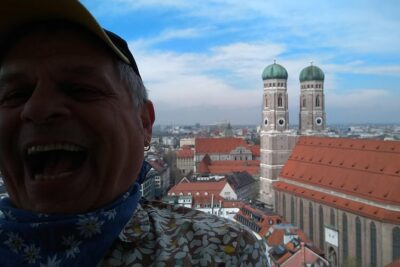
Next comes a viewpoint toward Frauenkirche, Munich’s big cathedral. You’ll get an angle on the two towers, which are often the first thing people notice on postcards. Your guide also points out the “footprint of the devil” detail and shares the dark legend wrapped around it.
This stop is valuable because it trains you to notice what locals notice—small symbols, not just large buildings. And it gives you a story lens for later on the tour, when the “myth vs. power vs. politics” theme keeps appearing in different forms.
Practical tip: for the best view, let the guide pick the spot. Trying to squeeze around for a photo can make you lose the explanation.
Odeonsplatz: beer-hall politics right where it happened
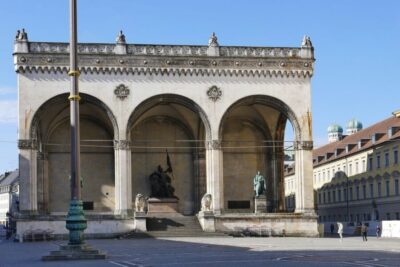
One of the most gripping segments is at Odeonsplatz, where the tour focuses on the Beer-Hall-Putsch. You’ll pass the key surroundings while your guide explains that this was the night when about 2,000 men, led by Adolf Hitler, marched toward the center of Munich trying to seize power.
You don’t just get the lesson. You get the place. That’s why this tour feels different from a generic “Hitler in Munich” story you might hear somewhere else. It’s still heavy material, but the framing stays grounded in geography, so your brain can place events in real streets instead of vague dates.
Theatine Church: baroque gratitude tied to Prince Max Emanuel
As you keep moving, you’ll see the Theatine Church, a baroque building connected to the Elector of Bavaria Ferdinand Maria and his wife. The guide explains it was built as a thank-you gesture for the birth of Prince Max Emanuel, the long-awaited heir to the Bavarian crown.
This is a good example of why private guiding can add value. The exterior alone might look like another impressive church stop. Here, it becomes a reminder of dynasties, succession anxiety, and the way architecture was used to signal legitimacy and gratitude.
Ludwigstrasse and the royal-education streetscape
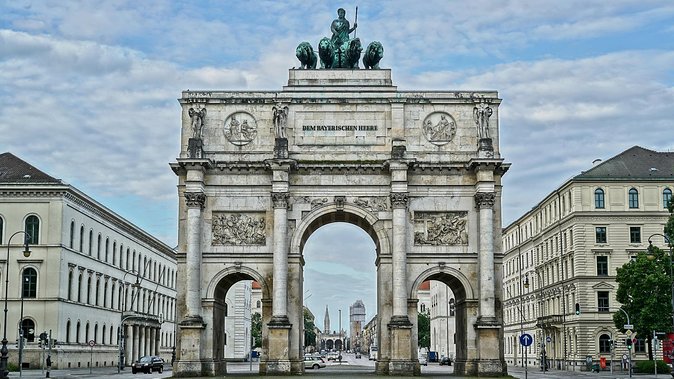
From there, the walk reaches Ludwigstrasse, described as neoclassical styled. This street is about institutions and authority. Your guide highlights sights along it, including the State Library and the oldest university of Munich, and also the Gate of Victory.
This segment is for you if you like your sightseeing to make sense. The tour doesn’t treat each building like an isolated postcard. It groups them into themes: education, state, public memory, and the kinds of monuments that say power belongs to a certain class of people.
Also, it’s a good break from the constant “big cathedral, big church” feeling. Here you get an urban, civic rhythm.
Max-Joseph-Square: Opera, National Theater, and the Residence
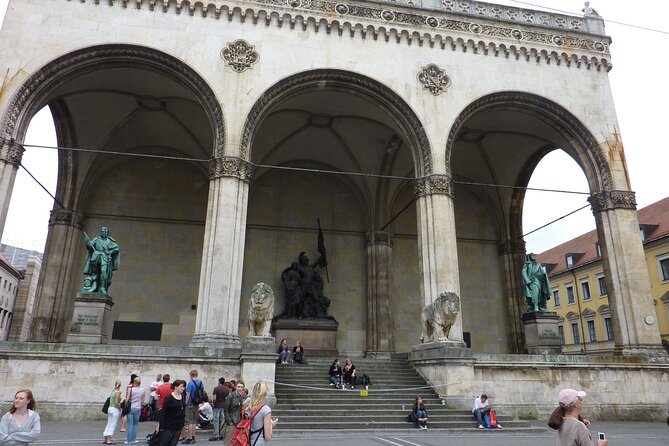
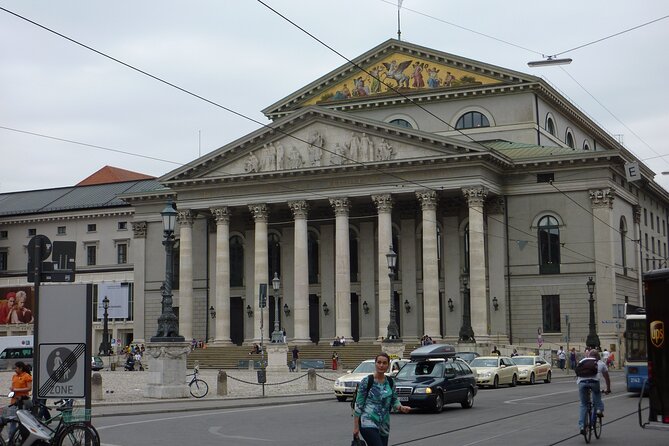
As the tour heads back toward the center, you reach Max-Joseph-Square. This is where you get a wide-angle sense of Munich’s grand cultural stage: views of the Opera, the National Theater, and then the Residence.
The Residenz is the former palace of the Bavarian monarchs, and it’s described here as the largest palace in all of Germany. Even if you don’t go inside (entrance fees aren’t included), standing near it is enough to feel the scale, and the guide’s context helps you understand why this kind of palace was more than a home. It was governance made visible.
This is also a spot where you may want to pause for a moment and just look. The buildings in this part of town are designed to be seen.
Hofbräuhaus: Munich’s beer-hall institution from 1589
Next is the Hofbräuhaus, established in 1589. Your guide frames it as the mothership of beer halls worldwide—an opinion, yes, but it also matches why so many people come to Munich specifically for this beer-hall mythology.
Even if you don’t plan to spend much time ordering drinks, this stop is worth it. It brings the tour from court life and political history into the social fabric of the city. Munich isn’t only about power; it’s also about public gatherings and traditions that outlast the rulers.
A practical thought: if you want to eat at the end of the tour, decide early. Hofbräuhaus is famous, but it can be busy, so plan your timing if you’re traveling in peak hours.
Viktualienmarkt: the market where local ingredients do the talking
The last major stop is Viktualienmarkt, a public food market. Your guide points out that it offers fresh local products, and this is a great way to end a history-heavy walk with something practical.
Markets also work like a reset button for your brain. You’ll stop seeing the city as a list of landmarks and start seeing it as a place where locals buy lunch and dinner. If you like photography, it’s also where the colors and textures feel alive without needing special lighting.
If you still have energy after the tour, this is where you can turn your walk into a real meal plan.
What I think makes the guiding style work
This tour is built around a key promise: you get a guide who stays with your group only. That means you’re not stuck with a rigid script you have to follow even if you’re more interested in, say, royal Munich than 20th-century politics.
The tour also supports customization on the spot. That’s important because the Munich city center can feel like it has “too many famous stops.” If your group wants more time on churches, or wants more detail on beer-hall history, you can steer the focus—within reason.
I’ve also seen this tour paired with guides who take a playful approach to storytelling. Guides like Tom Lipton and Peter are specifically mentioned by name in feedback, with praise for knowledge, accommodation, and a sense of humor. That style can matter. When the facts are good but the delivery is flat, history can feel like homework. When the guide knows when to be witty and when to slow down, the whole walk feels easier.
Where the tour may not fit you perfectly
This walk hits a lot of Munich’s big-name landmarks, but it still is a 2-hour experience. If you want a long deep museum-style visit, you’ll likely feel it’s too brief. And since entrance fees aren’t included, you should expect that some stops will be more about seeing and hearing than going in.
Also, because the walk is voice-driven, your ability to hear matters. Choose a spot where you’re close enough to catch details, especially around the more complex political explanations.
Best times and smart prep tips
No exact start time is given, so I can’t tell you which hour gets you the clock performance. But since the Glockenspiel figures perform at fixed hours, try to plan your schedule so you’re not late for the start. If you’re arriving early, take a quick look at Marienplatz from where you’ll likely meet the group, so you’re not spending your first 10 minutes searching.
Pack for an outdoor walking tour in central Munich: light layers, water, and comfortable shoes. The tour is easy, but cobblestones and city sidewalks add up.
If you’re the kind of traveler who likes questions, bring them. This tour explicitly invites you to ask as many questions as you like, and your guide can adjust on the fly.
Should you book this Munich private walking tour?
Book it if you want:
- A guided path through the historic core without juggling public transport
- A tour that connects major sites to the stories behind them, including monarchy and the Beer-Hall-Putsch
- A group-focused experience where questions are welcome and timing stays on your side
Skip it if you:
- Only care about interiors and long ticketed museum time
- Need a quieter, low-speech format (this is meant to be listened to)
- Prefer to wander freely without a planned route through Marienplatz, cathedral viewpoints, and the central cultural/royal belt
If your goal is to get your bearings fast in Munich and understand what you’re seeing, this is a strong pick—especially because it pairs the “wow” stops (Glockenspiel, Frauenkirche, Residence) with the social and everyday ending at Viktualienmarkt.
FAQ
How long is the Munich private walking tour?
It lasts about 2 hours.
What’s the group size for this private tour?
It’s a private tour for your group, with pricing listed per group up to 15 people.
What language is the tour offered in?
The tour is offered in English.
Is the tour wheelchair-friendly or does it require stairs?
The activity level is listed as easy, and it’s a walking tour with no transportation needed, but accessibility details beyond that aren’t provided.
Is transportation included?
No. The tour is designed so that no transportation is needed.
What’s included in the price?
You get a private guided tour with a local guide who will be with your group only. Customizing on the spot is also possible.
Are entrance fees included?
No. Entrance fees aren’t included.
Where does the tour start?
The start point is Fischbrunnen, Marienplatz 8, 80331 München, Germany.
What should I bring for the walk?
Comfortable walking shoes and layers for outdoor weather are a good idea, since it’s an easy walking tour in the city center.
Can I cancel for a full refund?
Yes. You can cancel up to 24 hours in advance for a full refund. If you cancel less than 24 hours before the start time, the amount paid won’t be refunded.
More Altstadt and Marienplatz Walks
Just added to the Munich Explorer notebook

Old Town & Marienplatz Walks, compared.
 ★ 4.6Third Reich & WWII Walking TourFrom $316,181 reviews
 ★ 4.5Third Reich Walking Tour MunichFrom $454,291 reviews
 ★ 4.7Old Town & Viktualienmarkt City Walk in GermanFrom $232,304 reviews
 ★ 4.7Night Watchman Walking TourFrom $5302,092 reviews
 ★ 5.0Munich Ghosts and Spirits Evening Walking TourFrom $601,900 reviews
 ★ 4.5Munich Old Town Walking TourFrom $271,287 reviews
 ★ 4.6Spooky Tour of Old Town in GermanFrom $261,112 reviews
 ★ 4.7Walking Tour Old Town and ViktualienmarktFrom $282839 reviews
Browse the lists this tour appears in