
Reviewed · OLD TOWN & MARIENPLATZ WALKS
Munich Old Town – Guided Walking Tour in English
Munich Old Town tours work best when they do two things at once: guide your feet and explain what you’re looking at. This one links Munich’s big public squares, Hofbräuhaus, and the royal-era sights into a storyline you can actually remember.
I particularly like the way it pairs Bavarian beer culture with the political-and-historical backstory behind the city’s landmarks. I also like that the guide points out what matters in places like Marienplatz and the Wittelsbach sites, not just what’s pretty on a postcard.
The one potential drawback: the route includes darker material tied to Nazism and the Beer Hall Putsch, so if you want a lighter day with zero heavy history, you’ll need to mentally prepare.
In This Review
- Key highlights
- Meeting Point at St. Peter Church: How the Tour Starts Smoothly
- Marienplatz and the Town Halls: Munich’s Center, Explained in Human Scale
- Hofbräuhaus: Bavaria’s Beer Culture Beyond the Costume
- Odeonsplatz and the National Theatre: Squares That Signal Power
- Max Joseph Platz and Royal Residences: Wittelsbach Power, Made Visible
- Munich’s Dark Chapter: Beer Hall Putsch and Nazism, With Care
- The Carillon Knights Moment: A Quick Quirk to Know About
- Duration and Pace: Getting a First-Timer Overview Without Burning a Day
- Price and Value: Why $29 Can Be Fair in Munich
- Who This Tour Fits Best (and Who Might Want a Different One)
- Should You Book This Munich Old Town Walking Tour?
- FAQ
- Where is the meeting point for the Munich Old Town guided walking tour?
- How long is the tour, and what language is it in?
- How much does the tour cost?
- Is hotel pickup or drop-off included?
- What sights and themes will I see during the walk?
- Do I need to pay extra on the day?
- Can I cancel for a refund?
Key highlights
- Hofbräuhaus focus: beer culture explained through how Bavaria developed its brewing identity
- Marienplatz stop: the heart of Munich with both New and Old Town Hall in view
- Royal Bavaria theme: time at Max Joseph Platz and the residences of Bavarian kings
- Square-to-square flow: Odeonsplatz and nearby cultural buildings stitched into the story
- Sensitive, real-history framing: the tour covers the Beer Hall Putsch and the NSDAP’s early roots
More laps of the Altstadt and Marienplatz
- Munich: Third Reich & WWII Walking Tour★ 4.6 · 6,181 reviews
- Third Reich Walking Tour Munich★ 4.5 · 4,291 reviews
- Munich: Old Town & Viktualienmarkt City Walk in German★ 4.7 · 2,304 reviews
- Munich: Night Watchman Walking Tour★ 4.7 · 2,092 reviews
Meeting Point at St. Peter Church: How the Tour Starts Smoothly
Meet at the main gate of St. Peter Church, and look for the guide with the yellow umbrella of Walkative. That small detail matters more than you’d think in a place like Munich’s Altstadt, where streets branch quickly and you don’t want to waste the first ten minutes hunting for your group.
From the start, the tour feels designed to keep you moving. It’s only 150 minutes, so you get a brisk overview rather than a slow meander. You also avoid the most common first-timer mistake in Munich: spending too long at one big photo spot and then rushing through the rest without context.
Because there’s no hotel pickup or drop-off included, you’ll be happiest if you can reach central Munich on your own. The upside is you start right where the city’s story is strongest, instead of being dropped off three neighborhoods away.
Marienplatz and the Town Halls: Munich’s Center, Explained in Human Scale
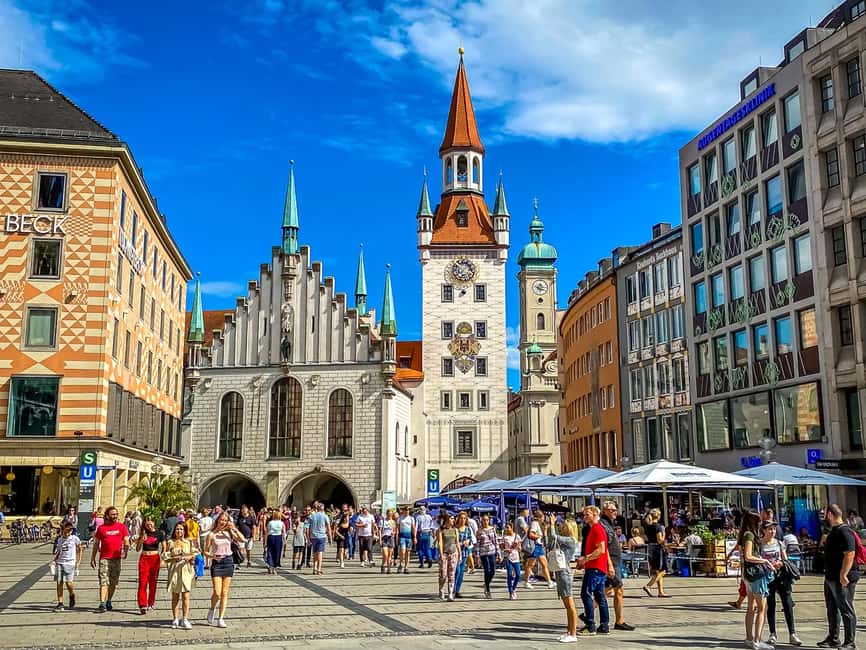
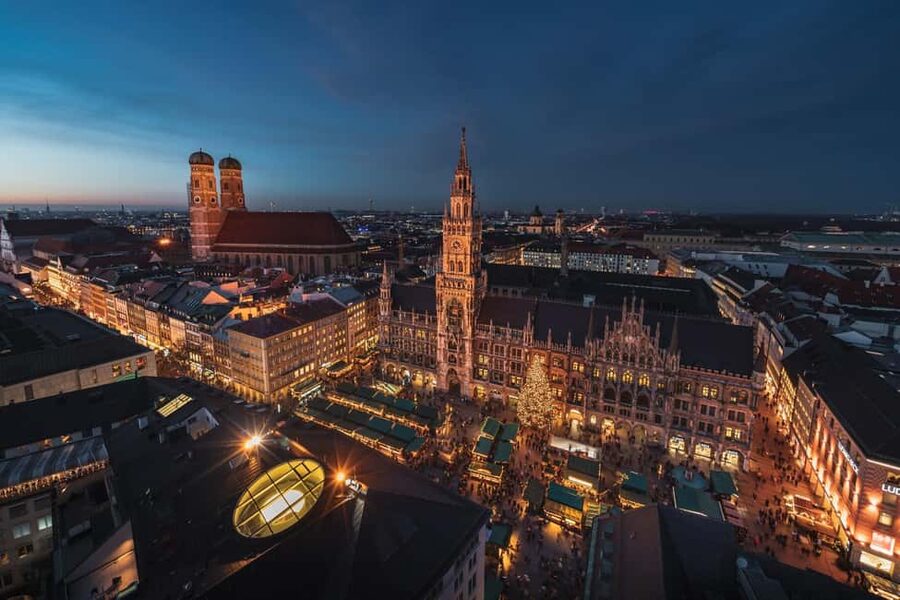
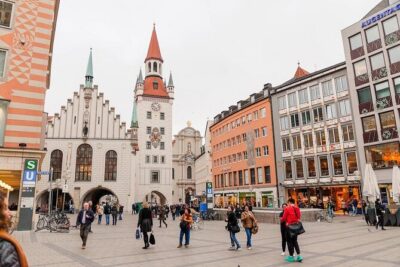
Marienplatz is Munich’s “everyone meets here” place, and this tour uses it like a reference point. You’ll see the New Town Hall and the Old Town Hall, and the guide’s job is to make the buildings feel connected to everyday life in the city—not like random architecture trivia.
Why this stop works: Marienplatz isn’t just one monument. It’s an entire operating system for Munich. You’ll start to understand how public space, civic pride, and tourism all overlap here. Once you “get” Marienplatz, the next squares feel easier to navigate because you have a mental map.
If you’re the type who likes to photograph facades, bells, and tower lines, you’ll appreciate the way the tour keeps you in the exact zones where those shots make sense. If you hate circling crowds, you might find this area busy at times—so wear comfortable shoes and plan to move with the flow.
Hofbräuhaus: Bavaria’s Beer Culture Beyond the Costume
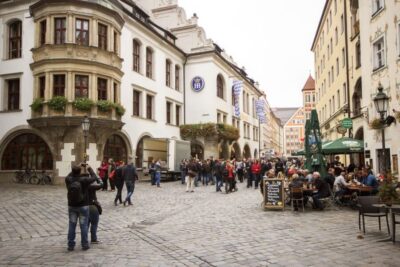
Hofbräuhaus is the tour’s standout beer moment, and it isn’t treated like a theme-park stop. The guide explains how Bavaria developed its beer culture, which helps you move beyond the usual Oktoberfest stereotypes.
You’ll also get the kind of Bavarian trivia that makes future visits more fun. In feedback, people mention stories like Aloisius, the character associated with the Hofbräuhaus atmosphere, plus the way Munich’s symbols show up in logos and emblems. That’s valuable because it trains your eye: you start noticing the same visual references outside the brewery too.
This stop also makes the city make sense. Munich people talk beer like it’s part of civic identity, not just nightlife. When a guide ties the culture to history, you understand why you’ll keep hearing the same words and seeing the same traditions across Bavaria.
Practical note: Hofbräuhaus is a real working landmark, which means there can be crowd noise and movement. The tour structure helps you keep your bearings, but you’ll still want to accept that you’re in a popular place.
- From Munich: Neuschwanstein & Linderhof Castle Full-Day Trip
★ 4.6 · 14,646 reviews - Neuschwanstein & Linderhof Castle-Fairytale Day Tour from Munich
★ 4.5 · 7,275 reviews - Munich: Third Reich & WWII Walking Tour
★ 4.6 · 6,181 reviews
Odeonsplatz and the National Theatre: Squares That Signal Power
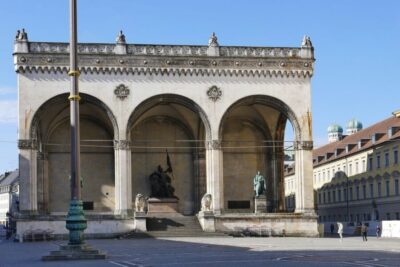
From beer halls to grand civic culture, the tour shifts gears at Odeonsplatz and nearby cultural buildings like the National Theatre and State Opera. This is where Munich stops feeling like a walkable museum and starts acting like a city with status.
Why I like this part of the route: it shows how Munich’s “show” isn’t random. German cities often use plazas and major buildings to declare what they value—religion, monarchy, arts, industry, and public memory. Odeonsplatz helps you see that pattern quickly.
If you’re interested in how cities build messages with space—where people gather, where ceremonies happen, where crowds are directed—these squares will give you useful clues for your independent sightseeing afterward. Even if you don’t know the details yet, the guide’s storyline helps you understand why these locations matter.
Max Joseph Platz and Royal Residences: Wittelsbach Power, Made Visible
A big theme here is Bavaria’s long run under the Wittelsbach family—about seven centuries—and you’ll feel that theme most strongly around Max Joseph Platz and the residences of Bavarian kings. This is where you go from “Munich is famous” to “Munich has a timeline.”
The value is in how the guide connects ruling families to what you see on the street. When you understand that Munich’s grandeur wasn’t accidental, you stop treating palaces and residences as separate sights. Instead, they become pieces of the same political story.
You’ll also have a better sense of why certain areas look ceremonial and why others feel more everyday. That knowledge makes your next day easier. You’ll know what to prioritize and you’ll also know what to skip if you only have time for one palace visit.
One more practical perk: this area is ideal for planning. If you’re the type who likes to map out your next stops while you still have a guide’s context in your head, this part of the walk is a great time to ask questions.
Munich’s Dark Chapter: Beer Hall Putsch and Nazism, With Care
This tour doesn’t avoid the darker side of Munich’s history. You’ll hear about the Beer Hall Putsch in 1923, the imprisonment that followed for Adolf Hitler, and the fact that Mein Kampf was written during that period. The guide also covers the birthplace of the NSDAP and how those early moves led to the wider catastrophe of World War II.
You’ll also learn that Munich wasn’t only about Nazism. The tour references Joseph Ratzinger, later Pope Benedict XVI, and notes he worked while he was still an archbishop.
This is where the guide’s handling matters. Multiple accounts highlight that complex events are addressed in a sensitive way. You’ll want a guide who can keep the tone respectful while still explaining why places matter.
Possible drawback (worth repeating): one review-style comment notes that the tour could feel too war-related for some people. So if you came for a mostly cheerful walk, you might wish for a higher proportion of light cultural history. On the flip side, if you want the full Munich story—beer culture and political reality—this approach is likely exactly what you’re looking for.
The Carillon Knights Moment: A Quick Quirk to Know About
One specific thing you might find disappointing is the stop connected to a show of knightly figure fights in the city carillon. In the tour’s framing, it’s treated as an attraction, but not everyone is impressed by it.
Here’s how I’d think about it: it’s still worth seeing once, if only because it’s part of Munich’s public character and tradition. But if you’re the type who wants only major monuments, this element is the one to keep your expectations realistic about.
If you’re traveling with friends who like quirky local details, this might be a fun beat. If your goal is maximum “must-see” impact, treat it as a short scene rather than the highlight of the day.
Duration and Pace: Getting a First-Timer Overview Without Burning a Day
150 minutes is an efficient length. You’ll see major Old Town anchor points without losing a whole afternoon. That matters in Munich, where your schedule can get swallowed by museums, beer stops, and second thoughts about where to eat.
The pacing likely works best for people who:
- want a strong introduction before picking restaurants and museums
- like a guided route that prevents “where are we?” moments
- prefer walking tours with context, not just directions
And it may not suit you as well if you’re looking for long stops at churches or you want deep time in one building. This isn’t a slow, sit-down museum visit. It’s a moving story.
Group style is another factor. The tour joins a general pay-as-you-wish walking tour setup. Importantly, the amount you pay covers a reservation fee and the guide’s payment in advance. No extra payment is required on the spot. If you’d rather go private or smaller, the supplier can help you organize that—but you’d need to ask beforehand.
Price and Value: Why $29 Can Be Fair in Munich
At $29 per person for 150 minutes, you’re paying for more than walking. You’re paying for a guide who connects sites to the city’s larger story—plus that narrative structure people consistently praise.
In practical value terms, here’s what you get for that money:
- a route that hits core Old Town sights (so you don’t waste your first day guessing)
- history context you’d likely miss if you self-walk with no guide
- help translating Bavarian symbols and culture, not just pointing at them
- a guide who can answer questions while you’re still nearby the relevant landmarks
For first-time visitors, this price can be a fast shortcut. You’ll often spend far more than $29 on one wrong meal decision, one museum that doesn’t match your interests, or one wasted afternoon. A good guide helps prevent those misfires.
The bigger question isn’t whether $29 is “cheap.” It’s whether you’ll use the context. If you enjoy stories—royalty, beer, and the complicated 20th century—this is strong value.
Who This Tour Fits Best (and Who Might Want a Different One)
This Munich Old Town tour fits best if you:
- want a guided walk in English with major sights like Marienplatz and Hofbräuhaus
- care about how culture and history connect
- like asking questions and getting recommendations
In reviews, guides like Alex, Jean, Noel Byrnes, Patrick, Lima, Charles, Karl, Patricia, and others are mentioned. People also note humor and patient, engaging storytelling, plus multilingual support in some cases (like Jean being able to work across multiple languages).
Who might reconsider: if you want a purely light, beer-and-tradition day with no heavy political history, the tour’s inclusion of Nazi-era events may feel like too much. And if you hate walking in winter weather, remember you’ll be out on the street for the full 150 minutes.
Should You Book This Munich Old Town Walking Tour?
I’d book it if this is your first real day in Munich and you want your bearings fast. The blend of Marienplatz, Hofbräuhaus, royal-era sights, and real historical context gives you a city “frame” that makes the rest of your trip easier and more meaningful.
I’d skip it (or choose a different style) if your trip is time-tight and you want only cheerful, low-context sightseeing. In that case, you might prefer a tour that keeps history lighter and leaves the harder material for museums where you can control the pacing.
If you’re on the fence, consider your mood. This tour is built for people who want to understand Munich—not just look at it.
FAQ
Where is the meeting point for the Munich Old Town guided walking tour?
You meet at the main gate of St. Peter Church. The guide will be waiting with the yellow umbrella of Walkative.
How long is the tour, and what language is it in?
The tour lasts 150 minutes. It’s a live guided tour in English (and German is also listed as available).
How much does the tour cost?
The price is $29 per person.
Is hotel pickup or drop-off included?
No. Hotel pickup and drop-off are not included.
What sights and themes will I see during the walk?
You’ll see major Old Town sights such as Marienplatz (New and Old Town Hall), Hofbräuhaus, Odeonsplatz, the National Theater and State Opera, Max Joseph Platz, and the residences of Bavarian kings. The tour also covers both light and dark pages of history, including the Beer Hall Putsch era and the NSDAP, plus other historical context.
Do I need to pay extra on the day?
The tour operates as a general pay as you wish walking tour setup. The amount you pay covers a reservation fee and the guide’s payment in advance, and no more payment is required from you on the spot. If you want a smaller private tour, you should contact the supplier before booking.
Can I cancel for a refund?
Yes. Free cancellation is available up to 24 hours in advance for a full refund.
More Altstadt and Marienplatz Walks
Just added to the Munich Explorer notebook

Old Town & Marienplatz Walks, compared.
 ★ 4.6Third Reich & WWII Walking TourFrom $316,181 reviews
 ★ 4.5Third Reich Walking Tour MunichFrom $454,291 reviews
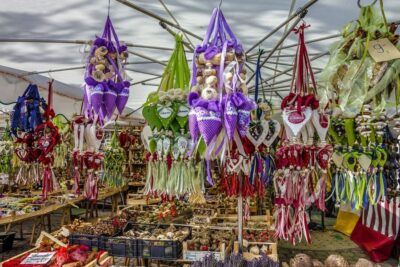 ★ 4.7Old Town & Viktualienmarkt City Walk in GermanFrom $232,304 reviews
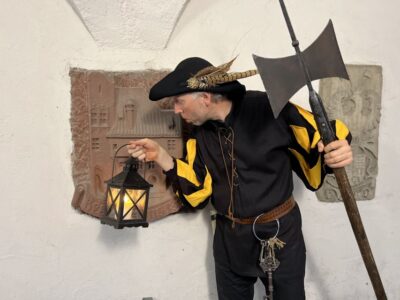 ★ 4.7Night Watchman Walking TourFrom $5302,092 reviews
 ★ 5.0Munich Ghosts and Spirits Evening Walking TourFrom $601,900 reviews
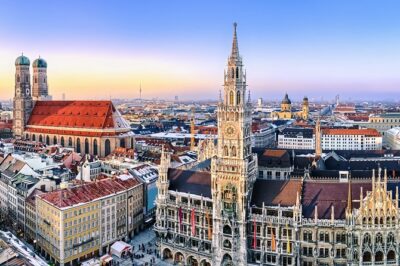 ★ 4.5Munich Old Town Walking TourFrom $271,287 reviews
 ★ 4.6Spooky Tour of Old Town in GermanFrom $261,112 reviews
 ★ 4.7Walking Tour Old Town and ViktualienmarktFrom $282839 reviews
Browse the lists this tour appears in