
Reviewed · OLD TOWN & MARIENPLATZ WALKS
Oberammergau Private Guided Walking Tour
Oberammergau packs 2,000 years into 90 minutes. I love how the guide turns the village into a living timeline, from an early monastery linked to Ettal to the Passion Play origins that shaped the town’s identity. You’ll also get a close-up sense of why wood carving and painted house fronts matter here, not just as decoration but as tools pilgrims carried outward.
The best part is the tone: personal and story-driven. In my favorite moment, it felt like you weren’t reading about history; you were walking through it. One heads-up: this is a 90-minute walking experience, so wear comfortable shoes and plan on moving through village streets at a steady pace. (Entrance fees are not included, though most of what makes Oberammergau special is right outside.)
If you get a guide like Ekaterina, you’re in good hands. One recent small-group tour highlighted how she paired clear storytelling with easy interaction, bringing the whole place to life for just a few people.
In This Review
- Key highlights I’d circle first
- Meeting Oberammergau at the tourist office on Eugen-Papst-Straße
- Ettal Monastery roots and the pilgrim path to Rome
- Wood carving isn’t decoration here; it’s a centuries-long system
- Märchenhäuser and the fairy-tale thread from the Grimm era
- The 30 Years War, Black Plague, and why the Passion Play started
- WWII secrets you can still sense in the village corners
- How a guide customizes in real time (and how to take control)
- Price and value for a private group up to 15
- Who this Oberammergau private walk suits best
- Should you book this private guided walking tour?
- FAQ
- How long is the Oberammergau private guided walking tour?
- Where do we meet for the tour?
- Is this tour private?
- What languages are available?
- Is the price per person or per group?
- Are entrance fees included?
Key highlights I’d circle first
- Ettal-linked monastery beginnings: how a 9th-century religious base helped set the village’s direction.
- Pilgrimage route logic: why Oberammergau sat between Germany and Italy on the way to Rome.
- Wood carving’s spread: how pilgrim traffic and markets helped grow the craft from the 14th century onward.
- Märchenhäuser in context: fairy-tale house themes tied to Brothers Grimm-era folklore gathering.
- Plague and war as turning points: the 30 Years War and Black Plague shaping the Passion of Christ play.
Meeting Oberammergau at the tourist office on Eugen-Papst-Straße
Your tour starts right in the village center, in front of the tourist office at Eugen-Papst-Straße 9A (82487 Oberammergau). I like meeting here because it’s practical: you can orient fast, find the right street, and then the guide can immediately start connecting sites you can see in front of you.
This is a private group format, meaning it’s just your group with the guide. That matters in a small village like Oberammergau, where the details are everywhere. With a small group, you can actually ask questions without feeling like you’re interrupting a bus schedule.
Also, note the tour runs 90 minutes. That’s long enough to connect several time periods, but short enough that you won’t feel trapped in one square. If you like your walking tours with a clear story arc, this length usually hits the sweet spot.
Ettal Monastery roots and the pilgrim path to Rome
Oberammergau is often described as an alpine “Passion Play town,” but the deeper story starts earlier. You’ll hear how the village’s roots go back to the late Bronze Age, and how the village as we know it today took shape with a small monastery in the 9th century. The link to nearby Ettal Monastery is a key piece, because it helps explain why religious institutions mattered here long before modern tourism.
Then the guide connects the dots with geography. Oberammergau sits in the Ammer valley, named after the river Ammer that crosses the village. Even more important than the river is the crossroads feel: the village became a stopping place for pilgrims traveling between Germany and Italy en route to Rome. In other words, people weren’t just passing through for fun; they were moving with purpose, and that kind of flow changes a place.
Why this matters for you on the ground: once you understand the pilgrimage logic, the rest of the tour makes more sense. You’ll start seeing crafts, markets, and even the village’s visual style as something that grew alongside travelers’ needs—souvenirs, food, lodging, and religious meaning.
Wood carving isn’t decoration here; it’s a centuries-long system
The guide spends real time on Oberammergau’s wood carving legacy, and I’m glad, because this is where the village can feel either charming or empty—depending on whether you know why it exists.
You’ll learn how Oberammergau became a fulcrum of wood carving art from the 14th century onward. The connection to pilgrims and markets is crucial. The idea is simple: when people arrive from far away, they buy things. Over time, the craft becomes specialized, repeatable, and shareable. Markets become distribution points, and that keeps the tradition alive.
I also like that the tour doesn’t treat wood carving as one static tradition frozen in time. Instead, it’s presented as a practical culture that survived changing eras because the demand kept returning—especially through religious travel and the village’s reputation.
If you’re the type who usually snaps photos and moves on, slow down for this part. You’ll get more out of the tour if you actually look at the carvings with questions in your head like: What would pilgrims want to carry home? What style would be instantly recognizable in a crowded market?
Märchenhäuser and the fairy-tale thread from the Grimm era
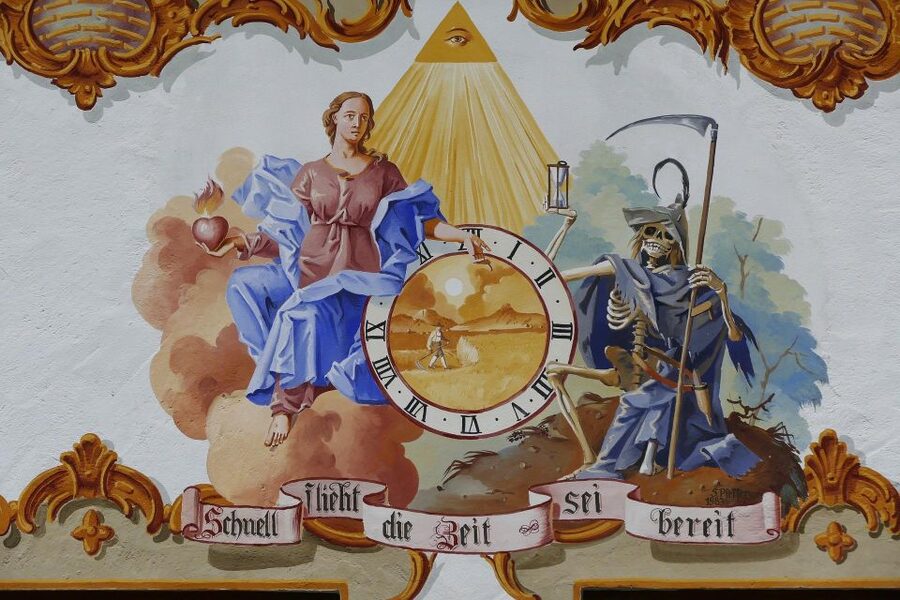
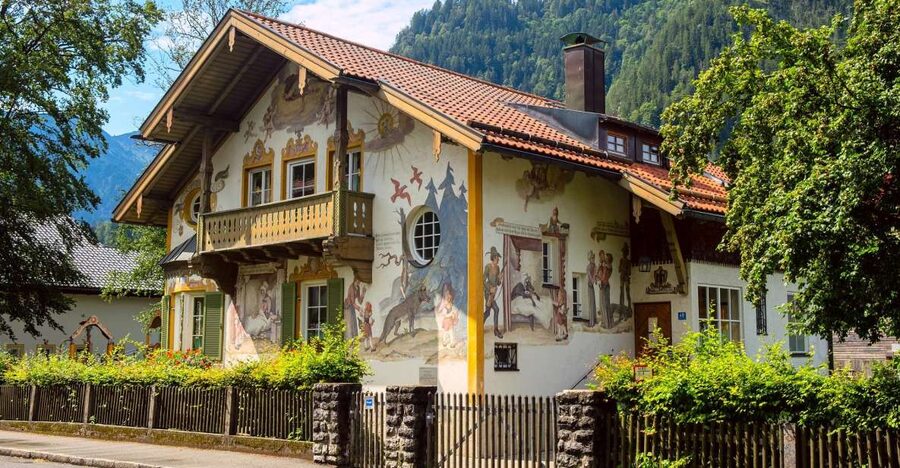
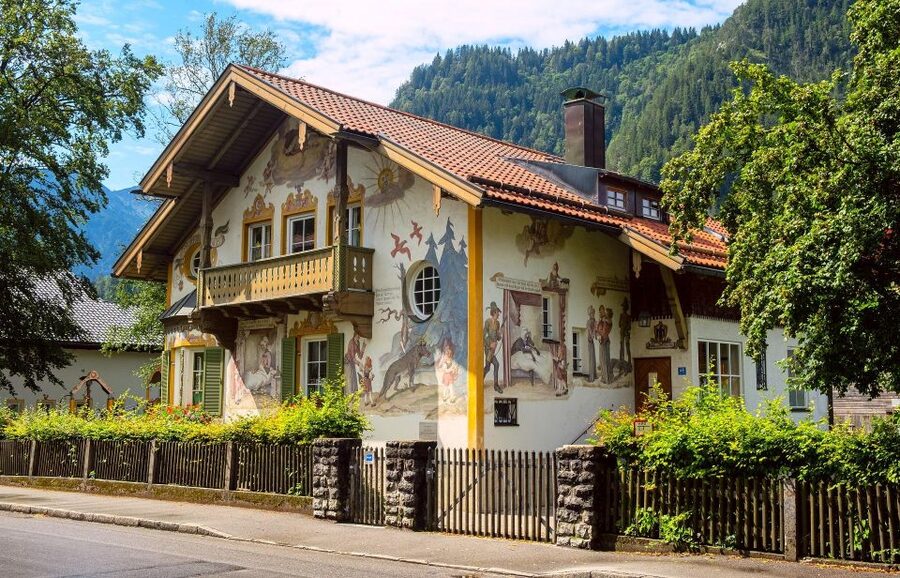
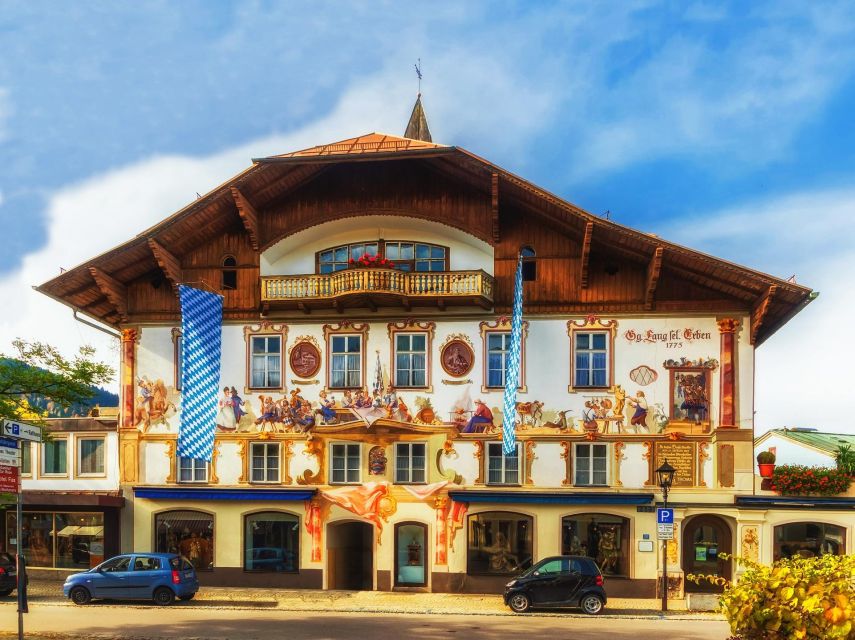
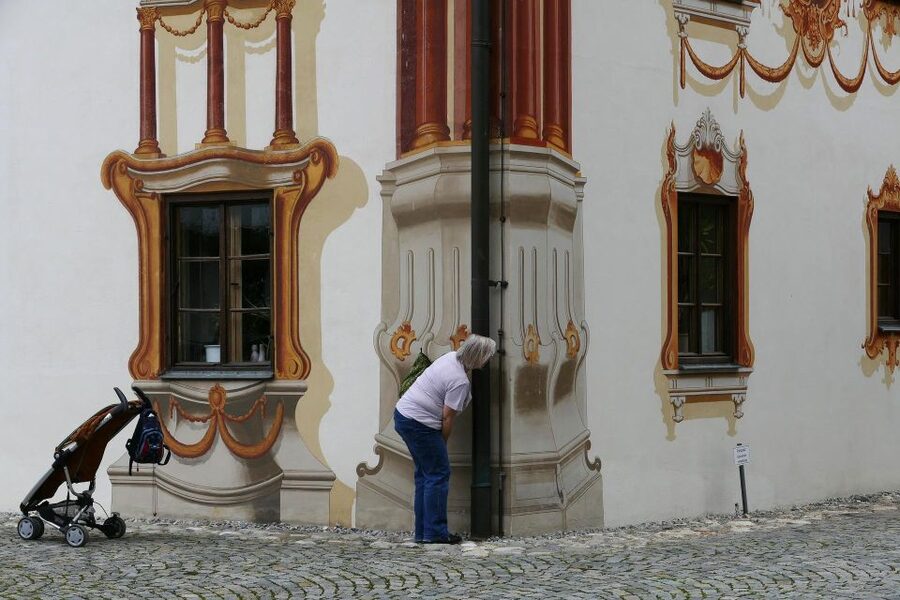
Another big theme is Oberammergau’s Märchenhäuser—literally, house-front stories. These are often linked to the way the village’s buildings present painted or themed narratives, including famous 18th-century frescoes painted on town houses.
Here’s the part that surprised me: the tour connects Märchenhäuser to the fairy tales collected by the Brothers Grimm in the early 19th century. That doesn’t mean every painted detail is a one-to-one illustration of a Grimm story, but the guide helps you understand the cultural mechanism: oral folklore gets gathered, stylized, and then finds a place in public life.
On the street, you’ll notice the town isn’t just a backdrop. It’s a set of talking surfaces. You begin to read the village the way you’d read a book cover—what’s the theme, what’s the mood, and how does the town want visitors to feel?
Practical tip: keep your eyes up. In Oberammergau, the story isn’t only at eye level. A lot of what makes the Märchenhäuser concept work is in the façade and the painted references, which you can easily miss if you walk with your camera at chest height.
The 30 Years War, Black Plague, and why the Passion Play started
If Oberammergau feels uniquely serious for a small village, this is why. The tour explains how events like the 30 Years War brought hardship, and how the Black Plague returned in that context. The guide frames these as turning points, not as random tragedies—because people in that era looked for meaning, ritual, and hope.
Out of that environment grew the Passion of Christ play, known as one of the best-known representations of the last days of Christ. You’ll also hear about the fact that the Passion Play is associated with an exclusive cast. That exclusivity adds weight: it’s not presented as a traveling show; it’s tied to the village itself.
What you should take away as a visitor: this play isn’t just entertainment. It’s a long-running expression shaped by fear, faith, and community memory. Even if you’re not religious, it helps to treat it like cultural history you can walk toward.
If you’re planning your timing, remember the tour is a walking overview. It won’t replace the experience of seeing the Passion Play performance, but it will give you the “why” behind why Oberammergau is famous for it.
WWII secrets you can still sense in the village corners
Oberammergau’s story isn’t only medieval and religious. You’ll also get a look at WWII secrets, including references to a Wehrmacht headquarters and a Messerschmitt factory.
I appreciate that the tour includes this portion, because it keeps the picture honest. A small village can have layers: agricultural life, pilgrimage traffic, art traditions—and then wartime infrastructure and its shadows. Even if you don’t leave with a detailed map of every wartime site, you leave with a better sense of how the 20th century touched even remote places.
One consideration: WWII topics can feel heavy. If that’s not your style, you can still handle it. Ask the guide what the key takeaways are for visitors—often they’ll frame it in terms of how the village remembers and records its past.
How a guide customizes in real time (and how to take control)
Included in your experience is a local professional guide who stays with your group the whole time. The tour also allows for possible customizing on the spot, which is a big deal if you have specific interests.
For example, if you care most about art, you can ask for extra time looking at the frescoes and Märchenhäuser themes. If you’re more history-minded, you can steer toward the monastery-to-pilgrimage storyline or the shift from plague and war to the Passion Play tradition. With a private format, the guide can often adjust without turning it into chaos.
Here are a few things you can do before you start walking:
- Ask what the guide thinks is the single most important turning point for Oberammergau’s identity.
- Let them know if you want more on wood carving or more on the Passion Play.
- If you love details, request one or two “look for this” moments so you don’t miss what makes the village unique.
That last point is why private guides can be such good value here. The village is full of small visual cues. A group that moves without guidance tends to wander. A guided group learns how to see.
Price and value for a private group up to 15
The price is $280 per group for up to 15 people, for 90 minutes. That sounds simple, but the value depends on your group size and what you want out of the visit.
Here’s the practical math:
- If you’re traveling as a small family or couple, you pay more per person than a bus tour, but you buy time, tailoring, and the ability to ask questions.
- If you’re traveling with several friends (approaching the top end of 15), the per-person cost drops fast, and the private format becomes a smart financial move.
Either way, I like this model because it fits the setting. Oberammergau isn’t a mega-attraction where you need huge crowds to justify the effort. It’s a village where stories matter. Spending a flat group price for a guide who walks with you is often the cleanest way to get that kind of attention.
Also, entrance fees aren’t included. That’s fine because the tour’s value is mostly in what you can learn and observe as you walk. Still, if you plan to add any optional museum stops on your own afterward, budget for those separately.
Who this Oberammergau private walk suits best
This tour works especially well if you:
- Like walking tours with a clear story thread instead of a list of stops.
- Care about how art traditions (wood carving and frescoes) connect to real social and religious history.
- Want the Passion Play background without needing to research beforehand.
- Enjoy history that covers more than one era, including WWII-era references.
It may feel less ideal if you:
- Want a deep-drawing class of art history at museum pace (this is still 90 minutes).
- Need lots of long breaks or step-by-step pause time, because it’s designed for active walking through the village.
Should you book this private guided walking tour?
I’d book it if you want Oberammergau to make sense fast. The mix of monastery roots, pilgrimage routes, wood carving culture, Märchenhäuser themes linked to Grimm-era folklore, and the dark-but-important chapters of plague, war, and WWII references gives you a balanced view in a short time.
Skip the tour (or at least consider a different format) if your goal is only scenic photos and you don’t care why the village looks the way it does. But if you enjoy learning as you walk, this private group setup is exactly the right tool.
If you do book, come ready with one preference: wood carving, Passion Play origins, or the Märchenhäuser story. Tell the guide early, and you’ll likely get the tour to match your kind of curiosity.
FAQ
How long is the Oberammergau private guided walking tour?
It lasts about 90 minutes.
Where do we meet for the tour?
You meet in front of the tourist office at Eugen-Papst-Straße 9A, 82487 Oberammergau, Germany.
Is this tour private?
Yes. It’s a private group experience with your local guide only for your group.
What languages are available?
The guide can lead the tour in English and German.
Is the price per person or per group?
It’s priced at $280 per group, up to 15 people.
Are entrance fees included?
No. Entrance fees are not included. The tour mentions that entrances are an extra cost if they come up.
Old Town & Marienplatz Walks, compared.
 ★ 4.6Third Reich & WWII Walking TourFrom $316,181 reviews
 ★ 4.5Third Reich Walking Tour MunichFrom $454,291 reviews
 ★ 4.7Old Town & Viktualienmarkt City Walk in GermanFrom $232,304 reviews
 ★ 4.7Night Watchman Walking TourFrom $5302,092 reviews
 ★ 5.0Munich Ghosts and Spirits Evening Walking TourFrom $601,900 reviews
 ★ 4.5Munich Old Town Walking TourFrom $271,287 reviews
 ★ 4.6Spooky Tour of Old Town in GermanFrom $261,112 reviews
 ★ 4.7Walking Tour Old Town and ViktualienmarktFrom $282839 reviews
Browse the lists this tour appears in