
Reviewed · OPEN-TOP SIGHTSEEING BUSES
Half Price Fantastic Munich City Tour
Munich can feel big and busy, but this tour keeps it human. You get a private, small-group walk with Curt Milburn that mixes famous landmarks with quieter streets, plus an iPad loaded with past images to make the story click. I especially liked the way the tour ties sites to what was happening then, and I also liked the practical food stop at Viktualienmarkt for Bavarian samples. One thing to consider: it’s a focused 2–3 hour route through central Old Town, so if you want long time inside museums or distant neighborhoods, you may need a second day plan.
The vibe is part history lecture, part friend-showing-you-Munich. Curt is American, relates easily to English-speaking visitors, and keeps the pace adjustable for your group, which matters when you’re juggling photos, questions, and timing. If you’re very sensitive to heavy 20th-century topics, know the route includes a stop tied to the Nazi rise in Munich.
In This Review
- Key Highlights Worth Your Time
- Munich in 2–3 Hours With Curt Milburn
- Price and What $119.83 Covers (Up to 15 People)
- A Private Walk That Still Moves at Your Pace
- Starting at Marienplatz: Why This Location Works
- Odeonsplatz to Platzl: Nazi History and Beer-Hall Myth in One Route
- Viktualienmarkt: Bavarian Food Samples Without the Fuss
- Asamkirche and Residenz Munich: Baroque Drama and Royal Power
- Marienplatz Glockenspiel and Maximillianstraße: City Identity Meets Luxury Windows
- Ohel Jakob Synagogue and Frauenkirche: Hard Stories and Gothic Scale
- English Garden and the Surfer’s Wave: A Calm Ending With Munich’s Local Edge
- How to Plan Around the Stops (So the Day Actually Feels Good)
- Who This Tour Suits Best
- Should You Book This Half Price Munich City Tour?
- FAQ
- How long is the Munich city tour?
- What time does it start and where do we meet?
- Is this tour private?
- What is the price?
- What languages is the tour offered in?
- Are there admission fees during the stops?
Key Highlights Worth Your Time
- Private group for up to 15: One single fee, no joining a random crowd
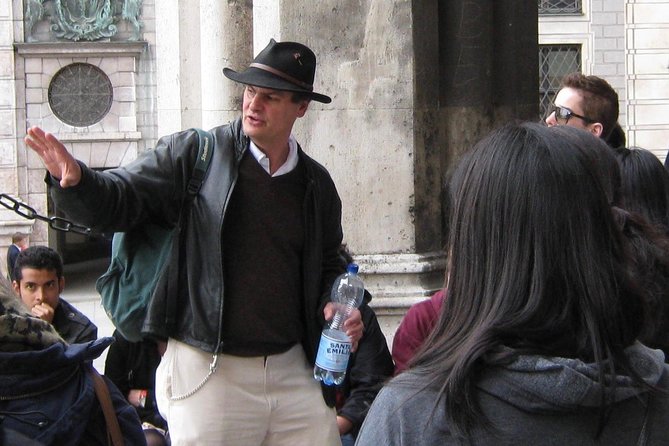
- Curt Milburn + iPad visuals: You see photos and films while standing at key history spots
- Viktualienmarkt food samples: Easy win for a real Bavarian taste
- Odeonsplatz + Platzl: Two different Munich “myth stories,” one route
- Asamkirche and Residenz Munich: Baroque church drama and royal power in a tight timeline
- English Garden finish with the Surfer’s wave: A calmer ending after Old Town
More open-top loops around the sights
- Munich Hop-On Hop-Off Tour: 1-Day or 2-Day Ticket★ 4.3 · 4,161 reviews
- Munich: Old Town & Viktualienmarkt City Walk in German★ 4.7 · 2,304 reviews
- Munich: City Bus Tour & FC Bayern Munich Allianz Arena Tour★ 4.5 · 2,071 reviews
- Munich City Hop-on Hop-off Tour★ 3.5 · 1,233 reviews
Munich in 2–3 Hours With Curt Milburn
This tour is built for people who want Munich’s headline sites without spending their entire trip glued to a guidebook. Curt Milburn leads it like you’re walking with a trusted friend who actually cares about the city. You’ll cover the classics you expect—Marienplatz, the cathedral area, the beer-hall connection—but you’ll also get context that makes the city feel less like a list and more like a timeline.
Curt’s style stands out because the tour doesn’t stop at “what you see.” It connects what happened there. A big part of that is the iPad he uses with films and images spanning over 1000 years of European history, so you can picture the past while you’re in the present. That makes it easier to understand why certain buildings look the way they do, and why Munich became what it became.
The whole thing runs about 2 to 3 hours, and the meeting point is Marienplatz 18 (80331 München) with a start time of 10:30 am. That schedule is a plus if you want the rest of the day open for beer gardens, parks, or a slow lunch.
Price and What $119.83 Covers (Up to 15 People)
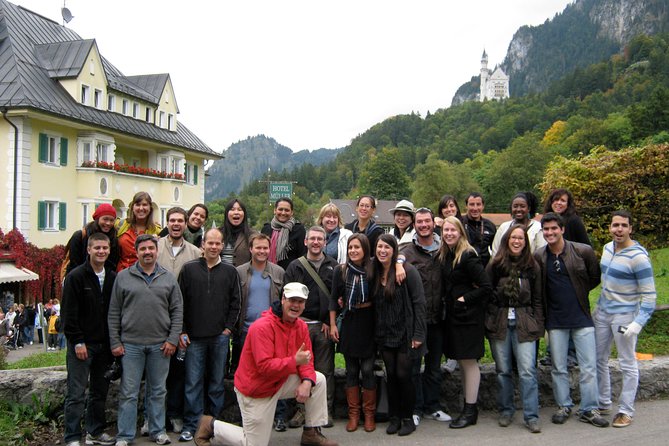
The price is $119.83 per group, sized to up to 15 people. That structure can be great value if you’re traveling with family, friends, or a small group that wants control over pacing. Instead of paying per person, you’re buying a single guided session that stays private to your group.
Is it the cheapest option? No city tour is always the cheapest when you’re paying for a guide. But here’s why it can still feel like a smart spend: you’re getting a guided route through major central sights, a food moment at Viktualienmarkt with free samples (when open), and added context through iPad visuals. If you’ve ever spent a half day walking between landmarks with no thread tying them together, you’ll feel the difference.
Also, the itinerary lists free admission for each listed stop. That doesn’t mean nothing costs anything in Munich, but it does reduce the “surprise ticket” problem that often comes with sightseeing plans.
A Private Walk That Still Moves at Your Pace
This is a private tour/activity, meaning only your group participates. That’s a real advantage in a city like Munich, where crowds can flatten the experience fast. You won’t be stuck matching a large group’s pace or getting rushed through photo stops.
In practice, what you get is a route that still works like a city walk, but with room to ask questions and linger when something clicks. Curt’s been doing this for years, and the format is set up for conversation, not a silent march.
You’ll be in English, and you’ll receive a mobile ticket, which makes it easier to show up without extra paperwork. The tour is also described as being near public transportation, which is handy because Munich’s transit can get you close without stressing about parking.
- From Munich: Neuschwanstein & Linderhof Castle Full-Day Trip
★ 4.6 · 14,646 reviews - Neuschwanstein & Linderhof Castle-Fairytale Day Tour from Munich
★ 4.5 · 7,275 reviews - Munich: Third Reich & WWII Walking Tour
★ 4.6 · 6,181 reviews
Starting at Marienplatz: Why This Location Works
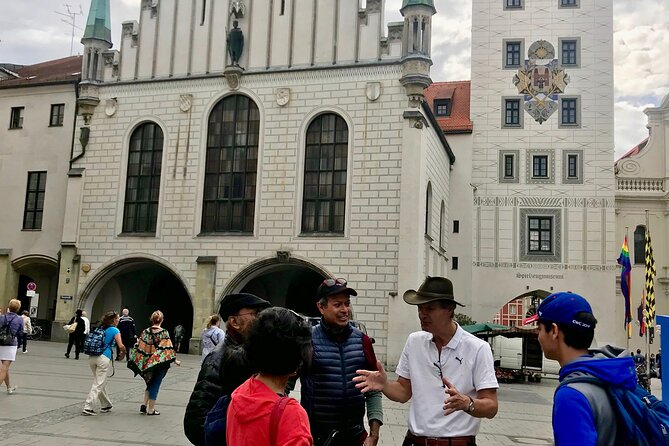
You start at Marienplatz 18, right in the center where most first-timers naturally gravitate. That matters because you’re not burning time getting from a remote hotel area into the heart of the sights. You’re positioned for efficient walking, and you’ll pass through key areas without feeling like you’re crisscrossing the city.
From there, the route is designed like a “greatest hits plus context” loop. You move from major historic squares to the city’s landmark churches and civic buildings, then out to a market pause and finally toward a green space finish. It’s a structure that helps you get oriented fast, even if Munich is new to you.
If you like to plan the rest of your day after a tour, this start also helps. You’ll end back at the meeting point, which keeps your next step simple—lunch plans, museums, or just wandering.
Odeonsplatz to Platzl: Nazi History and Beer-Hall Myth in One Route
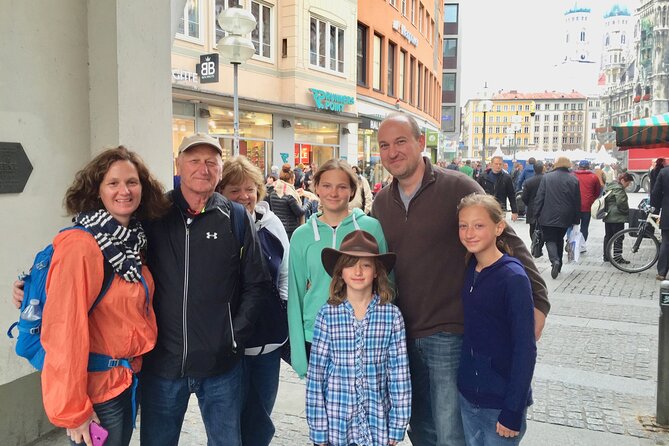
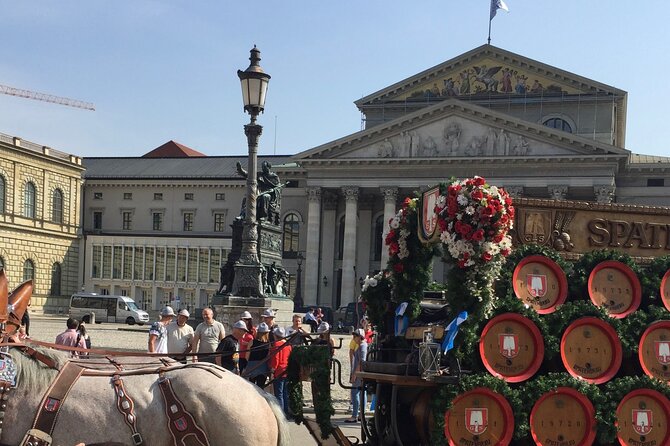
Stop 1 is Odeonsplatz, a place that connects to how the Nazis rose to power in Munich. This is one of the heavier stops on the route. The value here is not that you’re getting a “scandal story.” It’s that you’re grounding Munich’s modern story in the reality of its past. Seeing the location in person, with visuals on an iPad, makes the history feel less abstract.
Then you move to Platzl, billed as the most famous beer hall in the world. Even if you know Munich as a beer destination, this stop reframes it. Beer halls weren’t just social spaces; they also fit into politics and public life. That’s the tour’s pattern: a landmark is never only a landmark.
Both stops are quick—around 25 minutes and 20 minutes respectively—but they’re set up for a focused “understand what you’re looking at” moment. If you’re the type who likes to know why a square matters before taking photos, you’ll appreciate the pacing.
Viktualienmarkt: Bavarian Food Samples Without the Fuss
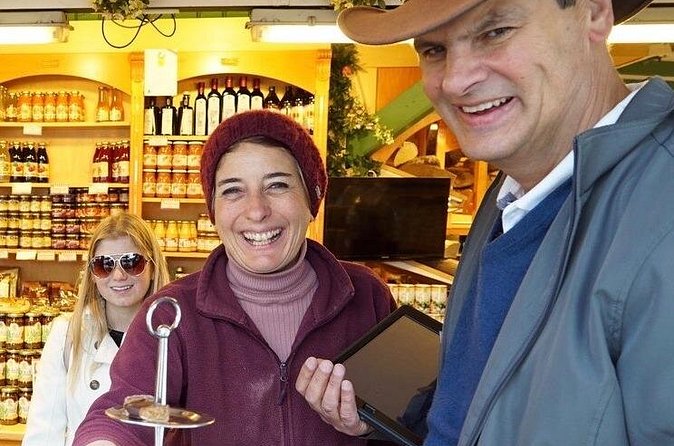
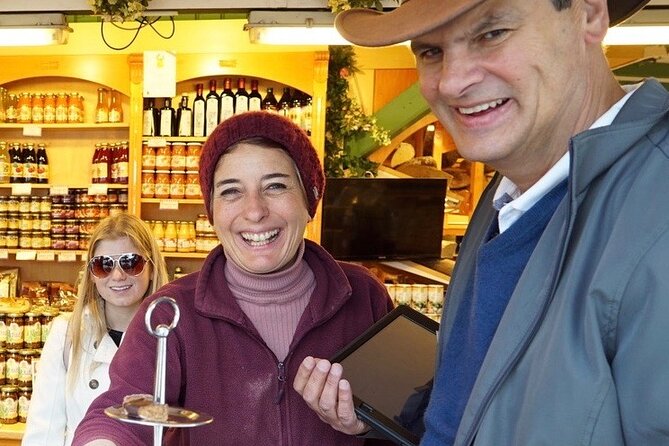
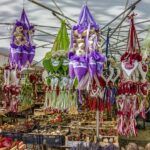
Next is Viktualienmarkt, an outdoor market with free Bavarian food samples. This is the stop where your tour shifts gears from history mode to comfort mode. You get a chance to snack and keep moving, rather than treating food as a separate, complicated plan.
There’s also a practical detail you should know: Viktualienmarkt is closed Sundays, so if you’re traveling on a Sunday, that food-sample moment may not happen the way you’d expect. It’s worth planning your expectations around the day of week.
Still, even if you don’t eat much, this stop helps you experience Munich’s everyday culture—vendors, stalls, and local rhythms—without needing to research which market foods to try. It’s one of those “value-added” parts of the itinerary that you don’t want to skip.
Asamkirche and Residenz Munich: Baroque Drama and Royal Power
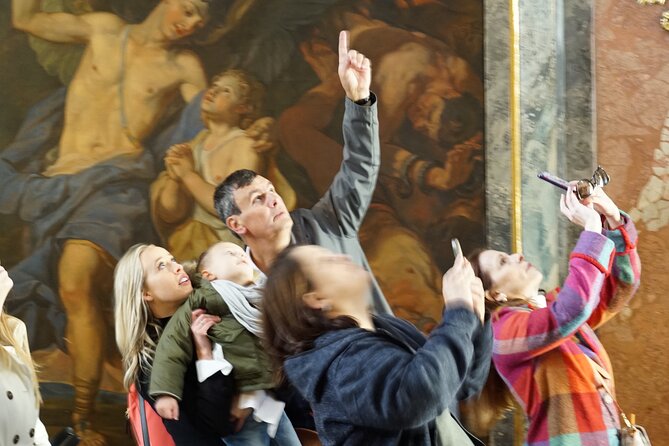
Stop 4 is Asamkirche, described as the most baroque you have ever seen. That phrase is doing a lot of work, but the core idea is true: this is a church that looks like it was designed to overwhelm you—in a good way. Baroque art in Munich can feel theatrical, and the short stop format works here because the visual impact hits fast.
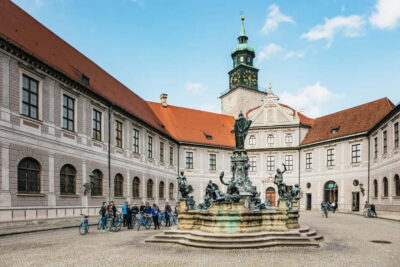
Stop 5 is Residenz München, the history center for the Bavarian kings and the royal family. If you’re curious about how power worked in Bavaria, this is your “royal Munich” moment. The itinerary frames it as part of understanding the Bavarian kings and the royal family story, not just walking past fancy buildings.
These two stops together make a strong pairing:
- Asamkirche shows the style and intensity of religious art.
- Residenz shows the political and dynastic story behind the city.
And because you’re on a timed walking route, you don’t get stuck choosing between “church time” and “palace time.” You get both.
Marienplatz Glockenspiel and Maximillianstraße: City Identity Meets Luxury Windows
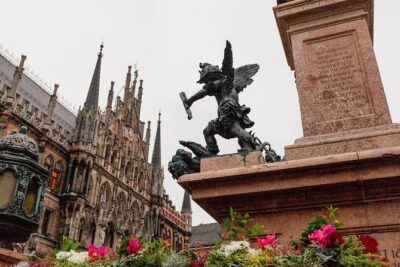
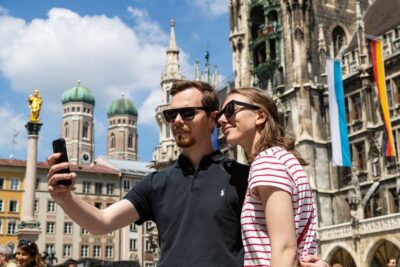
Stop 6 returns you to the civic heart at Munich Marienplatz, including the New Town Hall and the Glockenspiel. This is where Munich signals its self-image: public life, architecture, and traditions that locals and visitors both recognize.
Then you head to Maximillianstrasse, a street known for luxury brands like Armani, Gucci, and Omega. This isn’t just shopping for the sake of shopping. It’s a contrast stop that shows you the other side of Munich—money, fashion, and modern prestige—right after historic squares and royal sites.
Even if you don’t buy anything, this stop is helpful for orientation. It tells you what parts of central Munich feel like today, and it gives you a natural point to break off later if you want to explore more shopping or just keep walking the main streets.
Ohel Jakob Synagogue and Frauenkirche: Hard Stories and Gothic Scale
Stop 8 is Ohel Jakob Synagogue, introduced as the tortured history of Jews in Munich. This is another emotionally heavy stop. The tour’s purpose here is to make the history readable where it happened, not to treat it like a quick “factoid.” The route pacing (20 minutes) suggests it’s enough time to absorb meaning without rushing.
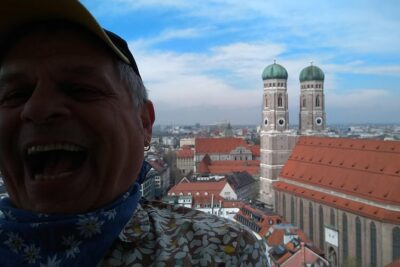
Stop 10 is Frauenkirche, Munich’s Gothic cathedral. After the heavier history, the cathedral stop can feel like a shift in tone—less about political catastrophe, more about the scale of faith and architecture. It’s also a classic Munich photo spot, and you’re getting it in the right order: you’ve already learned how Munich’s identity was shaped, so the cathedral isn’t just a postcard.
If you’re traveling with kids or teens, this part can still work, as long as you’re okay with frank historical context. It’s better than pretending these stories didn’t happen.
English Garden and the Surfer’s Wave: A Calm Ending With Munich’s Local Edge
The tour heads to the English Garden, Munich’s famous city park, with a mention of the permanent Surfer’s wave. This stop is around 15 minutes, and that short window is perfect for what it’s meant to do: reset your mind after dense Old Town history.
The English Garden gives you a sense of Munich beyond buildings and monuments. It’s a place that feels practical and lived-in—people go there, not just tourists. And the Surfer’s wave detail is a fun reminder that the city has its own local quirks.
This is a smart finish for a half-day tour. You leave with a clear sense of what you just learned, but you also end where you can keep enjoying the city without a schedule pressure.
How to Plan Around the Stops (So the Day Actually Feels Good)
Because the tour is about 2 to 3 hours, you’ll want to treat it as a planning tool, not as the whole day. I suggest you do something like this:
- Use the tour to get oriented around central Munich.
- Plan lunch nearby in the afternoon.
- Then pick one theme to go deeper on: churches, royal sites, parks, or museums.
Also, wear shoes you like walking in. The itinerary strings together central squares and landmarks. It’s not a “get on and off a vehicle” style day based on what’s described, so comfort matters.
Finally, if you like photos, bring a charged phone/camera battery. Several stops are designed for visuals—especially with Curt’s iPad support—which can make your photos more meaningful because you know what you’re looking at.
Who This Tour Suits Best
This tour fits best if you:
- Want a private Munich orientation with a single group booking.
- Appreciate history context tied to real places, not just dates.
- Like a guide who can adapt the pace and keep questions coming.
- Want a market food moment without turning it into a food tour.
It’s also a strong choice for people who may feel overwhelmed by Munich’s size. The route is concentrated, and the storytelling helps you connect pieces quickly.
If you mainly want entertainment—only light jokes and only sunny topics—this route may feel too serious at times. It does not avoid heavy history; it includes it, with a clear focus on where it belongs.
Should You Book This Half Price Munich City Tour?
Yes, if you want a structured but flexible introduction to central Munich, led by Curt Milburn, with free-entry stops, Viktualienmarkt food samples, and iPad visuals that bring history into view. The group pricing up to 15 people is also a big reason this can be a good deal if you’re not traveling solo.
I’d skip it (or at least add a lighter day) if your schedule demands lots of museum time or if you’d rather avoid any mention of Nazi rise and Jewish historical tragedy. This tour doesn’t hide those topics, and it treats them as part of the city’s story.
If your goal is to get your bearings fast and leave with a clearer understanding of Munich’s past and present, this is a solid bet.
FAQ
How long is the Munich city tour?
It runs about 2 to 3 hours.
What time does it start and where do we meet?
The tour starts at 10:30 am at Marienplatz 18, 80331 München, Germany.
Is this tour private?
Yes. It’s described as private, and only your group will participate, with a group size of up to 15.
What is the price?
The price is $119.83 per group.
What languages is the tour offered in?
The tour is offered in English.
Are there admission fees during the stops?
The listed stops are marked as Admission Ticket Free, and the tour also includes free samples at Viktualienmarkt (noting the market is closed Sundays).
More Hop-On Hop-Off Loops in Munich

Just added to the Munich Explorer notebook

Open-Top Sightseeing Buses, compared.
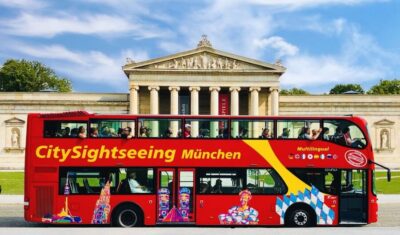 ★ 4.3Munich Hop-On Hop-Off Tour: 1-Day or 2-Day TicketFrom $274,161 reviews
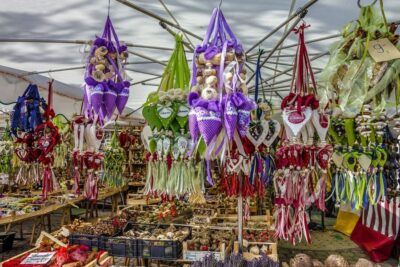 ★ 4.7Old Town & Viktualienmarkt City Walk in GermanFrom $232,304 reviews
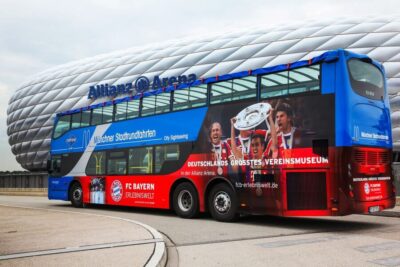 ★ 4.5City Bus Tour & FC Bayern Munich Allianz Arena TourFrom $602,071 reviews
 ★ 3.5Munich City Hop-on Hop-off TourFrom $311,233 reviews
 ★ 4.0Big Bus Hop-On Hop-Off Tour by Open-Top BusFrom $271,110 reviews
 ★ 4.7Guided City Tour by Bike with Beer Garden StopFrom $53604 reviews
 ★ 5.0Munich City Walking Tour, includes Third Reich & ViktualienmarktFrom $31458 reviews
 ★ 4.0Hop-On Hop-Off Tour CitySightseeing MunichFrom $28309 reviews
Browse the lists this tour appears in