
Reviewed · NUREMBERG BY RAIL
Nuremberg Private Guided Tour from Munich by Rail
Nuremberg hits hard, and this tour makes it click. You’ll glide from Munich by rail and spend the day with a private English-speaking guide, stitching together medieval Nuremberg, the city’s WWII role, and the places where that story still echoes. It’s not a random checklist either; the day is flexible enough that you can steer toward what matters most to you.
Two things I like a lot: private guide time that keeps the history straight (and answers the questions you actually have), and roundtrip train transport that takes the stress out of a long day. Even better, the experience includes hotel pickup and drop-off, so you’re not stuck figuring out train logistics while you’re already thinking about timing.
One thing to consider: a couple key sights involve extra ticket costs or short on-site windows, so you’ll want to budget for add-on entries like the courthouse-style exhibits and specific interiors such as Albrecht Dürer House and St. Sebaldus Church.
In This Review
- Key Things That Make This Tour Worth It
- Nuremberg by Rail From Munich: Why the Logistics Feel Easy
- The Altstadt Wall and Medieval Nuremberg Starts the Story Right
- Handwerkerhof, Hauptmarkt, and the Beautiful Fountain: Small Stops With Real Personality
- Kaiserburg Castle: Imperial Power in Plain Sight
- Albrecht Dürer House and St. Sebaldus Church: Art and Faith, With Ticket Reality
- Kongresshalle and the Rally Grounds: When a City’s Past Won’t Behave
- Where the Added Fees May Appear: Courthouse and Exhibition Costs
- Custom Itinerary and Real-World Pacing: How Private Time Feels
- Price and Value: What You’re Paying For at $474.09
- Tips That Make the Day Go Smoothly
- Should You Book This Munich-to-Nuremberg Private Tour?
- FAQ
- How long is the Nuremberg private guided tour from Munich?
- What does the tour cost?
- Is this tour private?
- Do I get train transport from Munich to Nuremberg and back?
- Is hotel pickup and drop-off included?
- Is the tour offered in English?
- Are entrance fees included for all sights?
- Where does the tour start and end?
- How soon will I get confirmation after booking?
- Is there free cancellation?
- Are service animals allowed?
Key Things That Make This Tour Worth It
- Hotel pickup + private guide means a true door-to-door feel from Munich (when pickup is offered).
- Rail roundtrip included, so you can focus on the day instead of planning connections.
- WWII landmarks plus medieval old town in one outing, with a guide to connect the dots.
- Customizable pacing, so your time doesn’t feel like a conveyor belt.
- Strong guide reviews include names like Susanna, Jason, Paul, Chris, and Nick, praised for clear English and good storytelling.
More rail days out to Nuremberg
- Nuremberg Guided Day Trip from Munich by Train★ 4.5 · 546 reviews
- From Munich: Nuremberg Day Trip by Train★ 4.4 · 357 reviews
- Nuremberg Private Guided Tour from Munich by Rail★ 4.5 · 23 reviews
- From Munich: Nuremberg Old Town Private Day Trip★ 5.0 · 5 reviews
Nuremberg by Rail From Munich: Why the Logistics Feel Easy
This is a full-day trip, about 8 to 9 hours, built around one main idea: get you from Munich to Nuremberg without turning it into a second job. Roundtrip trains are included, and the meeting point is Munich Hauptbahnhof. If you’re eligible for pickup, you’ll also get hotel pickup and drop-off, which is a big quality-of-life upgrade—especially when you’re traveling as a couple or small group.
The private part matters. With your own guide, you’re not stuck waiting for the “late person in group B.” You can ask questions when they come up, not after the group stops. Several guides on this route (like Susanna and Jason) were specifically praised for handling questions well and using their own visuals and prepared context to keep the day coherent.
You’ll also want to mentally prepare for a day that changes tone. Early on, you’re in the Altstadt and market square vibe. Later, you’re at spaces tied to Nazi rallies and the aftermath. A good guide helps you move through that without either rushing or getting lost in details.
The Altstadt Wall and Medieval Nuremberg Starts the Story Right
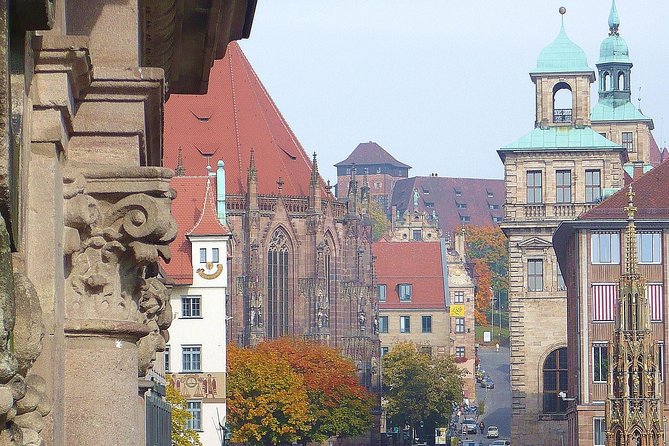
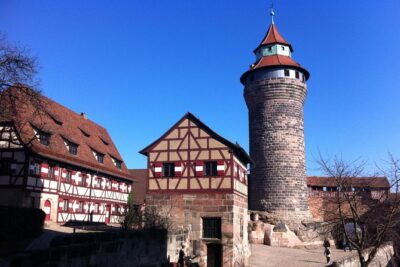
Your first real taste of Nuremberg is the walled medieval city center, the Altstadt. You’ll typically get about one hour here, which is enough to do two important things: get oriented and understand why this city looks the way it does. Nuremberg’s old town isn’t just pretty stone. It’s the stage where later history played out, including the city’s long identity as a place of power, commerce, and craft.
If you like walking through streets and reading the city with your feet, this is a great start point. A guide also helps you spot what matters fast—where you should pause for views, what details connect to civic life, and what to treat as a landmark versus background.
Then you shift from “overview walking” into shorter, sharper stops. That rhythm continues through the day, so you’re not stuck doing one long monologue after another.
Handwerkerhof, Hauptmarkt, and the Beautiful Fountain: Small Stops With Real Personality
After the Altstadt orientation, you’ll pop into Handwerkerhof for about 10 minutes. Think of it as a traditional craftsman’s court—more of a cultural stop than a long museum. It’s one of those places where you can quickly absorb how Nuremberg packaged crafts, shopping, and everyday life into a readable area.
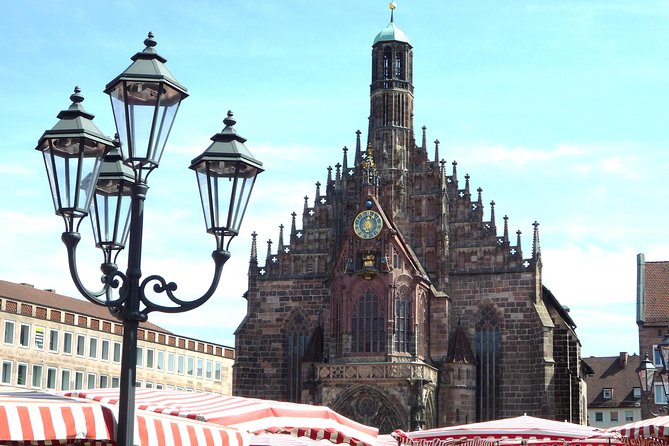
From there, you hit Hauptmarkt, the main market square, with about 15 minutes. This is the kind of stop where time matters: too short, and you miss the structure of the space. Too long, and it turns into “standing and staring.” In this tour, it’s timed to keep you moving while still letting you feel the market square as the city’s long-running center.
Next comes Der Schoene Brunnen (the Beautiful Fountain) for about 10 minutes. The golden Gothic tower detail is what most people notice first, but the real reason it’s worth your time is the wishing-ring tradition—small local lore that gives you a human connection, not just a postcard view.
Tip: If you’re the type who likes photos, this is where you’ll want to be ready. These stops are brief, so keep your phone charged and your camera settings simple.
- From Munich: Neuschwanstein & Linderhof Castle Full-Day Trip
★ 4.6 · 14,646 reviews - Neuschwanstein & Linderhof Castle-Fairytale Day Tour from Munich
★ 4.5 · 7,275 reviews - Munich: Third Reich & WWII Walking Tour
★ 4.6 · 6,181 reviews
Kaiserburg Castle: Imperial Power in Plain Sight
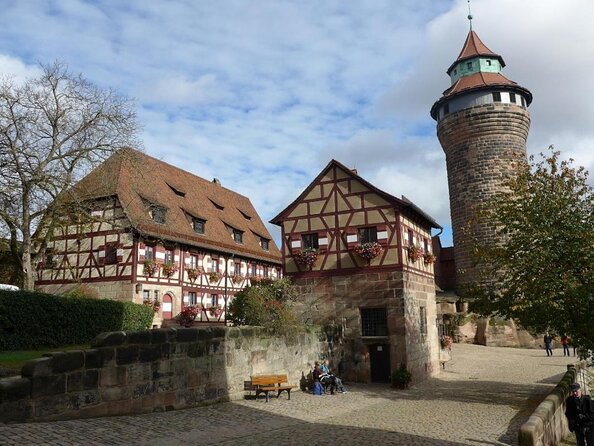
You’ll get around 15 minutes at Kaiserburg Nuremberg, the imperial castle complex dating back to at least 1050. Even if you don’t go deep into every corner, it’s a meaningful stop because it anchors Nuremberg in the Middle Ages as a seat of authority, not just a later WWII footnote.
Castle stops work best when the guide explains how to look. Look for the defensive logic, the layers of authority, and what the position of the castle tells you about medieval priorities: sightlines, control, and status.
This is also a good moment to slow down for a view. Castle-adjacent spaces tend to reward you with “oh, that’s why it’s located here.” Your guide’s job is to connect that to Nuremberg’s larger story, from old town fortifications to later modern identity.
Albrecht Dürer House and St. Sebaldus Church: Art and Faith, With Ticket Reality
Two stops here are about interiors and specific legacy, and they come with the most important planning note of the day: admission isn’t included for both.
- Albrecht-Dürer-Haus: about 5 minutes, and admission is not included.
- St. Sebaldus Church: about 15 minutes, and admission is not included.
Even with shorter time, these stops matter because they represent two different kinds of Nuremberg pride: Renaissance art through Albrecht Dürer and long civic continuity through the oldest church in Nuremberg, with Saint Sebald as patron.
Practical advice: budget for add-on tickets here, and don’t assume every interior will be open on your exact day. One review noted that Dürer’s house was closed on their date, which is a reminder that special closures happen. If you run into a closure, you can still get value from the surrounding context, but it’s smart to know that you may not get full interior access.
Kongresshalle and the Rally Grounds: When a City’s Past Won’t Behave
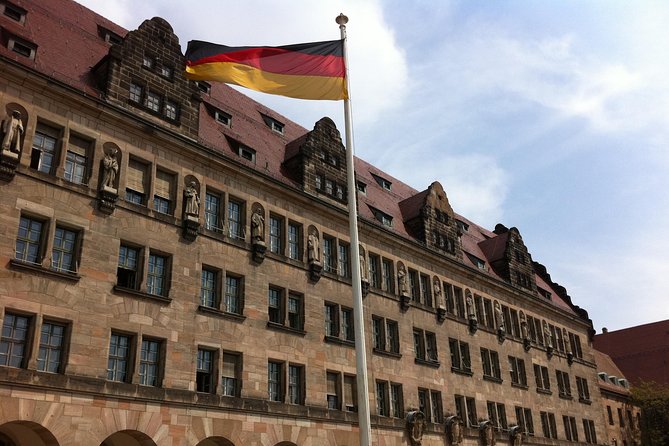
After the lighter medieval beats, you shift to the WWII-era landmarks.
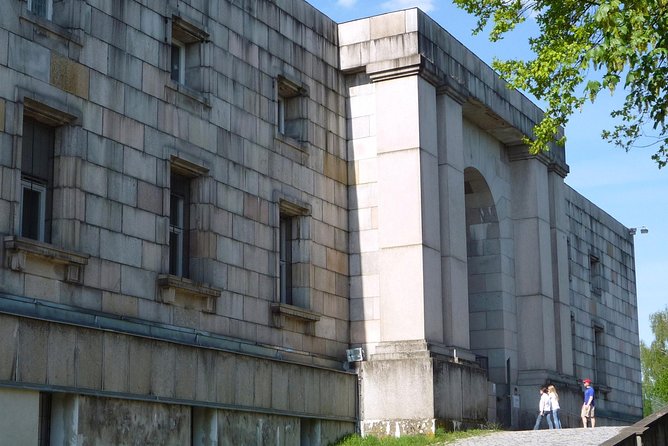
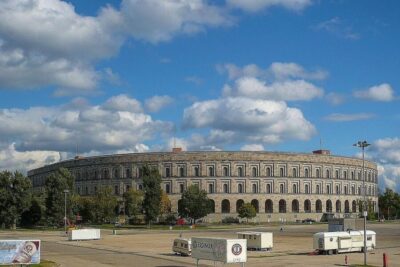
Kongresshalle Nuremberg is about 15 minutes. It’s known for being the unfinished Congress Hall of the Nazi Party. From the outside, it’s striking, but what you’ll really remember is the explanation: why such a building was planned, what it symbolized, and how it fits into the larger machinery of Nazi propaganda.
Then you go to the Documentation Center Nazi Party Rally Grounds for about one hour. Even when the rally grounds feel like they’re more open space than dramatic architecture, they still land emotionally because you’re physically on the scale where mass spectacle happened.
One helpful detail from real-world experiences: parts of the rally grounds are now used for sports fields and outdoor events. That change doesn’t erase the past, but it helps you understand the city’s post-war reality: the world didn’t just move on; it repurposed land and reshaped meaning.
This is the part of the day where having an expert guide is not optional. Without context, it can turn into “look at big concrete things.” With context, it becomes understandable history—plus a lesson in how places keep memory.
Where the Added Fees May Appear: Courthouse and Exhibition Costs
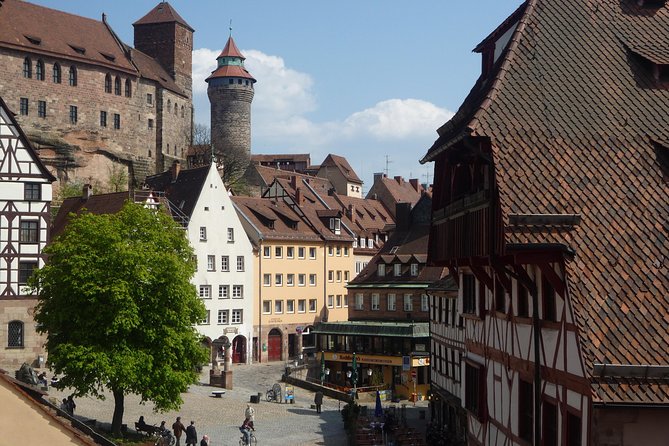
You may run into extra entrance costs for exhibits tied to the Nuremberg Trials area. The tour data notes an entrance fee of €7.50 per person for a courthouse exhibition or the Documentation Center Nazi Party Rally Grounds, depending on what you select.
Here’s how to plan: if you care specifically about the trials and the courtroom story, ask your guide what’s included that day and what costs extra. This tour is clearly designed to make WWII stops accessible, but not all exhibit components are treated the same.
In practice, your guide will help you fit it into the day’s timeline. If you’re a history-first traveler, I’d treat that €7.50 as part of the real cost of understanding what you’re seeing, not an afterthought.
Custom Itinerary and Real-World Pacing: How Private Time Feels
One of the most consistent themes in guide feedback is pace. The best trips don’t mean rushing; they mean using time well.
With a private day, you can usually do things like:
- shift priorities if something pulls you in
- ask questions when they come up instead of waiting
- get help with transitions between train and city walking
Some reviews also mention guides handling train logistics and ticketing. Even if you’re comfortable on your own, it’s still a win: you lose less time to “Where do I go now?” and you gain more time to watch, ask, and absorb.
Because the day blends medieval and WWII sites, pacing is also about emotional balance. You don’t want to spend too long in heavy places right after each other. A good guide naturally spaces the moments so the story has room to breathe.
Price and Value: What You’re Paying For at $474.09
At $474.09 per person, this isn’t a budget activity. But for what it includes, it often makes sense.
What you get that would cost time and money on your own:
- Private guide
- Roundtrip train transport from Munich
- Hotel pickup and drop-off (where offered)
- Time in key old town and WWII sites
The private guide is the real value driver. In places tied to WWII and the Nuremberg Trials, context is everything. You’re not just touring buildings; you’re interpreting history you can’t fully read from a plaque. Reviews repeatedly praise guides like Jason, Susanna, Paul, and Chris for making the day feel understandable and personal.
When does the price feel especially fair? If you’re traveling with a small group, private time spreads better than you might expect, and you also avoid the group-wait problem that comes with standard group tours. One review specifically highlighted the experience working especially well for solo travelers and small groups (up to about four), where personal attention stays high.
If you’re a “show me the map and I’ll do it myself” traveler, a cheaper DIY approach might tempt you. But if you want the day to feel coherent—medieval Nuremberg to Nazi-era landmarks to the aftermath—this is priced like an education with transportation included.
Tips That Make the Day Go Smoothly
A few practical habits will help you get the most out of a packed 8–9 hours:
- Wear shoes you can walk in for an entire day. You’ll move between multiple city areas plus the castle area.
- Plan for add-on tickets at Albrecht Dürer House and St. Sebaldus Church, since admission is listed as not included.
- Expect at least one extra fee possibility tied to an exhibition component (the €7.50 per person entry cost is specifically mentioned).
- Keep a flexible mindset. Some stops are short by design, so prioritize what you most want explained and ask your guide to focus there.
- If you love asking questions, this is your day. Several guides were praised for answering questions and using their own prepared context.
Also, because this is English offered, you’ll get value from a guide who can explain both the city’s earlier layers and the later WWII layer without turning it into a lecture that drags.
Should You Book This Munich-to-Nuremberg Private Tour?
I’d book it if you want a guided, rail-based day trip that treats Nuremberg like more than a photo stop. It’s a strong fit for history lovers, first-timers who don’t want to plan train timing, and anyone who prefers a private guide to tie together the medieval city and the Nazi-era sites.
I’d think twice if you’re mainly looking for long museum time or you hate extra ticket costs for interiors. This tour is structured for key stops and meaningful context, not marathon museum wandering.
If you’re on the fence, here’s the simplest decision rule: if you want someone to help you understand what you’re seeing—especially at WWII-era sites—this is the kind of day trip that’s worth paying for. If you’d rather explore independently and don’t care much about narration, you’ll likely feel the price more than the value.
FAQ
How long is the Nuremberg private guided tour from Munich?
It runs about 8 to 9 hours.
What does the tour cost?
The price is $474.09 per person.
Is this tour private?
Yes. It’s a private tour/activity, and only your group participates.
Do I get train transport from Munich to Nuremberg and back?
Yes. Roundtrip train transport is included.
Is hotel pickup and drop-off included?
Yes, hotel pickup and drop-off are included. Meeting at Munich’s train station is also possible.
Is the tour offered in English?
Yes, it’s offered in English.
Are entrance fees included for all sights?
No. Some stops have admission not included (including Albrecht Dürer House and St. Sebaldus Church). Also, an entrance fee of €7.50 per person may apply for a courthouse exhibition or the Documentation Center Nazi Party Rally Grounds.
Where does the tour start and end?
It starts at Hauptbahnhof, 80335 Munich, Germany and ends back at the meeting point.
How soon will I get confirmation after booking?
Confirmation is received within 48 hours of booking, subject to availability.
Is there free cancellation?
Yes. You can cancel for a full refund up to 24 hours in advance.
Are service animals allowed?
Yes, service animals are allowed.
More on Nuremberg by Rail


Just added to the Munich Explorer notebook
Nuremberg by Rail, compared.
 ★ 4.5Nuremberg Guided Day Trip from Munich by TrainFrom $95546 reviews
 ★ 4.4Nuremberg Day Trip by TrainFrom $93357 reviews
 ★ 5.0Nuremberg Old Town Private Day TripFrom $1,9085 reviews
 ★ 5.0Private Transfer Munich Nuremberg English Speaking DriverFrom $4113 reviews
Browse the lists this tour appears in