
Reviewed · NIGHT WATCHMAN EVENING WALKS
Munich: Middle Ages Tour with Night Watchman
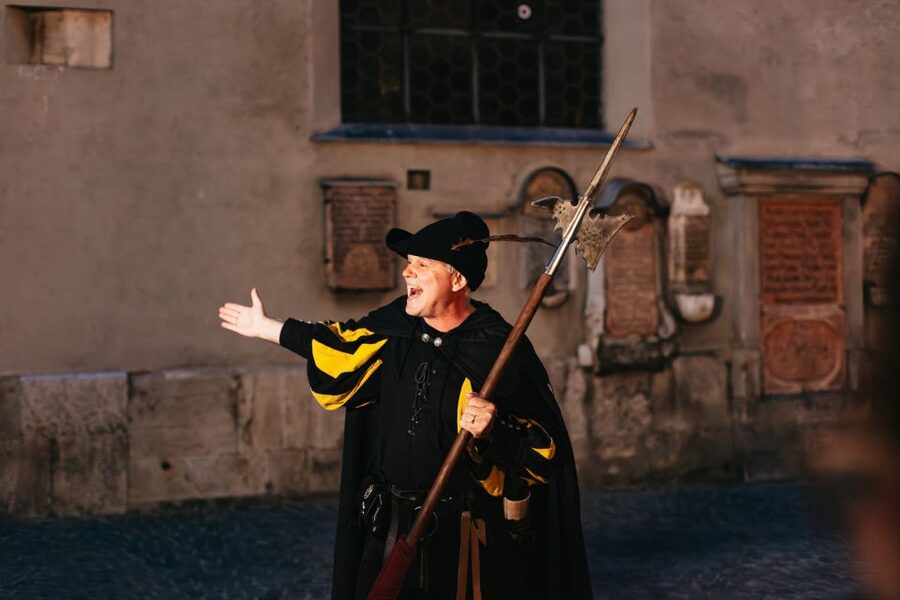
A lantern helps you see Munich differently. This 1.5-hour walk with Wolfram turns Marienplatz into a real medieval stage with armor, props, and street-level history. I especially like how it pairs major landmarks with stories about punishment—so you understand how the city controlled behavior, not just what it built.
Two things I really like: the guide’s medieval garb and live performance feel, and the way the route connects everyday places (churches, squares, a market area) to the darker side of city life. One drawback to note: the subject matter includes executions and torture techniques, so it’s not ideal if you prefer gentler history or don’t want graphic themes.
In This Review
- Key Things to Know Before You Go
- Meeting Wolfram at Rathaus Apotheke and Setting the Medieval Tone
- St. Peter’s Church: Incense, Old Remains, and a Real Sense of Place
- Viktualienmarkt to Old Town Hall: How Daily Life Meets Authority
- Alter Hof and Marienhof: Power Corners and the Feel of Court Life
- Frauenkirche and the Center-Stage View of Munich
- City Wall Moments: The 12th-Century Spine of Defense and Control
- Metzgerzeile and the Punishment of Bad Bakers
- Talburg Gate: Closing Time, Halberd Action, and Theater-Driven History
- Medieval Prisons: Torture Techniques and Where the Tour Gets Heavy
- Exploring the Castle and the Schwabinger Gate Finish
- Price and Value: Why $21 Can Be a Smart Night Out
- Practical Tips: How to Have a Good Time Without Missing the Point
- Who This Tour Fits Best (and Who Should Pass)
- Should You Book This Munich Night Watchman Tour?
- FAQ
- How long is the Munich medieval night watchman tour?
- Where do I meet the guide?
- What language is the tour?
- Is food included?
- What topics will the tour cover?
- Can I take photos or record video?
- Is the tour affected by weather?
- Is it suitable for kids?
Key Things to Know Before You Go
- Wolfram’s performance brings the tour to life with lantern, halberd, and horn
- Marienplatz as the launchpad makes it easy to start your medieval story right in the center
- City walls and gates include the 12th-century wall and the Talburg Gate closing moment
- Bakers and punishments get attention at Metzgerzeile, connecting law to daily life
- Prison and execution themes add emotional weight—go in with the right expectations
More lantern-lit rounds with the night watchman
- Munich: Night Watchman Walking Tour★ 4.7 · 2,092 reviews
- Munich: Night Watchman Torch Tour in German★ 4.8 · 1,280 reviews
- Munich: Middle Ages Tour with Night Watchman★ 4.9 · 652 reviews
- München: Der Nachtwächter für Kinder – Führung auf Deutsch★ 5.0 · 322 reviews
Meeting Wolfram at Rathaus Apotheke and Setting the Medieval Tone
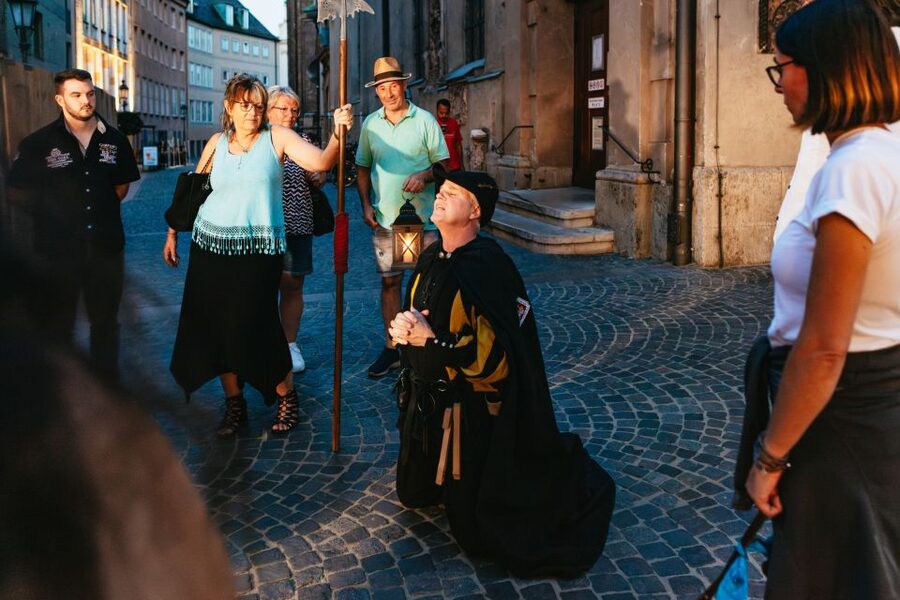
You start at Rathaus Apotheke on Marienplatz. The meeting spot is about 25 meters to the left of number 8, and you can plug the GPS coordinates 48.13737, 11.57588 straight into Google Maps if you want the fastest arrival.
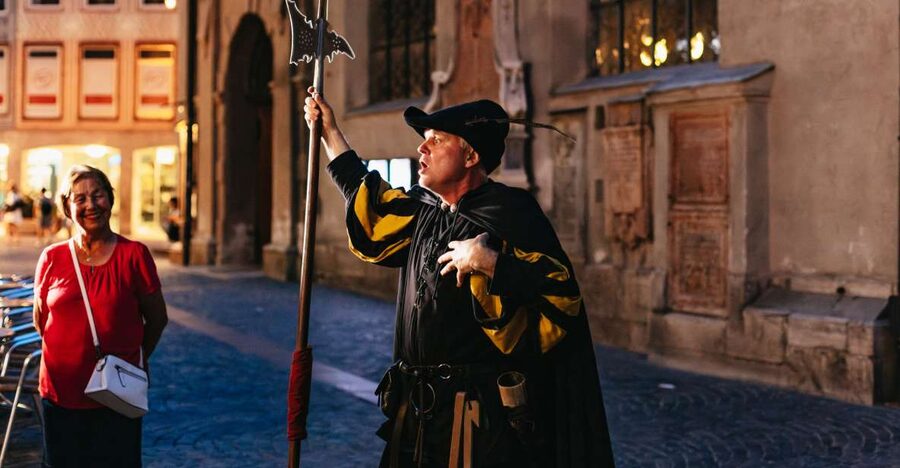
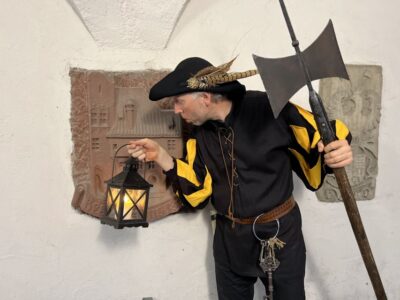
Your guide wears typical medieval clothing and carries period-style props: a lantern, a halberd, and a horn. That’s not just costume for fun. It helps you shift mental gears from modern Munich traffic and selfies to a city where announcements, threats, and timing mattered.
The tour runs about 1.5 hours, so you’ll get a focused dose rather than a long day of wandering. It’s also rain or shine, which I like—medieval stories work whether the sky is clear or the streets are slick.
St. Peter’s Church: Incense, Old Remains, and a Real Sense of Place
St. Peter’s Church is where the atmosphere starts to click. You’ll spend two guided stretches there, each about 10 minutes, and the emphasis isn’t just on architecture—it’s on what remains and what that means for how Munich remembers itself.
One detail you’re likely to notice is the mention of incense in the ancient remains. That kind of sensory cue is smart because it makes history feel less like a lecture and more like you’re stepping into a different rhythm of life.
There’s also a practical payoff. When you stand in these older areas early in the route, the rest of the tour’s grim themes make more sense. You’re not hearing about punishment in a vacuum—you’re hearing it while you’re physically in the older fabric of the city.
Viktualienmarkt to Old Town Hall: How Daily Life Meets Authority
Next you move toward the Viktualienmarkt area. It’s roughly a 10-minute guided stop, short enough that you won’t lose the thread of the story. What I like here is the contrast: market life is practical, social, and regular, while medieval justice could be sudden and harsh.
From there, you visit the Old Town Hall for another guided 10 minutes. This stop matters because the medieval city wasn’t only religious and military. It was administrative. When you understand who had power, you get why punishments happened where they did—because authority needed visible places.
If you like walking tours that connect details to big ideas, this is a good match. The route doesn’t treat the past as separate from the present. It uses familiar streets to explain who set rules and how those rules were enforced.
- From Munich: Neuschwanstein & Linderhof Castle Full-Day Trip
★ 4.6 · 14,646 reviews - Neuschwanstein & Linderhof Castle-Fairytale Day Tour from Munich
★ 4.5 · 7,275 reviews - Munich: Third Reich & WWII Walking Tour
★ 4.6 · 6,181 reviews
Alter Hof and Marienhof: Power Corners and the Feel of Court Life
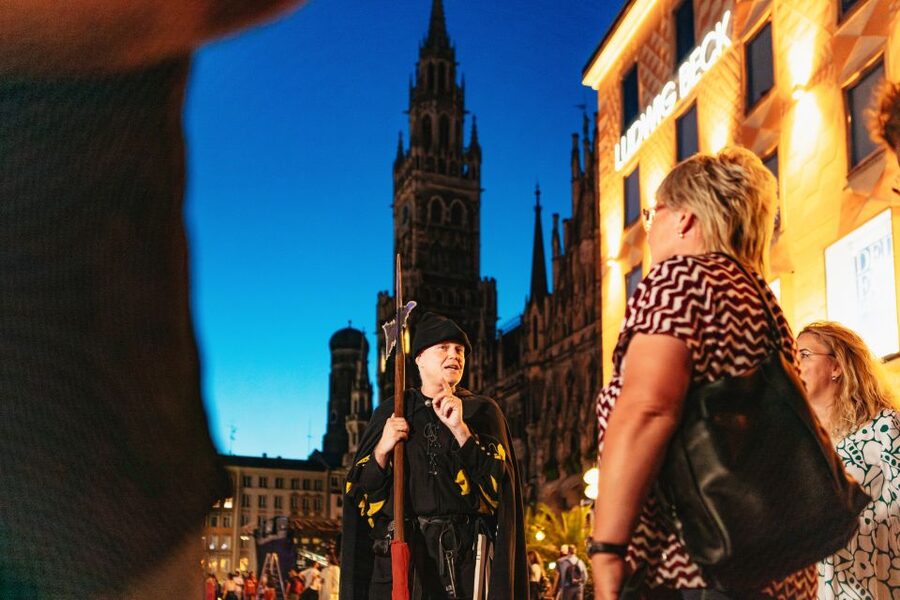
You continue with Alter Hof (about 10 minutes) and Marienhof (about 10 minutes). These aren’t random photo stops. They’re the kind of settings where you can imagine officials, processions, and decisions being made.
This is where the tour’s tone becomes clear. You’re not just collecting facts about medieval Munich; you’re learning how the city’s structure shaped behavior. Think of it like reading the rulebook by looking at the rooms where the rules were written.
Even if you’re not an expert, these short guided blocks are manageable. The timing keeps you moving, and the narration helps you connect what you see with what you’re hearing—so you don’t end the tour with a list of names but no meaning.
Frauenkirche and the Center-Stage View of Munich
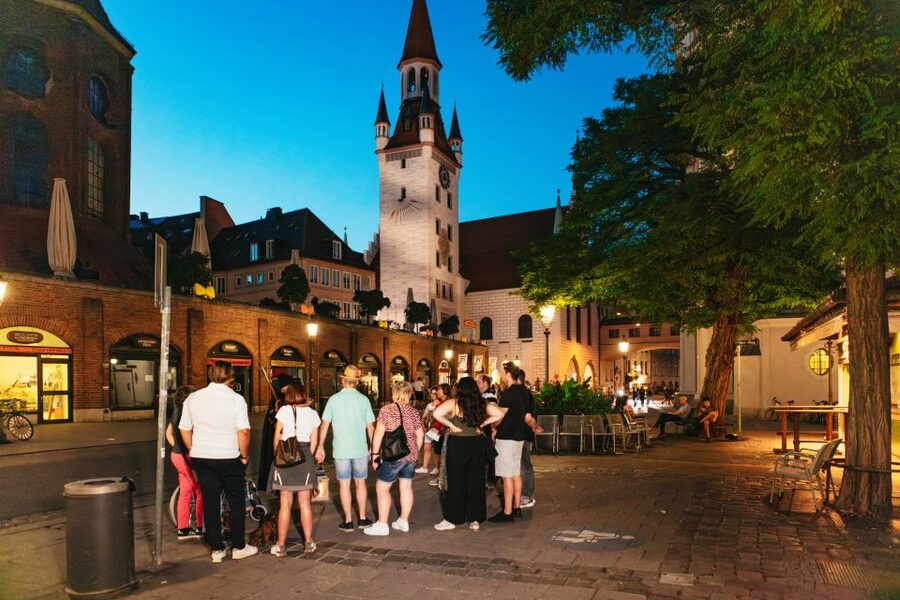
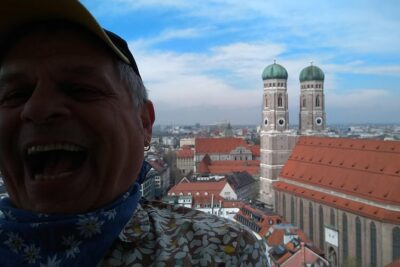
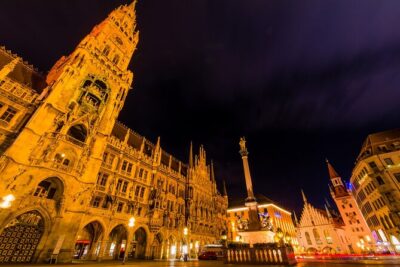
You’ll also have time at the Munich Frauenkirche for about 10 minutes. That’s a strong anchor because it keeps you grounded in modern Munich’s most recognizable silhouette while the tour’s medieval storytelling plays around it.
Why this works: it gives you a reference point. You can keep Munich’s “now” in your mind while Wolfram’s “then” takes over the street corners. That makes the whole walk easier to visualize, especially if you’re only in town briefly.
If you like history with a sense of theater, this portion of the route helps you transition. You’re still in the city center, but the narrative begins to widen from buildings into systems—walls, gates, and enforcement.
City Wall Moments: The 12th-Century Spine of Defense and Control
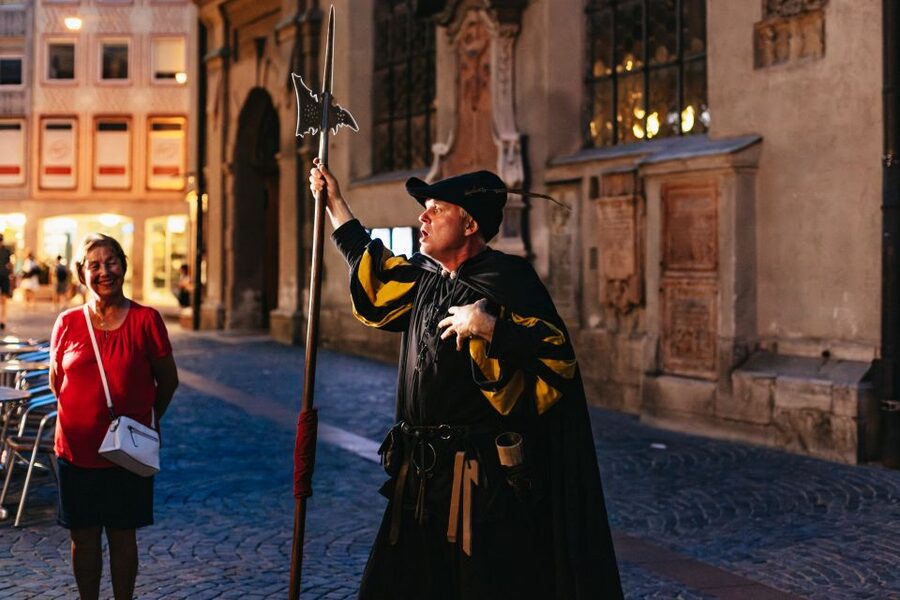
One of the tour’s major payoffs is the walk to the 12th-century city wall. The time you spend there shifts the focus from “who lived where” to “how the city protected itself.”
A good medieval wall isn’t just stone. It’s a boundary line between safe and unsafe, lawful and outlawed. When you connect the wall to the tour’s themes—interrogations, punishments, and execution practices—it stops being scenery and becomes part of the story’s logic.
This is also where the narration turns explicitly darker. You’ll hear about executions and beheadings as part of the medieval justice system. I find that pairing the visual scale of the wall with harsh stories makes the era feel more believable. It’s not abstract. It’s tied to real space and real consequences.
Metzgerzeile and the Punishment of Bad Bakers
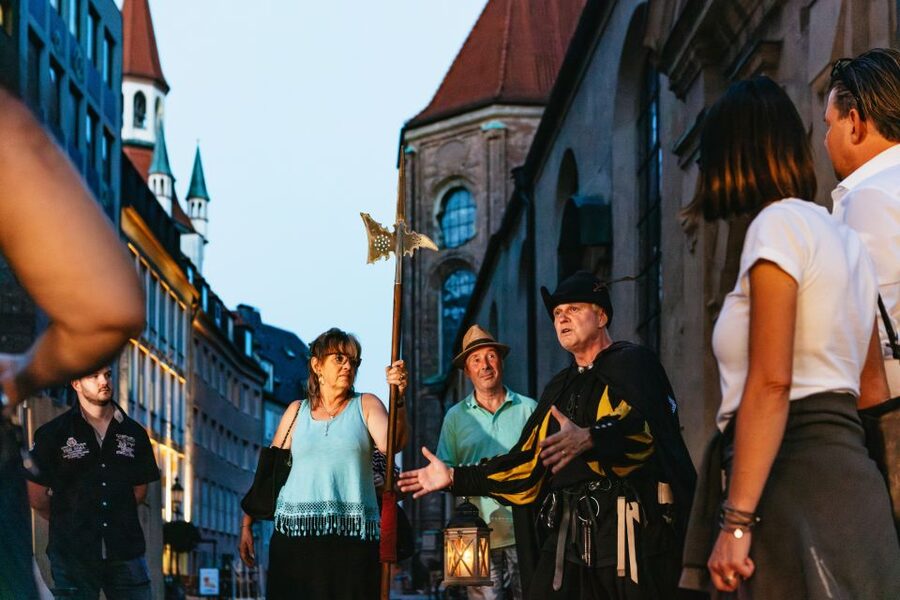
You’ll also learn about punishments for bad bakers at Metzgerzeile. That’s a clever detail because it reminds you that medieval law wasn’t only for violent crimes.
Food and quality control mattered. If bread or ingredients were tainted, people noticed fast. So punishment wasn’t just punishment—it was public messaging about order and survival.
If you prefer history that feels grounded in daily life, this stop is one of the most satisfying. It shows how authorities protected the community and how they enforced standards in ways that would be very foreign today.
Talburg Gate: Closing Time, Halberd Action, and Theater-Driven History
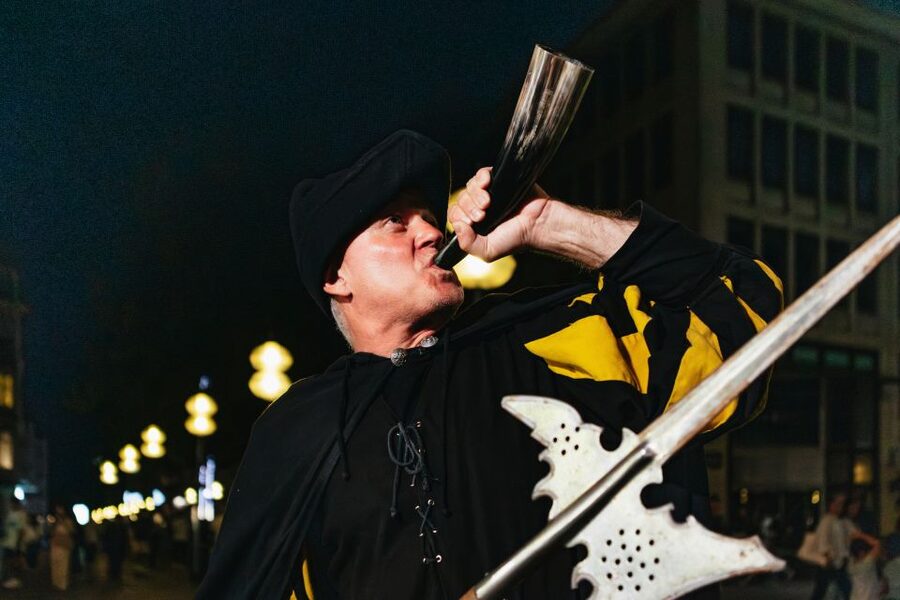
A signature moment is when you witness the closing of the Talburg Gate. You’ll also get a fight moment using a halberd, which adds a clear performance element.
This is one of those “don’t overthink it” moments. The action is brief, but it helps you understand what a gate represents: control over access, fear as deterrence, and the daily reality of being walled-in.
You’re learning about safety and enforcement at the same time. That combination is why this segment lands. It turns architecture into behavior, and behavior into history you can picture.
Medieval Prisons: Torture Techniques and Where the Tour Gets Heavy
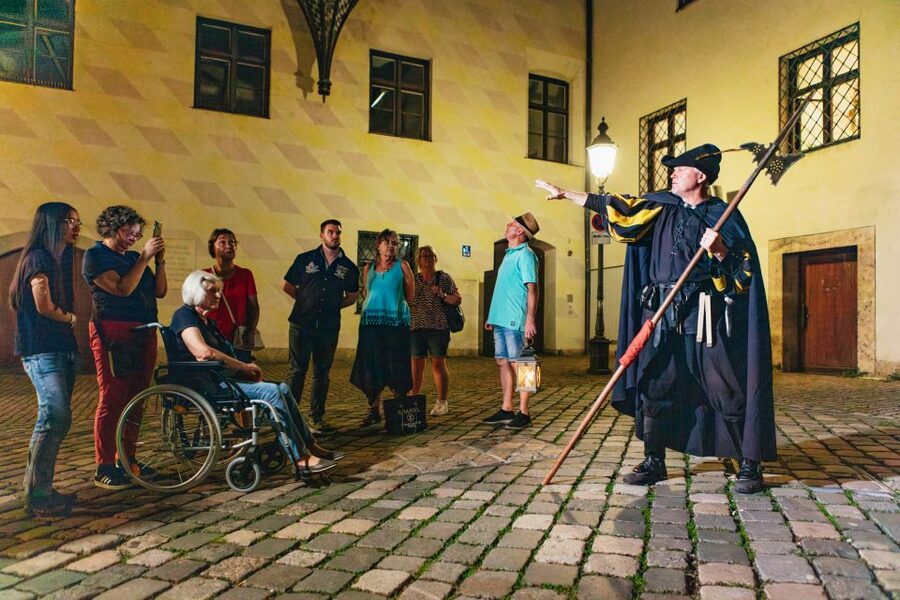
The tour includes discussion of terrifying torture techniques used in medieval prisons. That’s not the kind of topic you treat casually, and you shouldn’t either.
You’ll also encounter ideas around interrogations and punishment. If you’re coming for “gory history,” you’ll get the darker side of medieval justice. If you’re sensitive to graphic themes, you may want to skip this one entirely or mentally brace yourself before you start.
I think it helps to approach this tour like a historical crime story: stay focused on how systems worked and what society valued, rather than turning away or trying to laugh it off. The guide’s delivery matters here, and the costumed setup is part of how the tour frames the topic.
Exploring the Castle and the Schwabinger Gate Finish
As the route continues, you explore the city castle and the Schwabinger Gate. These stops round out the “defense and control” theme and give the walk a satisfying arc—center to boundary, boundary to authority, authority back into the city’s older core.
Gates and castle edges make you think about movement: who could pass, who couldn’t, and what happened if you broke the rules. When you pair that with the earlier talk of executions and prison practices, the whole story hangs together.
The final stretch also makes the whole experience feel complete. You end back at the starting point near Rathaus Apotheke on Marienplatz.
Price and Value: Why $21 Can Be a Smart Night Out
The price is $21 per person for about 1.5 hours, which is strong value for a guided, performance-style tour. You get a live guide in medieval garb, plus multiple central stops and several “big story” elements—city walls, gates, and prison/execution themes.
Where you’ll feel the value most is the format. This isn’t just “walk and look.” The tour uses props (lantern, horn, halberd) and dramatic moments (Talburg Gate closing and halberd action) to make the history stick.
The one trade-off is that food and drinks aren’t included. So if you’re planning this as part of an evening out, grab something beforehand or plan for a quick stop after.
Practical Tips: How to Have a Good Time Without Missing the Point
A few things will help you get more out of the experience:
- Be ready for rain. It runs rain or shine, so wear shoes you trust on wet streets.
- Limit the camera. Flash photography isn’t allowed, and video recording isn’t allowed. Bring a phone for photos without flash, or just enjoy it with your eyes.
- Go in at the right emotional volume. The story includes executions and prison torture techniques. If that’s not your thing, your experience will feel longer and heavier.
Also, the tour is in German. If your German is limited, you might still follow along thanks to the visual theater and props, but don’t expect a fully detailed translation.
Who This Tour Fits Best (and Who Should Pass)
This tour is listed as not suitable for children under 12. That makes sense given the topics, the performance, and the darker justice and prison material.
It’s a great fit if you want something more vivid than a standard walking tour. If you like history that feels like it belongs on the street—not only in museums—this one is built for you.
It’s also a strong choice for adults who don’t want a half-day commitment. At 1.5 hours, you’ll get a coherent story arc without draining your whole day.
If you hate heavy topics or want only mild, family-friendly explanations, skip it. You’ll get more comfort from a lighter sights-and-stories route.
Should You Book This Munich Night Watchman Tour?
I’d book it if you want a performance-style walk that uses Munich’s central streets, walls, and gates to explain medieval behavior and justice. The Wolfram night watchman concept, the medieval garb, and the Talburg Gate moment make it memorable in a good way, and the price is reasonable for what you’re getting in time and storytelling.
I’d skip it if you’re easily upset by themes like executions and prison torture techniques or if you strongly prefer tours without dark content. And if you don’t read or speak German well, go in knowing the narration is German—the theater helps, but it’s still a story you’re meant to listen to.
If you’re somewhere in the middle, still consider booking and decide based on your personal comfort with darker history.
FAQ
How long is the Munich medieval night watchman tour?
It lasts about 1.5 hours.
Where do I meet the guide?
Meet your guide in front of Rathaus Apotheke on Marienplatz (about 25 meters left of number 8). You can use GPS 48.13737, 11.57588 in Google Maps.
What language is the tour?
The tour guide speaks German.
Is food included?
No. Food and drinks are not included.
What topics will the tour cover?
You can expect medieval stories that include punishments, executions and beheadings, and torture techniques in medieval prisons.
Can I take photos or record video?
Flash photography is not allowed, and video recording is not allowed.
Is the tour affected by weather?
The tour takes place rain or shine.
Is it suitable for kids?
It is not suitable for children under 12.
More Night Watchman Rounds in Munich



Just added to the Munich Explorer notebook



Night Watchman Evening Walks, compared.
 ★ 4.7Night Watchman Walking TourFrom $5302,092 reviews
 ★ 4.8Night Watchman Torch Tour in GermanFrom $221,280 reviews
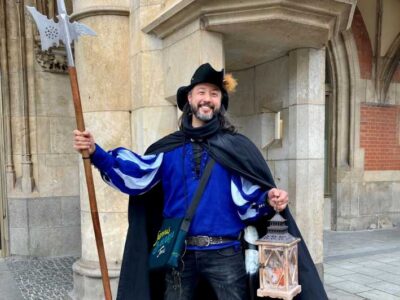 ★ 5.0Der Nachtwächter für Kinder – Führung auf DeutschFrom $17322 reviews
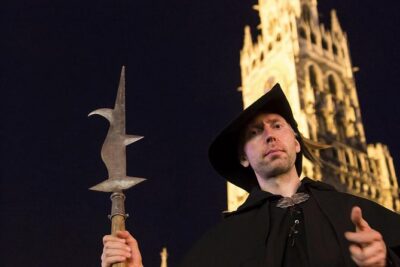 ★ 5.0On the road with the night watchmanFrom $17142 reviews
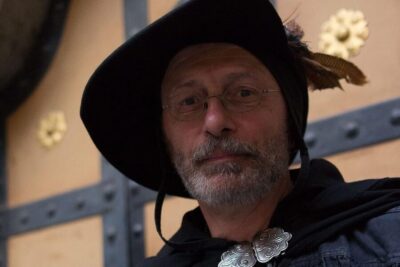 ★ 4.9Night Watchman Tour for Kids (6 – 12 years) – 75 minFrom $16140 reviews
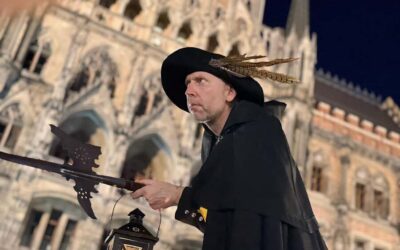 ★ 4.2Night Watchman Tour in EnglishFrom $22108 reviews
 ★ 4.33-Hour Culinary Nightwatch TourFrom $8887 reviews
 ★ 5.0Night watchman torchlight tour in MunichFrom $2240 reviews
Browse the lists this tour appears in