
Reviewed · BERCHTESGADEN & EAGLE'S NEST TOURS
Eagle’s Nest Berchtesgaden Private Full Day WWII Historical Tour
Bunker tunnels and mountain politics in one day. This full-day Eagle’s Nest / Kehlsteinhaus and Obersalzberg tour is built for people who want more than photos: you get a guided look at the underground complex, Hitler’s tea house on Kehlstein mountain, and a longer driving route around key WWII remnants near Berchtesgaden.
Two things I really like: first, it’s genuinely private (up to 6 in your group) with air-conditioned transport, so the day feels paced for real conversation. Second, the guide, Tom, brings history to life with an impressive photo collection, including construction-era images tied to the Tea House and renovation details connected to Hitler’s Berghof—plus behind-the-scenes technical spots like the generation station under the Tea House and the brass elevator made for Hitler.
The main drawback to think about is season and access. The Eagle’s Nest building is only open mid May through October (weather dependent). If you go outside that window, you won’t visit the building itself, though you’ll still get a detailed historical account and the tour expands with extra driving stops.
In This Review
- Key highlights to know before you go
- How the day runs from Berchtesgaden
- Stop 1: Dokumentationszentrum Obersalzberg bunker tunnels
- Stop 2: Kehlsteinhaus (Eagle’s Nest) and the brass elevator
- Stop 3: Obersalzberg sites, from Berghof ruins to SS housing
- What Tom brings to the tour (beyond the facts)
- Price and value: what you’re really paying for
- Logistics that matter: tickets, timing, and season
- Who should book this tour (and who should think twice)
- Should you book? My take
- FAQ
- What time does the tour start, and how long is it?
- Is there pickup from Salzburg or Munich?
- What admissions fees should I budget?
- Is the Eagle’s Nest (Kehlsteinhaus) visit included year-round?
- What happens if weather is poor?
- Can I cancel and get a full refund?
Key highlights to know before you go
- Original Obersalzberg bunker tunnels at the Dokumentationszentrum Obersalzberg (about 30 minutes on-site).
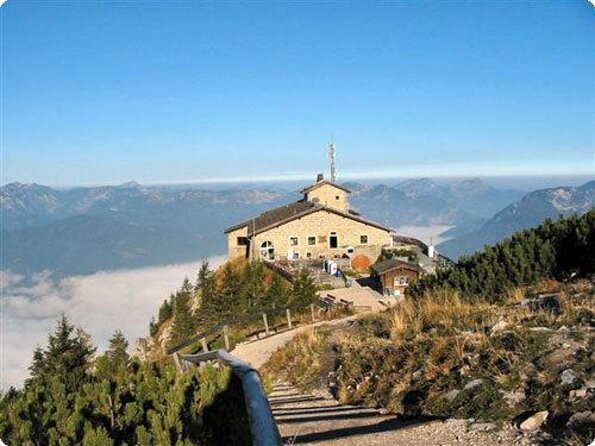
- Kehlsteinhaus on Kehlstein mountain at 6,017 ft, with the famous brass elevator and original features like the marble fireplace.
- More than the headline sites: Obersalzberg coverage includes ruins and remnant locations tied to Berghof, Göring, Speer, and SS areas.
- Time with Tom: strong photo-based storytelling and behind-the-scenes details (including the generation station under the Tea House).
- A full-day structure (about 7 hours) with a 2-hour Kehlsteinhaus stop and about 4 hours on Obersalzberg.
- Seasonality matters: Eagle’s Nest building access changes outside mid May to October.
More walks tracing Munich Third Reich and wartime history
- Eagle’s Nest-Berchtesgaden-Obersalzberg Private Half Day WWII Historical Tour★ 5.0 · 64 reviews
- Berchtesgaden: Private Eagle’s Nest & Obersalzberg WWII Tour★ 5.0 · 32 reviews
- Berchtesgaden-Obersalzberg Private Half Day WWII Historical Tour★ 5.0 · 17 reviews
How the day runs from Berchtesgaden
This tour is built as a single, focused loop: you meet in Berchtesgaden (Bahnhofpl. 2) at 8:30 am, then you’re back at the same meeting point when the day ends. There’s no Salzburg or Munich pickup, so plan your travel logistics around getting to Berchtesgaden first.
The schedule is straightforward and practical: you’re in the vehicle for transitions, then you get dedicated blocks of time at each area. The day is roughly 7 hours total, with about 30 minutes at Dokumentationszentrum Obersalzberg, about 2 hours for Kehlsteinhaus, and about 4 hours covering Obersalzberg sites—plus the driving between them.
Because it’s private for a group of up to 6 and offered in English, you can ask questions and slow down where you want. That matters here, because this region isn’t just architecture—it’s the physical geography of Nazi power, secrecy, and propaganda. You’ll move through places that are now documented and interpreted, and the pacing helps you absorb it without feeling rushed.
Stop 1: Dokumentationszentrum Obersalzberg bunker tunnels
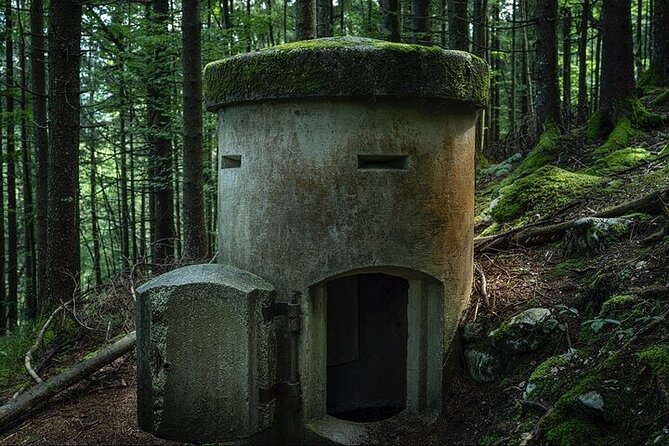
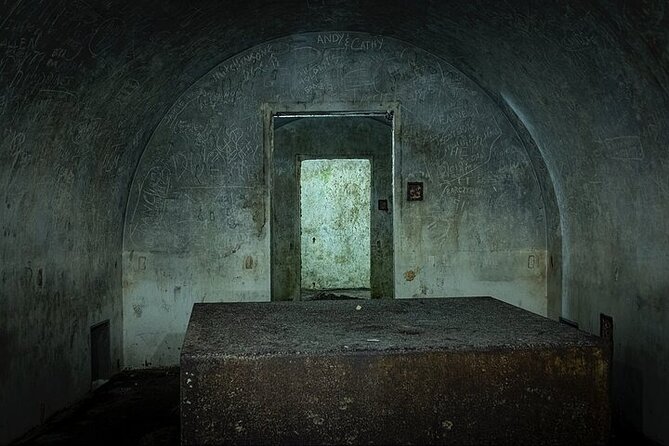
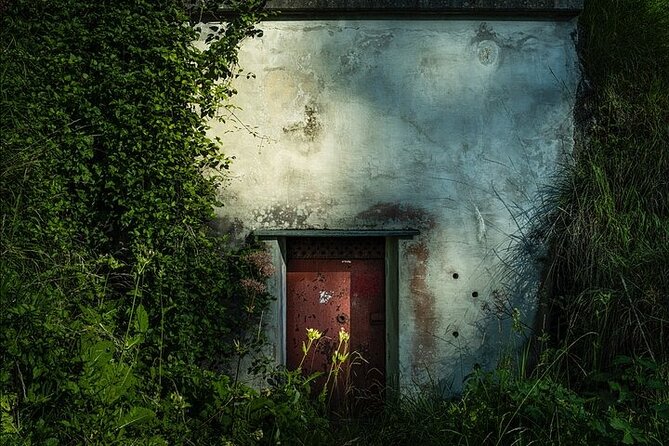
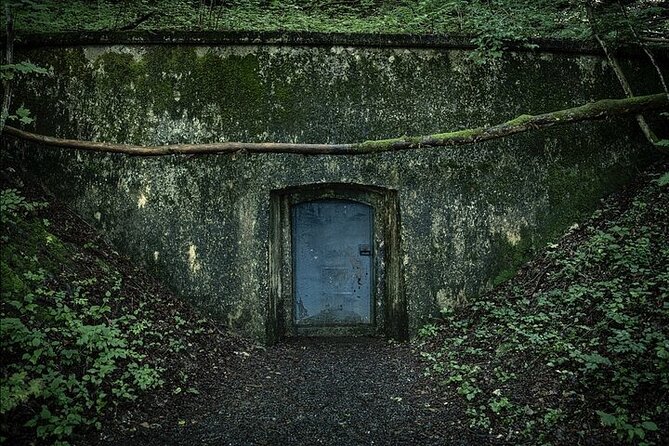
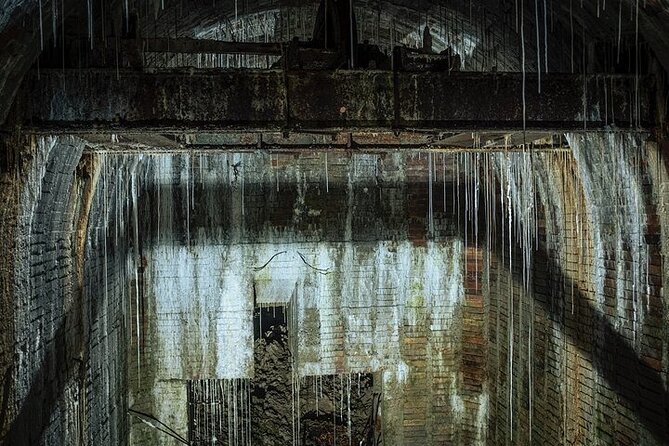
Your first major stop is the Dokumentationszentrum Obersalzberg, where you get to see an original section of the underground bunker complex—the kind of buried space that makes this story feel real. This isn’t a generic museum room. The experience centers on the meandering labyrinth of twisting tunnels and cavernous chambers deep below the former compound.
You’ll spend about 30 minutes here, and admission is not included (budget €4.50 per person). That time is short but focused, so I’d use it actively: look for how the tunnels connect, how the space is shaped, and how that layout supports the idea of secrecy and control. Even if you already know the broad story, underground infrastructure changes your understanding fast. It’s one thing to read about hidden operations; it’s another to see the actual geometry of them.
If you’re the type who likes visuals and concrete details, this stop is a strong opening. Tom’s approach tends to fit well here—he can connect what you’re physically seeing to what the area was built to do.
Stop 2: Kehlsteinhaus (Eagle’s Nest) and the brass elevator
Next comes the headline: Kehlsteinhaus, famously called the Eagle’s Nest. It’s perched on Kehlstein mountain at 6,017 ft, and your on-site time is about 2 hours. Admission for this stop is not included and is listed at €31.90 per person.
When the Eagle’s Nest building is open (mid May to October, weather dependent), you get to explore the site’s original elements—especially things like the huge marble fireplace and the brass elevator made for Hitler. That elevator detail isn’t just trivia. It’s a window into the entire mindset behind the place: transport engineered for convenience and controlled access, an effort to turn power into spectacle.
When you go outside that open season (November through mid May), you won’t visit inside the Eagle’s Nest building. Instead, the tour includes an in-depth historical account of the Eagle’s Nest’s significance. Practically, that still keeps the day worthwhile, but you should know what you’re trading away: you’ll miss the on-site building experience and be more in explanation mode.
Also note the weather dependency. This is alpine terrain, so your best bet is to choose a day with stable conditions. If weather forces changes, you won’t be left hanging—the experience notes that if it’s canceled due to poor weather, you’ll be offered a different date or a full refund.
More runs out to Berchtesgaden and the Eagle's Nest
- Eagle’s Nest Hiking Tour
★ 5.0 · 133 reviews - Berchtesgaden: Via Ferrata Beginner Tour of Schützensteig
★ 4.7 · 15 reviews
Stop 3: Obersalzberg sites, from Berghof ruins to SS housing
The final long stretch focuses on Obersalzberg, covering both familiar and less obvious remnants. This is where the tour stops feeling like a single attraction and starts feeling like an ordered walk through a wartime “hub” area.
You get about 4 hours here, and admission is listed as free for this portion. That time allocation matters: it gives you enough room to understand relationships between locations rather than treating each stop as a disconnected highlight.
The range of sites included is broad, including:
- the ruins of Hitler’s former Berghof home, with the chance to experience the panoramic views that were once part of the appeal
- the site of Hitler’s private Tea House
- original sections of the bunker complex underneath the former National Socialist compound
- the former home of Hermann Göring
- Albert Speer’s former home and studio
- the former RSD Headquarters
- the ruins of the workers’ theatre hall
- an abandoned old military hospital
- the former Reich Chancellery
- the former SS officers’ housing
One thing I appreciate about how this is framed is that it doesn’t only focus on Hitler-as-a-monument. You’re also moving across locations tied to architecture, industry-adjacent leadership, propaganda and culture, and the administrative machinery of power. Even the ruins and “site of” locations can teach you how the regime operated across roles—where influence lived, where it was planned, and how the built environment supported it.
There’s also a practical benefit: with so many places listed, a private guide helps you connect the dots so you don’t leave with a list of names and no sense of layout.
What Tom brings to the tour (beyond the facts)
The biggest quality jump on this type of tour usually comes down to the guide’s ability to connect place to purpose. Here, Tom’s storytelling is a major reason this tour earns top marks.
From what’s described, Tom is passionate and uses a large photo collection that includes details like construction images tied to the Tea House and photos showing renovations around Hitler’s Berghof. That matters because photos taken during construction can show what was planned versus what later tourists assume was always there.
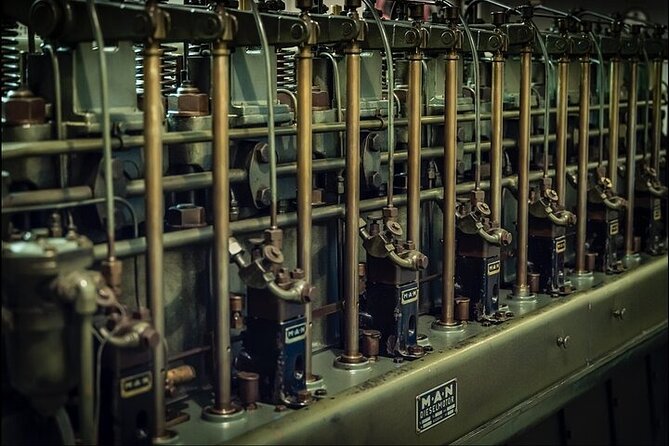
Tom also adds technical and behind-the-scenes details that you might otherwise miss. One example mentioned is the generation station hidden in the tunnel system beneath the Tea House, plus the brass elevator connected to Kehlsteinhaus. Even if you’re not a technical person, these details help you understand the regime’s approach to comfort, secrecy, and self-sufficiency—how they engineered daily life and operations into the mountain itself.
So if you’re choosing this tour because you want more than a standard guided walk, this is the angle to pay attention to: you’re not just seeing sites. You’re learning the how-and-why tied to each one.
Price and value: what you’re really paying for
The price is $1,117.42 per group (up to 6), and the day runs about 7 hours. That sounds pricey at first glance—until you break it down by group size.
At the maximum group size (6 people), you can think of it as roughly $186 per person for the guiding and private transport side. On top of that, you’ll pay admissions for two main items:
- Dokumentationszentrum Obersalzberg: €4.50 per person
- Eagle’s Nest / Kehlsteinhaus: €31.90 per person
Food and drinks aren’t included, so budget for lunch or snacks on your own.
Where I see the value: this route is spread across multiple zones with meaningful driving time, and the key on-site experiences have specific timing (like the tunnel section at the documentation center and the Eagle’s Nest visit when open). A private vehicle plus a guide who can manage the flow—while also answering questions—can be a better deal than stitching together separate public tours and then losing time to confusion.
And if you’re traveling with a small group of friends or family, private transport often feels like the real bargain. Everyone gets a turn to ask questions, and you can adapt pacing to your interests—especially important on a subject this heavy.
Logistics that matter: tickets, timing, and season
You’ll use a mobile ticket, which makes the day smoother at the entrances. Admission for Dokumentationszentrum and the Eagle’s Nest is clearly listed as not included, so you’ll want to plan for cashless payments if that’s accepted there, but at minimum plan for those costs per person.
The start time is 8:30 am, and the tour begins and ends in Berchtesgaden. I’d strongly suggest you build in a little buffer for getting to Bahnhofpl. 2 and being ready before the first stop. On days when the schedule is tight, being early helps you avoid the stress spiral.
Most important: Eagle’s Nest access changes by season. If you’re booking for mid May to October, you can expect the building visit. If your trip falls outside that window, you should still go, but you’ll want to treat it as a historical interpretation day with expanded driving stops rather than a full on-site experience.
Weather affects access too. The tour notes it requires good weather, and if it’s canceled due to poor conditions, you’ll be offered a different date or a full refund—so it’s not the kind of gamble where you’ll lose your money and get nothing.
Who should book this tour (and who should think twice)
This tour fits you best if you want:
- a private, small-group experience rather than joining a large group
- a guide who can connect locations to how the regime worked, not just what happened there
- a mix of underground spaces and prominent sites like Kehlsteinhaus
- an organized day that doesn’t require you to research routes and timing yourself
You might think twice if:
- you’re only interested in one stop (Eagle’s Nest) and hate the idea of extended explanations if access is limited by season
- you strongly prefer self-guided touring and minimal talking (this day is built around guided interpretation)
- you’re not able to handle alpine weather variability, since access can depend on weather
For most travelers with a real interest in WWII history and German regional context, this strikes a good balance: it’s structured enough to be efficient, and detailed enough to feel meaningful.
Should you book? My take
I’d book this tour if your goal is a full, guided look at the Obersalzberg region tied to how the Nazi leadership lived, planned, and enforced secrecy. The strongest selling point is the combination of original bunker access, Kehlsteinhaus features like the brass elevator and marble fireplace (when open), and Tom’s photo-backed, behind-the-scenes way of teaching the story.
If you’re going when the Eagle’s Nest building is open, you’ll likely feel like the day was built around the best version of the experience. If you’re traveling outside that season, the tour still sounds worthwhile, but you should be honest with yourself: you’re buying a historical interpretation experience plus extra driving stops, not the full building visit.
Either way, it’s a serious day. Plan for that, bring curiosity, and give yourself enough time to process what you’re seeing.
FAQ
What time does the tour start, and how long is it?
It starts at 8:30 am in Berchtesgaden and runs for about 7 hours.
Is there pickup from Salzburg or Munich?
No. All tours start and end in Berchtesgaden. The guide can meet you at the train and bus station in Berchtesgaden or at your accommodation in the local area.
What admissions fees should I budget?
Dokumentationszentrum Obersalzberg Bunkers is €4.50 per person, and The Eagle’s Nest is €31.90 per person. Food and drinks are not included.
Is the Eagle’s Nest (Kehlsteinhaus) visit included year-round?
The Eagle’s Nest building is only open mid May to October, depending on weather. If you travel outside that period, you won’t be able to visit the building, but you’ll still get an in-depth historical account and expanded driving stops.
What happens if weather is poor?
The experience requires good weather. If it’s canceled due to poor weather, you’ll be offered a different date or a full refund.
Can I cancel and get a full refund?
Yes. You can cancel up to 24 hours in advance for a full refund. If you cancel less than 24 hours before the start time, the amount paid is not refunded.
More History Walks in Berchtesgaden
More Berchtesgaden and Eagle's Nest Trips
More Third Reich and WWII History in Berchtesgaden
Just added to the Munich Explorer notebook
Berchtesgaden & Eagle's Nest Tours, compared.
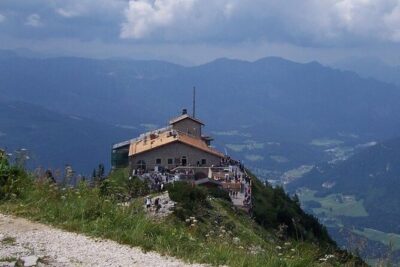 ★ 4.0Berchtesgaden and Eagle’s Nest Day Tour from MunichFrom $761,077 reviews
 ★ 4.5Berchtesgaden and Eagle’s Nest Day Trip from MunichFrom $78797 reviews
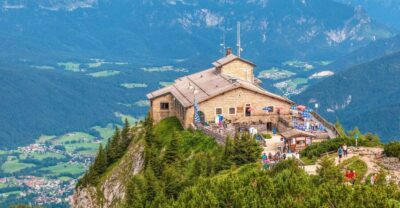 ★ 4.6Berchtesgaden Foothills and ObersalzbergFrom $80419 reviews
 ★ 4.8Guided Group Tour to Eagle’s NestFrom $176303 reviews
 ★ 5.0Eagle’s Nest Hiking TourFrom $240133 reviews
 ★ 5.0Eagle’s Nest-Berchtesgaden-Obersalzberg Private Half Day WWII Historical TourFrom $59164 reviews
 ★ 5.0Berchtesgaden: Private Eagle’s Nest & Obersalzberg WWII TourFrom $57732 reviews
 ★ 4.5Private TOUR Munich > Eagle Nest > Königssee > Salzburg > MunichFrom $51032 reviews
Browse the lists this tour appears in