
Reviewed · DACHAU MEMORIAL SITE TOURS
Dachau Memorial Public Tour
History hits hard at Dachau. This small-group Dachau Memorial public tour is interesting because it follows a clear route through key parts of the camp—so the story stays coherent instead of turning into a checklist. I especially like how guides such as Charlotte and Michael bring strong WW2 context, and how the walk connects the Main Gate to the roll call area, museum, bunker, and reconstructed barracks.
The one drawback: the subject is emotionally heavy, and it runs about 5 hours, so plan to stay steady and bring your own food or lunch timing since food and beverage aren’t included.
In This Review
- Key highlights you’ll feel in your day
- Why This Dachau Memorial Tour Feels Different From a Quick Visit
- Getting Started in Munich: Marienplatz Meeting Point and Timing
- The 5-Hour Structure That Turns Information Into Understanding
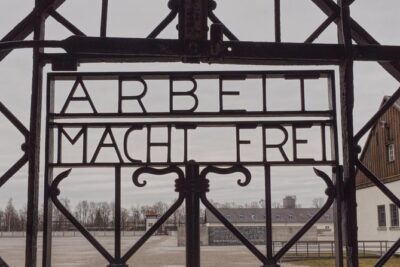
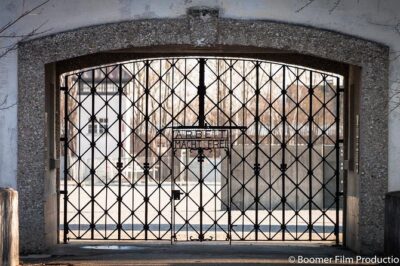
- Entering Through the Main Gate and Jourhaus: Where the System Took Shape
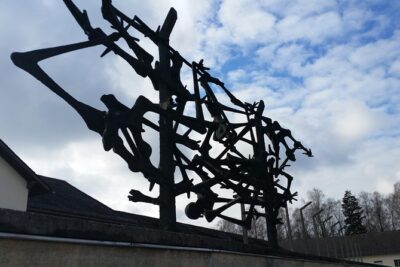
- The Roll Call Area and International Monument: A Place That Forces Clarity
- Former Maintenance Building Museum: Learning With Context (Not Just Facts)
- The Bunker: Understanding Prison Through the Spaces It Left Behind
- Reconstructed Barracks: Daily Life Without Turning It Into a Spectacle
- Religious Memorials: A Reminder That People Remained People
- Guard Towers and Outer Walls: Seeing the Camp as a Fortified System
- Remembrance Moments: Respectful Silence Outside the Crematorium Area
- Price and Value: What $118.74 Actually Buys You
- Who Should Book This Tour (and Who Might Think Twice)
- Practical Tips for Getting the Most From Your Time There
- Should You Book This Dachau Memorial Public Tour?
- FAQ
- How long is the Dachau Memorial public tour?
- Where does the tour start and where does it end?
- What time does the tour start?
- What’s included in the ticket price?
- Is food included?
- Is the memorial admission free?
- What’s the group size limit?
- Is this tour ticket mobile-friendly?
- What is the cancellation policy?
Key highlights you’ll feel in your day
- A tight route through the camp’s most important spaces, from the Main Gate and Jourhaus to the Roll Call Area and memorials
- A professional local guide who can explain the larger WW2 timeline, not just dates on signs
- Museum + documentary-style exhibits in the Former Maintenance Building that connect artifacts to stories
- Bunker and reconstructed barracks that show how punishment and daily life were structured
- Quiet remembrance moments, including a reported minute of silence outside the crematorium area
Other guided visits to the Dachau Memorial Site
- Dachau Concentration Camp Memorial Site Tour from Munich by Train★ 4.5 · 5,637 reviews
- From Munich: Dachau Memorial Site Day Tour★ 4.8 · 2,723 reviews
- From Munich: Dachau Memorial Site Half-Day Trip★ 4.7 · 2,526 reviews
- From Munich: Dachau Memorial Site Full-Day Tour★ 4.9 · 1,406 reviews
Why This Dachau Memorial Tour Feels Different From a Quick Visit
Dachau wasn’t just another site in Nazi Germany. It was the first concentration camp opened by the Nazis in 1933, starting with political prisoners and later turning into a forced-labor camp. Over its 12 years of operation, it held more than 200,000 inmates, and the memorial marks the fact that about 40,000 people from 34 nations died before liberation in 1945.
What makes a guided format valuable here is simple: these places can be confusing on your own. You’ll stand in front of buildings, memorials, and reconstructed spaces that look similar at first glance. A good guide helps you connect the dots—what each area was used for and why it mattered in the camp system.
Getting Started in Munich: Marienplatz Meeting Point and Timing
The tour starts at 10:00 am at Fischbrunnen at Marienplatz (Marienplatz 8, 80331 München). You’ll finish back at the same meeting point. That “in and out” structure helps if you’re trying to fit Dachau into an otherwise busy Munich itinerary.
This is also a small group experience, with a maximum of 15 travelers. Smaller groups tend to move with less chaos, which matters on a site like this. You’ll also be near public transportation, so it’s easier to arrive without building extra stress into your morning.
The 5-Hour Structure That Turns Information Into Understanding
With an approximate 5-hour duration, you’re getting more than a photo stop. The visit is built around the Memorial Site itself—your time is spent in the spaces where the story unfolds. That pacing is part of the value: you’re allowed to absorb, read, and listen without rushing straight through.
You should also expect a steady rhythm of walking and standing. Even if you don’t do long museum-style circuits, you’ll likely be on your feet for much of the tour window. If you’re sensitive to emotionally intense settings, plan your day so you’re not heading straight to a big dinner or party afterward.
- From Munich: Neuschwanstein & Linderhof Castle Full-Day Trip
★ 4.6 · 14,646 reviews - Neuschwanstein & Linderhof Castle-Fairytale Day Tour from Munich
★ 4.5 · 7,275 reviews - Munich: Third Reich & WWII Walking Tour
★ 4.6 · 6,181 reviews
Entering Through the Main Gate and Jourhaus: Where the System Took Shape
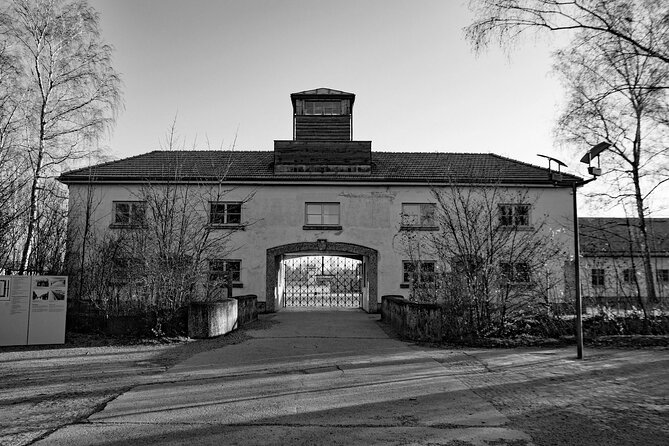
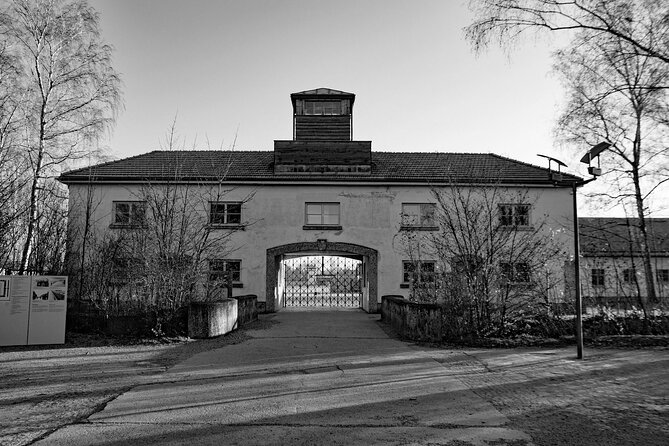
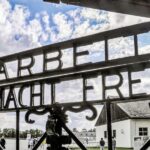
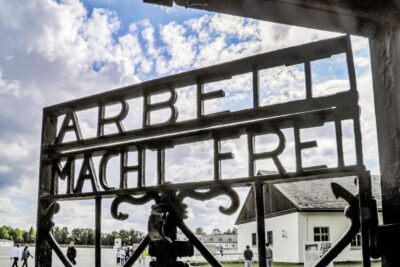
The tour’s first major focus is the Main Gate and the Jourhaus. Stepping through the gate is a heavy moment, because it immediately frames the camp as an organized place, not an abstract idea. The Jourhaus was central to camp administration, so it helps you understand that this wasn’t random cruelty—it was structured control.
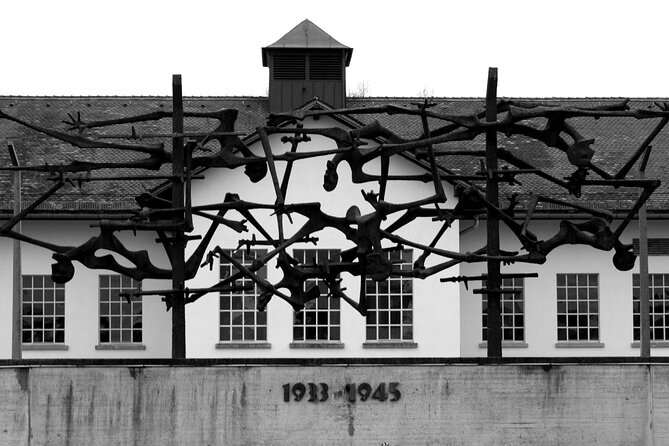
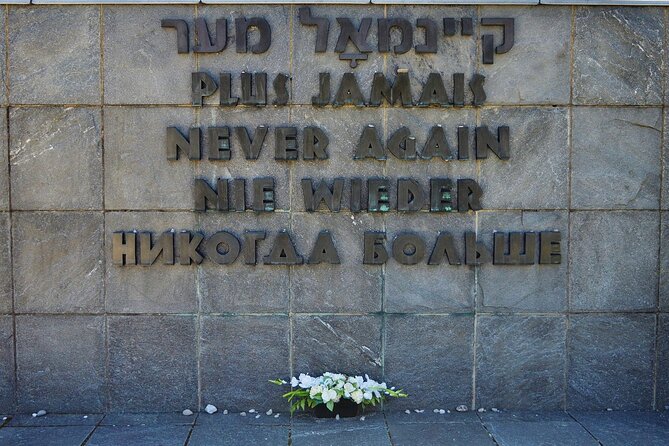
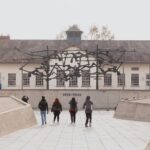
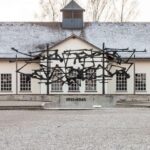
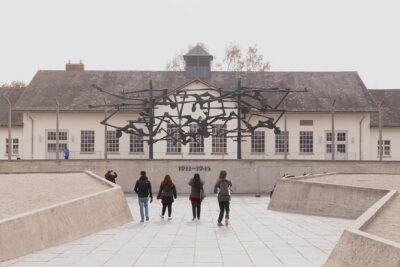
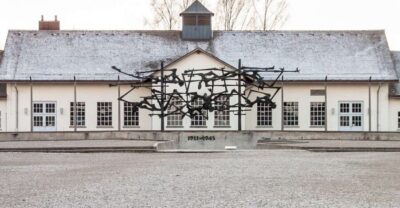
From there, you move toward the camp’s roll call area. This is where the International Monument now stands as a tribute to those who endured the camp. Paying attention here is more than respectful behavior; it’s how you grasp the role of assembly, inspection, and discipline in daily camp life.
The Roll Call Area and International Monument: A Place That Forces Clarity
A lot of memorial sites include plaques and walls. This one includes an open, defined space where people were required to gather. Seeing that geography helps you understand the power dynamics that came from being watched, counted, and ordered.
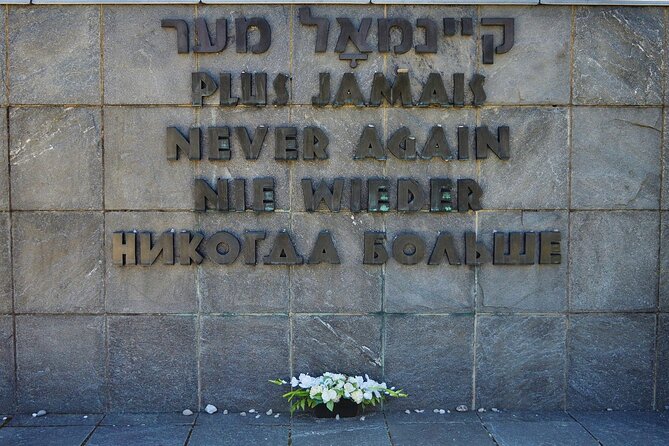
The International Monument makes that meaning visible. It’s a marker that reminds you: the suffering here wasn’t limited to one country or one language group. The overview facts—34 nations affected and about 40,000 deaths—aren’t just numbers anymore once you’ve stood where people were processed.
Former Maintenance Building Museum: Learning With Context (Not Just Facts)
Next, you’ll spend time in the Former Maintenance Building, which houses a museum. According to the tour description, it uses exhibits and documentaries to guide you through the camp’s history. This is the part of the visit that tends to help people connect what they’re seeing outside with what happened over time.
I like this approach because it reduces guesswork. Without context, it’s easy to interpret one building in isolation. With museum materials, you can place each area inside the broader system—how political imprisonment became forced labor and how the camp operated over 12 years.
The Bunker: Understanding Prison Through the Spaces It Left Behind
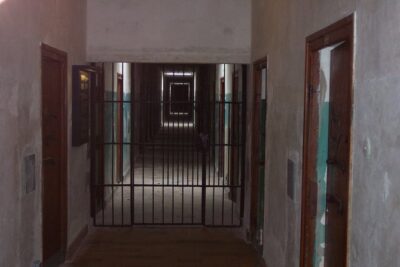
The tour also includes the Bunker, described as a former prison area. This is one of those stops where your mind may want to rush, because it’s the kind of place that reads as punishment on sight. But giving it time is important, since it reflects how incarceration was enforced and how cruelty was formalized.
There’s no “easy” way to process this part of the visit. Instead, think of it as learning what control looked like in architecture and confinement. You’ll likely notice how stark the setting is—because the goal was not humane comfort.
Reconstructed Barracks: Daily Life Without Turning It Into a Spectacle
Two reconstructed barracks are included in the memorial route. The goal here is to offer glimpses into prisoners’ daily lives. Reconstruction can be tricky: it helps you imagine, but it can never be a perfect substitute for original rooms and artifacts. Still, it’s often where visitors finally understand how routine and living conditions were shaped by the camp environment.
This is also a moment to listen to your guide’s framing. In sites like this, the details that matter aren’t just the objects or layout—they’re the meaning behind the space. With the right commentary, you’ll understand how barracks fit into schedules, labor, discipline, and survival.
Religious Memorials: A Reminder That People Remained People
One of the tour’s listed stops includes diverse Religious Memorials. This part can feel surprising at first, because you’re used to memorial sites focusing only on buildings and dates. Here, the memorial design points toward unity amid adversity.
It’s not “comforting.” It’s grounding. It helps you remember that inmates weren’t only prisoners; they carried beliefs, communities, and identities even inside a system designed to strip those away.
Guard Towers and Outer Walls: Seeing the Camp as a Fortified System
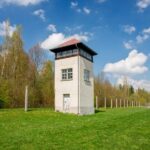
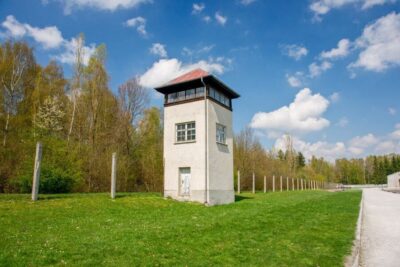
The memorial route also highlights security installations, including guard towers and partially reconstructed outer walls. This part matters because it reframes the camp as a secured, guarded environment—not just a set of buildings. When you see the surrounding structure, the purpose of confinement becomes physical and obvious.
Even partial reconstructions help you understand the logic of control. You can start to see why escape attempts were so difficult and why surveillance was central to daily life. It turns “camp” into a tangible machine that operated day after day.
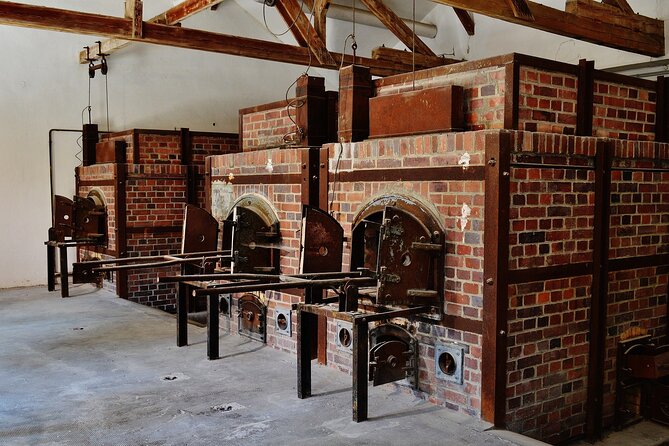
Remembrance Moments: Respectful Silence Outside the Crematorium Area
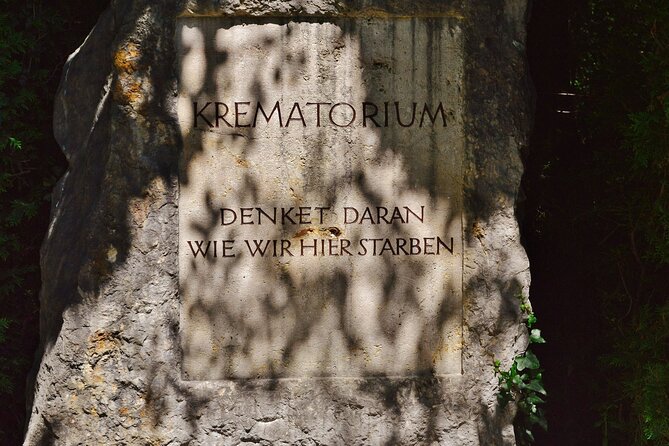
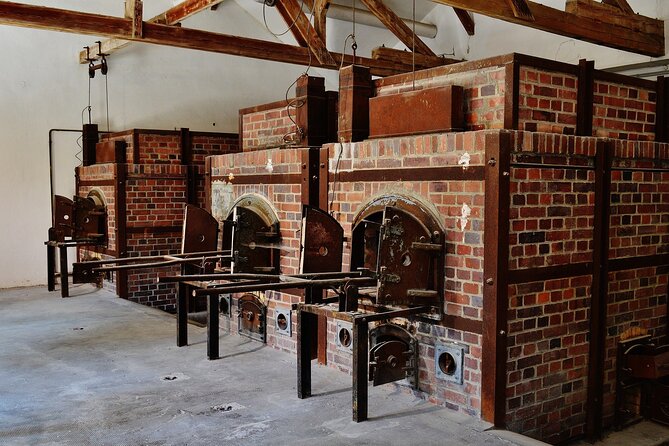
One detail from the experience stands out for many people: a minute of silence outside the crematorium area. That kind of pause isn’t the same as sightseeing. It’s a structured moment of respect, and it helps the visit stay anchored in remembrance.
If you’re the type who likes to bring meaning into your travel (not just photos), you’ll probably appreciate this pacing. Show up ready to be quiet for a moment. Put your phone away and let the silence do what it’s meant to do.
Price and Value: What $118.74 Actually Buys You
The tour price is $118.74 per person. That sounds steep until you break down what’s included. What you’re paying for is a local professional guide on a public guided tour, delivered in a format that keeps the group small (max 15).
Admission is listed as free, so the main cost isn’t entry fees—it’s interpretation and time with a guide who can connect the site to the wider WWII story. Group discounts and the use of a mobile ticket can also make planning smoother. And the tour runs about 5 hours, which is a decent chunk of time for a site that deserves more than a quick glance.
One practical value note: this is booked on average 36 days in advance, which is a clue that slots can fill. If you’re set on a specific date, don’t wait until the last minute.
Who Should Book This Tour (and Who Might Think Twice)
This Dachau Memorial tour fits best if you want an organized visit with clear historical framing. It’s also a strong choice for first-time visitors who feel uncertain about what they’re seeing. The guide-led structure helps you avoid getting lost in names, buildings, and memorial details.
It may feel like a lot if you’re looking for a light day trip. The camp’s history includes forced labor and large-scale death, and the memorial spaces are designed to be direct. If you’re traveling with kids or anyone who struggles with heavy historical material, you’ll want to judge carefully.
Practical Tips for Getting the Most From Your Time There
Since food and beverage aren’t included, I’d plan a snack or lunch timing before or after your tour slot. You’ll be on-site long enough that hunger can distract from what you came to understand.
Also, consider bringing a notebook or saved notes in your phone for questions. A good tour is partly about listening, and partly about noticing what you don’t yet understand. With the kind of guidance reflected by Charlotte and Michael, you’ll likely be able to ask at least a couple of targeted questions.
Finally, arrive with the mindset that this is a memorial visit first, not a standard attraction. If you do that, the minute silence and the memorial spaces will land with the weight they’re meant to have.
Should You Book This Dachau Memorial Public Tour?
I think this is worth booking if you want a guided, structured experience at Dachau, with a local professional guide and a small group limit. The tour’s focus on major camp elements—Main Gate, Jourhaus, roll call area, museum, bunker, reconstructed barracks, religious memorials, and security installations—gives you an actual path through the site rather than a vague wander.
Skip it only if you truly prefer to visit memorials on your own, or if you know this level of tragedy and confinement history will be too hard for your day. If you’re ready for a sobering, guided learning experience in Munich, this one is a solid choice.
FAQ
How long is the Dachau Memorial public tour?
The tour is approximately 5 hours.
Where does the tour start and where does it end?
It starts at Fischbrunnen at Marienplatz 8, 80331 München, Germany, and ends back at the same meeting point.
What time does the tour start?
The start time is 10:00 am.
What’s included in the ticket price?
It includes a local professional guide on a public guided tour.
Is food included?
No. Food and beverage are not included.
Is the memorial admission free?
Admission is listed as free.
What’s the group size limit?
The tour has a maximum of 15 travelers.
Is this tour ticket mobile-friendly?
Yes, it includes a mobile ticket.
What is the cancellation policy?
You can cancel for a full refund up to 24 hours before the experience starts, and confirmation is received at the time of booking.
Visiting the Dachau Memorial Site
Just added to the Munich Explorer notebook
Dachau Memorial Site Tours, compared.
 ★ 4.5Dachau Concentration Camp Memorial Site Tour from Munich by TrainFrom $645,637 reviews
 ★ 4.8Dachau Memorial Site Day TourFrom $492,723 reviews
 ★ 4.7Dachau Memorial Site Half-Day TripFrom $622,526 reviews
 ★ 4.9Dachau Memorial Site Full-Day TourFrom $511,406 reviews
 ★ 4.5Dachau Concentration Camp Memorial Tour with Train from MunichFrom $56955 reviews
 ★ 5.0Early-Start Dachau Memorial Half-Day Tour from MunichFrom $62942 reviews
 ★ 5.0Guided Dachau Concentration Camp Memorial Site Tour with Train from MunichFrom $90920 reviews
 ★ 5.0Full-Day Dachau Concentration Camp Memorial Site Tour from MunichFrom $48897 reviews
Browse the lists this tour appears in