Reviewed · MUNICH
Hidden Architectural Gems of Munich (Max. 16 guests)
Munich has a second face, south of the center. This small-group walk with architect and official guide Philipp takes you from Munich Volkstheater into street art walls, then down toward the Isar for water-story details and a steamboat beer garden stop. I especially love the mix of architecture + street art in one route, because it teaches you how to notice details in real life, not just landmark photos. One thing to plan for: it’s outdoors and on foot, and it’s not for wheelchair users, so comfortable shoes and warm layers matter.
With a max group size of 16, you actually get time to ask questions and point things out as you go. The tour runs in English, German, and Spanish, lasts about 150 minutes, and is family friendly. It also has a strong track record, sitting at 4.9 stars from 52 reviews (and listed as 100% five-star on Google).
You’ll end in a fun place to linger, but food and drinks are on your own. If you’re hoping for museum interiors or guaranteed indoor stops, keep your expectations realistic and treat it as a focused walk through neighborhoods, bridges, and creative corners.
In This Review
- Key points to know before you go
- Munich’s south feels personal on this 150-minute architecture walk
- Where you meet: Piazza Zenetti and easy subway access
- How Philipp’s architect-eye changes what you notice on the street
- The route stop-by-stop: Volkstheater, street art, and the Isar story
- Start: Piazza Zenetti → Munich Volkstheater
- The street art segment: Beginner’s Wall and Bahnwärter Thiel
- Toward the river: MS Utting by the bridge at Lagerhausstrasse
- Dreimühlenstraße and Wittelsbacherbrücke: views that explain movement
- Claude-Lorrain-Straße to Little Venice
- The neighborhoods: Scherbenviertel and Untergiesing
- Final stop: Gans Woanders
- Why the steamboat beer garden (Alte Utting) is more than a novelty
- Street art meets architecture: Beginner’s Wall and Bahnwärter Thiel with context
- Value for money: $30 for an official guide and an architect
- Who this tour is best for (and who may want to skip it)
- Final call: should you book this Munich south architecture walk?
- FAQ
- How long is the tour?
- How many people are in the group?
- What does the tour cost?
- Where do we meet?
- What subway stop should I use?
- What languages are offered?
- Is it suitable for wheelchair users?
- Are food and drinks included?
- What should I bring?
- Can I cancel if plans change?
Key points to know before you go
- Official Munich guide + architect Philipp: you get both city context and design thinking.
- Small group of max 16: easier pace, more conversation, less rushing.
- Street art stops like Beginner’s Wall and Bahnwärter Thiel: creativity explained through place, not just photos.
- Isar river and Munich water history: the city’s relationship to water becomes a story you can walk through.
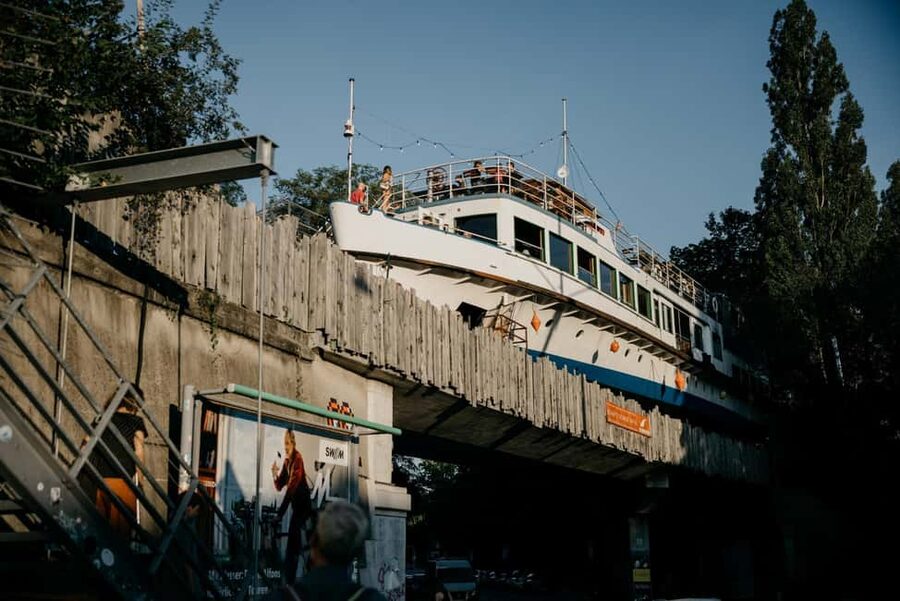
- Unique beer stop at Alte Utting (MS Utting): a steamboat setting that changes how you picture Munich beer culture.
- Ends at Gans Woanders: whimsical, artistic energy to wrap up the route.
Still mapping out your time in Munich? A few more tours worth a look.
- From Munich: Neuschwanstein & Linderhof Castle Full-Day Trip★ 4.6 · 14,646 reviews
- Neuschwanstein & Linderhof Castle-Fairytale Day Tour from Munich★ 4.5 · 7,275 reviews
- Munich: Third Reich & WWII Walking Tour★ 4.6 · 6,181 reviews
- Dachau Concentration Camp Memorial Site Tour from Munich by Train★ 4.5 · 5,637 reviews
Munich’s south feels personal on this 150-minute architecture walk
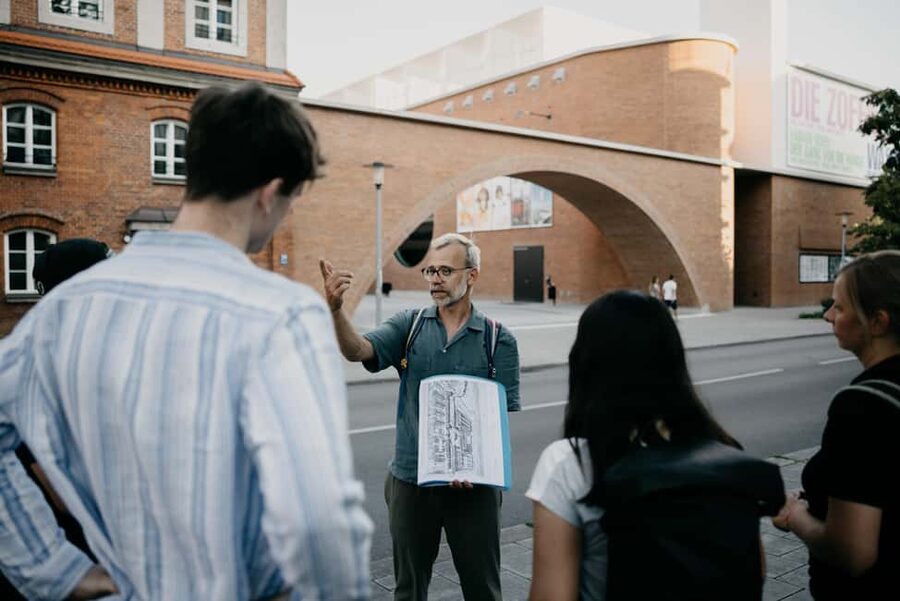
If you’ve ever toured central Munich and thought you saw the famous bits but missed the spirit, this route is a smart correction. It’s not about ticking off one big monument after another. Instead, you get a guided way of looking at the city: how buildings sit in streets, how creative spaces grow, and how Munich’s water story shapes daily life.
Philipp brings a different kind of attention. You’re looking at facades and street corners with an architect’s eye, but you’re also learning how official planning meets everyday creativity. That matters because Munich can look orderly from a distance, yet up close it’s full of small choices, experiments, and local personality.
I like the practical rhythm: the walk gives you enough stops to feel like you traveled somewhere, but it’s short enough that you’re not stuck wandering all afternoon. And since it’s a small group, the guide can react to your questions instead of reading a script at full speed.
One more plus: you’ll be in the south of Munich, around Untergiesing and along the Isar, not just in the center. That shift alone makes the experience feel more like a real neighborhood walk and less like a photo bus tour.
Where you meet: Piazza Zenetti and easy subway access
You’ll start at Piazza Zenetti Square. It’s identifiable by distinctive grey and turquoise street furniture. When you arrive, look for Philipp with a tablet slung over his shoulder.
Getting there is straightforward with the subway. Take U3 or U6, then exit at Poccistrasse station and walk about 10 minutes to the meeting point. If you’re traveling with a stroller or family group, the transit part is simple, but remember the tour itself is walking outdoors.
For this kind of route, I’d treat your footwear like a serious tool. Bring comfortable shoes, because you’ll be on sidewalks and along river-adjacent areas. Also bring warm clothing. Munich’s winter chill can turn a “quick stroll” into an endurance event, even if the duration is only around 2.5 hours.
Two rules to keep in mind: smoking isn’t allowed, and it isn’t suitable for wheelchair users. If mobility is a concern, you may want to rethink this specific tour style and choose something with fewer outdoor walking segments.
How Philipp’s architect-eye changes what you notice on the street
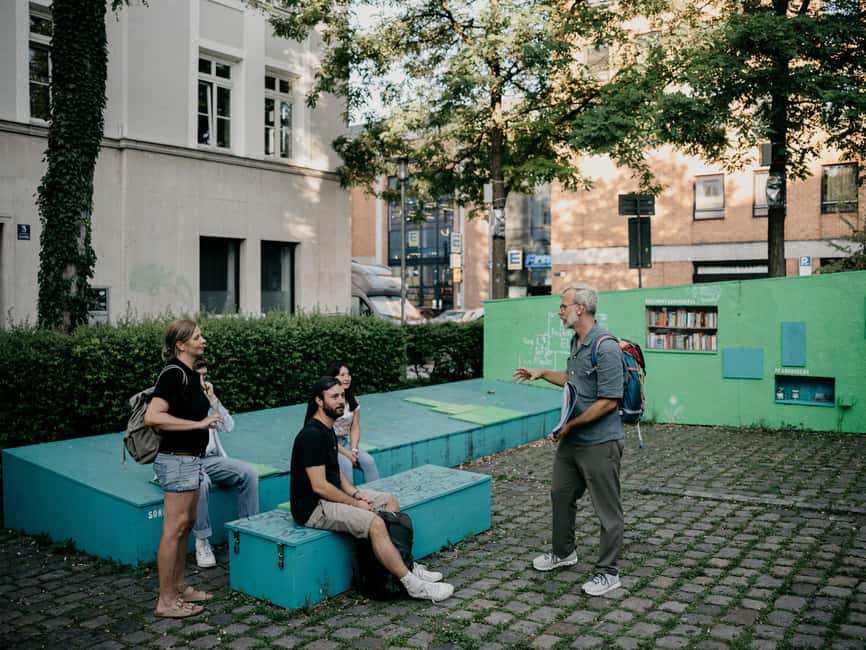
Philipp isn’t only a guide who knows facts. He’s an architect, and that changes the kind of commentary you hear. You start noticing how form affects comfort: where people gather, how streets frame views, and how a building’s details signal what the place values.
What I like about this approach is that it doesn’t get stuck in technical language. The tour stays grounded in what you can see and what you can interpret. You’ll learn context for landmarks like Munich Volkstheater, but you’ll also get direction for the smaller things, like how a creative spot works as a cultural hub, or why a bridge crossing feels like more than just a shortcut.
From the overall feedback pattern, people consistently praise the way Philipp answers questions and brings energy to the route. That’s exactly what you want in a short walking tour. You don’t just receive information—you get prompted to look, then you get your questions handled before you move on.
And because the tour is family friendly, the style tends to work for different ages. If you’re traveling with teens or younger kids, the street art and creative spaces tend to be the kind of subject that doesn’t feel like homework.
- From Munich: Neuschwanstein & Linderhof Castle Full-Day Trip
★ 4.6 · 14,646 reviews - Neuschwanstein & Linderhof Castle-Fairytale Day Tour from Munich
★ 4.5 · 7,275 reviews - Munich: Third Reich & WWII Walking Tour
★ 4.6 · 6,181 reviews
The route stop-by-stop: Volkstheater, street art, and the Isar story

This tour moves through a sequence of areas that each add a different layer to Munich’s identity. Here’s how the stops fit together and what to watch for.
Start: Piazza Zenetti → Munich Volkstheater
You begin at Piazza Zenetti, then head to Münchner Volkstheater. This is a good opener because it sets the tone: Munich isn’t only museums and classical facades. It has performance culture and civic buildings that reflect community life.
At this stage, you’ll get oriented—both geographically and visually. You’ll also hear how the building’s role ties into the neighborhood around it, which makes the later creative stops feel connected instead of random.
The street art segment: Beginner’s Wall and Bahnwärter Thiel
Next, you shift gears into the street art scene at Beginner’s Wall, followed by Bahnwärter Thiel. This is one of my favorite types of tour programming: it treats street art as part of the city’s design conversation, not as a separate entertainment category.
At Beginner’s Wall, you’ll be in the right mood for noticing composition—how artists work with walls, spacing, and the scale of a street-facing surface. Then Bahnwärter Thiel takes that energy and frames it as a real cultural space. The goal isn’t just to point at art; it’s to explain how a place like this becomes a meeting point for creativity.
If you’re the type who worries that street art tours will be all vibes and no structure, this one is built to connect it back to architecture and place.
Toward the river: MS Utting by the bridge at Lagerhausstrasse
From there, the route heads toward MS Utting, connected to the area at Lagerhausstrasse. You’re moving closer to the Isar, and the tour uses this transition to teach you about Munich’s relationship with water.
This is where you’ll start hearing the water-history thread that runs through the walk. Even if you only catch it in broad strokes, you’ll feel the difference: Munich stops looking like a backdrop and starts looking like a city shaped by rivers, crossings, and how people made life work with water.
Dreimühlenstraße and Wittelsbacherbrücke: views that explain movement
As you continue through stops like Dreimühlenstraße and cross near Wittelsbacherbrücke, the tour becomes more about how you move through the city. Bridges do more than connect sides. They change sightlines, wind direction, and the way neighborhoods feel.
Watch for how the city opens and compresses around crossings. When you understand that, later stops like Little Venice make more sense. You’re not just arriving at a photo-worthy spot—you’re understanding why it sits where it does.
Claude-Lorrain-Straße to Little Venice
You’ll head along Claude-Lorrain-Straße and then reach Little Venice. This area is popular for good reason, but what makes it work on this tour is the setup: you’ve been learning how water shapes Munich, so the river-side feel becomes part of the lesson.
At Little Venice, you’ll be in a zone where the city seems to soften around the water. Pay attention to how the space invites strolling and lingering. It’s the kind of place where you can see why a beer garden later in the day feels like the natural next step.
The neighborhoods: Scherbenviertel and Untergiesing
The route also passes through charming areas associated with Scherbenviertel and the hidden-district feel of Untergiesing. This part is about human scale—streets that feel lived-in, not staged.
You’ll likely notice small contrasts: quieter corners next to creative energy, and tidy architecture beside places where people have turned walls and spaces into cultural expression.
Final stop: Gans Woanders
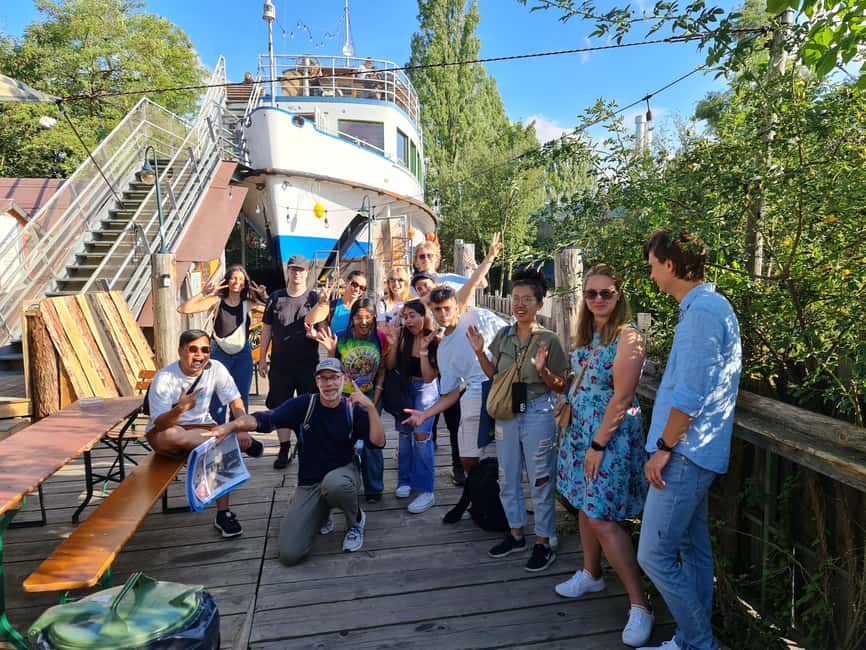
The walk ends at Gans Woanders, a whimsical beer garden with artistic flair. This is a smart finish. By the time you reach it, you’re ready to sit, reflect, and keep the conversation going with your guide if time allows.
Just remember: food and drinks aren’t included. So think of this as a last-chance area to grab a drink or snack on your own terms after the guided part.
Why the steamboat beer garden (Alte Utting) is more than a novelty

Yes, the idea sounds fun: a beer garden on a steamboat. But the tour treats Alte Utting as a way to understand Munich more deeply.
The key is the connection to water. When you’re near the Isar and you learn about how Munich’s water story works, a steamboat setting stops being a gimmick. It becomes a living example of how water and leisure have always intertwined here.
Also, a beer garden is a natural social pause. If you’re doing a walking tour, you need moments to reset. The steamboat scene gives you that, and it does it in a way that matches the tour’s theme.
One practical note: since drinks and food aren’t included, you’ll want to decide in advance how you want to handle it. If you’re trying to keep costs down, consider saving your main meal for later. If you’re excited about beer garden culture, then plan to budget for a drink and maybe a snack at the end near Gans Woanders.
Street art meets architecture: Beginner’s Wall and Bahnwärter Thiel with context

Some city street art tours treat artwork like a separate planet. This one avoids that. When you stand in front of works at Beginner’s Wall, you’re not only seeing images—you’re understanding why the wall exists, how it’s part of the street environment, and how creativity becomes part of public space.
Then Bahnwärter Thiel shifts the feeling from wall-to-wall viewing into place-to-place understanding. You’re learning how creative hubs can live inside the city’s fabric instead of living behind it.
If you’re an architecture fan, this pairing works because it shows that design isn’t only about official buildings. Everyday structures—repurposed spaces, community art areas, and cultural hangouts—also shape how neighborhoods function.
And if you’re more of a casual visitor, it still works. The tour doesn’t require you to be an art student. You just have to enjoy noticing, and Philipp will do the translating.
Value for money: $30 for an official guide and an architect
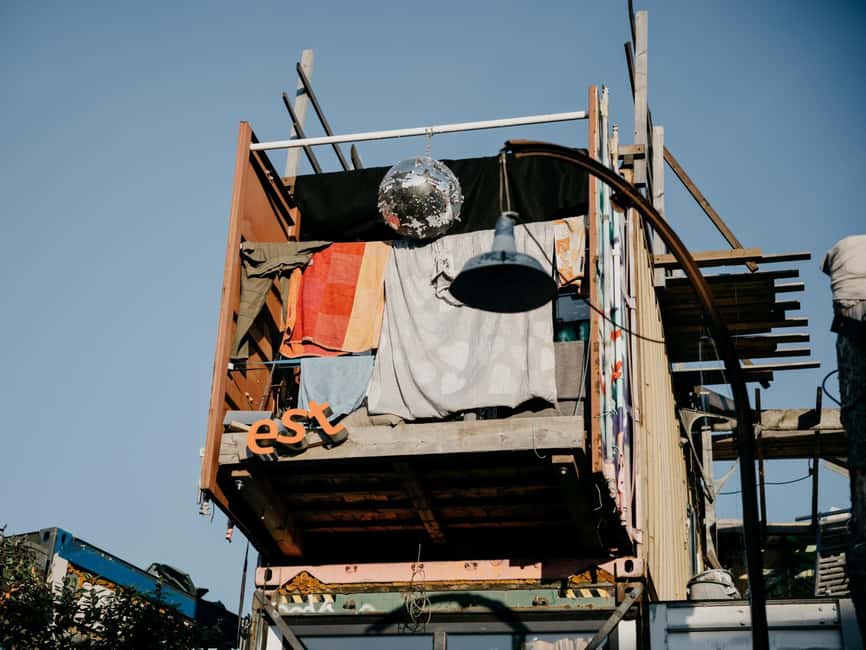
At about $30 per person for roughly 150 minutes, the value is in the mix of expertise and the pacing. Many city walks either stay purely architectural or purely cultural. This one links architecture, street art, and water history in a compact time frame.
You’re also not paying for transportation included in the price. That’s normal for walking tours, but it’s worth noting. You’ll handle getting to the meeting point, likely by subway (U3/U6 to Poccistrasse) and a short walk.
What’s included is the real value: Philipp as an official Munich guide and architect, plus an insight-led route through the sites, plus a digital map of favorite places to visit in Munich. That map can be handy for extending the day after the tour, especially if you want a few extra ideas that fit the same theme.
And because the group max is 16, you get more interaction per person than you would on larger tours.
Who this tour is best for (and who may want to skip it)

You’ll probably love this experience if you:
- Like architecture, but also want the city to feel human and current.
- Want a walk that includes street art without losing structure.
- Enjoy river settings and want a guide-led way to understand Munich’s water story.
- Prefer smaller groups with time for questions.
It may be a tough match if you:
- Need wheelchair accessibility, since it isn’t suitable for wheelchair users.
- Want mostly indoor stops or a fully seated experience.
- Have low tolerance for outdoor walking in colder weather, since warm clothing and comfortable shoes are part of the plan.
- Expect food and drinks to be included, since they are not.
This is also a good choice for families because the route includes creative visuals and clear guided explanation, and the overall duration is short enough for energy levels.
Final call: should you book this Munich south architecture walk?
If your ideal Munich day includes design details, street art stops, and a river-side story ending at a fun beer garden, then yes, I’d book it. The strongest reason is the combination: you get an official guide’s city understanding plus an architect’s way of teaching you what you’re looking at.
The other reason to lean in is pacing and group size. Small group tours can feel personal, and this one is built for conversation rather than a fast march.
Just be realistic about what it is: a 150-minute walking experience with outdoor time and no built-in food stop included. If you pack warm layers and choose shoes you can trust, you’ll have a day that feels like Munich is talking back to you.
FAQ
How long is the tour?
The tour lasts about 150 minutes.
How many people are in the group?
It’s a small group with a maximum of 16 guests.
What does the tour cost?
The price listed is $30 per person.
Where do we meet?
You meet at Piazza Zenetti Square. It has distinctive grey and turquoise street furniture. Philipp is easy to spot with a tablet slung over his shoulder.
What subway stop should I use?
Take subway lines U3 or U6, exit at Poccistrasse station, then walk about 10 minutes to the meeting point.
What languages are offered?
The live tour guide is available in English, German, and Spanish.
Is it suitable for wheelchair users?
No. It’s not suitable for wheelchair users.
Are food and drinks included?
No. Food and drinks are not included.
What should I bring?
Bring comfortable shoes and warm clothing.
Can I cancel if plans change?
Yes. Free cancellation is available up to 24 hours in advance for a full refund.