Reviewed · MUNICH
Behind The Screen Discover Authentic Munich with a Private Host
Munich clicks into focus fast on foot. This private 3-hour walk with host Naveen turns headline sights into real stories, with planning that can match your interests before you even meet. I especially like how the experience feels personal, not stock.
You’ll also get a smart mix of places: the central square for the glockenspiel, the food-energy of Viktualienmarkt, and the grand power sites around the old center. One consideration: two major stops have admission not included (Hofbräu München and Residenz), and Viktualienmarkt is closed on public holidays and Sundays.
In This Review
- Key points that matter
- A private Munich host who works like a local
- Marienplatz and the Glockenspiel: the schedule that shapes your morning
- Viktualienmarkt: where Munich’s food pulse is easiest to feel
- Frauenkirche: the big hall church that still surprises people
- Hofbräu München: beer-hall culture that feeds Oktoberfest stories
- Odeonsplatz: a short walk with heavy historical weight
- Residenz Munich: the Wittelsbach palace in city-palace scale
- Price and value: what you’re really paying for at $325.89
- The kind of traveler this fits best
- Timing tips: when your route makes the most sense
- Should you book this private Munich walk?
- FAQ
- FAQ
- How long is the tour?
- Is this a private tour?
- What language is the tour offered in?
- What stops do you visit in Munich?
- Are admission fees included for every stop?
- Is Viktualienmarkt open every day?
- Which admission costs might cost extra during the tour?
- Where does the tour start and end?
- What are the tour’s operating hours?
- Is there free cancellation?
- Can you bring a service animal?
Key points that matter
- Private host attention: Your walk stays focused on what your group wants to see.
- Marienplatz glockenspiel timing: You’ll catch the famous bell play in summer/winter schedules.
- Food-first Munich at Viktualienmarkt: Great for getting your bearings by taste, not just by landmarks.
- Top-tier photo moments: The guide supports the trip with historical images and practical photo stops.
- Beer-hall and political Munich in one loop: Hofbräu München and Odeonsplatz connect culture and conflict.
- Wittelsbach power center at Residenz: You get the palace context in a short window.
Still mapping out your time in Munich? A few more tours worth a look.
- From Munich: Neuschwanstein & Linderhof Castle Full-Day Trip★ 4.6 · 14,646 reviews
- Neuschwanstein & Linderhof Castle-Fairytale Day Tour from Munich★ 4.5 · 7,275 reviews
- Munich: Third Reich & WWII Walking Tour★ 4.6 · 6,181 reviews
- Dachau Concentration Camp Memorial Site Tour from Munich by Train★ 4.5 · 5,637 reviews
A private Munich host who works like a local
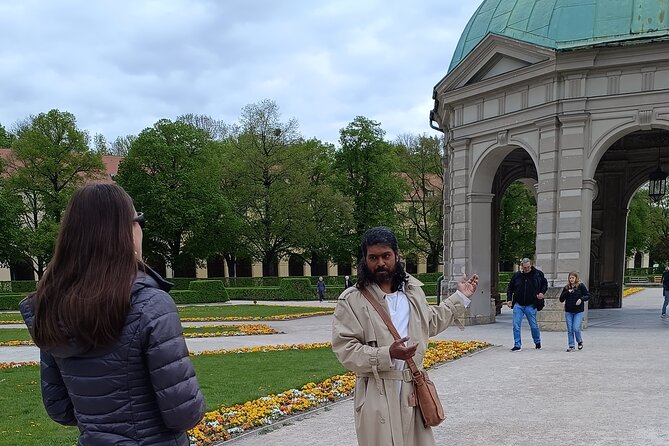
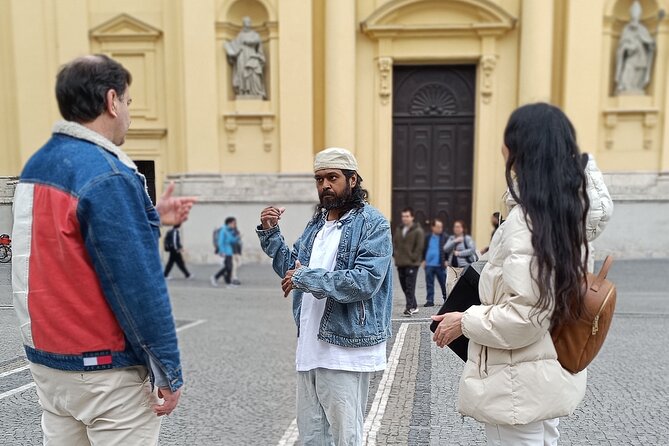
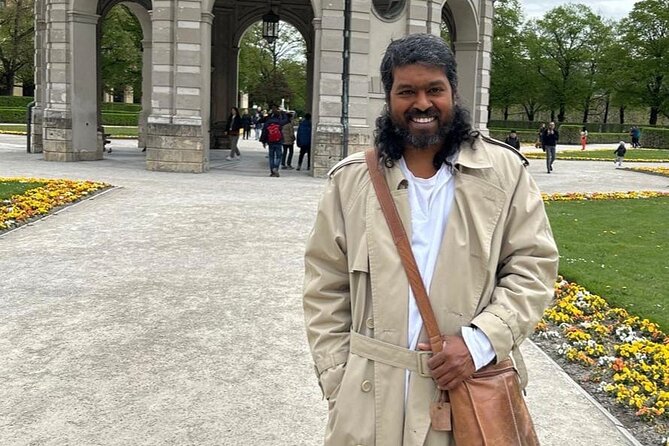
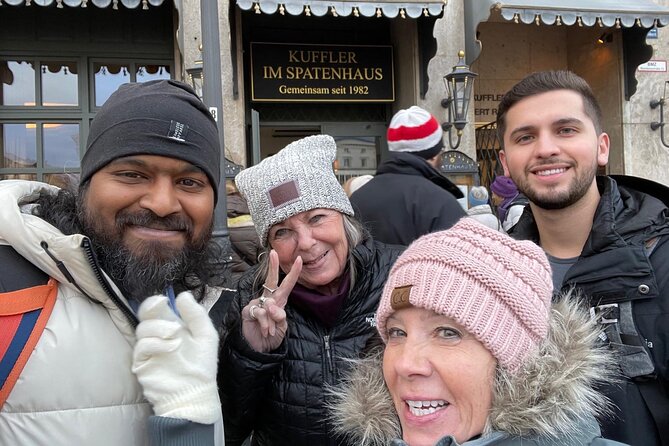
A private tour is best when it does two things: it saves you guesswork, and it stops the city from turning into a blur. This one does both, because it’s run as a private walking tour with host Naveen, so the focus can shift based on your questions and interests.
What I like most is the effort you get before the walk. In practice, that means you can share what you care about—history, food, architecture, or a family-friendly pace—and the guide can steer the route. Afterward, you’re not left with just photos you took yourself; the guide follows up with extra historical images, which helps you remember what you saw and why it mattered.
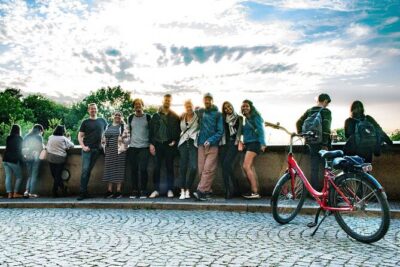
The other practical win: you get major landmarks, but you’re not trapped in a huge group. That matters in Munich’s center, where it’s easy to lose time to crowds and slow moving conversations. Here, your group’s pace stays in control.
Marienplatz and the Glockenspiel: the schedule that shapes your morning
Marienplatz is where Munich shows its face—government buildings, church towers, and the rhythm of daily life. You start with a short introduction to Munich’s arc, reaching back around 1600 years and bringing it forward to the city you see today.
Then comes the glockenspiel. It’s not just a show; it’s a clock for the city’s imagination. During the summer day time, the bell play runs three times; in winter day time, it runs twice. Your timing on the walk matters here, because the whole point is to line up with that performance rather than just standing nearby and hoping.
How to enjoy this stop more: treat it like a pause button. Look up for the mechanics and the story beats, then glance around at the square itself—because the show is only one layer of what Marienplatz is doing.
Viktualienmarkt: where Munich’s food pulse is easiest to feel
If you want to understand Munich fast, you need more than buildings. You need the food culture that local people circle back to. That’s why Viktualienmarkt is such a strong stop.
This market is a farmer-style food hall in the open air—an ideal place to get your bearings as a foodie. It’s often the kind of location that helps you decode what neighborhoods “feel like” without needing a long explanation.
There is one day-to-day detail to keep in mind: Viktualienmarkt is closed on public holidays and Sundays. So if your dates land on a Sunday, you may want to adjust expectations and focus on what’s nearby in the center.
Value for your trip: even if you don’t buy much, you learn. You’ll start to recognize the foods Munich treats as normal, not special-occasion. That makes the rest of your meals in town easier to choose.
- From Munich: Neuschwanstein & Linderhof Castle Full-Day Trip
★ 4.6 · 14,646 reviews - Neuschwanstein & Linderhof Castle-Fairytale Day Tour from Munich
★ 4.5 · 7,275 reviews - Munich: Third Reich & WWII Walking Tour
★ 4.6 · 6,181 reviews
Frauenkirche: the big hall church that still surprises people
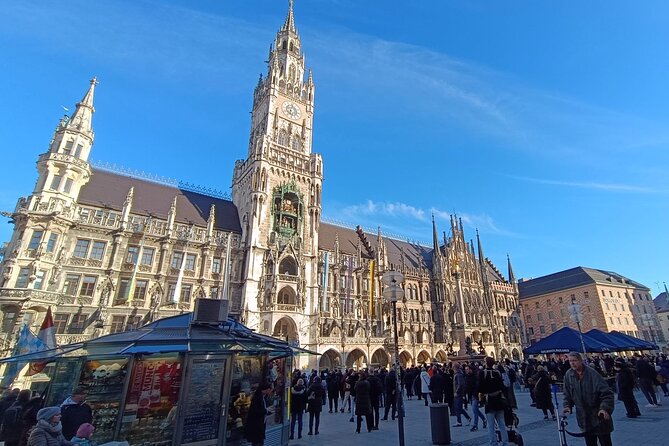
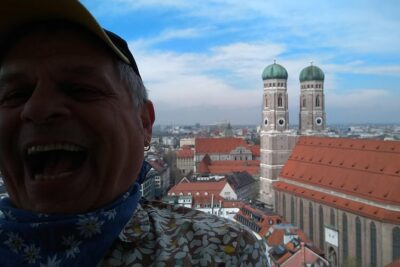
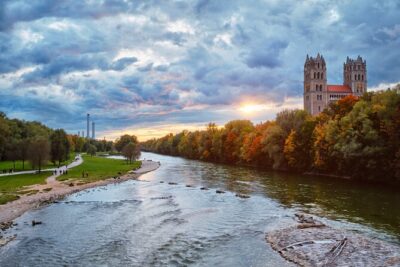
Frauenkirche is the cathedral of Our Dear Lady in Munich, tied to the archdiocese of Munich and neighboring Freising. It’s also described as the biggest hall church in the world, which is a bold claim—and the building lives up to the scale once you’re standing in front of it.
This stop is short by design, but it works because it’s a “read the building” moment. Instead of trying to cram a full museum visit into three hours, the walk uses Frauenkirche to give you orientation: where this faith center sits in the city, how it dominates the skyline, and why Munich’s identity is tied to churches like this.
Quick practical tip: come with one question. For example, ask yourself what makes a hall church feel different from other church layouts. If you do that, you’ll notice more than you otherwise would.
Hofbräu München: beer-hall culture that feeds Oktoberfest stories
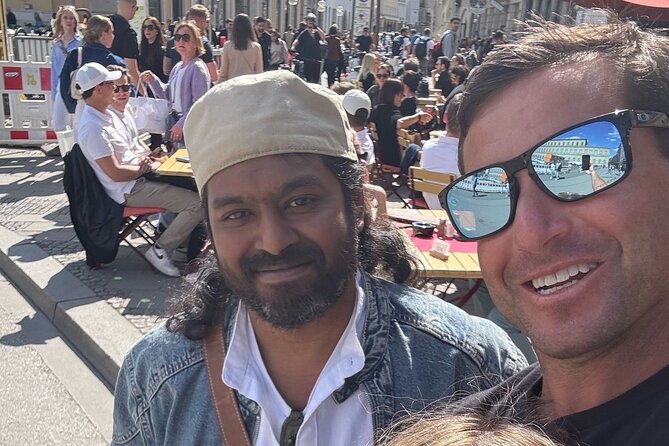
Hofbräu München is the kind of stop that turns the city’s festive reputation into something tangible. It’s linked to the Oktoberfest story as a prelude, with origins dating to 1588–89.
This is also where Munich’s showmanship has deep roots. The place is famous for being tied to a famous beer hall moment that later helped shape the way people talk about Bavarian celebration. Even if you’re not chasing political history, you’ll feel the cultural gravity here—like you’ve arrived at one of the city’s central “story locations.”
There’s also a budget reality: admission here is not included in the tour price. That doesn’t make it a bad stop—it just means you should expect a small extra cost if you want to go inside fully rather than only look from the outside.
Best way to handle it: decide ahead of time whether you want Hofbräu München as a photo-and-sense stop, or as a sit-down beer-hall experience. Either can work, but it changes what you should carry money for.
Odeonsplatz: a short walk with heavy historical weight
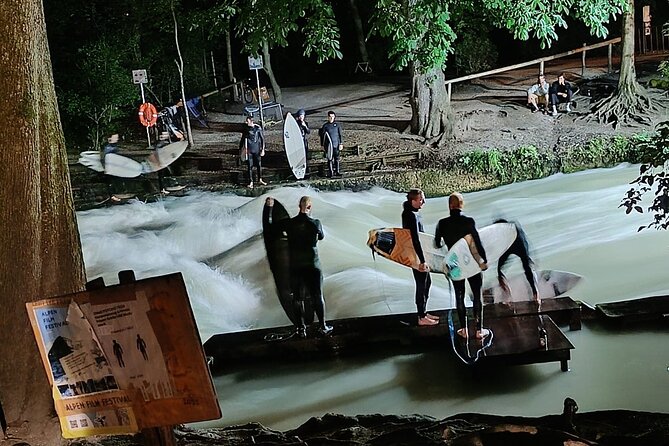
Odeonsplatz is one of those squares where the city tells you, quietly and then not-so-quietly, that things used to be different. This stop connects to the failed beer hall putsch, a turning point that’s central to the darker side of Munich’s 20th-century story.
The length of the stop is brief, so it’s not trying to turn your walk into a lecture marathon. Instead, it sets context so later, when you read or see headlines, you understand what the geography has to do with the events.
What I’d do here: slow down for a minute. Even if you’re not a history nut, asking how a square’s layout affects gatherings can make the story stick.
Residenz Munich: the Wittelsbach palace in city-palace scale
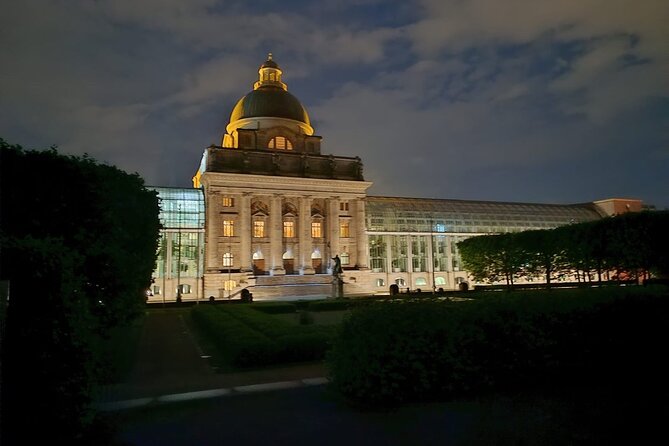
Residenz München is the palace of the Wittelsbach dynasty, with the dynasty starting to live there as early as the 1380s. It’s described as the largest city palace in Germany, and that kind of scale matters when you’re trying to understand why Munich became the seat of power it did.
Because the tour window is limited, the stop gives you a strong overview rather than a full palace marathon. Admission here is not included, so you can choose your level: quick exterior orientation or a longer inside visit if time and budget allow.
How to make Residenz click: think “administration” and “status,” not just “royal rooms.” Palaces like this are built to signal control, and that’s what you should look for as you take in the size and layout.
Price and value: what you’re really paying for at $325.89
At about $325.89 per person for roughly 3 hours, this isn’t a budget mass-market tour. But it also isn’t trying to be one. You’re paying for private pacing, private attention, and a guide who can adjust the walk to your group.
That value shows up in two ways:
- You get flexibility: you’re not stuck with one rigid script that assumes what everyone cares about.
- You get support beyond the walk: pre-trip questions and after-walk historical photos help the experience last longer than a single afternoon.
If you’re someone who wants to tick off sights only, you could find cheaper options. But if you want the meaning behind the sights—plus a plan that keeps the route efficient—this can be good value.
One cost note: you’ll likely have extra entry fees if you go inside Hofbräu München and Residenz. Build that into your mental budget so there are no surprises.
The kind of traveler this fits best
This tour works especially well for:
- First-time visitors who want to get oriented fast in central Munich.
- People who like history and culture, but don’t want to sacrifice food time and sightseeing rhythm.
- Families and groups who want a guide to stay patient and adapt to a pace that fits real life.
It’s also a nice option if you enjoy public transportation and don’t mind a bit of logistical planning. In past walks, the host has guided visitors on taking trains efficiently and helped with on-the-ground movement plans—exactly the kind of thing that saves energy.
If you’re the type who likes to ask questions in the moment, you’ll benefit. A good walk is conversation plus walking, and this one is set up for that.
Timing tips: when your route makes the most sense
Since the walk is about 3 hours, you’ll want to think like a local planner. For example, arriving early gives you a better chance to hit the glockenspiel performance at the right time window and keeps the rest of your day from feeling rushed.
Also, pay attention to calendar days for Viktualienmarkt. If you’re visiting on a Sunday or a public holiday, the market may be closed, so you’ll want to be open to that swap in feel.
Should you book this private Munich walk?
If you want Munich with less guesswork and more meaning, I’d book it. The standout strength is the private host approach: you can tailor the walk, ask questions, and leave with historical context that makes the city feel less like a postcard and more like a place with layers.
I’d skip or reconsider if you’re mostly chasing bargain prices, or if you don’t plan to pay extra for Hofbräu München and Residenz. In that case, a cheaper group-style tour might satisfy your needs with less added cost.
FAQ
FAQ
How long is the tour?
It’s about 3 hours.
Is this a private tour?
Yes. Only your group will participate.
What language is the tour offered in?
It’s offered in English.
What stops do you visit in Munich?
The walk includes Marienplatz, Viktualienmarkt, Frauenkirche, Hofbräu München, Odeonsplatz, and Residenz München.
Are admission fees included for every stop?
Some stops have free admission, while others have admission not included (Hofbräu München and Residenz München). The tour includes admission fees for the elements listed as included.
Is Viktualienmarkt open every day?
No. It’s closed on public holidays and Sundays.
Which admission costs might cost extra during the tour?
Hofbräu München and Residenz München are listed as admission not included.
Where does the tour start and end?
The tour ends back at the meeting point.
What are the tour’s operating hours?
It runs daily from 8:00 AM to 8:00 PM.
Is there free cancellation?
Yes. You can cancel up to 24 hours in advance for a full refund.
Can you bring a service animal?
Yes, service animals are allowed.