Reviewed · MUNICH
500 Years of Munich Architecture (Max. 16 Guests)
Munich architecture tells a 500-year story on foot. This small-group tour (max 16 guests) is led by Philipp, an architect and certified official city guide, and it teaches you how Munich buildings changed as society changed. I especially like the inside-looking-out explanations of styles you can actually see in the street, and the fact that the route mixes landmark churches with quieter corners plus an Isar River nature break. The main drawback to plan for is that it’s not for everyone: expect a walking route and it isn’t suitable for wheelchair users or people with mobility impairments.
What makes this experience feel different is the way Philipp connects architecture to real life, not just dates and names. You’ll go from medieval forms to later church styles, royal-era showpieces, and modern contrasts, then finish at the Gasteig rooftop terrace for a skyline view (weather permitting). It also runs in English, German, or Spanish, so you’re not stuck with one language that may not fit your group.
In This Review
- Key highlights you won’t get from a quick photo stop
- A local architect’s walk through 500 years of Munich
- Meet at Frauenkirche and learn to see Munich from the start
- Gothic and early landmarks: Frauenkirche plus St. Michael’s
- Trinity Church and Theatine Church: where belief meets style
- Bavarian State Opera and Maximilianstraße: Munich flexing its civic muscles
- St. Lukas and Müllersche Volksbad: architecture you feel in everyday life
- Sudetendeutsches Museum and the mix of old-to-new contrasts
- The Isar River section: Art Nouveau, street art, and modern museum vibes
- Gasteig rooftop terrace finale: the skyline payoff
- Price and value: $30 for an architect-led, 150-minute route
- Group size, timing, and comfort tips that matter
- Who this tour suits best
- Should you book 500 Years of Munich Architecture?
- FAQ
- Where does the tour start?
- How long is the tour?
- How big is the group?
- What languages are available?
- Is food or drinks included?
- Is it wheelchair accessible?
Key highlights you won’t get from a quick photo stop
- Philipp’s architect lens: you learn to read buildings instead of just naming them
- A tight small group: max 16 people means room for questions and slower explanations
- A route that mixes big and lesser-known: Frauenkirche and others, plus quieter architectural surprises
- Isar River portion: you get nature, Art Nouveau details, and street art in the same walk
- Modern finale at Gasteig: the rooftop terrace viewpoint is the payoff moment
Still mapping out your time in Munich? A few more tours worth a look.
- From Munich: Neuschwanstein & Linderhof Castle Full-Day Trip★ 4.6 · 14,646 reviews
- Neuschwanstein & Linderhof Castle-Fairytale Day Tour from Munich★ 4.5 · 7,275 reviews
- Munich: Third Reich & WWII Walking Tour★ 4.6 · 6,181 reviews
- Dachau Concentration Camp Memorial Site Tour from Munich by Train★ 4.5 · 5,637 reviews
A local architect’s walk through 500 years of Munich
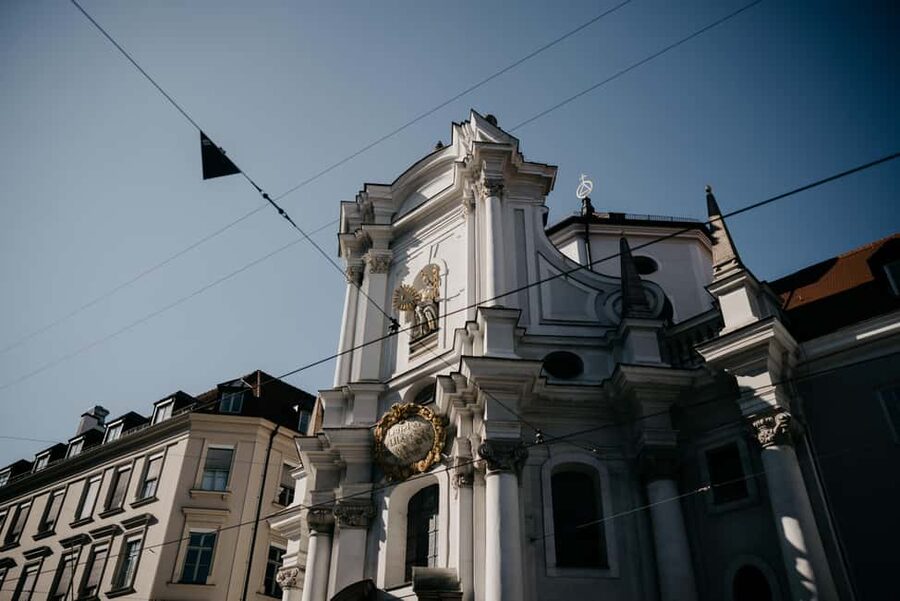
This isn’t a generic “look at the church” tour. The whole format is built around a simple idea: architecture is a record of politics, faith, and changing taste. With Philipp at the front, you tend to notice how style shifts when power shifts, when communities rebuild, and when new materials or ideas show up.
At $30 per person for a 150-minute guided experience with an architect-led approach, the value is in the guidance itself. You’re paying for interpretation—why a building looks the way it does—and for the pacing of a small group that can pause for questions. And because it ends with a viewpoint instead of stopping mid-street, you leave with a stronger sense of how Munich “adds up” visually.
Meet at Frauenkirche and learn to see Munich from the start
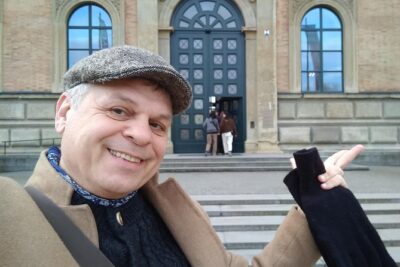
You’ll meet outside Frauenkirche (Frauenplatz 1), right by the main cathedral entrance. Philipp is easy to spot with a tablet slung over his shoulder, and that helps because the group starts with orientation instead of waiting around.
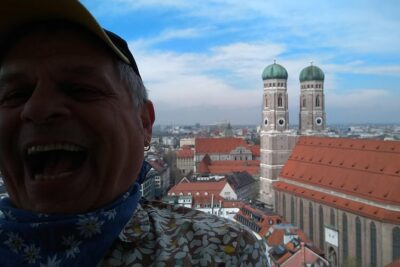
Starting here matters because Frauenkirche is more than a postcard face. It’s a key reference point for Gothic-era thinking in Munich, and it gives you a visual anchor for everything that comes next. Even if you’ve seen the exterior before, you’ll likely start noticing proportions, details, and style cues more clearly once you have the framework Philipp gives you.
Gothic and early landmarks: Frauenkirche plus St. Michael’s
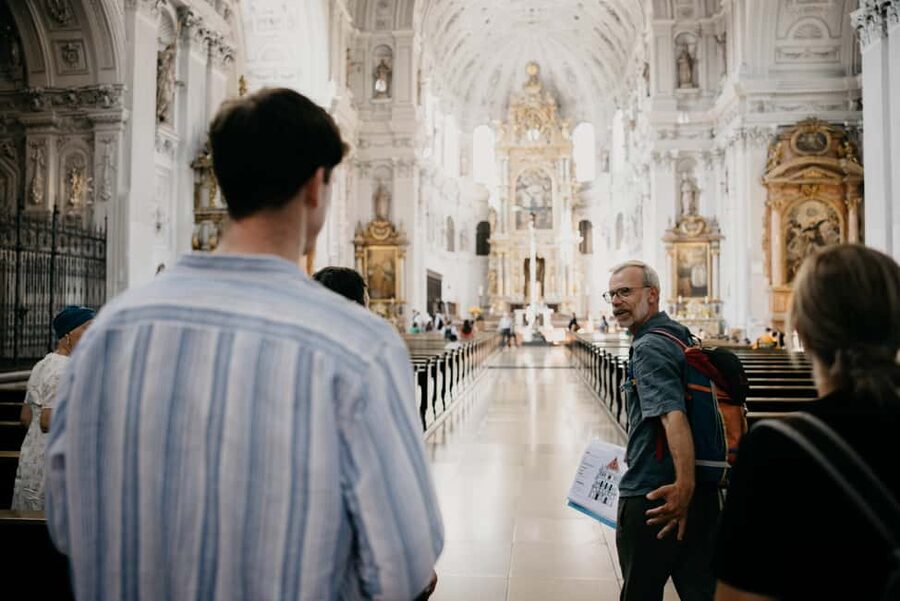
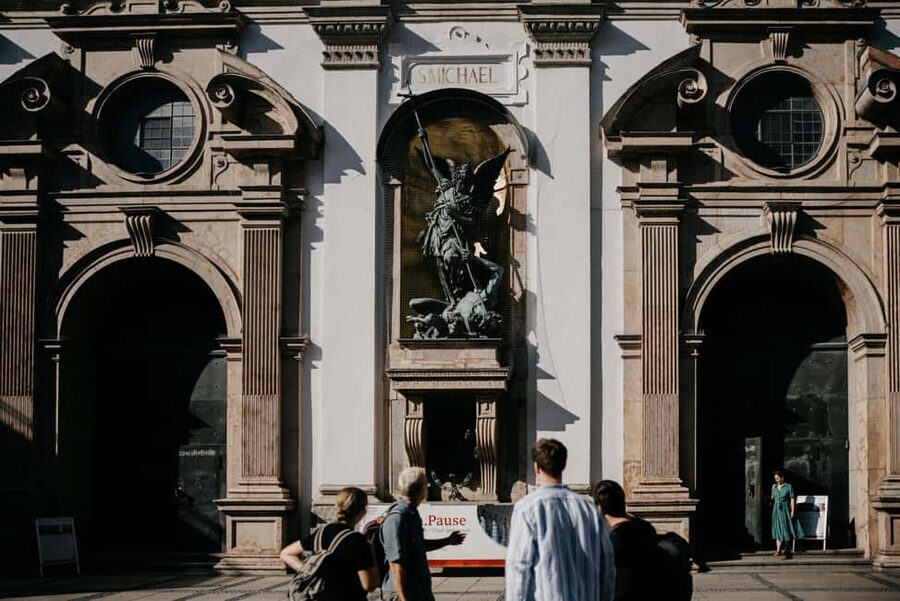
From Frauenkirche you move into the next layer of the old city’s religious architecture, including St. Michael’s Church. This section works well if you like churches as living history—places where Munich’s identity showed up in stone and design choices.
The best part is how Philipp helps you compare rather than memorize. Gothic features can look similar on quick glance photos, but on a guided walk you start seeing what makes each building distinct. If you’re the type who gets impatient with long explanations, don’t worry: the tour’s rhythm stays tied to what you can see around you.
- From Munich: Neuschwanstein & Linderhof Castle Full-Day Trip
★ 4.6 · 14,646 reviews - Neuschwanstein & Linderhof Castle-Fairytale Day Tour from Munich
★ 4.5 · 7,275 reviews - Munich: Third Reich & WWII Walking Tour
★ 4.6 · 6,181 reviews
Trinity Church and Theatine Church: where belief meets style
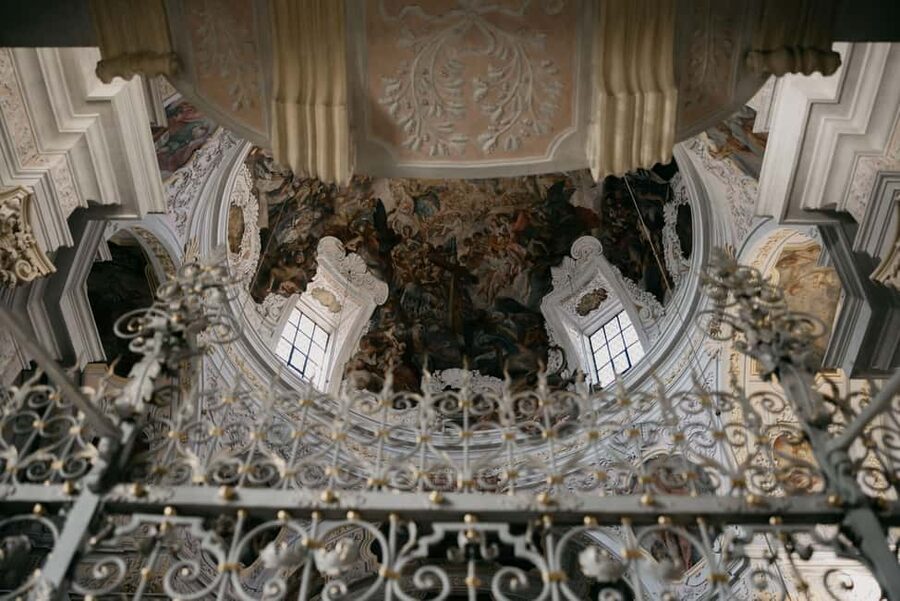
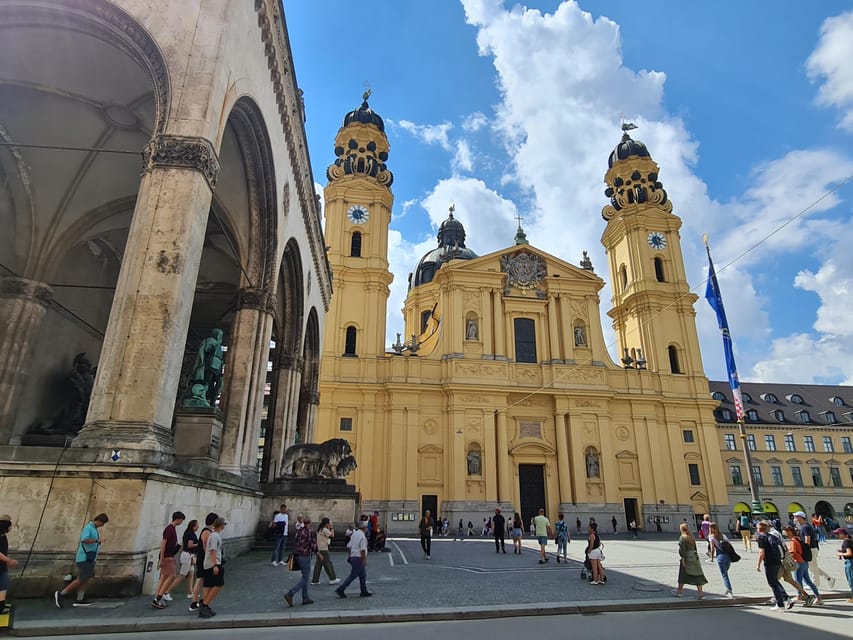
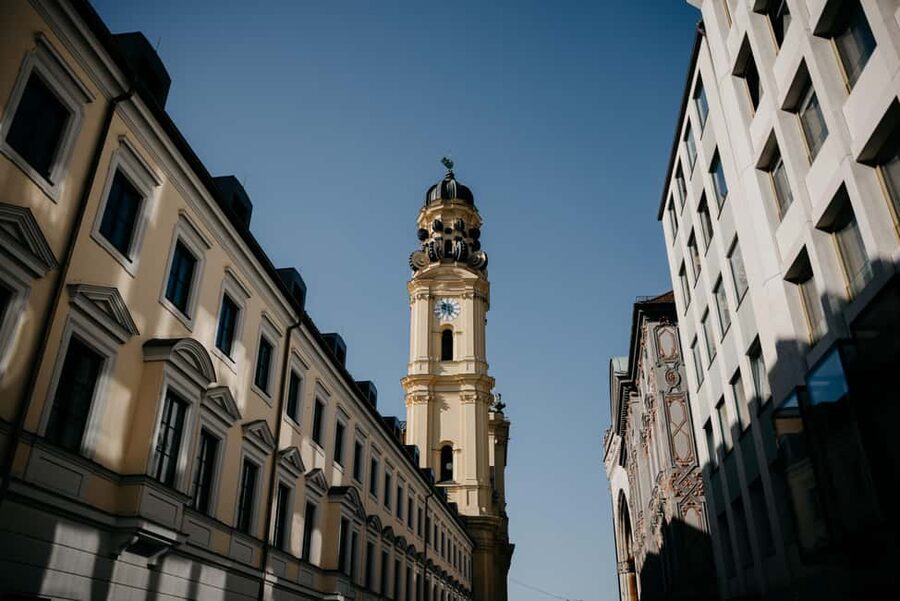
Then you shift into more ornate territory with Trinity Church and Theatine Church. These stops bring you closer to baroque and later stylistic energy, when churches were designed to do more than hold services—they aimed to impress and persuade.
This is also where you feel the tour’s “social and political conditions” theme. Architecture isn’t treated like an isolated art project; it’s discussed as something shaped by the expectations of the time. You’ll likely find yourself looking at the churches with a more practical question in mind: what were they trying to communicate to the public?
Bavarian State Opera and Maximilianstraße: Munich flexing its civic muscles
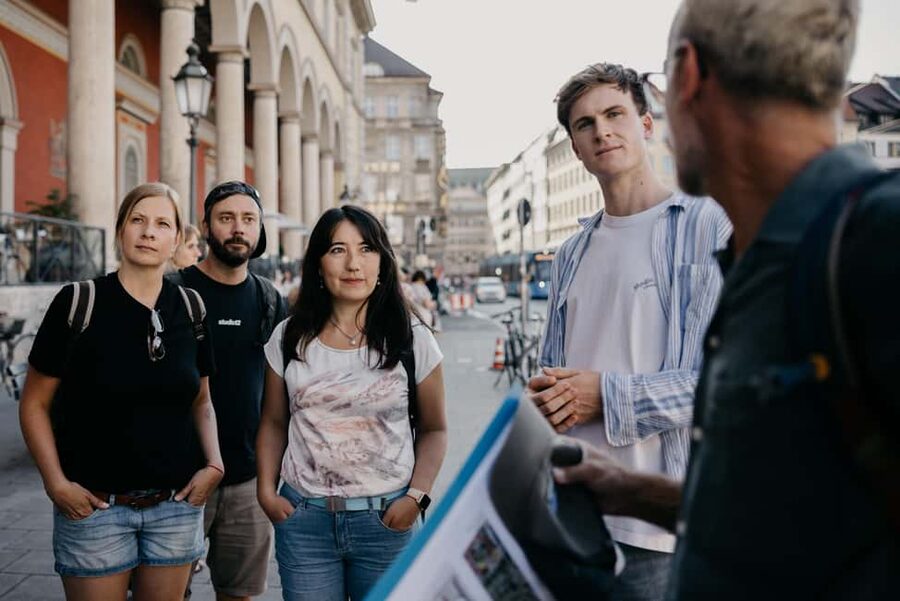
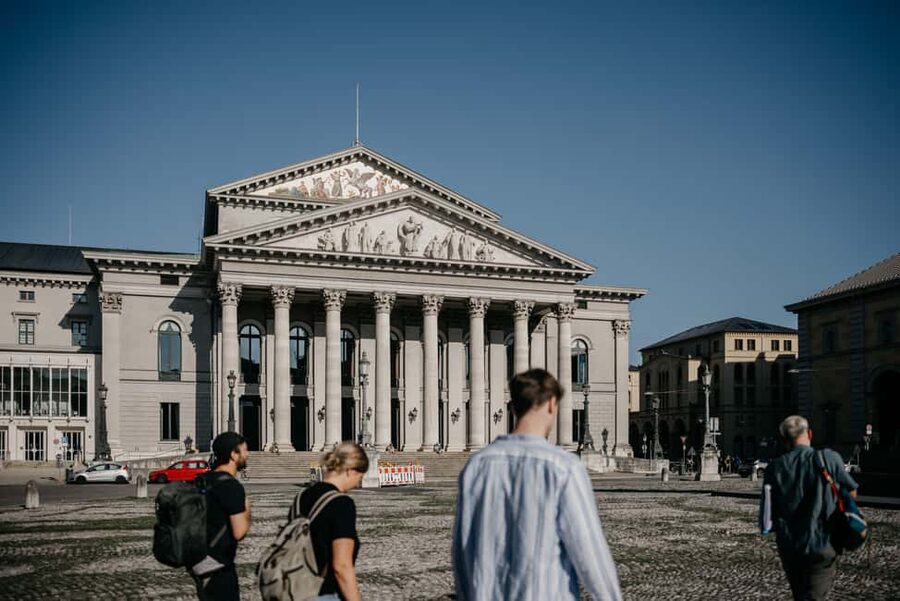
After the church-focused stretch, you head into a more civic and cultural mood at the Bavarian State Opera and along Maximilianstraße. This is where Munich’s architecture starts acting like a statement—about refinement, public life, and how the city wanted to be seen.
You get a guided walk down Maximilianstraße, which is helpful because straight sightseeing can miss the story. With Philipp’s guidance, the street becomes a sequence: building to building, you start noticing how major institutions relate to their surroundings.
St. Lukas and Müllersche Volksbad: architecture you feel in everyday life
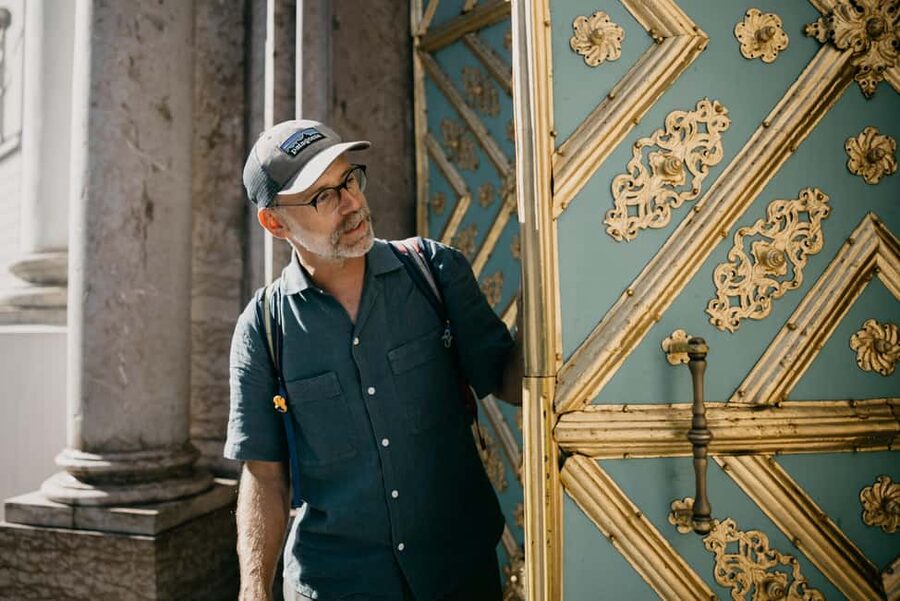
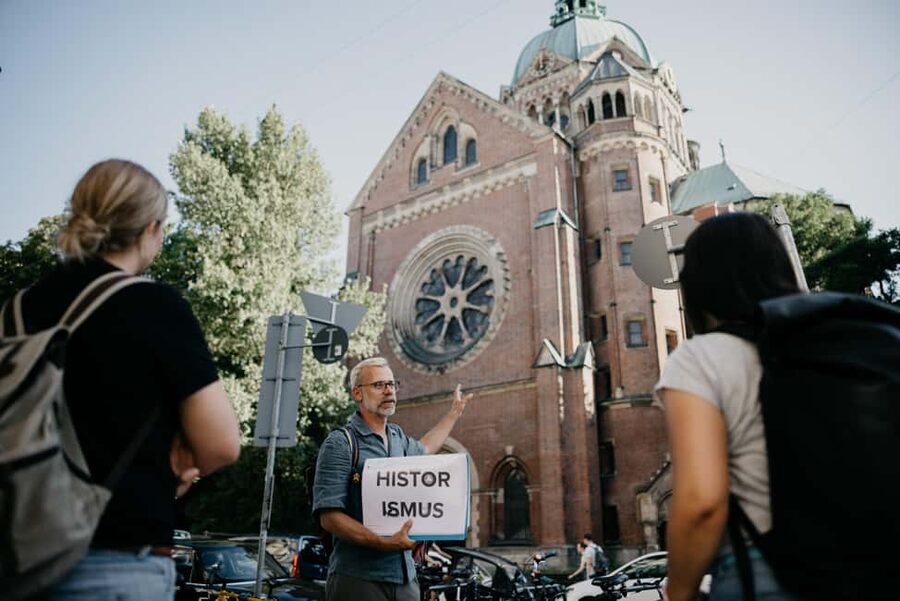
The tour then moves toward a different side of the city with St. Lukas and Müllersche Volksbad. These aren’t just “big famous monuments.” They’re the kind of places that help you understand how architecture serves real routines—faith, community, and public facilities.
Guided stops here are valuable because they break the habit of treating architecture like something reserved for palaces and cathedrals. You’ll likely walk away with a better sense of what “public building” meant across time in Munich, not only what elites built.
Sudetendeutsches Museum and the mix of old-to-new contrasts
Next comes the Sudetendeutsches Museum, where the tour’s time-travel idea continues. Even without turning it into a museum lecture, this stop fits the theme well: architecture and design respond to shifting identity.
By this point, you’ll probably understand the tour’s larger purpose. It’s not only about what Munich built, but how the city kept reorganizing itself—stylistically and socially—over centuries. That makes the later modern parts feel less random when you finally reach the Isar and the final rooftop view.
The Isar River section: Art Nouveau, street art, and modern museum vibes
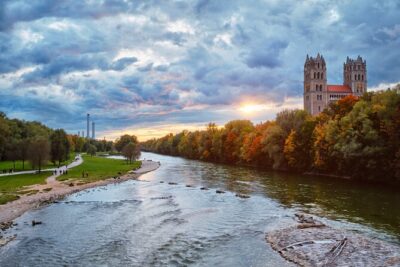
One of the most memorable portions of this experience is the shift to the Isar River. This is where you get a change of pace—nature and open air—while still staying on theme with architectural style.
Along the river route, you’ll see Art Nouveau touches and street art, plus the feel of a modern museum setting. The balance is smart: you’re not stuck in a straight line of stone façades for the whole 150 minutes. Instead, you get texture—different visual languages in one walk.
This part is also a good reminder that “architecture” isn’t only historic. The city keeps adding layers, and you can learn to spot what era each layer belongs to based on design cues.
Gasteig rooftop terrace finale: the skyline payoff
The tour ends at Dachgarten on the Gasteig rooftop terrace. This is the moment when the city’s scale hits you, because you can see Munich from above rather than from street level.
If the weather cooperates, the rooftop view is the payoff for the whole route. After spending time comparing styles, materials, and building purposes, you finally get to connect the dots in one wide panorama. It turns the earlier stops into something more than a sequence of separate attractions.
Bring this in mind while you’re walking: the ending view makes time on your feet feel worthwhile, especially since the group stays small enough for the transition to feel calm rather than rushed.
Price and value: $30 for an architect-led, 150-minute route
At $30 per person, the price is easy to justify if you care about how cities grow. You’re paying for a guided explanation from Philipp, who is both an architect and a certified official guide, which changes the quality of what you hear.
This isn’t a long tour full of filler stops. In 150 minutes, you get a timeline from medieval and Gothic forms into later church styles, royal-era civic streets, and modern contrasts. On top of that, you receive a special postcard highlighting a tour moment and a digital map with Philipp’s favorite spots. Those extras help you keep learning after the walk ends.
If your travel style is mainly “quick photos and done,” you might find the time feels structured. But if you like spending a bit more time understanding why buildings look the way they do, the value is strong.
Group size, timing, and comfort tips that matter
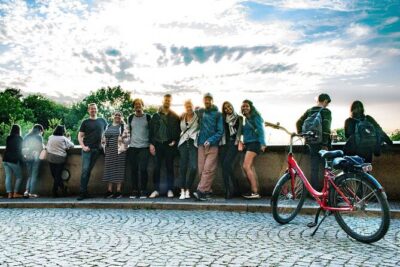
The max 16-guest group size is one of the quiet strengths here. You don’t feel swallowed by a big crowd, and you can ask questions without turning it into a lecture hall. The duration is 150 minutes, so you should treat it as a real walk rather than a casual stroll.
Practical note: bring comfortable shoes. The tour isn’t listed as suitable for wheelchair users or people with mobility impairments, so if walking distance is a concern, I’d consider that early. Also, food and drinks aren’t included, so plan to grab something before or after based on your schedule.
Who this tour suits best
This tour is a good match if you:
- want architecture explained through a professional’s lens, not just historical trivia
- enjoy seeing landmarks alongside everyday public buildings
- like city walks that end with a viewpoint
- travel with a family and want something interesting that still feels approachable (it’s family friendly)
It’s also smart for Munich newcomers who want orientation fast, because the route gives you a usable framework for reading the city later. If you’re a long-time Munich resident, it still works because the focus is on comparison—how styles shift and why.
Should you book 500 Years of Munich Architecture?
I’d book it if you want more than a highlights loop. The combination of Philipp’s architect-guided explanations, a tight small group, and a route that connects churches, civic streets, the Isar River, and modern finishes makes the experience feel focused rather than random.
Skip it if you need step-free access or you want minimal walking. Also, if you don’t like structured commentary and prefer fully independent sightseeing, the pace and stop-by-stop guidance might feel too “guided.”
If you’re on the fence, here’s the simple decision rule: if architecture visuals mean something to you when someone tells you what to look for, this tour is worth your time.
FAQ
Where does the tour start?
You’ll meet outside Frauenkirche cathedral at Frauenplatz 1. Look for Philipp, who has a tablet slung over his shoulder.
How long is the tour?
The duration is 150 minutes.
How big is the group?
It’s a small-group experience with a maximum of 16 guests.
What languages are available?
The tour is offered in English, German, and Spanish.
Is food or drinks included?
No. Food and drinks aren’t included.
Is it wheelchair accessible?
No. The tour is not suitable for people with mobility impairments or wheelchair users. Smoking is also not allowed during the experience.