
Reviewed · HOHENSCHWANGAU & FUSSEN CASTLE TRIPS
Füssen: Old Town Guided Walking Tour in German
Füssen tells stories on your feet. This 1.5-hour guided walk strings together the town’s arc from the Roman period to today, with stops that feel real, not staged. I especially like the small group vibe (max 10) and the way the guide turns street corners into mini-history lessons.
The only possible drawback: it’s German-speaking, so if you’re not comfortable with the language, you’ll need to rely on gestures and your own reading of the sights.
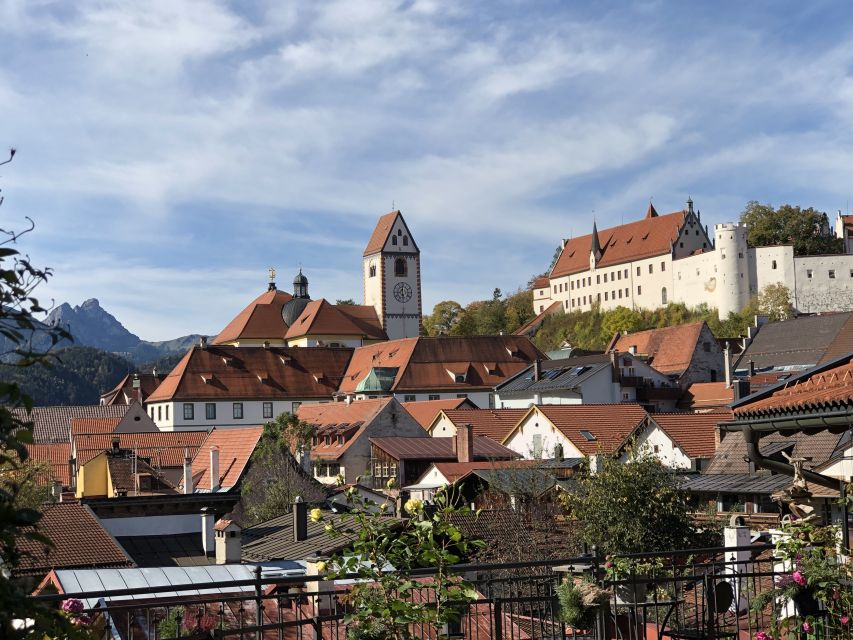
You’ll start at Kaiser-Maximilian-Platz, then move through the Old Town at a steady pace, picking up context as you go. The route hits signature places like Sebastian Cemetery with a medieval city wall, the Holy Spirit Hospital Church interior, and the Courtyard of the High Castle where you’ll see painted works up close. You’ll be done fast, but you’ll also come away with a clearer map of why Füssen grew where it did.
In This Review
- Key highlights that make this tour worth your time
- A Small-Group Stroll Through Füssen’s Roman-to-Modern Story
- Where You Meet and How to Time Your Walk
- Sebastian Cemetery and the Medieval City Wall You Can Still See
- Franciscan Monastery, Bleichertörle, and the Lechuferweg Along the Water
- Holy Spirit Hospital Church: Look Past the Doorway
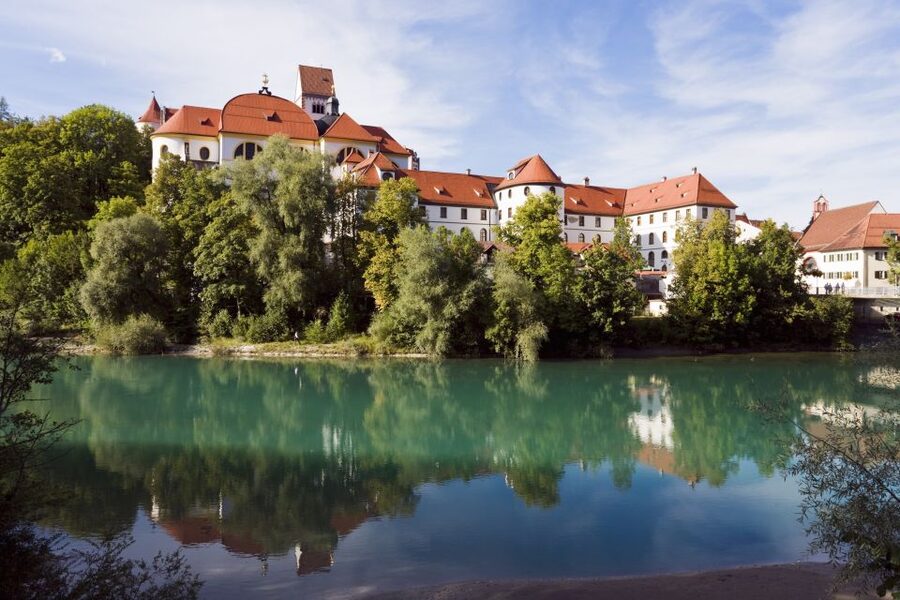
- St. Mang Basilica and the High Castle Courtyard Paintings
- What the German Guide Adds (and Why People Rave About the Q&A)
- The Price: Why $9 Feels Like Good Value
- Who This Tour Suits Best
- Practical Tips for Getting More From Each Stop
- Should You Book This Füssen Old Town Guided Walking Tour?
- FAQ
- What language is the guided tour?
- How long is the Füssen Old Town guided walking tour?
- How many people are in the group?
- Where do we meet the guide?
- What’s included in the ticket price?
- What is not included?
- Is the tour wheelchair accessible?
Key highlights that make this tour worth your time
- Roman-to-modern storytelling: you’re not just looking at buildings; you’re learning how the town’s layers connect
- Sebastian Cemetery + medieval wall: a rare chance to connect a cemetery setting with city defenses
- Hospital Church interior stop: you’ll get a guided look at what’s inside, not only what you can photograph outside
- Courtyard of the High Castle paintings: art in an Old Town setting that feels made for walking
- Small group up to 10: more Q&A, fewer people blocking the path, and a calmer pace
More castle days out of Fussen and Hohenschwangau
- Füssen: Neuschwanstein Castle Express Ticket and Audio Guide★ 3.9 · 788 reviews
- From Hohenschwangau: Tour to Neuschwanstein Castle★ 4.7 · 693 reviews
- Neuschwanstein Castle Tour with Skip the Line from Hohenschwangau★ 5.0 · 323 reviews
- Skip The Line Neuschwanstein Castle Tour from Hohenschwangau★ 5.0 · 273 reviews
A Small-Group Stroll Through Füssen’s Roman-to-Modern Story
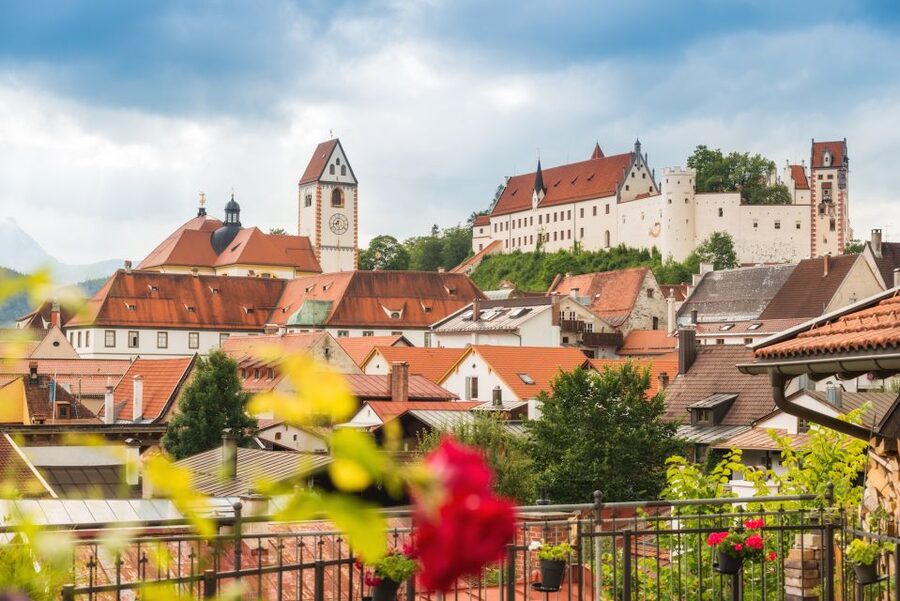
Füssen isn’t huge, but it can feel like it has chapters stacked on top of each other. The tour’s biggest strength is that your guide uses the street layout to explain the timeline—from the Roman period all the way to the present—so the Old Town starts making sense. Instead of memorizing dates, you begin noticing patterns: where power sat, where people walked, and how religious sites shaped daily life.
I also like that the tour keeps moving. You’re not trapped in one square for long. You’re continuously linking one stop to the next, which makes the whole hour-and-a-half feel efficient.
And because the group is capped at 10, the conversation stays human. People can ask questions without turning the tour into a crowded Q-and-A session. That matters in a place where details hide in plain sight—doorways, carvings, and small architectural changes.
Where You Meet and How to Time Your Walk
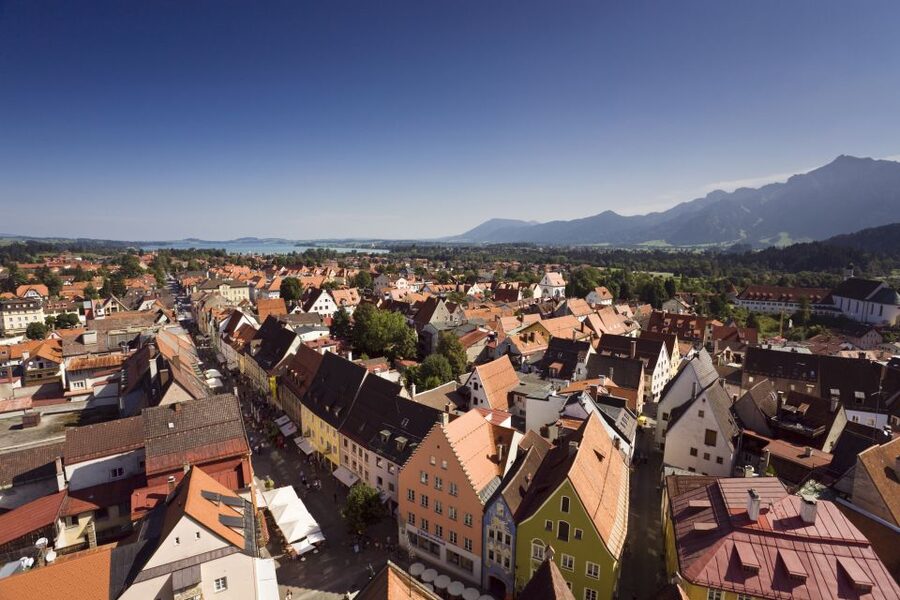
You meet outside the Tourist Information at Kaiser-Maximilian-Platz 1. Plan to arrive 10 minutes early so you’re not sprinting to catch the first words from your guide. It’s a sensible setup because Kaiser-Maximilian-Platz is one of the easiest places in town to orient yourself.
The walk itself is scheduled for about 1.5 hours, which is a sweet spot in a day that already includes sightseeing. It gives you enough time to hit several major landmarks, but it doesn’t eat your whole afternoon. If you’re the type who likes to keep flexibility—wander afterward, stop for coffee, or return to a sight that caught your eye—this pacing works.
The tour is also wheelchair accessible, which is a plus if you want a guided experience without switching to a private format. Just expect that you’ll move at walking speed for the majority of the route.
Sebastian Cemetery and the Medieval City Wall You Can Still See
One of the best stops is Sebastian Cemetery, where you’ll be able to spot a Medieval city wall. This is exactly the kind of detail that most people miss when they’re just taking photos. When a guide points out the wall’s presence and explains the setting, it changes how you read the area around it.
Cemeteries are often quiet, but here the mood comes with context. You’re not just seeing graves in an Old Town corner; you’re standing in a place connected to how towns used defenses and boundaries. It’s a reminder that walls weren’t only military objects—they shaped how people moved and lived.
If you like history that feels grounded in real streets, this is a strong anchor point in the tour. It sets a framework for the rest: what you’ll see later won’t feel random. You’ll start connecting the church buildings, the monasteries, and the castle courtyard to the same long story.
More laps of the Altstadt and Marienplatz
- Füssen: Old Town Guided Walking Tour in German
★ 4.8 · 127 reviews
Franciscan Monastery, Bleichertörle, and the Lechuferweg Along the Water
After the cemetery, you continue toward the Franciscan Monastery, then pass the Bleichertörle and the Lechuferweg. Even without getting lost in technical details, this stretch helps you understand why Füssen’s Old Town feels the way it does.
Monastery areas tend to offer two things on a walking tour: architecture and atmosphere. A Franciscan site often gives you a sense of how faith and community space worked together. The guide’s job here is to slow you down just enough to notice what you would otherwise glide past.
The Bleichertörle and the Lechuferweg add a different flavor. Being near the water changes the feel of a walk. You get open sightlines and a calmer rhythm, which helps the tour stay varied. It also gives you a natural pause from more enclosed church and courtyard spaces.
This segment is especially good if you like tours that balance landmarks with “in-between” sections. Those passages are where the town actually comes alive.
Holy Spirit Hospital Church: Look Past the Doorway
Next up is the Holy Spirit Hospital Church. The highlight here is the chance to admire its impressive interior, not just stand outside and move on. Churches like this can be visually complex, and a guided stop can help you understand what you’re looking at—so your photos aren’t just souvenirs, they’re memory anchors.
What makes a hospital church stop valuable is the theme. You’re moving beyond politics and defense and into everyday care—how communities organized help, worship, and support. Even if you’re not an art historian, you’ll likely appreciate how the interior tells a story through design choices.
This is also a nice pacing reset. After cemetery and outdoor stretches, stepping into an interior space breaks the walk into a new sensory chapter. It keeps the tour from blending into one long stream of buildings.
St. Mang Basilica and the High Castle Courtyard Paintings
From the hospital church, you continue toward the St. Mang Basilica and then the Courtyard of the High Castle, where you can marvel at the paintings.
The basilica stop adds another layer to the religious theme, and it helps reinforce what you’ve learned so far: Füssen’s Old Town identity isn’t one-dimensional. Multiple sacred sites exist in a compact area, and each one adds a different angle on what mattered to the community.
Then you end (or near the end, depending on the day’s flow) at the Courtyard of the High Castle. This is the moment many people remember because the paintings turn a courtyard into an experience. Art in an outdoor courtyard setting can feel surprisingly intimate. You’re close enough to actually take in details, and the setting makes the space feel lived-in rather than museum-sterile.
If you like ending a walk with something visual, this works well. It gives you something concrete to carry forward after the tour—something you can revisit later on your own time, too.
What the German Guide Adds (and Why People Rave About the Q&A)
The tour is live with a German-speaking guide, and that language factor is worth taking seriously. Still, the upside is that the storytelling is thorough, and the route is built around being explained.
The standout praise in participant feedback centers on the guide’s presence: being open to questions and explaining with care. Names show up in the feedback too—Ella and Frau Schulz are mentioned as guides who answer questions and report a tour that can run longer in practice (one report notes close to two hours). That’s a strong sign of a guide who isn’t rushing.
If you speak German, you’ll likely get even more from the architecture and history references. If you don’t, you can still enjoy the tour by focusing on the guide’s physical pointers and the way you connect landmarks into a story. Just be realistic: this isn’t an audio-headset style tour where you can rely on translations on your phone.
The Price: Why $9 Feels Like Good Value
At $9 per person for a 1.5-hour guided walk, the price is hard to argue with. You’re paying for expert guidance through multiple landmarks—especially the stops that are harder to understand on your own, like the cemetery wall connection and the interior viewing at the Holy Spirit Hospital Church.
The best value angle here is efficiency. In a short amount of time, you cover several major points in Füssen’s Old Town: Sebastian Cemetery, Franciscan Monastery area, Bleichertörle, Lechuferweg, Holy Spirit Hospital Church, St. Mang Basilica, and the High Castle courtyard with paintings. If you were trying to piece that together independently, you might spend more time figuring out what matters and where to look.
Also, the group size helps justify the cost. A small group (up to 10) means you’re more likely to get answers to questions and a guide who can keep the pace comfortable. That’s a quality boost you feel during the walk.
Overall: this is priced like a “local orientation walk,” not a high-end private tour. For most people, that makes it an excellent first or second activity in Füssen.
Who This Tour Suits Best
I’d put this on your shortlist if you:
- Want a guided way to understand Füssen’s Old Town layout and why key sites exist
- Like a mix of outdoor landmarks and church/courtyard interiors
- Prefer small groups where you can ask questions
- Are comfortable with a German-speaking guide (or at least enjoy historical sightseeing even when you don’t catch every word)
If you’re in Füssen for a short stay, this tour is also a smart way to get your bearings quickly. It helps you decide what to revisit afterward—especially the courtyard painting stop, which is the kind of visual detail that rewards second looks.
If you’re traveling with a very small circle that wants total control of pace, you might consider a private guide instead. But for most visitors, this format hits a practical sweet spot.
Practical Tips for Getting More From Each Stop
A guided walk goes better when you show up prepared to look a little longer than usual. I’d do three simple things:
- Bring comfortable shoes. You’re doing a concentrated Old Town route in about 1.5 hours.
- Keep your eyes open for small details the guide might point out, not only the big-photo sites.
- Save questions. If you have one about a wall, a church interior, or a painting, ask. The small group size supports that kind of interaction.
Also, plan to stay curious. A cemetery stop and a fortress-courtyard paintings stop can sound like two unrelated items. The guide’s job is to connect them, and that’s where the tour earns its value.
Should You Book This Füssen Old Town Guided Walking Tour?
Yes—if your goal is a German-guided orientation that links Füssen’s landmarks into one clear story. The combination of varied stops (cemetery wall, monastery area, hospital church interior, basilica, and High Castle courtyard paintings) makes the time feel well spent. And with the tour often running smoothly for small groups, it’s a good fit for people who like asking questions and walking at a steady pace.
Skip it only if language is a hard barrier for you. Since it’s German-speaking, you’ll get the most if you can follow along or at least catch enough to connect the dots. Otherwise, you might enjoy the sights, but you’ll lose part of what makes the experience special.
FAQ
What language is the guided tour?
The tour is conducted in German.
How long is the Füssen Old Town guided walking tour?
It lasts about 1.5 hours.
How many people are in the group?
The group is small, limited to 10 participants.
Where do we meet the guide?
Meet outside the Tourist Information at Kaiser-Maximilian-Platz 1.
What’s included in the ticket price?
You get the guided walking tour with a German-speaking guide.
What is not included?
Food and drinks, as well as transfer to and from the meeting point, are not included.
Is the tour wheelchair accessible?
Yes, the tour is wheelchair accessible.
More Altstadt and Marienplatz Walks
Still Around Fussen and Hohenschwangau





Just added to the Munich Explorer notebook



Hohenschwangau & Fussen Castle Trips, compared.
 ★ 3.9Füssen: Neuschwanstein Castle Express Ticket and Audio GuideFrom $50788 reviews
 ★ 4.7From Hohenschwangau: Tour to Neuschwanstein CastleFrom $74693 reviews
 ★ 5.0Neuschwanstein Castle by Bus Incl. Bike Ride or HohenschwangauFrom $78607 reviews
 ★ 5.0Neuschwanstein Castle Tour with Skip the Line from HohenschwangauFrom $75323 reviews
 ★ 5.0Skip The Line Neuschwanstein Castle Tour from HohenschwangauFrom $74273 reviews
 ★ 4.3Füssen: Bike Hire and Neuschwanstein Castle Skip-the-LineFrom $67133 reviews
 ★ 5.0Neuschwanstein and Hohenschwangau Exclusive Skip-the-Crowds TourFrom $75988 reviews
 ★ 4.9Füssen to Neuschwanstein Castle – Guided Scenic TourFrom $4786 reviews
Browse the lists this tour appears in